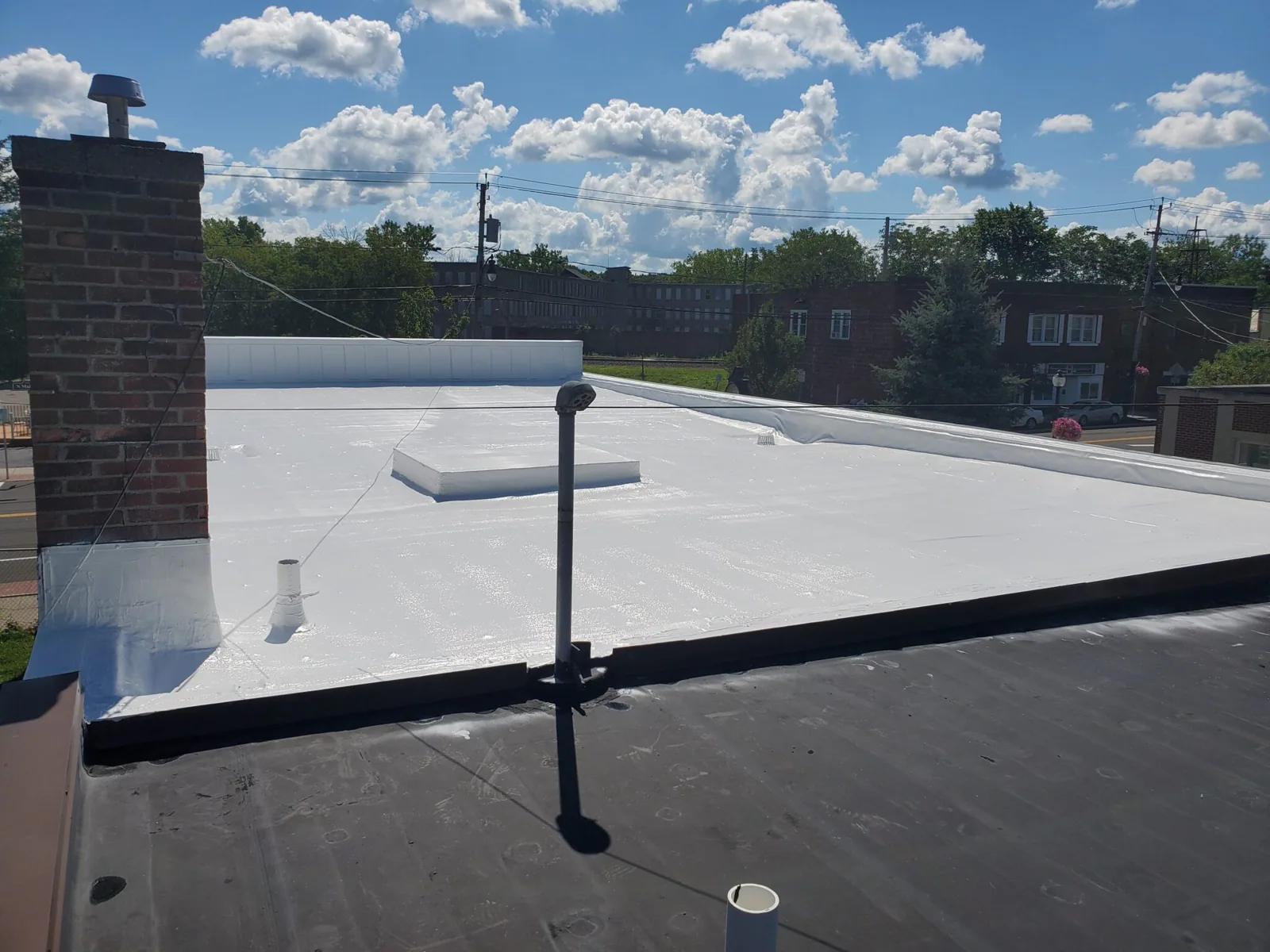

Failed Flashing Repair in Gastonia, NC
Roof leaks in Gaston County, as elsewhere, rarely start in the field of the membrane. They start where the roof meets something else: a parapet wall, a rooftop unit curb, a pipe, a skylight, an old mill wall. That junction is covered by flashing, and flashing is the part of a roof that moves, bakes and cracks first. A bead of sealant dries, a termination bar loosens, a corner pulls, and water finds the gap. None of those failures announces itself on the day it happens. The first sign is usually a brown ring on a ceiling tile after a storm, weeks or months later.
For an owner, the finding is simple and the stakes are not. A flashing repair this month is a small line item. The same flashing left through a wet spring becomes wet insulation and a section replacement.
Read Every Joint Where the Roof Stops
We walk the perimeter and every penetration. At parapets and walls we check the base flashing for lifted edges, cracks and torn corners, the termination at the top for loose bars and dry sealant, and the counterflashing above for gaps. At rooftop unit curbs we measure the height of the flashing above the membrane and look at the corners, where folds fail first. At pipes and vents we inspect boots and pitch pans for splitting. At skylights and hatches we check the curb flashing and the gasket. At roof drains we inspect the clamping ring and the flashing that dresses the drain bowl, because that junction sees more water than any other on the roof.
Photographs are tagged to the plan, and we press each seam and corner with a probe to find loose spots a visual check misses. Every defect is numbered on the plan so the repair list and the photo log match line for line. A flashing that looks sound from ten feet can be open at the back.
We also check what the flashing is attached to. A termination bar fastened into a crumbling mortar joint or a wet wood nailer will not hold, and a base flashing glued to a dusty substrate will peel. Where the wall behind the flashing has moved or cracked, we say so, because the repair has to include the wall or it will repeat. Photographs of each joint go into the log, with a note of the height of the flashing above the membrane, which the membrane maker's details specify.
Know Why Flashing Fails So You Fix It Once
Flashing fails for a short list of reasons. Sealant ages, and with July highs averaging about 90.7 F the sun bakes roof surfaces hotter than the air all summer. Thermal movement pulls at joints every day. Mastic patches stack up, and each layer traps moisture under it. Termination bars loosen as walls move. Equipment is replaced and the new unit does not match the old curb. A tropical remnant or a spring storm drives rain sideways into a joint that was fine in a normal rain.
If we only reseal, the next hot summer undoes the work. If we understand the cause, we fix it: a taller flashing, a new termination, a rebuilt corner or a counterflashing that sheds water the right way.
Equipment changes are the most overlooked cause. When a rooftop unit is replaced with one of a different size, the old curb flashing is cut, stretched or patched around the new footprint. The roofer is rarely in the room when that happens, and the leak appears a year later. We ask owners to include the roofing contractor in any equipment replacement, and we keep a log of every curb with its date and unit.
Price the Patch and the Cost of Waiting
A sealant repair on an open termination is the cheapest fix on a roof. A rebuilt corner or a new curb flashing costs more, and a full wall flashing replacement costs more again. What the owner needs is the choice and the consequence. We give a figure for each: reseal now, rebuild now, or wait until the next budget cycle, and what the wait likely costs once water reaches the insulation and the deck. For leased buildings, the report names which items are routine repairs and which are capital, so the lease terms decide who pays and the owner does not discover the answer after the leak.
Rain averages about 44 inches a year here, so a gap in flashing will see water. An open flashing will leak, and the question is whether the owner pays to fix it or pays to dry the building after.
Repair to the Substrate, Not Over the Problem
A flashing repair that sits on top of old mastic and a loose substrate fails in a season. We remove failed sealant and loose material, clean and prime the surface, replace torn flashing back to sound material and secure terminations with new fasteners and sealant. Where the substrate is damaged, we repair that first. At curbs, we rebuild the corners and extend the flashing to the height the membrane maker requires. At penetrations, we replace boots or pitch pans with a detail that sheds water and moves with the pipe.
For larger problems, skylight and penetration flashing and edge metal and coping work are scoped as their own items. Nearby failures such as seam failures and punctures are often found on the same visit.
Find the Flashing Problems Each Building Type Hides
An old mill-era building near Loray may carry tall masonry parapets and years of layered patches, and its wall terminations are the first place water gets behind the roof. Retail strips along New Hope Road and at Eastridge Mall may have canopies, parapets and rooftop units that all need flashing. A large industrial building at Gateway85 may have fewer walls but still many curbs and drains. Each building gets its own list, and the report says which details are sound, which are tired and which are open. Storm exposure matters as well. Hugo's 87 mph gusts in Charlotte on September 22, 1989 showed that tropical remnants can bring damaging wind this far inland, and wind-driven rain finds joints that stay dry in an ordinary shower. Buildings near Belmont and out toward McAdenville follow the same checklist.
Leave a Record the Warranty and the Carrier Can Use
Flashing work is documented with before-and-after photographs and a note of the materials used, which protects a manufacturer's warranty and supports an insurance claim if a storm opened the joint. A warranty file keeps those records together. After a storm like the May 2024 EF-1 tornado, storm damage repair starts with flashing and edges, since wind lifts them first.
Commercial Roofing Questions
Can sealant alone fix failed flashing?
Sometimes, on a minor gap. If the flashing is torn, loose or too low, sealant is a short-term patch and the detail needs to be rebuilt.
How often should flashing be inspected?
Once a year, plus after major storms. Older roofs and those with many penetrations may need a second look before spring.
Why does the leak show far from the flashing?
Water travels along the deck and insulation before it drips. We trace it back to the joint, not the stain.
Does flashing repair affect the warranty?
It can help or hurt, depending on materials and method. We follow the manufacturer's details and keep the records.
What is the most common flashing failure?
Open terminations at parapets and curb corners. Heat and movement dry the sealant and loosen the edge.
Topic
Failed Flashing Repair
Roof Types
Low-slope and metal
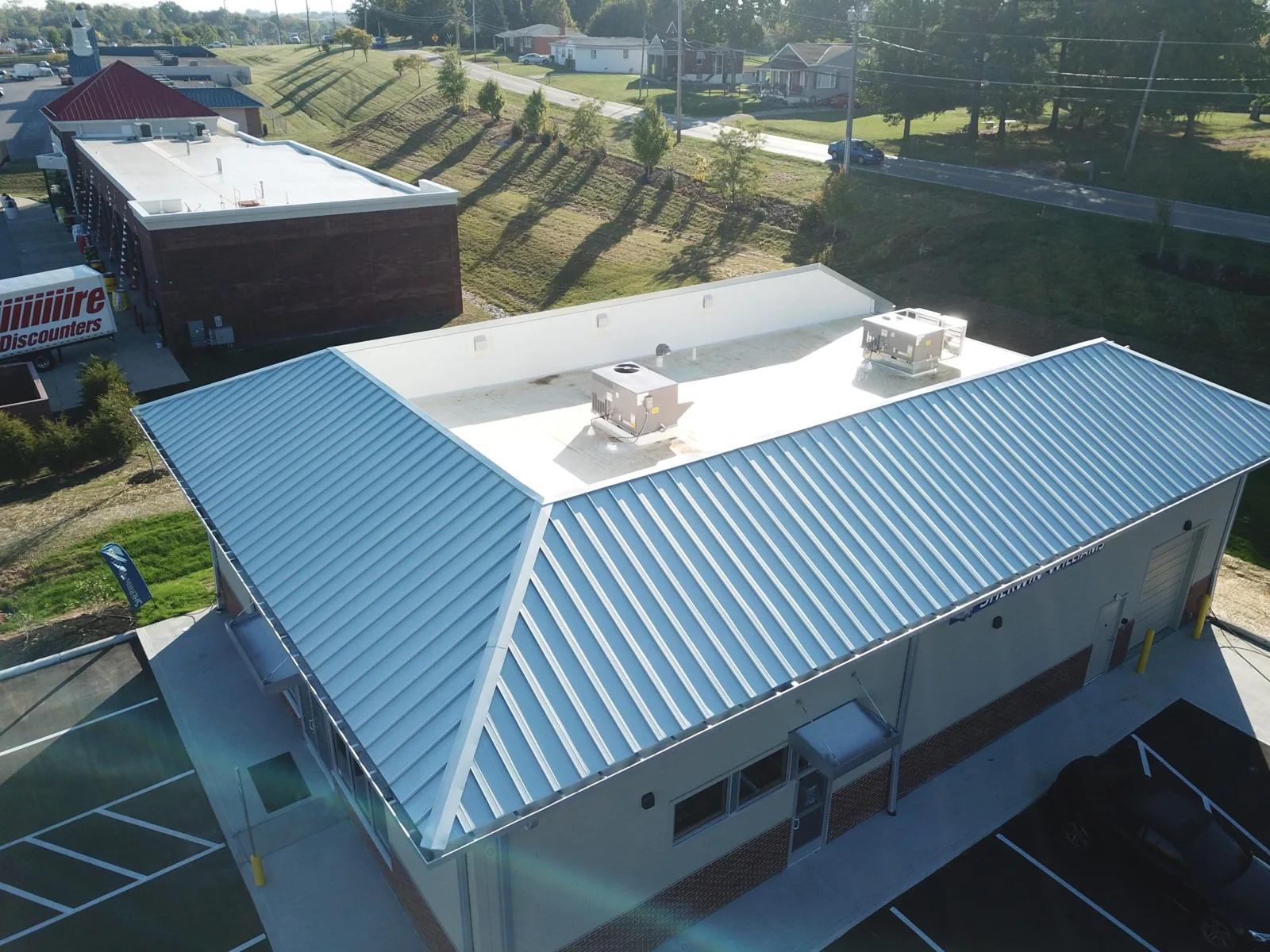
Related Roofing Work
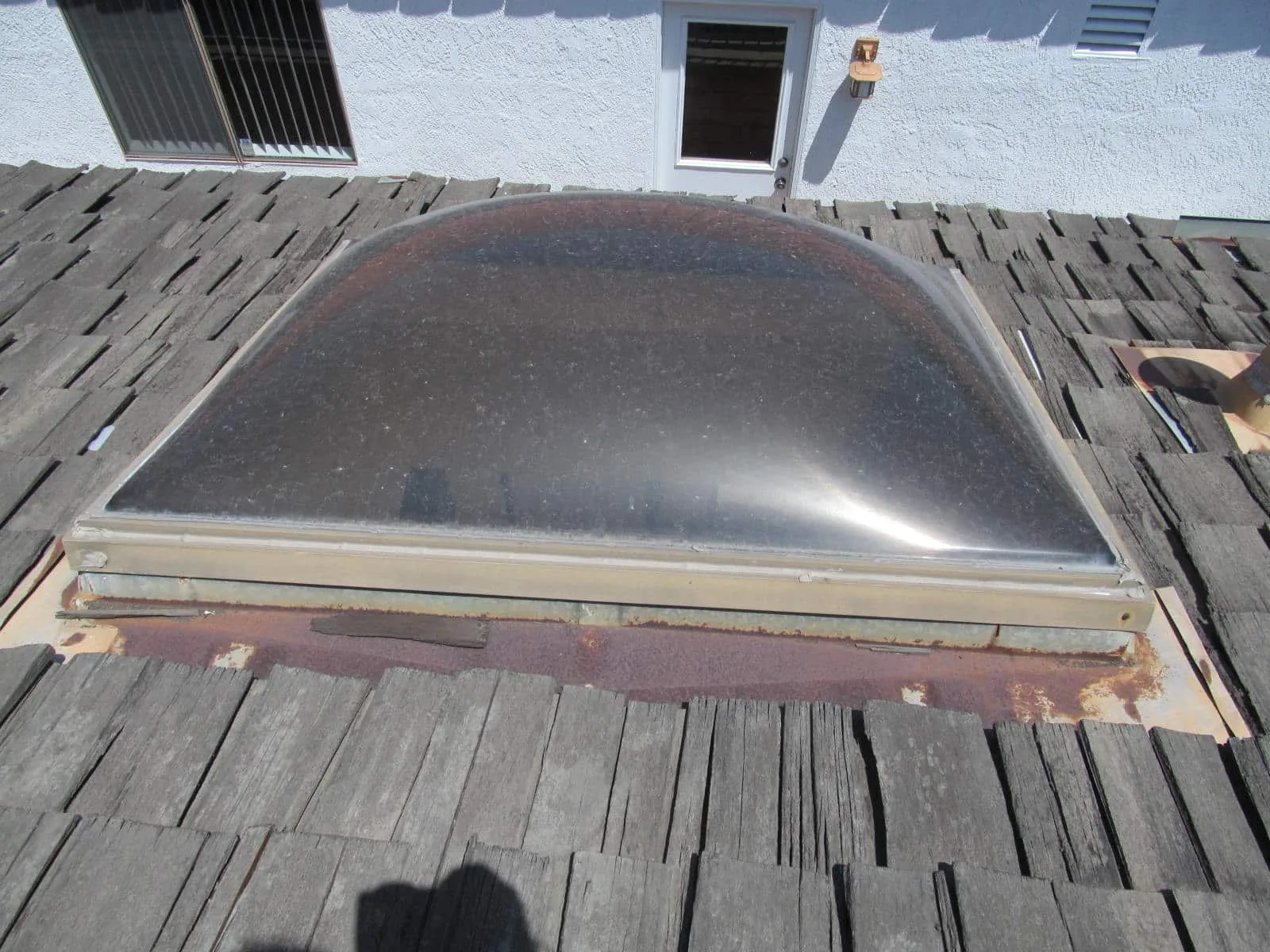
Skylight and Penetration Flashing
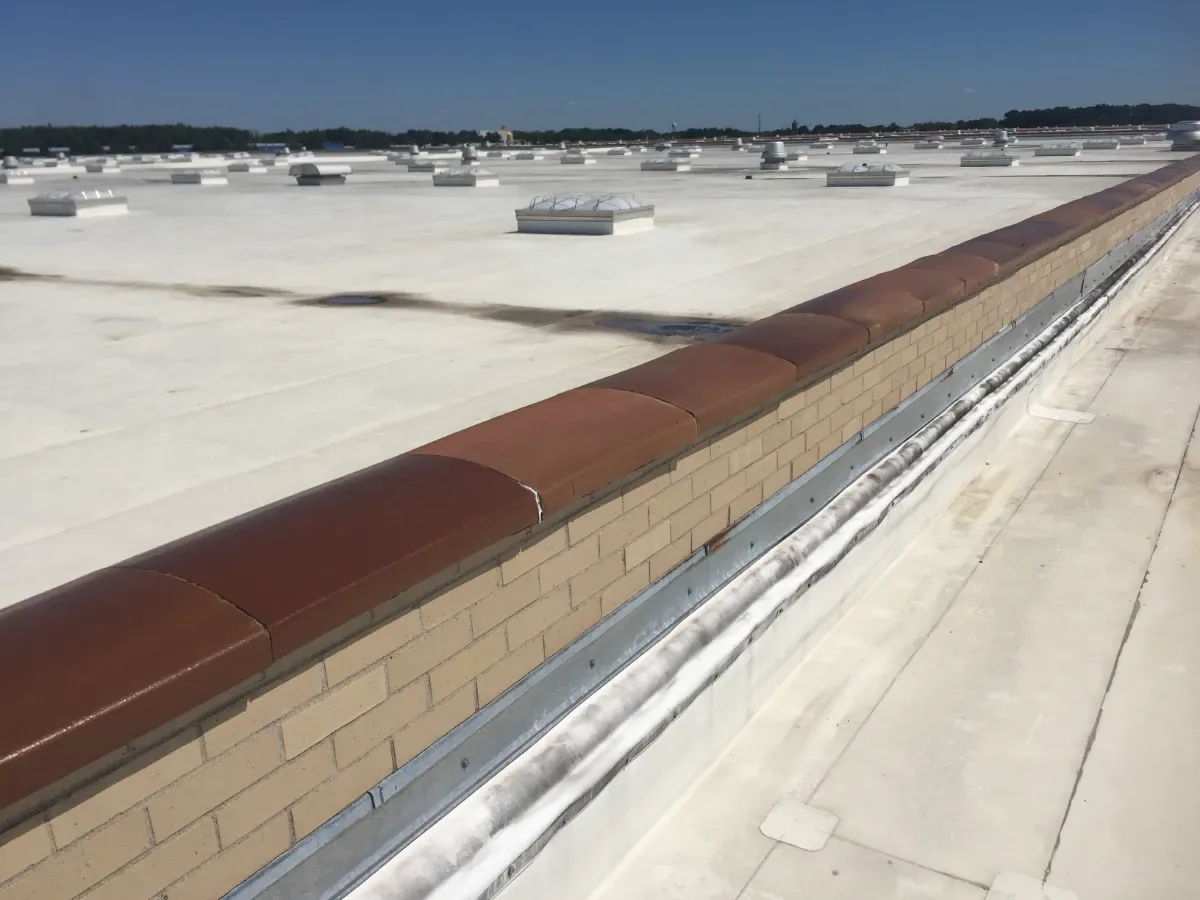
Edge Metal, Coping and Gutters