
TPO Roofing in Gastonia, NC
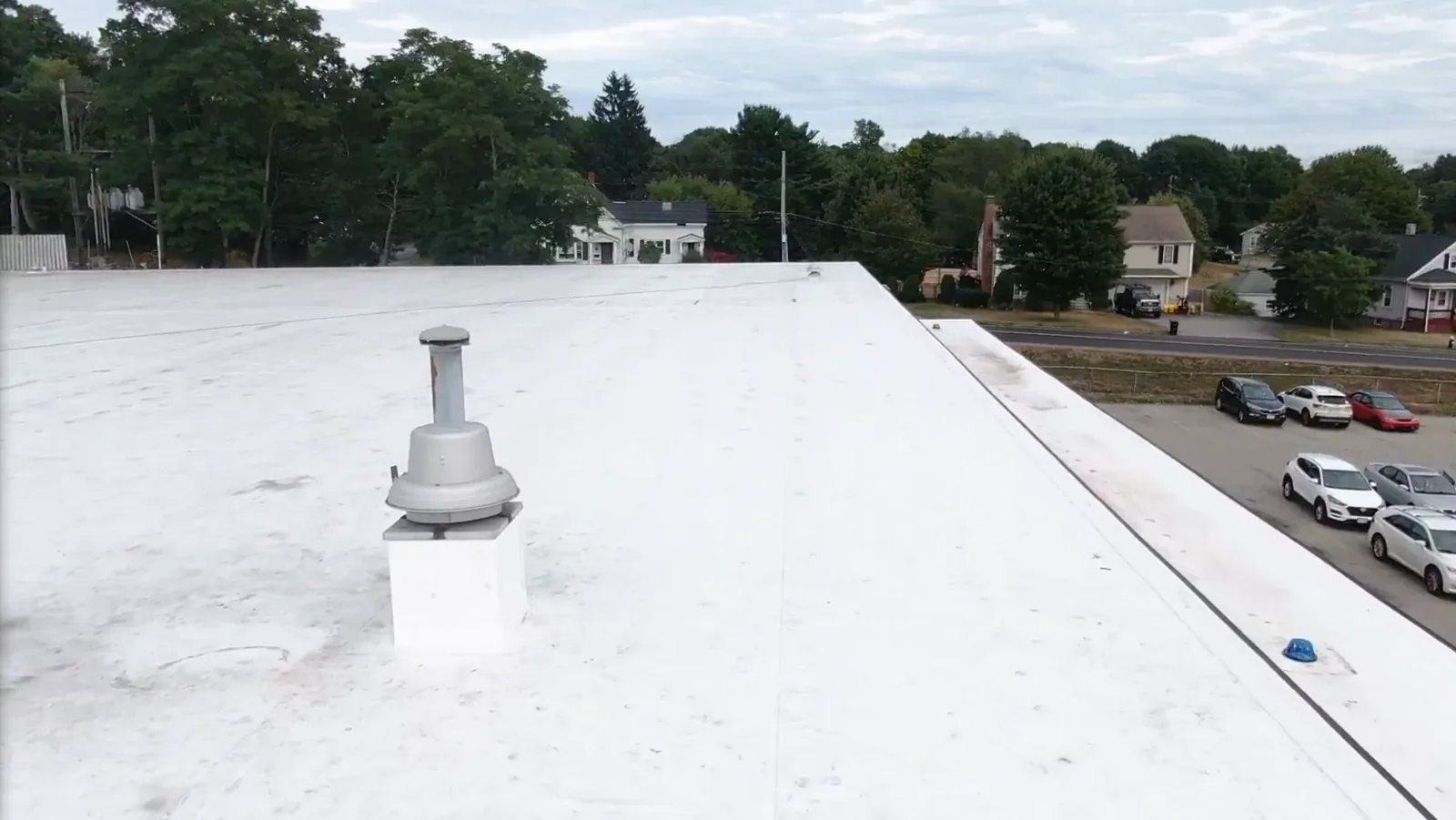
A pale line of dirt around a drain on a long white warehouse roof is a common finding on a TPO roof that has been standing a few years. It marks ponded water, and ponded water on a single-ply roof means heat, dirt and weight working on the seams. What it means for the owner is a decision date. Either the drain gets fixed this budget cycle, or the seams nearby become next year's leak.
TPO roofs in Gastonia, NC get a written account of what we found: a photo log, a plan of the seams we probed and a plain answer on repair or replace. Our emergency line stays open overnight.
Read what a TPO roof tells you
TPO is a single-ply membrane, usually white, welded at its seams with hot air. A good weld becomes one piece of plastic. A weak weld stays a bonded lap that can peel. Most TPO trouble starts at those laps, at flashings and at penetrations, so those are the first places we probe.
On a walk we press along each seam with a probe, photograph any lap that gives and mark it on the plan. We look for ponding lines, for wrinkles that show loose attachment, for fastener back-out that pushes a bump through the sheet, and for shrinkage that pulls the membrane away from a wall. The photo log is the record an owner can hand to a partner or a lender.
Attachment method changes what we look for. A mechanically attached TPO sheet is held by fasteners and plates in rows, and a back-out shows as a bump or a ridge. An adhered sheet is bonded to the board, and a bad bond shows as a soft blister or a billow. A ballasted sheet is held by stone, and displaced stone near an edge is a wind finding. Each has its own repair, and the plan names which one the roof has.
Plan for Piedmont heat and storms
Summers in Gastonia peak near 90.7 degrees on average in July, and about 44 inches of precipitation fall in a year. With snow at only about 1.2 inches a year, heat and heavy rain do more to a roof than snow load. A white membrane reflects much of that heat, but the seams and flashings still move with every hot afternoon.
Wind is the other test. On May 8, 2024 an EF-1 tornado with estimated 110 mph winds swept across Gaston County, and a warehouse in East Gastonia lost part of its roof. That storm is why edge metal, perimeter attachment and corners get checked first on any TPO roof we walk here. A single-ply roof holds or lets go at its edges, and the cost of waiting there is a lost section, not a stain.
Price the cost of waiting
A small seam repair is a modest line item. The same seam, left open through a spring storm season, lets water into the insulation, and the cost changes kind. Wet insulation has to come out, and the repair grows from a strip of weld into a section of roof. The photo log lets an owner see which stage a roof is in.
We put the numbers side by side: repair this quarter, repair next year, or plan replacement with a decision date. The price follows how much insulation is wet, access, penetrations, drains, edge metal and the system chosen. No percentages are promised. The owner picks the path with the facts on paper.
Remaining service life is the number that matters on a capital line. A TPO roof with years left deserves upkeep that lets those years arrive. Near its finish, replacement gets priced while there is time to compare bids. Midway through its life, a roof earns a limited repair; if the next inspection finds the same problem, replacement moves up.
Decide repair or replace
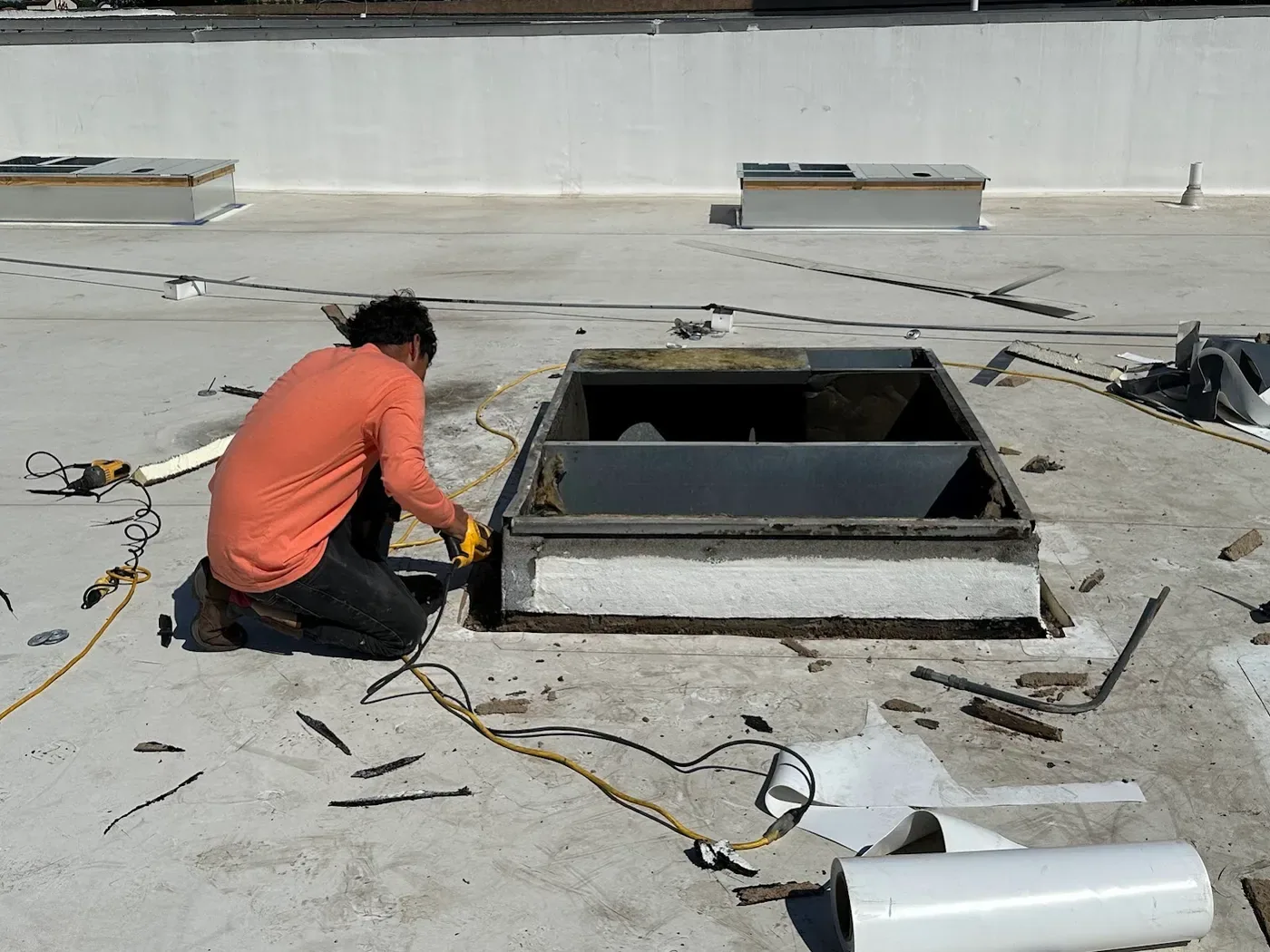
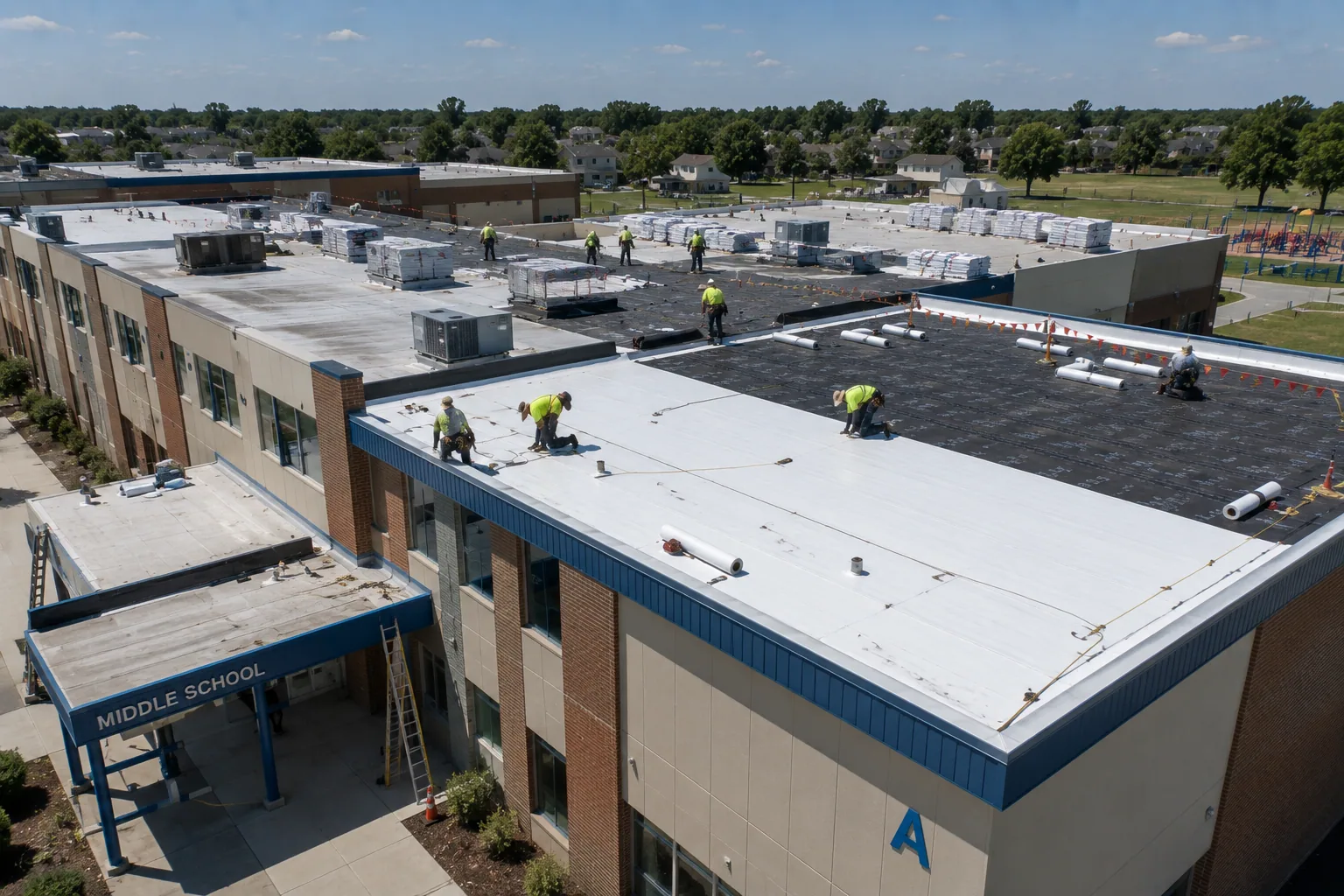
Repair is the answer while the insulation stays dry and the failures stay few. A weld patch, a cover strip or a new flashing can add years. Commercial roof repair on a dry TPO roof is often the best use of a budget line. A recover suits an old sheet that can still hold a bond over dry insulation, since a recover avoids tear-off.
Replace when the insulation is wet over a broad area or the membrane has gone brittle and cracked. A new TPO roof is usually a reflective, welded system with proper edge details, and it should be priced against the remaining service life of the old one. Compare it with PVC when chemicals or grease are present, and with EPDM for small, simple roofs.
Weather decides the calendar. Heat helps welds, rain does not, and the Piedmont spring storm season can interrupt an open roof. Each day's work is sized so every section is closed in before dark, materials are ordered early and the owner hears the decision date that keeps the project out of the worst months. A good schedule costs nothing and prevents most change orders.
Match the system to the Gaston County building
Gateway85 covers about 365 acres between Gastonia and Lowell, and its 2.4 million square feet of delivered buildings include a distribution center of 1.5 million square feet that opened in April 2023. Single-ply systems are common on large industrial buildings, and what is on any one roof gets confirmed by walking it.
Older roofs need the same plain look. Gaston County once led the country in cotton spindles in operation, and legacy mills such as the five-story Loray Mill are being converted. An old mill roof may carry several layers, and a TPO recover over it needs a core cut first. Gateway85 and the downtown Loray area are very different jobs under the same system name.
Storm records belong in the file as context. A May 2020 tornado with estimated 85 mph winds ran from Crowders Creek Road across US 321 toward the Gastonia airport, and Hurricane Hugo put 87 mph gusts over Charlotte in September 1989. Both are reasons to walk the perimeter attachment and flashings after any hard storm.
Commercial Roofing Questions
What is the first thing you check on a TPO roof?
The seams. We probe every lap, flashing and penetration, photograph any that give and log them on a plan. Most TPO failures start there, so the seam map drives the scope.
Does TPO hold up in Gastonia summers?
A white TPO roof reflects much of the heat, but seams and flashings still move. Because July highs average 90.7 degrees, welds and edges get a yearly check and drains stay clear.
Can I recover over an existing TPO roof?
Sometimes. The existing sheet has to be dry beneath and firm enough to take a bond. Cores and a moisture survey give the answer before a recover is priced.
What does ponded water do to TPO?
It adds weight, collects dirt and heat, and works at the seams over time. We log the ponded areas and recommend drain fixes or tapered insulation where it is warranted.
What do you need from the owner first?
The roof age, building use, leak history and any repair invoices. A written findings summary answers repair or replace in plain terms.
How do I know whether wind has loosened my TPO roof?
Look for ridges, billows, lifted edges and fasteners that have backed out. We probe the perimeter and corners first, photograph anything loose and log it for the file.
Topic
TPO Roofing
Roof Types
Low-slope and metal
Related Roofing Work
Commercial Roof Repair
Roof Recover and Overlay Systems