Commercial Roof Replacement in Gastonia, NC
Replacement is the most expensive roof decision an owner makes, so it should never rest on a hunch. In Gastonia, NC, the decision usually starts with a plain finding: seams opened along a parapet, a drain that holds water for days after a storm, or a layer of old patches that now covers more roof than the original membrane. We walk the roof, photograph what we find, and write down whether the building has repair years left or whether the next dollar belongs in a tear-off.
That written answer matters because commercial roofs here carry real stress. A Gaston County summer runs near 91 F in the afternoon, and the sun cooks membrane and flashing for months. Spring storms add wind and, in some years, tornadoes. An owner who waits for the leak to make the decision has handed the schedule, and often the price, to the weather.
Reading the Deck Before Pricing the Tear-Off
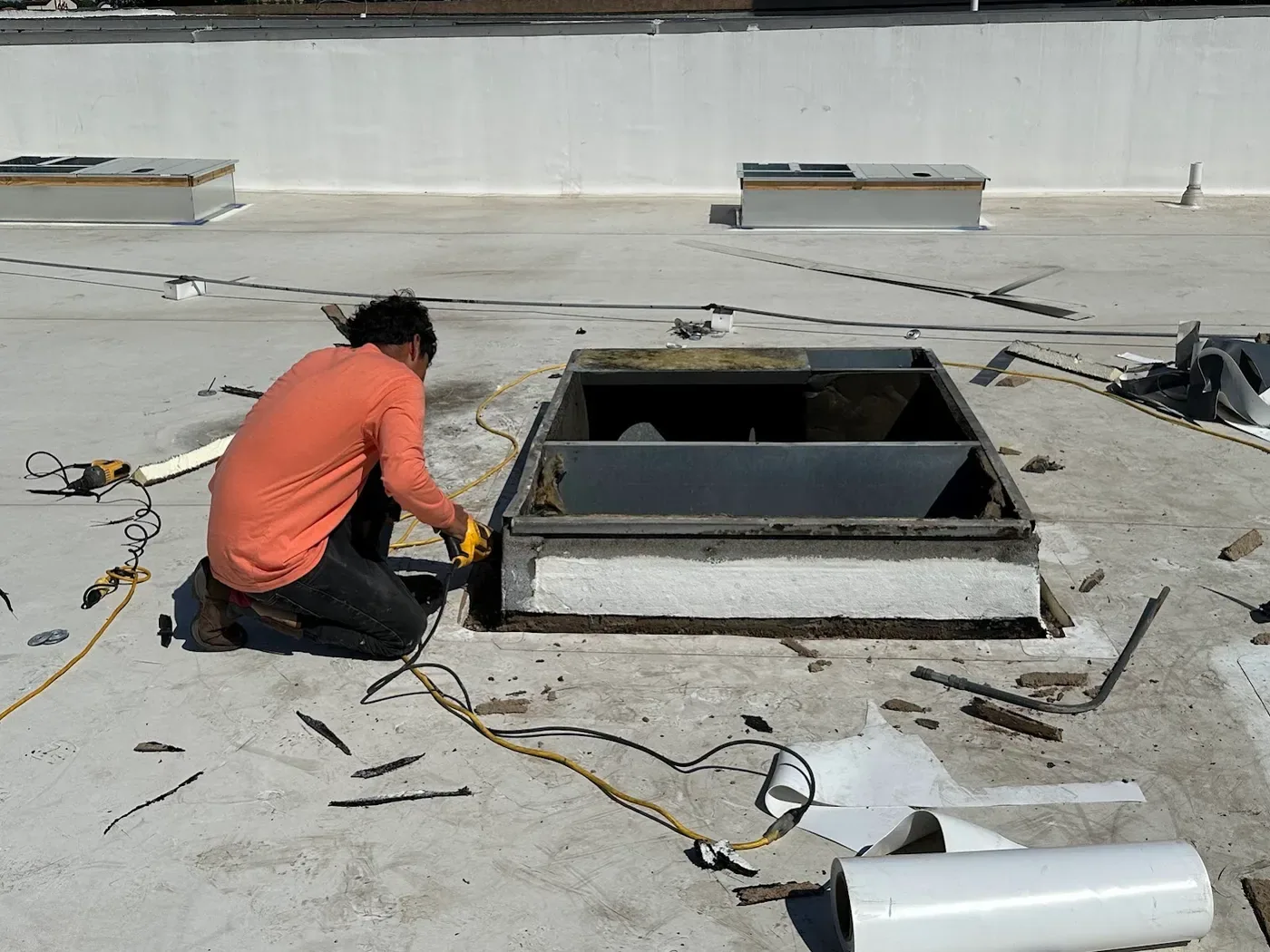
A replacement quote built from the roof surface alone is a guess. The membrane tells us how it has aged, but the insulation and deck underneath decide how much of the job is a swap and how much is a repair of its own. So we take core samples at several points, check for wet insulation with a moisture survey where the roof is large, and probe the deck at drains and low spots. Wet board that is left in place will take the new membrane down with it.
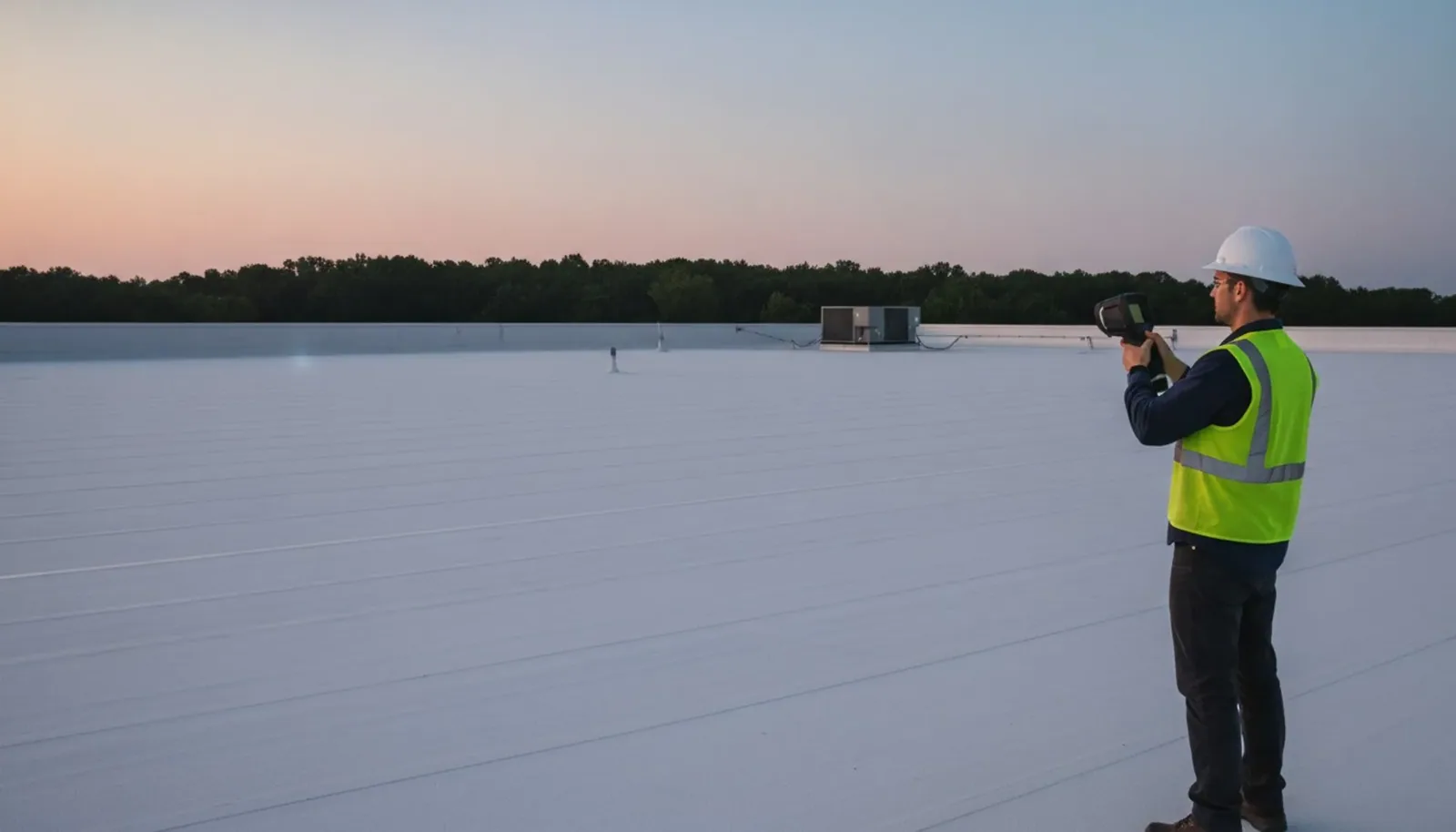
We also record what sits on the roof. Rooftop units, exhaust fans, conduit runs and old abandoned curbs all change how a crew works and what flashing costs. A roof with two older systems stacked on the deck is heavier and slower to remove than one with a single layer, so we count layers before we count days. An infrared moisture survey maps the wet areas before anyone commits to a scope.
Weighing Replacement Against One More Repair
Repair makes sense when the damage is local and the rest of the system has years left. It stops making sense when the repairs outnumber the sound areas. A good test is the spread of the trouble. Three leaks at three unrelated penetrations point to details that can be fixed. Leaks across the field of the roof, soft insulation over wide areas, and membrane that cracks when we flex it near a seam point to a system at the end of its life.
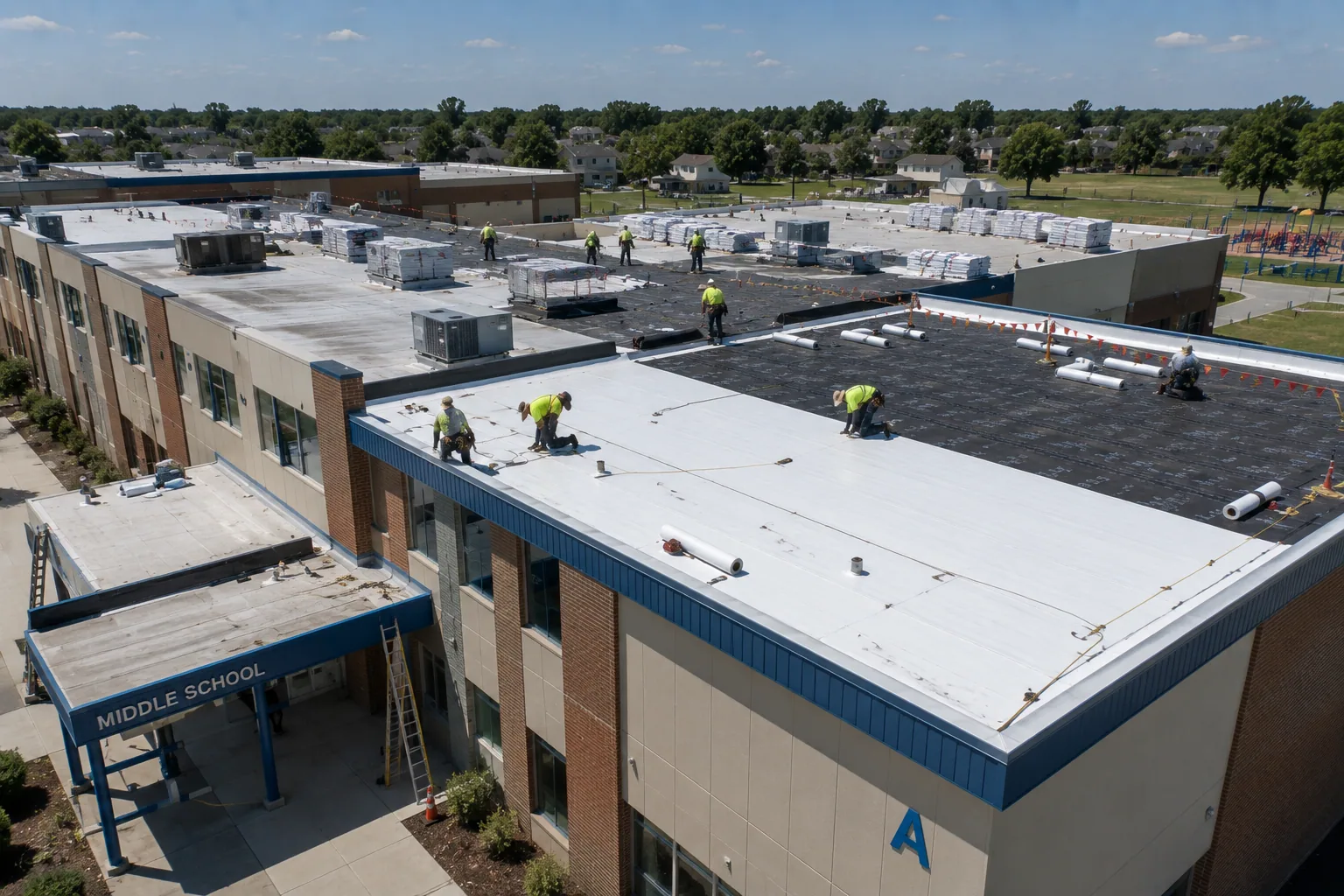
There is a middle path in some cases. If the insulation is dry and the deck is sound, a recover over the existing roof can cost less than a full tear-off and keep the building running. We will tell you plainly when that path is open and when wet insulation closes it. For owners who need a repair-only plan for a few more budget cycles, we price planned repairs next to the replacement so both numbers sit on one page.
The cost of waiting is not abstract. Water that reaches insulation spreads sideways before it shows up inside. By the time a ceiling stains, the wet area is usually larger than the stain, and what could have been a repair can become a deck-and-insulation replacement.
Budgeting the Job Line by Line
We write replacement scopes as line items so an owner or lender can see what each piece costs and where the choices are. The usual lines are tear-off and disposal, deck repair, insulation, cover board, the membrane itself, flashings and terminations, edge metal, drains and curbs, and cleanup. Deck repair is the one that moves. We carry an allowance for it and report the actual quantity after tear-off, so you pay for what is found and not for a guess.
Membrane choice shapes the budget as well. A TPO system is common on large flat roofs where reflectivity and welded seams matter, while modified bitumen may suit a roof with heavy foot traffic or a lot of small penetrations. We give you the trade-off for your building, including the expected service life range and the maintenance each one needs, so the choice is a decision and not a catalog pick.
Code is part of the scope. North Carolina still enforces the 2018 State Building Code, and the 2024 edition may be requested as an alternative method of construction under the administrative code. We confirm with the local building department which path applies before we price insulation and fastening.
Planning Around the Gaston County Calendar
Timing a tear-off in this part of the Piedmont comes down to weather windows. Late spring and summer afternoons bring fast thunderstorms, and an open roof cannot sit under a forecast of rain. We stage work in sections that can be dried in by the end of each day, with temporary seals ready at every tie-in. The May 2024 tornado that crossed Gastonia toward McAdenville and Belmont, and took part of the roof off a warehouse in East Gastonia, is a fair reminder of why a half-finished roof is a risk nobody should accept.
Building type changes the plan. Gateway85 holds about 2.4 million square feet of delivered buildings between Gastonia and Lowell, so a tear-off there is a question of crew count, crane access and where each day's section ends. The mill-era buildings around Loray and in Belmont raise a different one: the deck, drains and walls of an old mill have to be read on site before detail work can be priced. For a facility that must keep operating, reroofing an occupied building means fitting noise, access and protection below the deck around the operating day.
Setting the Decision Date and Next Steps
A decision date works better than an open-ended study. Once we hand over the findings, we suggest a date by which the choice has to be made, based on the roof's condition, the next storm season and your capital cycle. If the roof is sound enough to wait, we say so and put the first review on the calendar. If it is not, we explain what a failed winter or spring is likely to cost.
You can also bring us in before a purchase or a refinance. A lender or buyer will want a clear picture of roof capital planning for the years ahead, and a written replacement scope with a realistic timeline gives them one. The same format works for one building or a small group of them in Belmont, Mount Holly and across the Gastonia service area.
Commercial Roofing Questions
How do I know whether my Gastonia roof needs replacement or repair?
Look at where the trouble is. Leaks at isolated penetrations and flashings usually mean repair. Wet insulation across wide areas, cracked membrane in the field and repair patches that now outnumber sound sections point toward replacement. We confirm it with cores and a moisture survey before recommending a tear-off.
Can a new roof go over the old one?
Sometimes. A recover works when the insulation is dry, the deck is sound and code allows another layer. Wet insulation rules it out, because the new membrane would trap moisture. We test first and show you the results.
What does the price depend on most?
Deck condition, insulation thickness, the number of penetrations and edge details, and the system you choose. Deck repair is billed by actual quantity after tear-off, so the final figure follows what is found under the old roof.
How long does a tear-off take on a large flat roof?
Duration follows roof area, crew size, access for equipment and weather. We stage the roof in sections so each one is sealed before the end of the day, and we give you a schedule with float for rain.
Will my tenants lose use of the building?
Usually not. We plan crane picks, hoisting and noisy work around your operating hours and keep walkways and entrances clear. Tell us about sensitive areas and we will schedule work over them for the quietest windows.
Topic
Commercial Roof Replacement
Roof Types
Low-slope and metal

Related Roofing Work
Infrared Roof Moisture Surveys
Roof Recover and Overlay Systems