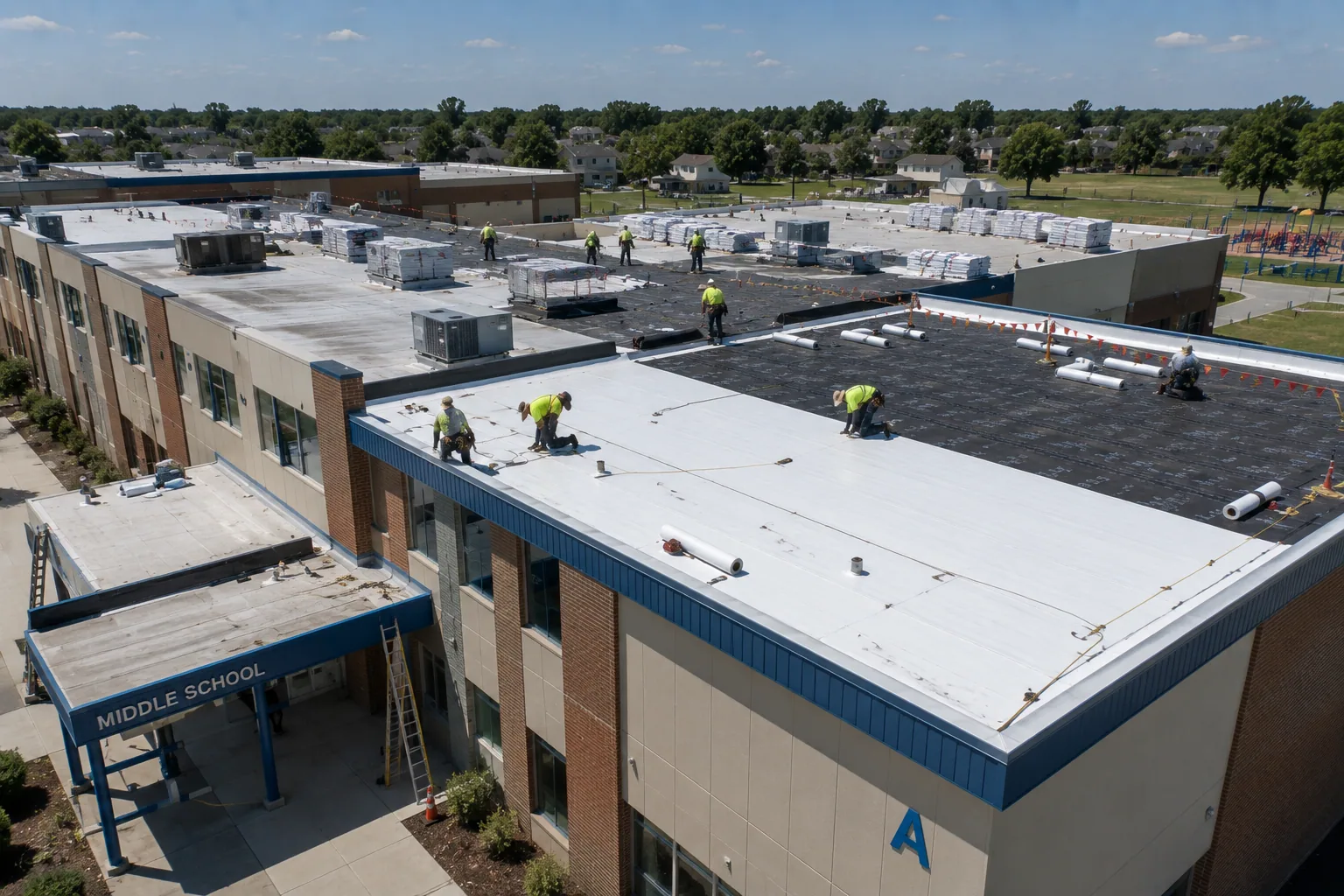
School Roofing in Gastonia, NC
A ceiling tile stained brown over the cafeteria is rarely a surprise to the custodian who has watched it for two years. What it usually means is a drain on a flat section of roof that holds water after every storm, with seams around it that have started to open. A school roof is a budget item with a deadline, because the best time to replace one is the summer break, and the decision has to be made months before the first student leaves in June.
Gaston County Schools is one of the largest employers in the Gastonia, NC area, and its buildings sit under the same hot Piedmont summers and spring storms as every other roof here. We walk the roof, photograph what we find, and hand back a written summary a facilities director can take to a board or a finance office, with the repair-or-replace question answered plainly.
Read the Roof Before the Budget Meeting
School buildings grow in pieces. A main building from one decade, a gym from another, and a classroom wing added later can each carry a different roof. We start by sorting the roof into sections by age, material, and condition, and we write down where one ends and the next begins. A section with ponded water at its drains, seams opening along a wall, and a patch from an earlier repair is a different line item from a section that is dry and sound.
That sorting is the most useful thing we hand over. It also settles an argument that tends to come up at budget time: whether the whole building needs a roof or only a part. When the sections are separated by age and condition, a board can fund the worst one first without replacing a good one by accident. Each section gets a photo log, a repair price, and a view on remaining service life. Facilities staff can lift any paragraph into a capital request without translating it first.
Price the Cost of Waiting
A deferred repair on a school roof carries a cost beyond the repair. Wet insulation spreads as water travels along the deck. Ceilings come down. A classroom is closed while the ceiling is rebuilt, and a leak over a gym floor can ruin a surface that costs more than the roof patch would have. The 44 inches of rain Gastonia averages each year gives water plenty of chances to find an opening, and a roof that is almost failing in June is often failing by October. Insulation that gets wet does not dry on its own under a membrane, so the area grows each storm. Mold in a classroom ceiling brings its own costs, from testing to remediation, and none of those costs appear in the roof budget until the day they have to be paid. A small repair now is the cheapest roof money a school will spend this decade.
We write the cost of acting now beside the cost of waiting a year. Sometimes the right answer is a repair this summer and a replacement in four years. Sometimes it is a replacement now. We say which, and why.
Plan the Summer Work Window
Most large school roof work happens between the last day of class and the first day of the new year, a window of a couple of months that has to hold design, permitting, material orders, and the work itself. Material lead times and crew schedules fill that window quickly, so the planning starts in winter. We map the sections that must be done first, such as the roof over the gym or an area with active leaks, and the sections that can wait for the next break. The plan names the crane day, the dumpster location, and the route the trucks take, so bus lanes and parking stay clear when summer programs run. A manufacturer's warranty, where one applies, is part of the same plan, since the installation has to follow its terms to be covered.
July heat near 91 F also shapes the work. Membranes soften, adhesives cure faster, and crews start early. For an occupied campus with summer programs, we agree on routes, noise hours, and areas that stay clear. When the school is not empty, occupied building reroofing rules the sequence.
Decide Between Repair and Replacement
A school roof is a long-term asset, so the decision follows the numbers. If most of the insulation is dry and the membrane has years left, a repair or a coating can carry a section forward. If an infrared moisture survey and core cuts show wet insulation across large areas, patches are money spent on a roof that is already gone. A recover can save tear-off cost where the existing roof is dry and the structure can carry another layer.
Before a replacement is priced, we confirm which edition of the state building code governs the permit. Drains, overflow scuppers, and edge metal are checked against what the code asks for, because those details are what a plans reviewer looks at first. Cost drivers are the roof area, the amount of wet insulation, the number of rooftop units to disconnect, and the access equipment the site allows. We price each one as its own line.
Check the Roof After Spring Storms
Minor roof damage followed the May 8, 2024 EF-1 tornado on several Gaston County buildings, and a May 2020 storm with estimated 85 mph winds crossed the county before it. A school that sits outside a storm track still gets a post-storm walk of its edges, rooftop units, and flashing, because wind finds loose metal wherever it blows. A school in Mount Holly, Cramerton or Lowell gets the same walk, and a gym roof near Gateway85 gets the same drain check.
We photograph findings on a plan with dates. If damage turns up, the record supports a claim and separates storm damage from older wear, which matters when the board asks what the insurer should pay.
Match the Roof to the Campus
Flat sections over gyms and cafeterias may carry a TPO or similar single-ply membrane, older wings may have modified bitumen or built-up roofs, and sloped sections over classrooms may use metal panels. Each needs different checks, and one campus can hold all three. For schools near downtown Gastonia or in Belmont, the walk settles which is which. A college building and a public building share many of the same questions.
Gym roofs deserve their own look. A long span over a wood floor means a drain failure turns into a flooring claim, so the gym roof gets a hose test on every outlet in spring and a photograph of each strainer before the first fall game.
Commercial Roofing Questions
When should a school start planning a summer reroof?
In the winter before. Design, permits, material orders, and crew booking all take time, and the summer window is short.
Can repairs happen during the school year?
Small repairs can, with a plan for access and noise. Larger work is better saved for a break.
How do you protect students and staff?
We fence the work area, keep material off routes people use, and schedule noisy steps away from class time.
What does a roof report include for a board?
A photo log, a section-by-section condition rating, repair prices, and a view on remaining service life.
Can we phase a replacement over several summers?
Yes. We rank sections by urgency and price each phase, so the budget can follow the roof.
Topic
School Roofing
Roof Types
Low-slope and metal
Related Roofing Work
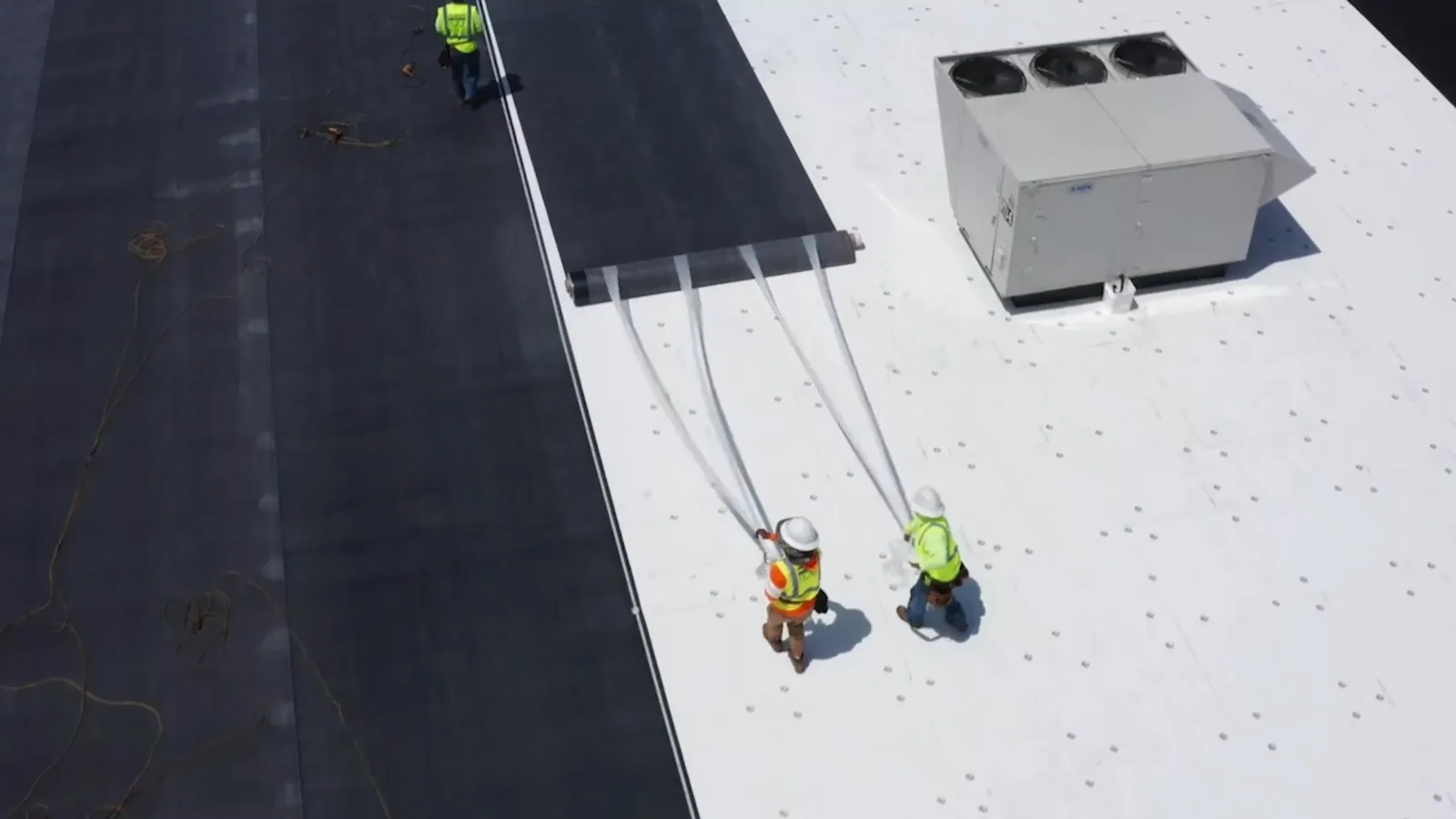
Occupied Building Reroofing
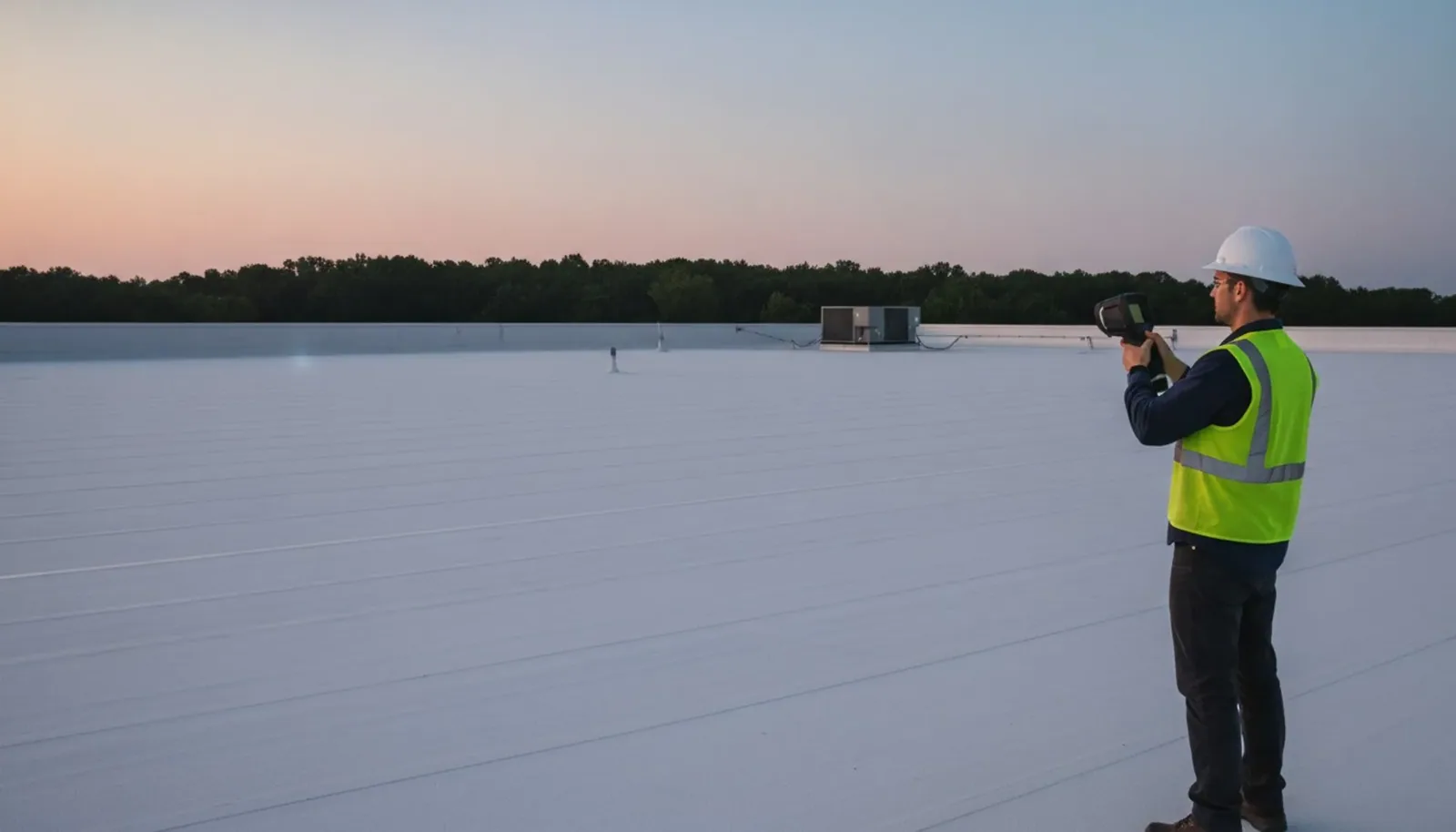
Infrared Roof Moisture Surveys