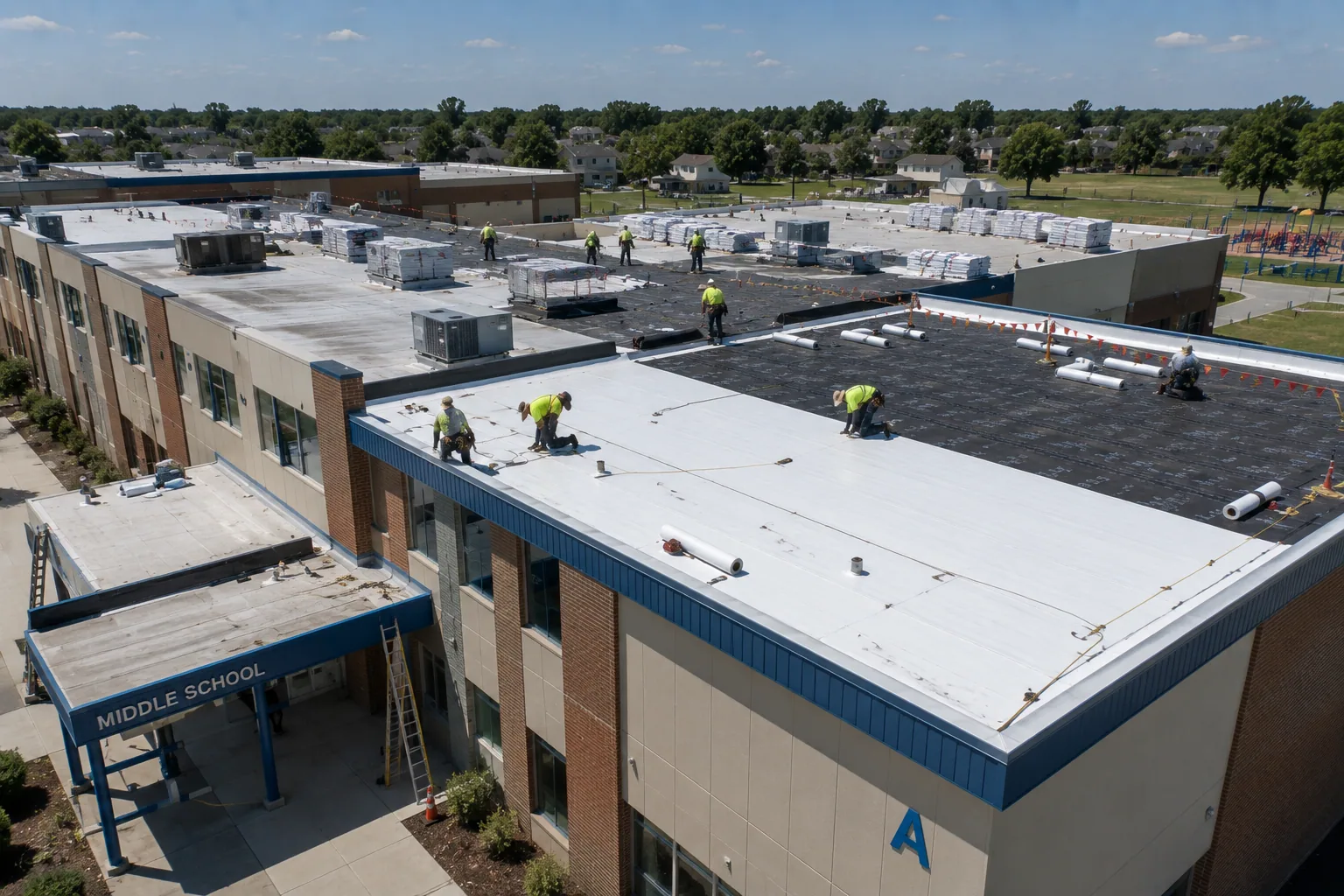
Commercial Roofing in Downtown Gastonia and the FUSE District, Gastonia, NC
A parapet seam that has opened a quarter inch on an older brick building is a finding to expect downtown, and it can have a longer story behind it than the owner knows. Water enters at the wall, runs behind the membrane and shows up as a stain two bays over. The first question is where it entered. The second is what that repair is worth on a building that may be changing hands or use.
Downtown Gastonia, NC and the FUSE District are in the middle of redevelopment. The FUSE District, short for Franklin Urban Sports and Entertainment, is a 16-acre redevelopment centered near South Hill Street and West Franklin Boulevard. Many locally owned businesses have revitalized the Downtown Gastonia Historic District around it. Roofs here carry history, new tenants and planned work, all at the same time.
Check Parapets, Walls and Old Repairs
On older downtown buildings, we start where the roof meets the wall. Parapet caps, wall flashings and masonry joints take the most weather, and they are where water usually gets behind the roof system. At the base of each wall we probe the membrane, then look at coping and mortar, noting any patch laid over an earlier patch.
A brick storefront may have a recent membrane over a very old deck, or the reverse. Cores and moisture scans show what is actually there, and the photo log keeps the record. The finding that matters is whether the insulation and deck are dry, because that decides repair versus replacement.
We also check the drains and scuppers that serve the downtown buildings, because debris from trees and neighboring roofs collects there. A clogged outlet on a roof with high parapets lets water rise against the wall flashing, and that is where many downtown leaks begin.
Read the Mill-Era Roof Before You Plan
Loray Mill's historic district spans about 69 acres and 649 contributing buildings, with a five-story brick mill dating to 1900 at its center. Across the county, legacy mills and their village housing are turning into apartments and mixed-use space. Old mill roofs bring their own questions: decks that may be heavy timber or concrete, large flat areas, parapets and monitors, and layers of past repairs.
When we walk a mill-era roof, we look for deferred repair first. Ponded water at low drains, tired seams along parapets and flashings that have been patched more than once are the typical findings. The owner of a converted building then has a clear line item: repair this year, restore in a few years or replace as part of the next capital cycle. Our roof asset management records keep that history from one owner to the next.
Mill roofs often carry mechanical equipment added long after the building was built, and each unit has its own curb and flashing. Those are the places we mark first on the photo log, because they are where later trades have worked on the roof and where unrecorded repairs hide.
Plan Roof Work Around Redevelopment
Redevelopment changes the roof schedule. Gastonia has put its former National Guard armory in the FUSE District, about 70 years old, out for developers, and the Trenton Mill redevelopment is nearby. What roofs those buildings carry today is a question for a first walk, and a first walk and a moisture survey answer the question before a purchaser or developer commits money, and a due diligence roof survey packages the findings for a lender.
For owners holding a building until a project starts, the goal is to keep water out cheaply. A focused repair of the leaking zones, drains and flashings can carry a roof through a holding period, and the written scope says what the repair does and does not cover. When a building is going to be converted, the roof plan is coordinated with the conversion schedule so the new system is not damaged by later trades.
Weigh Repair, Recover and Replacement
Downtown owners have three paths. A targeted repair fixes active leaks and buys time. A roof recover lays a fresh membrane over a roof that is dry and sound, which saves tear-off and disposal. Replacement removes everything down to the deck and rebuilds, and it is the right call when the insulation is wet or the deck has gone soft.
Heat and water arrive in the same season: Gastonia's July highs average 90.7 F and yearly rain totals about 44 inches. Cost drivers are roof area, access from the street or alley, the amount of wet insulation, parapet and wall flashing length, and the system chosen. Access matters downtown: lay-down space is tight, and a crane pick may need street coordination, which adds to the schedule.
Whatever path is chosen, the building's roof record is updated at closeout so the next owner, lender or tenant sees what was done and when.
Schedule Around Shops, Offices and Residents
Downtown buildings mix uses. A storefront on the ground floor may have offices or apartments above, and the roof sits over all of it. Work is planned from the occupants' schedules: noisy steps go in the hours the businesses can tolerate, and entrances and loading spots are protected before tear-off starts.
Street access is the usual constraint. Lay-down space is tight, a lift or crane may need a lane closed, and deliveries compete with customer parking. We agree the plan with the property manager and, where the street is involved, with the city, then post notices to neighbors a few days ahead. Spring storms bring sudden rain, so the opening each day stays small enough to seal by evening.
The closeout walk goes through every tie-in, parapet and drain with the owner. The photo log and repair record go into the roof file, which becomes the building's roof history for the next owner.
Coordinate With Nearby Areas
Downtown crews share schedules with the rest of the city, including Gastonia at large and the newer distribution roofs of the Gateway85 Industrial Corridor. A former armory raises its own questions about large, open-span roofs, and the checks are those of a National Guard armory roof.
Commercial Roofing Questions
Can an old brick building be reroofed without damaging the walls?
Yes, with care at the parapets and tie-ins. We inspect the masonry and coping first, and repair or replace what is loose before the new flashing goes on. Walls that need mason work are flagged for the right trade.
What do you check on a building about to be sold?
Moisture in the insulation, the condition of the deck and the cost of the next five years of roof work. The summary is written for a buyer or lender, with photographs for each finding.
Do you work around downtown events and traffic?
Yes. Staging, lifts and deliveries are scheduled with the property manager and with the city where street access is involved, and we avoid the busiest hours for lane closures.
Is a coating an option on an older roof?
Sometimes. It works on a dry, sound roof, and the moisture scan decides. A coating over wet insulation shortens the life of the whole roof, so we do not coat until the evidence supports it.
How do I keep roof records for a building I may sell?
Keep the photo log, repair invoices and moisture results in one file. We can set that up on the first walk, and it moves with the building to the next owner.
Topic
Downtown Gastonia and the FUSE District
Roof Types
Low-slope and metal
Related Roofing Work
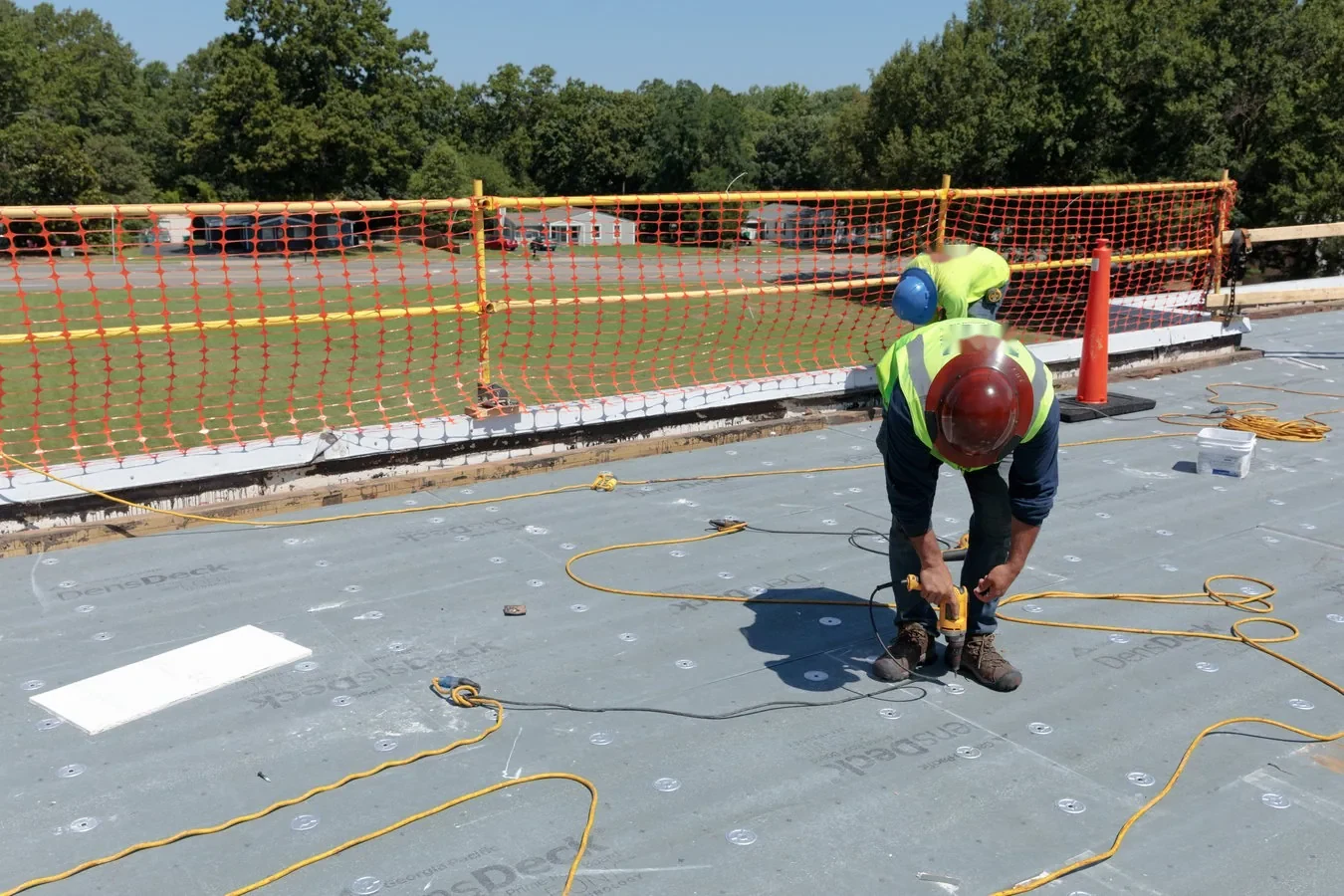
Roof Asset Management
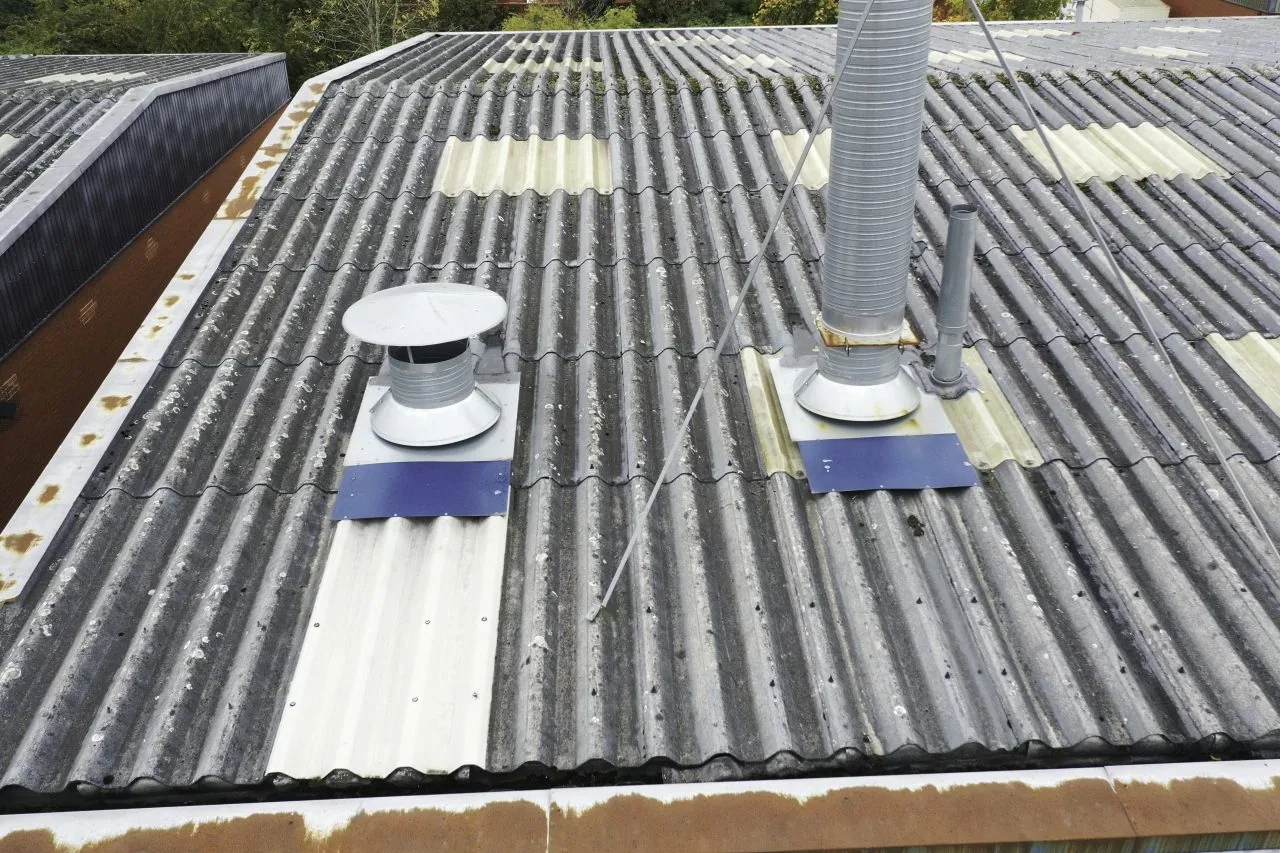
Due Diligence Roof Surveys