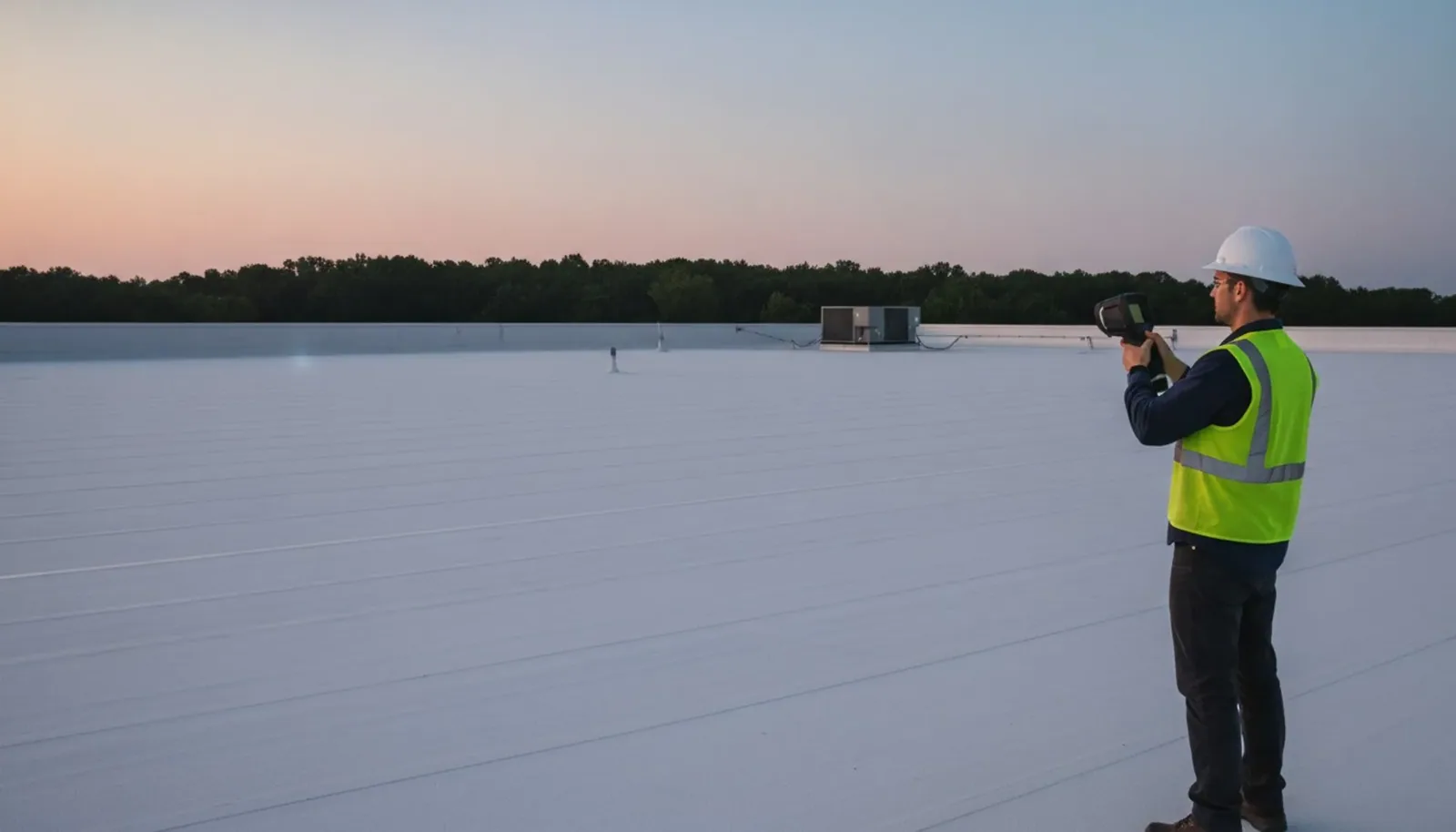

National Guard Armory and Readiness Center Roofing near Gastonia, NC
An armory roof gets used hard in short bursts and ignored in between. The finding a roofer sees is typical of buildings that are busy one weekend a month and quiet on the others: ponded water at a drain nobody checks between drill weekends, a drip over a drill floor, flashing cracked at a wall that has not been looked at since the last repair. What it means for the owner, the state or the unit, is a budget line and a calendar problem. A leak that appears on a drill weekend is a mission problem, and a repair has to fit around the training calendar.
Guard property in the Gastonia region includes a Gastonia site, a Belmont site and a Kings Mountain site, all within about 12 miles. July heat near 91 F, steady rain and a spring storm season set the conditions, and the May 2024 EF-1 tornado is the recent proof. We walk the roof, photograph what we find, and write findings a facility manager can take up the chain.
Know the Sites in the Region
The Gastonia property headquarters an engineer battalion and sits on just under six acres. Belmont's Guard property is nearly the same size and serves an aviation detachment, Kings Mountain's is under three acres, and a larger property on West Boulevard in Charlotte houses a brigade headquarters. Each building on each property has its own roof, age and needs.
The first walk records the system and reports what is found. The Belmont and Kings Mountain properties are small, and a small property can have a roof that is small in area but dense in detail: several wings, a few rooftop units, and the patch history of everyone who has maintained it. If a site holds more than one building, each building gets its own findings. A military maintenance facility roof raises different questions again.
Schedule Around Drill Weekends and Training
An armory runs on a training calendar. Drill weekends, annual training, and unit events set when the building is full and when it is empty. Roof work belongs in the empty weeks, with the plan agreed ahead with the facility manager. We map the weeks, schedule the loud steps and the lifts for weekdays between drills, and make sure the roof is sealed before a unit returns. The plan names the date the crane arrives, the day debris leaves, and the last day the roof is open, so the unit commander can follow the sequence day by day. Deliveries of material are timed for weekdays, when the gate is staffed and the lot is clear. If a leak appears on a drill weekend, we can mobilize for temporary protection and plan the permanent repair for the next gap.
Plan for Gate, Escort, and Records
A Guard facility is a controlled site. Contractors may need background checks, badges, an escort, and vehicle and material inspection. Some areas, such as arms rooms and secure storage, are off limits. We ask for the facility's access rules before the walk, put the crew list and vehicle list together in advance, and confirm each requirement with the facility contact. Plan on the access steps taking longer than the first roofing day, and put them at the front of the schedule. Tools, fuel, and some adhesives may need approval, and we ask early so a crew is never standing idle at a gate. A pre-work meeting, where the facility asks for one, is attended by the crew leader with the plan in hand. A federal or state project may name the Unified Facilities Criteria, and the specification is read ahead of pricing so any clash with the existing roof is flagged early.
Read the Long Span and the Drill Floor
Armories usually have a large drill floor with a high, open roof, plus office and support wings with lower roofs. The big roof sheds water to its edges and a few drains. The lower roofs have curbs, vents, and rooftop units. We walk both, check drains and scuppers, probe seams and laps, and mark ponded water. A ponding water repair is often the cheapest fix on the list. Where the structure is old, we check parapets, through-wall flashing, and mortar joints above the roofline. Gutters and downspouts are cleared and flushed, because a downspout that discharges against a masonry wall can saturate the wall, and the stain appears inside weeks later. We note rooftop antennas and equipment mounts, which add penetrations, and record any exclusion zones on the plan before the crew steps on the roof.
Roof access on a Guard property is rarely casual. A hatch may sit inside a secure area, a fixed ladder may climb a wall that belongs to a controlled space, and the escort may be free only during set hours. We walk the access route with the facility manager before the first visit and note every door, hatch and key holder on the plan. That list decides how many people can be on the roof at once and how long a walk can last. It also goes into the scope, so a bid never assumes a lift or a ladder the site will not allow.
Decide Between Repair and Replacement
A roof with dry insulation and a sound membrane or panels can be repaired and maintained. A roof with wet insulation, repeated patches, and deck damage is a replacement, and the funding path matters because public projects move on their own schedule. An infrared moisture survey and core cuts give the answer. A federal or state project may follow its own criteria rather than the local code, so we ask which governs before anything is priced. Roof area, access height, wet insulation, penetrations and time spent on access steps are priced separately. For a state-owned building, a clear scope, core data, and a photo log help the funding conversation, and our summary is built to be attached to a request.
Check the Roof After Storm Season and Think About Reuse
The May 2024 EF-1 tornado is why a post-storm walk of edges, equipment and flashing belongs on every armory calendar. The older armory in downtown Gastonia's FUSE District, which the city has marketed to developers, is a reminder that armories change hands and their roof records should travel with them. Facilities near Gastonia, Belmont, and Kings Mountain can request the walk, and a government building follows many of the same budget steps.
Commercial Roofing Questions
Can work happen around drill weekends?
We can. We schedule between drills, seal the roof before units return, and keep an emergency plan for leaks that appear during one.
What access rules should we expect?
Background checks, badges, escorts, vehicle inspection, and restricted areas. We confirm each requirement with the facility contact and put the crew and vehicle lists in before the first day, so the gate is not where the schedule slips.
Do you follow UFC criteria?
When the project specification names them, we read them first and document each step against them, with photographs at each inspection point.
How do you handle secure rooms?
We keep the crew out of restricted areas and protect the interior below the work zone. The facility manager marks the restricted rooms on the plan, the crew leader walks the line before work starts, and nothing is carried through a secure space.
What documents reach the facility manager?
A dated photo set, a ranked findings list, repair prices and a replace-by estimate. One format fits a single armory or a whole set, so a state office with several sites can compare roofs and see where money goes first.
Topic
National Guard Armory and Readiness Center Roofing near Gastonia, NC
Roof Types
Low-slope and metal

Related Roofing Work
Military Hangar and Aircraft Maintenance Facility Roofing near Gastonia, NC
Ponding Water Roof Repair