
Ponding Water Roof Repair in Gastonia, NC
Water standing on a flat roof two days after a rain is not a puddle, it is a finding. On a long warehouse roof in Gaston County it usually sits at the same spot after every storm, a drain at the low end of a run, a sag between joists or a scupper set a little too high. Each time it sits, it presses on the seams, grows algae on the sheet and adds weight the deck did not count on. A roof can look fine from the parking lot and still be holding a pond of water over a single seam.
The owner's question is whether to fix the drain this year or live with the pond. The facility manager, the landlord and the lender each ask it differently. We put both costs on paper, and the second one is the larger.
Measure the Pond Before Calling It a Problem
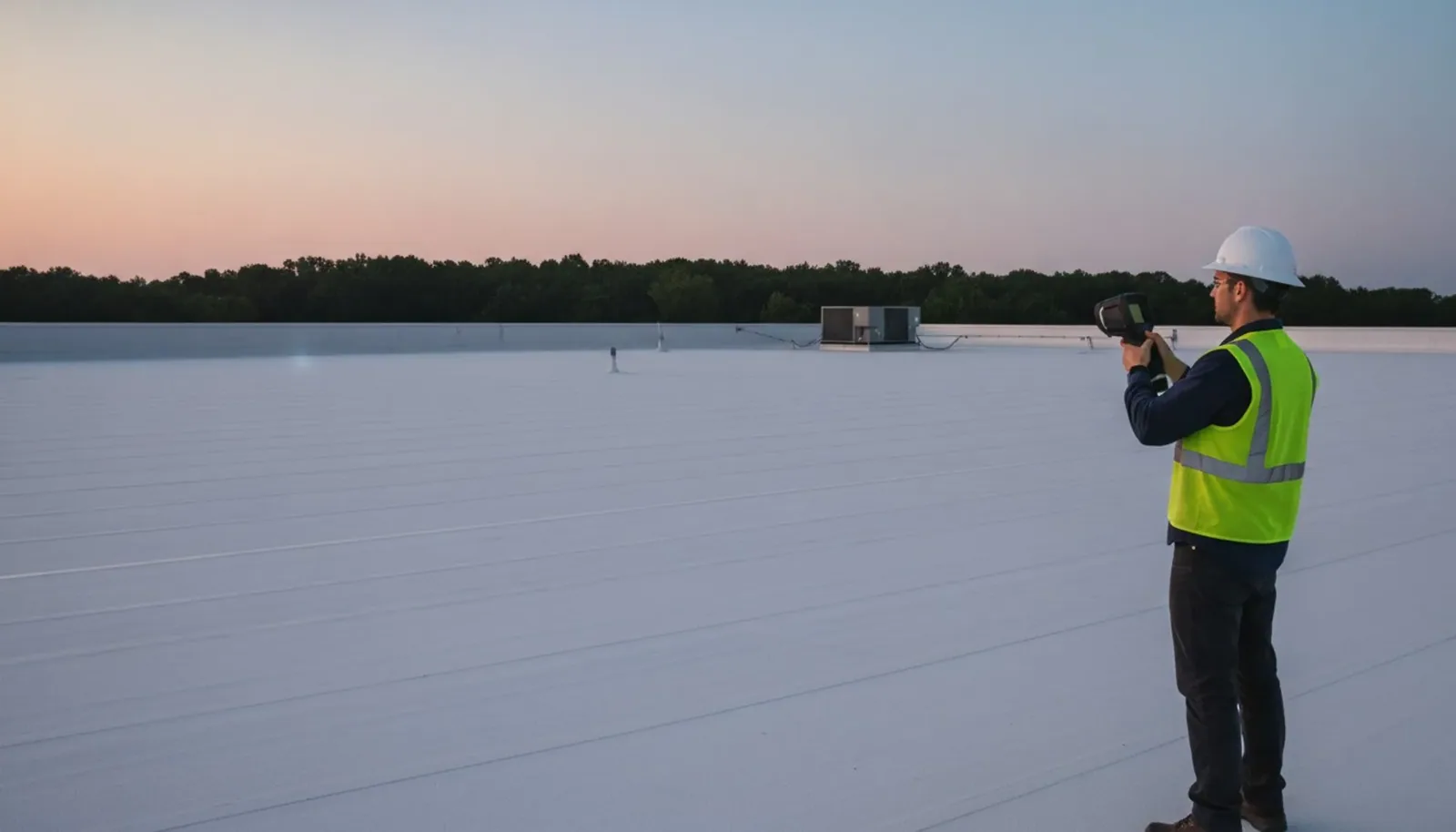
A shallow film that dries by the next day is normal on many flat roofs. A pond that stays, or that grows after each storm, is the one we care about. We walk the roof after a rain, note where water stands, measure how deep it gets and how long it lasts, and mark the area on a plan. We check whether the pond sits at a drain, between drains or along a wall, because each location points to a different cause.
Then we read the roof around it: seams at the pond's edge for softness or lifting, surface staining and algae, blistering on older systems and signs of wet insulation beneath. The photographs go in a log with dates so a second visit can compare. A hose test on a dry day confirms what the rain showed: we run water at the suspect drain and watch how fast it moves, since a drain that backs up under a steady flow will back up in a storm.
Find the Cause: Drain, Slope or Deck
Ponding has three common causes. The first is a drain that is clogged, set high or missing from the low point, and it is the cheapest to fix. The second is slope that was never enough, or that insulation was supposed to provide and did not. The third is deck deflection, where framing has sagged under load or equipment and created a bowl. We check each: we clear and flush the drain, level across the pond to find where the low point sits and look at the deck from below where access allows.
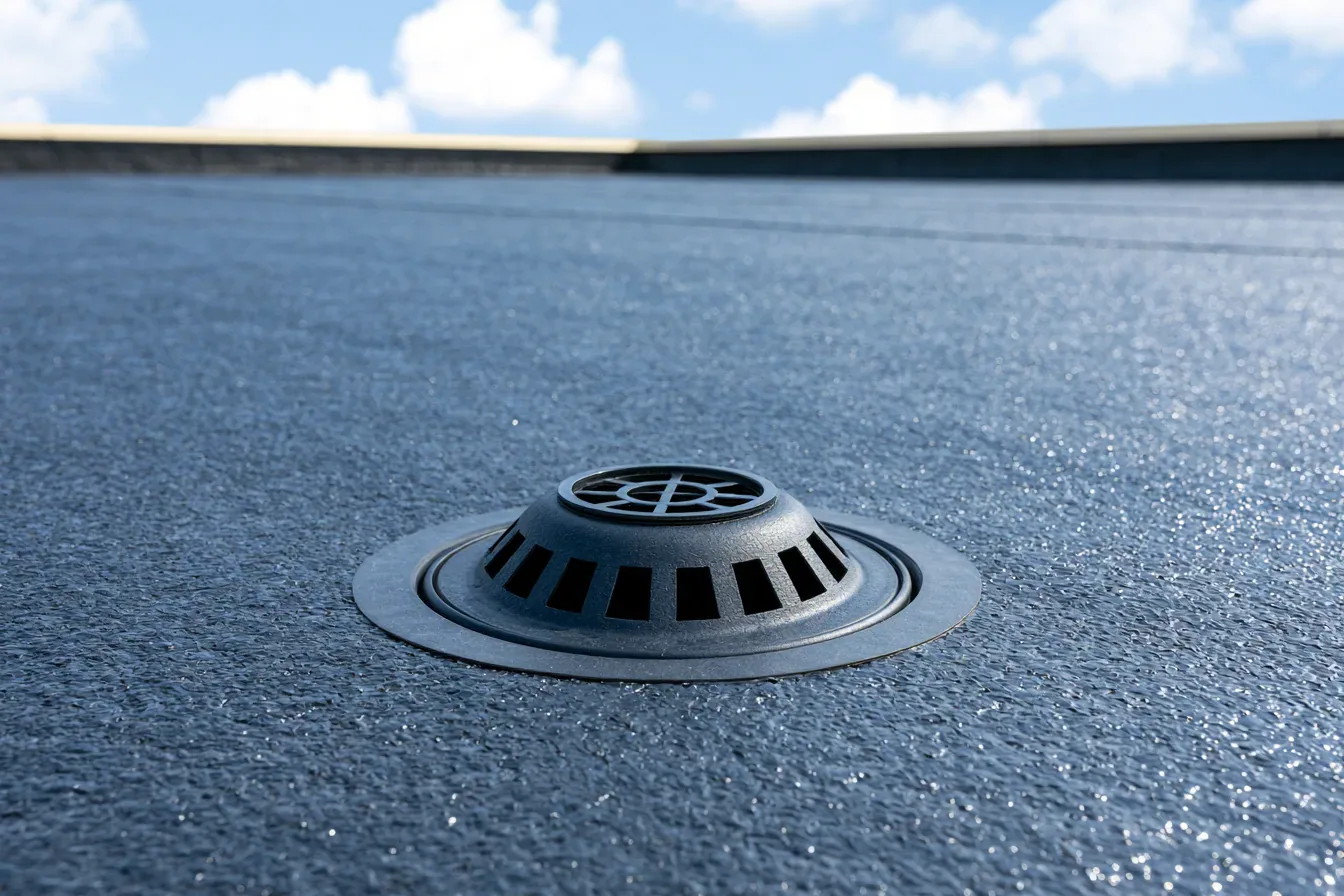
A drain and scuppers repair can include cleaning, re-flashing a drain bowl, resetting it lower or adding an overflow. Where slope is the problem, tapered insulation or a new drain moves the water.
We also look at what discharges onto the roof. Condensate lines, rooftop unit drains and downspouts from an upper roof can dump onto a lower membrane and create a pond that has nothing to do with slope, and the fix is a splash pad, a hard-piped line or a rerouted discharge. Debris is the other constant: leaves, windblown trash and gravel from neighboring roofs collect at drains, and a strainer that is cracked or missing lets that debris into the line.
Count the Cost of Letting It Sit
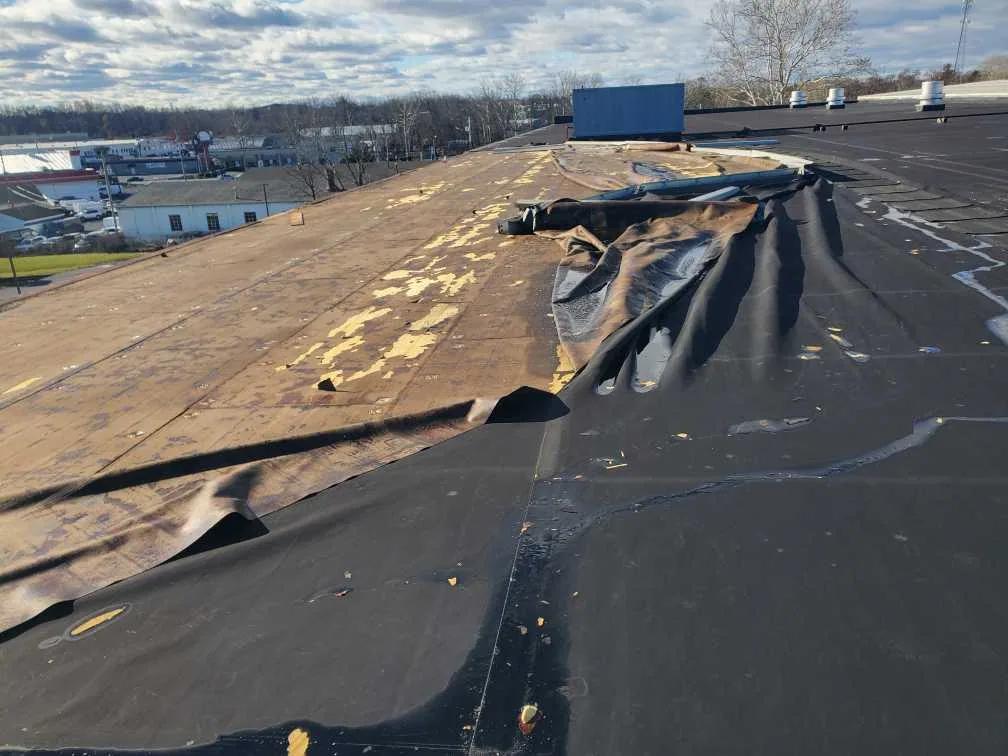
Ponding does damage slowly. Water on a seam keeps pressure on a weld or lap, and some membranes soften or lose surface under standing water. Algae and dirt collect in a pond and shorten the life of the sheet. Insulation under a leak-prone pond can take on water for months before a stain shows indoors. Weight is the other factor: standing water is heavy, and a roof that holds shallow ponds across a large area carries more than it was designed for.
Rainfall near 44 inches a year keeps ponds filling often. If a pond has been in place for three years, the likely cost is not a drain repair. It is wet insulation and a section replacement. If it has been in place for three weeks, a drain repair may end the story. That difference is the number we put on the page. For a building with a lender or a landlord, the report also states whether the pond is cosmetic, a maintenance item or a capital item, so the cost lands on the right line of the budget.
Choose the Fix That Matches the Cause
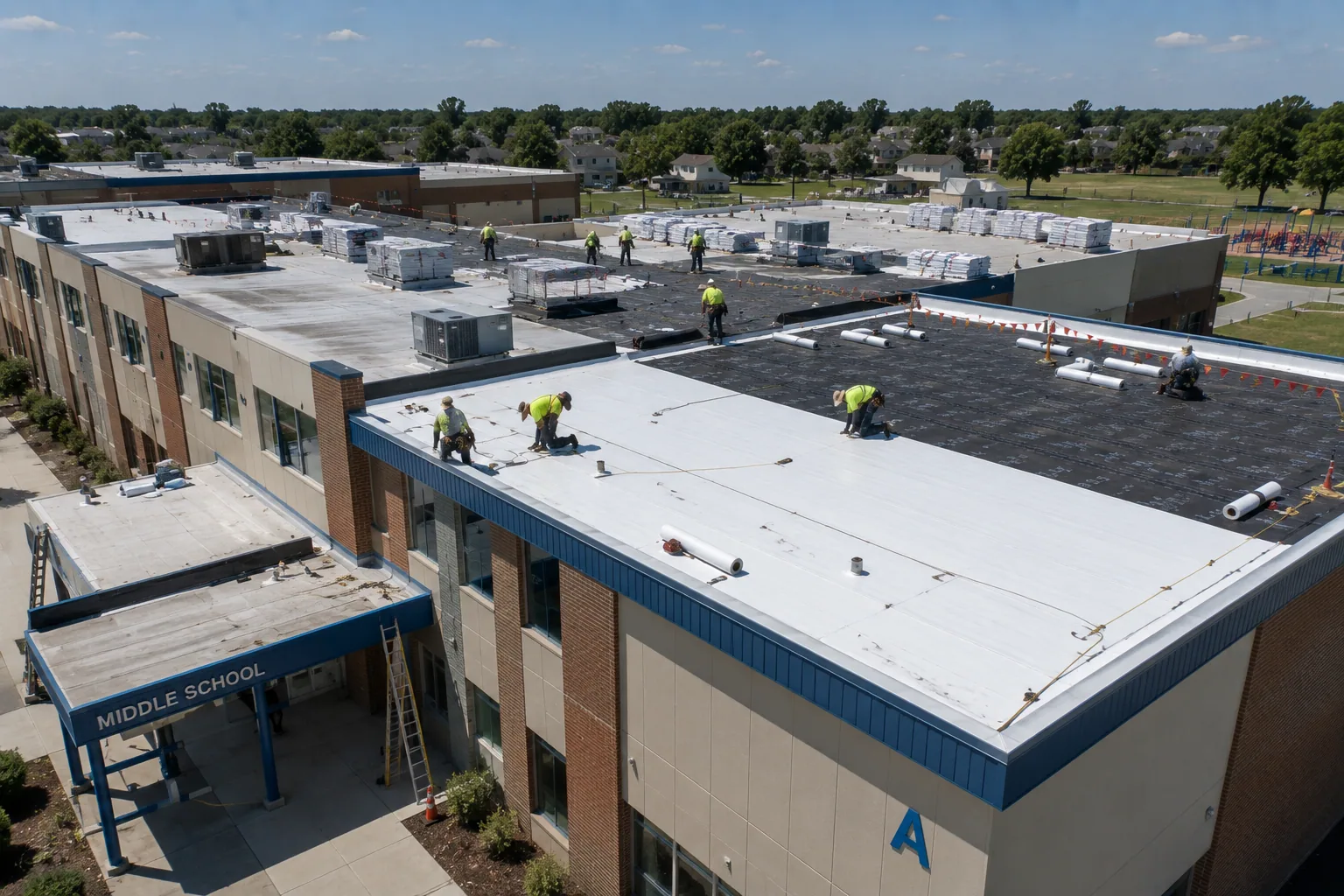
For a clogged or high drain, the repair is cleaning, resetting and re-flashing. For a pond away from a drain, the options are a new drain with a sump, a cricket or tapered insulation to move water to an existing drain, or a recover with a sloped system. For a deck that has sagged, a structural opinion comes first, and the roof follows. Where the membrane under the pond is already damaged, we repair or replace that section while the fix is made, since there is no point correcting the slope and leaving a weak sheet. If wet insulation is found, an infrared moisture survey outlines it so the cut-out is limited to what is wet. The new insulation goes in with the slope built in, the membrane is flashed to the drain and the repair is tested with water before the crew leaves.
Related details such as seam failure repair and membrane puncture repair often come with the same visit.
Look for Ponds on the Buildings Most Likely to Hold Them
Big flat roofs hold the most water. On the wide roof planes of industrial buildings like those at Gateway85, a single blocked drain can put inches of water on a large area. Stores and shopping centers around Eastridge Mall and along New Hope Road may have long runs with equipment curbs that interrupt drainage. Old mill-era roofs near Loray can trap water against parapet walls. Rock Hill, to the south, averages about 42.6 inches of precipitation a year, so the same issue appears across the service area.
Schedule the Fix Before Storm Season
The best time to correct ponding is before the spring storms, when the roof is dry and the crew can reach drains and seams safely. We schedule drain work and small slope corrections for that window and plan larger work, such as tapered insulation, with a recover or a replacement. A short preventive maintenance visit before each wet season keeps drains clear, which is the most reliable way to prevent ponding in the first place, and a written drain log shows the owner and the carrier that the care happened. Owners can pair the visit with a roof condition report to document every pond and every drain.
Drain work is quick.
Commercial Roofing Questions
How long can water sit before it matters?
Water that remains more than about two days after a rain deserves a look. A pond that is still there after every storm is a finding.
Can ponding void a roof warranty?
Some warranties exclude or limit coverage for standing water. We read the terms and tell the owner what applies.
Is tapered insulation the only fix?
No. A cleaned or reset drain, an added drain or a cricket often works. The cause decides, not the habit of the contractor.
Does ponding mean the deck is failing?
Not always. It can be a drain or slope issue. We check the deck from below where we can reach it before deciding.
Will a coating fix a pond?
It can protect the surface against standing water if the substrate is sound, but it does not move water. Drainage comes first.
Topic
Ponding Water Roof Repair
Roof Types
Low-slope and metal
Related Roofing Work
Roof Drains and Scuppers
Roof Recover and Overlay Systems