Emergency Commercial Roof Repair in Gastonia, NC
An EF-1 tornado with estimated 110 mph winds crossed Gaston County on May 8, 2024, lifting part of a warehouse roof in East Gastonia and leaving minor roof damage on several other buildings. A storm like that comes down to two questions for the person holding the keys in Gastonia, NC: who can get a tarp on this tonight, and what should be written down while the damage is fresh?
Emergency response is set up for that call. The phone is answered at every hour, on nights, weekends and holidays alike. The aim of the first visit is to stop water from reaching the interior and to record the damage while it is still fresh. The permanent repair comes next, and it is priced separately once the roof is dry and the facts are known.
Making the Roof Safe in the First Hours
The first hour is about three things: safety, water and records. Before anyone steps on a storm-damaged roof, we check for compromised decking, loose edge metal and lifted membrane that could shift underfoot. We look for downed power lines and for rooftop equipment that has moved. If the roof is unsafe, we say so and use other means to dry in.
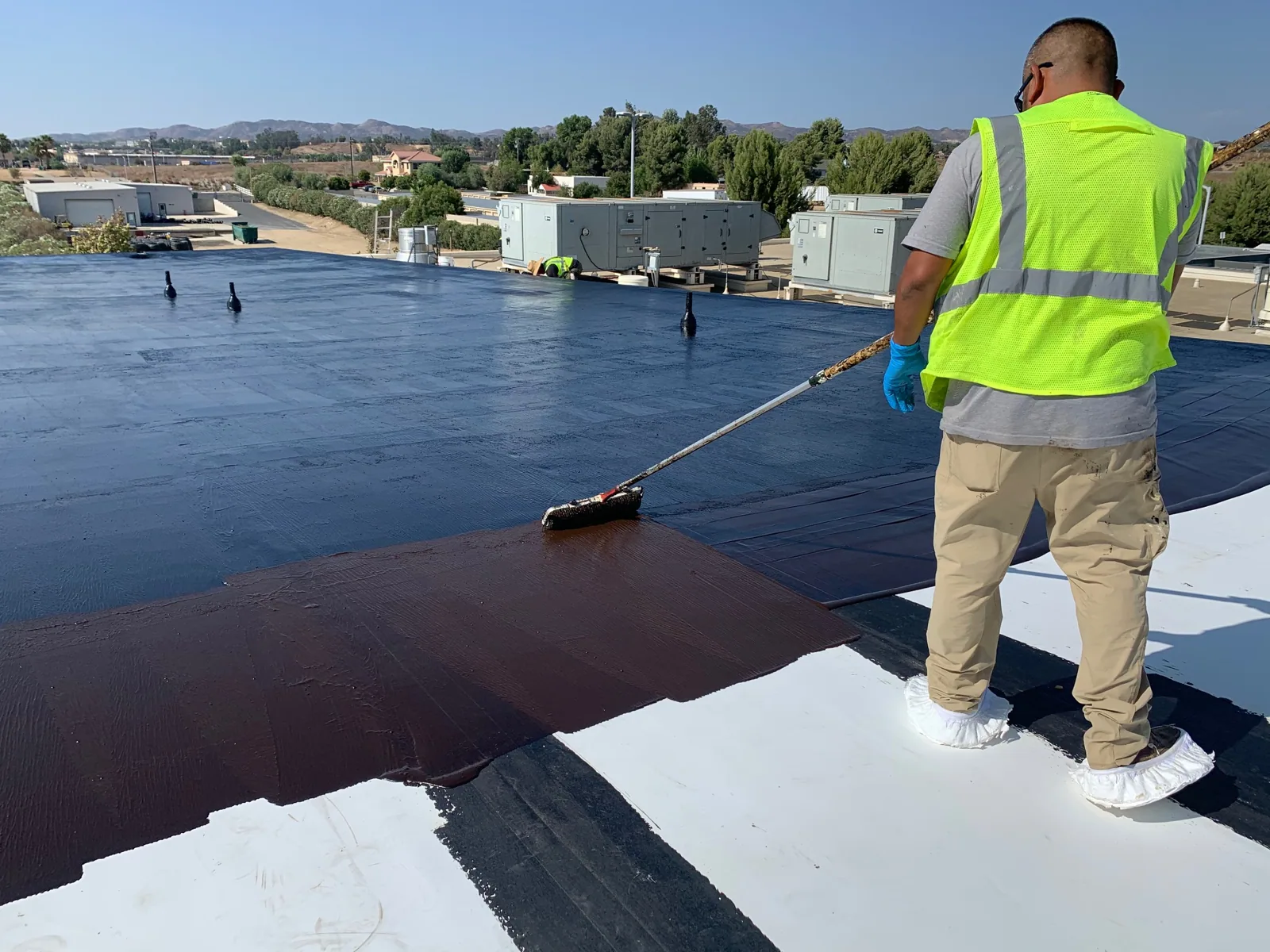
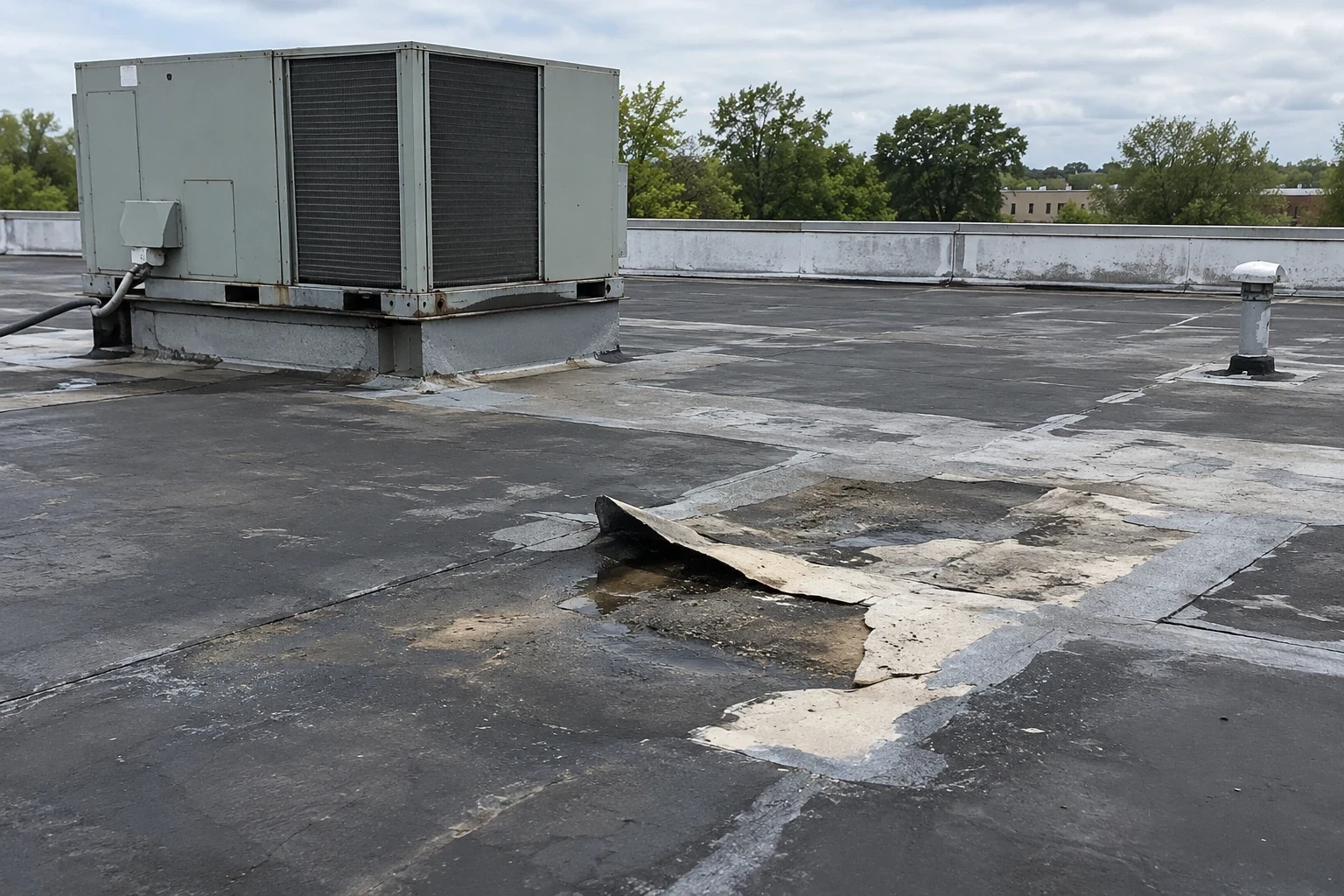
Dry-in methods depend on what the storm did. Torn membrane may be covered with a reinforced temporary sheet, mechanically fastened and sealed at the edges. An open section of deck may need plywood before the tarp. Failed flashings and displaced coping can often be secured with temporary metal and sealant. The goal is a cover that survives the next round of wind and rain, not a cosmetic one. Temporary materials are fastened into sound deck and sealed at every edge, because a tarp that is only weighted down becomes a sail in the next gust. Where the loss is wind related, wind damage roof repair follows as the permanent step.
Recording the Damage Before It Changes
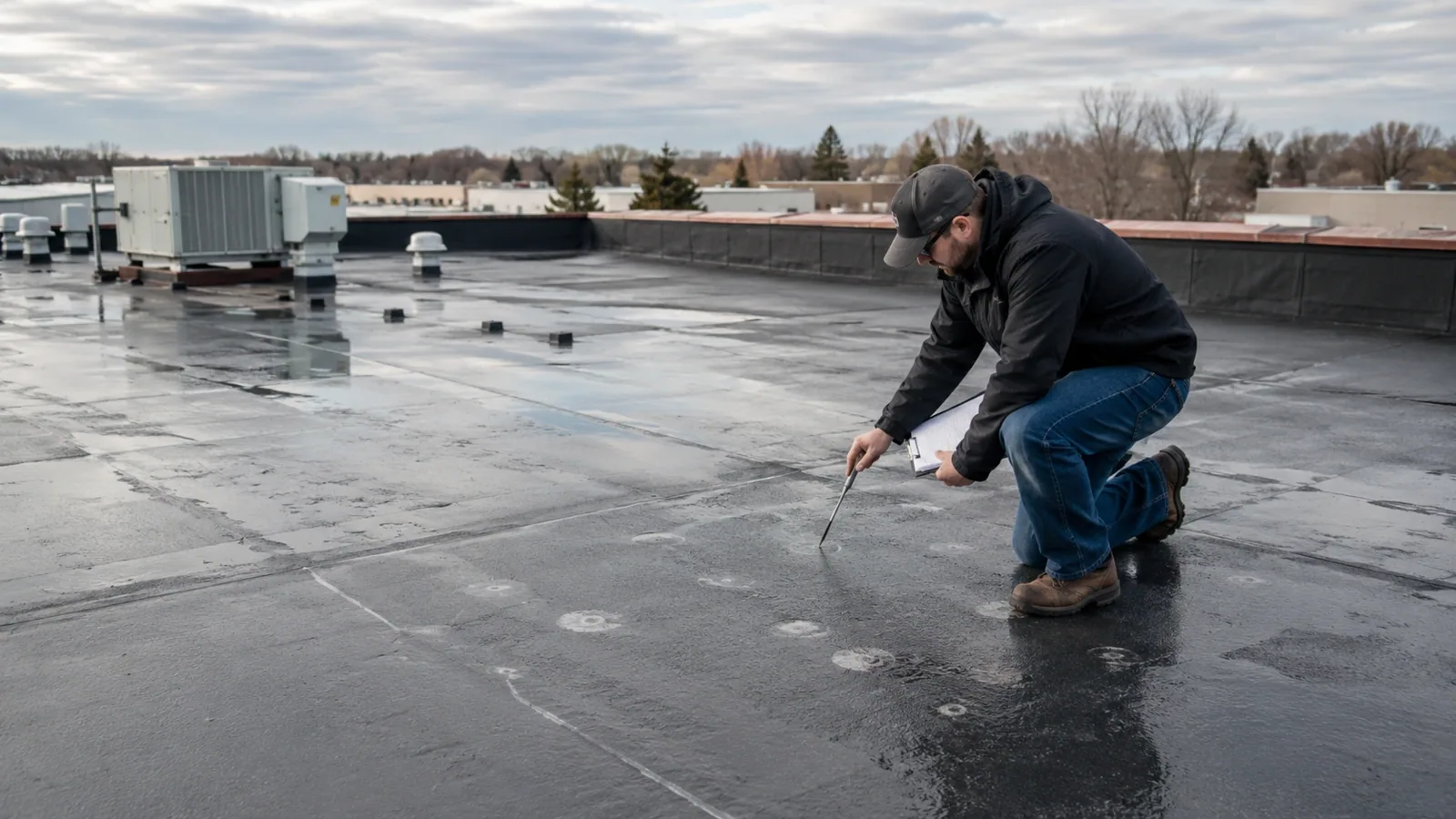
Storm damage disappears quickly. Debris is cleared, tarps cover the evidence, and weather washes away marks. So we photograph and note everything on arrival: displaced membrane, creased edge metal, impact marks, torn flashings, broken rooftop equipment and the condition of the surrounding roof. We mark locations on a sketch so the record ties each photo to a place.
We also look at what the storm did not touch but may have loosened. Edge metal that has shifted a quarter inch, a seam that has lifted slightly and a rooftop unit that has moved on its curb are the items that fail in the next rain, and they are easy to miss in the rush to cover the obvious opening. Listing them now keeps them out of the second emergency, and it gives the owner a short, specific list to price while the building is still under temporary cover.
That file is the starting point for an insurance claim. It also supports a warranty notice if the roof is covered. We can hand it to your adjuster, and our claim assistance work helps you organize the rest. You should also keep your own notes about when the event happened and when you called, since both dates matter in a claim.
Emergencies Across Gastonia and the Surrounding Towns
Storm risk here comes in several forms. Tornadoes are the most dramatic. Two have crossed the area in recent years, the 2024 EF-1 and an estimated 85 mph storm in May 2020 whose track began at Crowders Creek Road. Ice is another: the December 2002 ice storm left more than 1.3 million people in the Charlotte area without power, and ice and fallen limbs can overload a weak section of roof. Tropical remnants matter too. Hurricane Hugo reached Charlotte in 1989 with gusts of 87 mph, and inland towns can still see strong wind from a system that started on the coast.
We respond to warehouse and distribution roofs along the I-85 corridor, to older mill buildings in Belmont and Mount Holly, and to retail strips and offices. Each calls for a different dry-in plan because the roof structure, the equipment and the contents below are different.
Moving From Emergency Repair to Permanent Repair
Temporary protection is not a repair. After the roof is dry and secure, we return to assess the full extent of damage and write a scope for permanent work. That scope separates storm-caused damage from older conditions, so your claim reflects the event and your budget reflects the rest of the roof. If the storm exposed a roof that was already near the end of its life, we say that plainly and show the replacement option beside the repair, so the decision is made with both numbers in view and before the next storm season.
The permanent repair may be as small as replacing a section of membrane and edge metal or as large as a replacement. Planning that work is a matter of storm damage roof repair, and a roof with structural concerns after a larger event calls for tornado damage repair. Keep the invoices, photos and any adjuster correspondence together in one folder, because a claim moves faster when the paperwork is in one place. We give you a clear price for each stage, and we report anything we find under the damaged area, such as wet insulation, before it becomes a surprise.
Preparing Before the Next Storm Season
The best emergency is one that never gets to the interior. A spring inspection, a check of drains and edge metal, and a short list of weak spots cut the odds of a bad night. Loose coping, unsecured rooftop covers and clogged drains are the items that turn a strong storm into a claim, and all of them can be fixed ahead of time for a small part of what a night of emergency work costs.
If you manage several buildings, we can build a storm priority list in advance: which roofs are oldest, which have wet insulation on record, which hold sensitive contents below and which must stay open no matter what. After a storm, that list tells us where to send crews first and tells you what to expect. Our commercial roof inspection is the usual way to build the list, and the same findings feed a repair budget you can approve before the season starts.
Commercial Roofing Questions
What should I do while I wait for the crew to arrive?
Keep people away from the affected area, move stock and equipment that can be moved, and photograph the damage from the inside. Do not climb onto a storm-damaged roof. We handle that part.
How long does a temporary dry-in last?
A well-installed temporary cover can protect the building for weeks. It is meant to bridge the gap until permanent repair, and we check it after major weather.
Will you work with my insurance adjuster?
Yes. We provide photos, measurements and a written scope. We separate storm damage from older wear so the claim is clear, and we meet the adjuster on the roof if you wish.
Can you respond on a weekend or holiday?
Our emergency line is staffed every day, including holidays and nights. Describe the damage and the building, and we send a crew based on what is open to the weather.
Is emergency work billed differently from regular repair?
Emergency response involves after-hours labor and materials, and we explain the basis for the charge when we dispatch. Permanent work is priced separately after the roof is dry.
Topic
Emergency Commercial Roof Repair
Roof Types
Low-slope and metal
Related Roofing Work
Wind Damage Roof Repair
Roof Insurance Claim Documentation