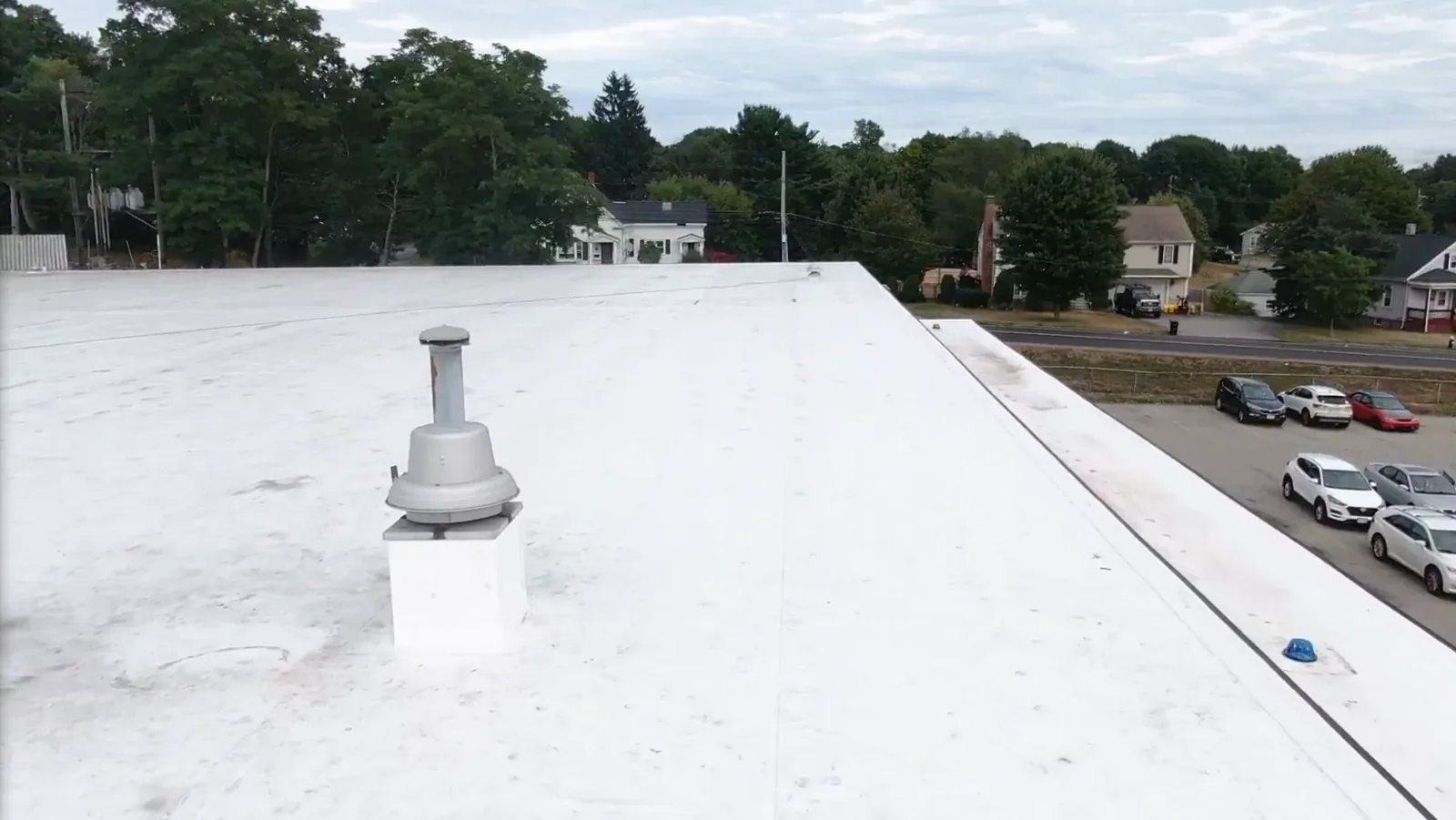

Manufacturing Plant Roofing in Gastonia, NC
A bucket under a production line at shift change is one way a plant roof problem reaches the plant manager. The bucket is cheap. The line it sits beside is not. A plant roof sits over a process, and a leak over a process costs money before anyone has looked at the roof. What that means for the owner is a plain question: what does an hour of lost production cost, and what does the roof repair cost to prevent it?
A manufacturing plant in Gastonia, NC gets a roof walk with the exhaust map in hand, a photo log and a written answer on repair or replace. A plant emergency reaches a crew day or night.
Know the plants in the market
Gastonia's historic base is textile manufacturing, and today the city hosts Parkdale Mills, the world's largest spun-yarn manufacturer, along with Wix Filtration, Freightliner, Stabilus, Curtiss-Wright and Radici. Mount Holly has American & Efird, a major thread maker with six plants and corporate offices, and National Gypsum has run a wallboard plant there since 2007. In Bessemer City the manufacturers include FMC Lithium, Advanced Drainage Systems, Hunter Douglas and Dole.
Plants differ in process, heat, moisture and chemistry, and the roof has to match. A first walk records what each building sends up through its roof and what the roof does about it.
Walk the stacks, fans and drains
Exhaust points and drains are where plant roofs show trouble. Stacks, hoods and fans sit on curbs, and each has a flashing. Process exhaust can soften membranes, stain surfaces and corrode metal near the outlet. Drains handle water from large areas, and a clogged strainer puts a lot of water on the roof.
On a walk we map every exhaust point, photograph the membrane near each, probe seams and flashings and test drains. We compare the condition near the exhaust with the field, since a band of damage around a stack confirms exposure. We list each penetration, flag the abandoned ones for removal and mark the owner of each unit so the right party is called.
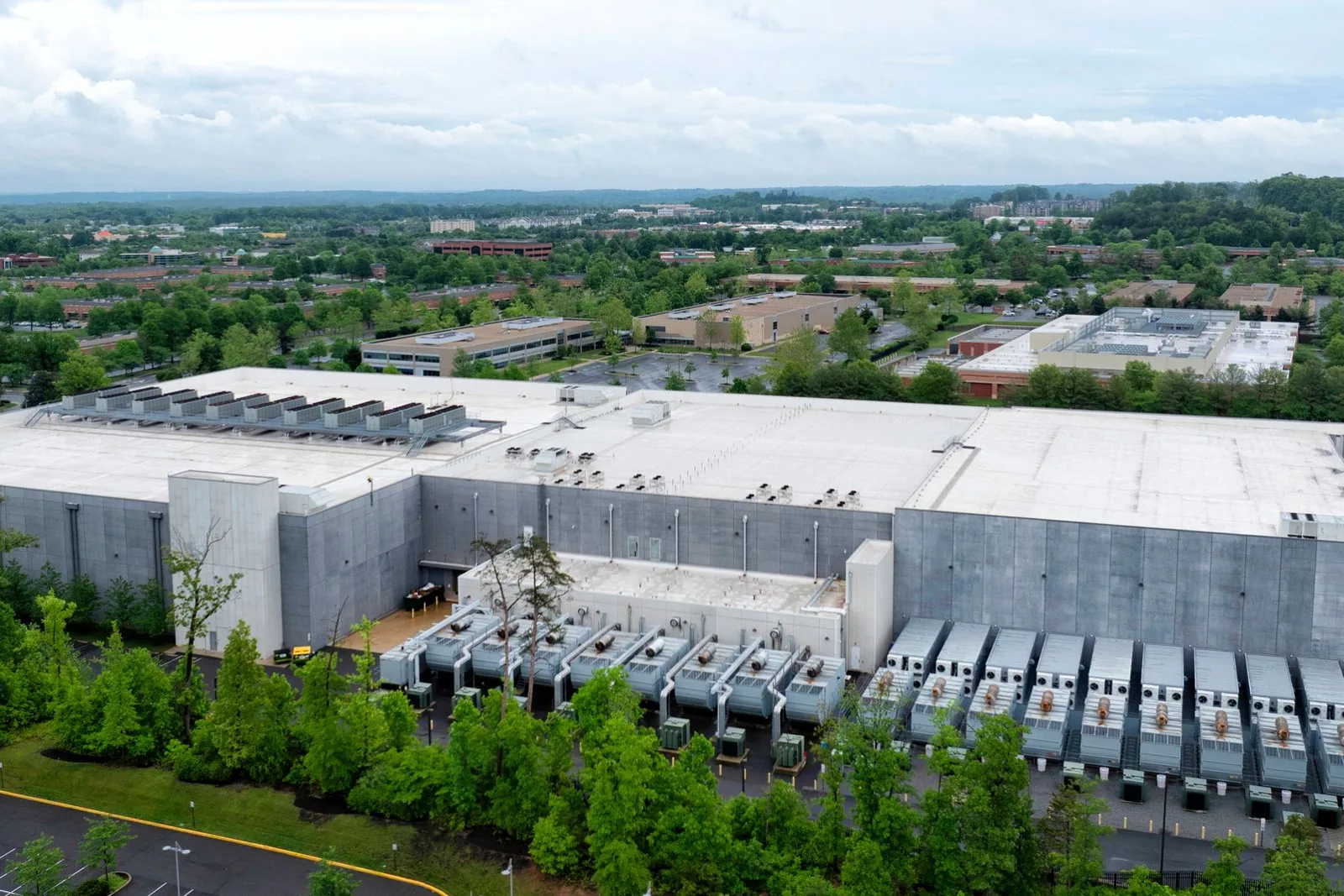
Equipment on a plant roof is a record of its own. Units, ducts, conduit, supports and pipe racks are listed with their flashing condition and their distance from drains. Supports that sit directly on the membrane without pads wear it through, and a stack with no storm collar lets water down the pipe. Each item gets a photograph and a rating, and the list becomes a punch list for repair.
Separate leaks from condensation
A plant roof carries a double burden. Water can come from above in rain, or from below as process moisture condenses on a cold deck. The stain on a ceiling looks the same either way, and the repair differs. A patch on top will not cure condensation from below.
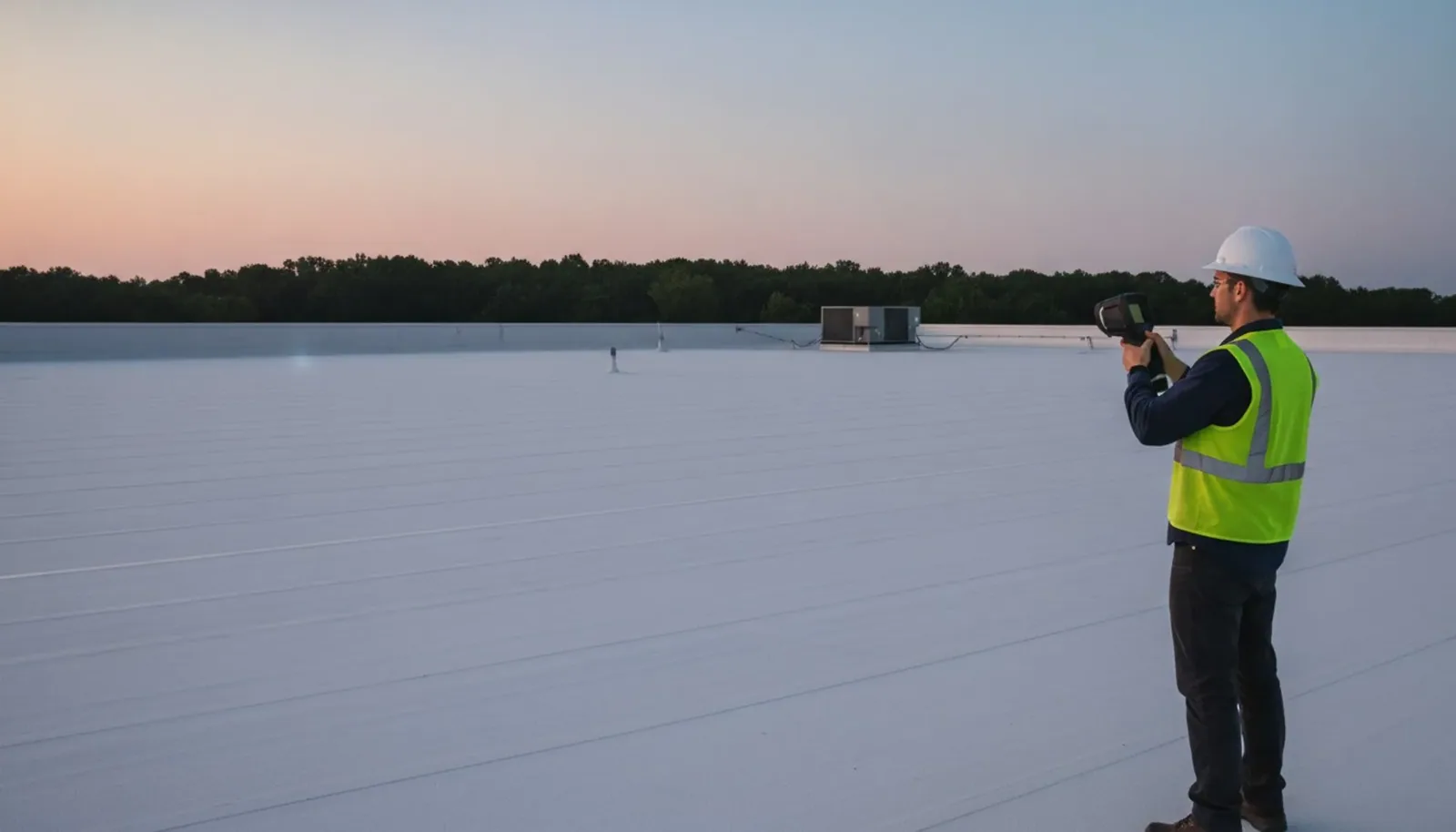
An infrared moisture survey and a few cores show which one we have. If the insulation is wet from above, we find the entry. If it is wet from below, the answer is ventilation, a vapor retarder or a process fix. Telling the two apart saves a repair cycle, and the answer goes in the photo log.
Textile and thread plants have their own moisture questions. Gaston County led the country in cotton spindles, and legacy mill buildings like the Loray Mill still stand beside modern plants. Older buildings may have heavy decks, multiple roof layers and abandoned penetrations from machinery long gone. Cores give the layer count and an inventory of abandoned openings; an opening nobody remembers is a leak waiting to be found.
Price the cost of waiting
A seam repaired this quarter is a small line item. Left through a hot summer and a wet spring, that seam lets water into the insulation over a line, and a leak lands on equipment. Heat moves the membrane and rain finds the weak spot, with Gastonia's July highs averaging 90.7 degrees and about 44 inches of precipitation in a year.
Four numbers go on one page: repair now, a limited repair that carries the roof through a shutdown cycle, a recover and a replacement. Cost drivers sit beside them: wet insulation, access, equipment to lift, penetrations, shutdown windows and the system chosen. The plant manager takes that page to a partner or lender.
A plant roof with sound insulation and a tired membrane stays in upkeep until the cores say otherwise. When one nears the end of its life, replacement is priced with lead time to line up bids and the next shutdown. Roofs in the middle get a limited repair, and the next walk shows whether replacement belongs on the calendar.
Choose repair or replace
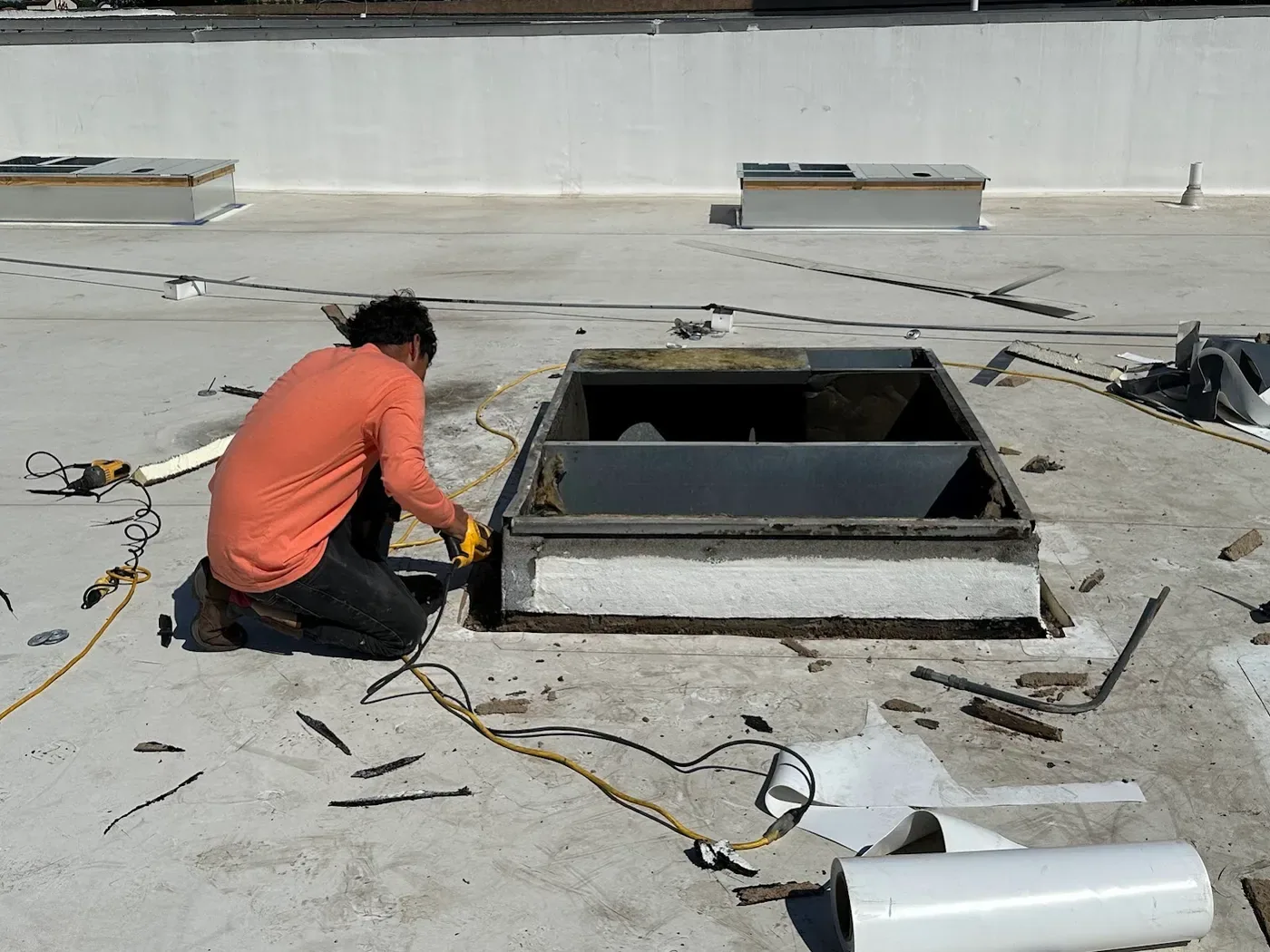
Repair is sensible where insulation is dry and failures stay local. Commercial roof repair around an exhaust point, with a membrane suited to it, is often enough. Recover when the old roof is sound and dry. Replacement is next if moisture has spread or the membrane cannot hold another repair.
Membrane choice follows exposure. A PVC roof or KEE roof may suit grease, oil and chemical exhaust, and TPO may suit light exposure. Plants cannot stop for a roof, so we phase work by area, around shifts and shutdown weeks, keep forklift lanes clear and close in each section daily.
Safety and permits shape the schedule. Hot work near a process needs a permit, a fire watch and a plan for what happens if a line trips. Crane and lift positions are set with the plant's safety lead, and fall protection on the roof is checked before crews arrive. The scope lists each rule, so the plant manager approves the plan once and knows it will be followed, including the rule for who may stop the work.
Keep the log current
A plant roof lasts longer on a schedule. Two walks a year clear drains, check seams and edges, photograph exhaust zones and add to the log. After any equipment change, a short walk checks the curbs. Two or three small items piling up show in the log, giving the owner a chance to act before a leak reaches a line. A Mount Holly plant and a Bessemer City plant get the same routine, and the warehouse or distribution bays attached to a plant are walked in the same visit.
Commercial Roofing Questions
Can a plant stay in production during a roof replacement?
Usually. We phase work by area around shifts and shutdown weeks, keep forklift lanes clear, protect equipment and close in each section daily. Hot-work rules are agreed beforehand.
How can I tell a leak from condensation?
A leak follows rain. Condensation follows process moisture and cold surfaces. A moisture survey, cores and a look at the underside of the deck show which one it is.
Does exhaust change the membrane choice?
Yes. Grease, oil mist and chemical vapor affect membranes differently. We map the exhaust points and recommend materials that suit each zone.
What does a leak over a line cost?
That depends on the line. We cannot put a number on lost production, but we can put the roof repair and the risk side by side so the owner can weigh them.
What do you need from a plant before the first walk?
The roof age, a note of what runs below each area, a list of exhaust points, leak history and repair invoices. You get written findings with repair or replace answered plainly.
Topic
Manufacturing Plant Roofing
Roof Types
Low-slope and metal
Related Roofing Work
Infrared Roof Moisture Surveys
Commercial Roof Repair