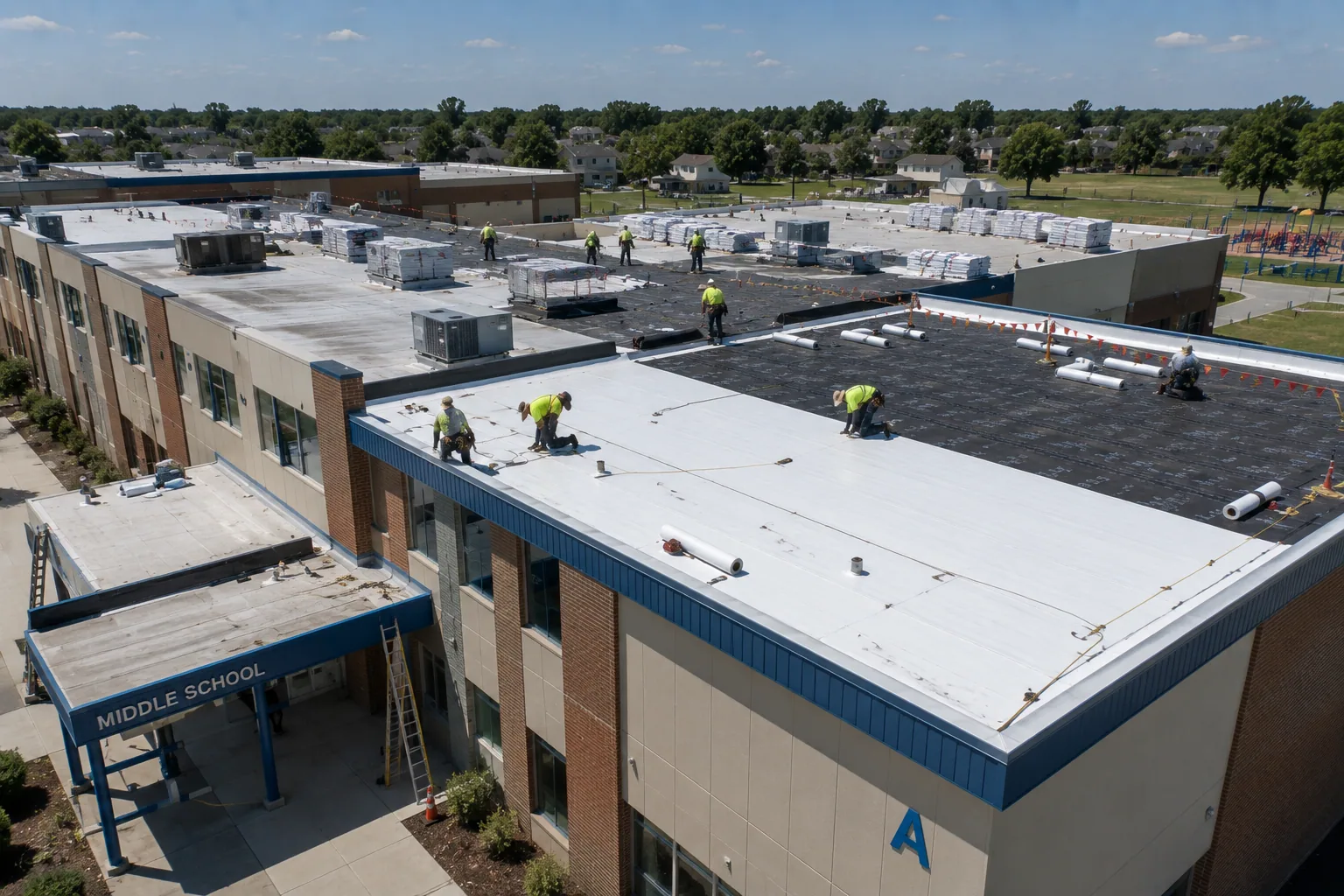

Roofing for School Districts in Gastonia, NC
The roof that draws attention first is often not the worst one. It is the one over the gym, the cafeteria or the wing with the brass plaque, where a leak lands on something people notice. In Gastonia, NC, Gaston County Schools is one of the area's major employers, and a school system carries roofs from more than one building era. A flat roof over a classroom wing, a membrane over a gymnasium, an addition on a newer system and a canopy over the bus loop each have their own age and their own leak history.
The question for a board is simple: which roofs go first, what does each cost and what does waiting cost? We walk them and put the answers on paper.
Work the Summer Window and Plan It in Winter
The academic calendar sets the roofing calendar. From the last day of classes to the first day of the fall term a campus is empty, and that stretch is when large replacements happen. The window is short, the weather is hot, with a July mean high near 90.7 F, and storms still arrive. Bids, board approvals and material lead times all come first, so a roof not funded by spring is not replaced that summer.
During the school year the work shifts to repairs and inspections. Leaks over classrooms are mapped and covered, and permanent work waits for a holiday break or the summer. We sort every leak into three groups with the facilities director: stop it now, stage it for a break or hold it for the summer replacement.
Keep Students Out of the Work Zone
On an occupied campus, the work zone is fenced and signed. The lift and the dumpster stay out of drop-off lanes and bus loops, deliveries come outside arrival and dismissal times and the crew does not use areas where students walk. Noise and fumes are managed near classrooms, air intakes are located and protected and hot work follows a fire watch. The roof and the ground are swept at the end of every shift, since a stray screw in a playground is a student injury.
When a summer job runs into the first days of school, the crew finishes sections over occupied rooms first and leaves unoccupied wings for the weekend, so classes open under a dry roof. A magnetic sweep of the ground around the work zone is part of the evening closeout, and the foreman signs the sweep log for the principal or the facilities lead.
Write the Scope So the Bids Match
Public school work goes out to bid, and a clear scope produces cleaner bids. We help the district write the scope from the walk: roof sections, quantities, deck repair allowances, insulation thickness, flashing details and warranty requirements. Unit prices for wet insulation and deck repair let the board compare bids on the same footing and avoid change-order arguments after tear-off begins.
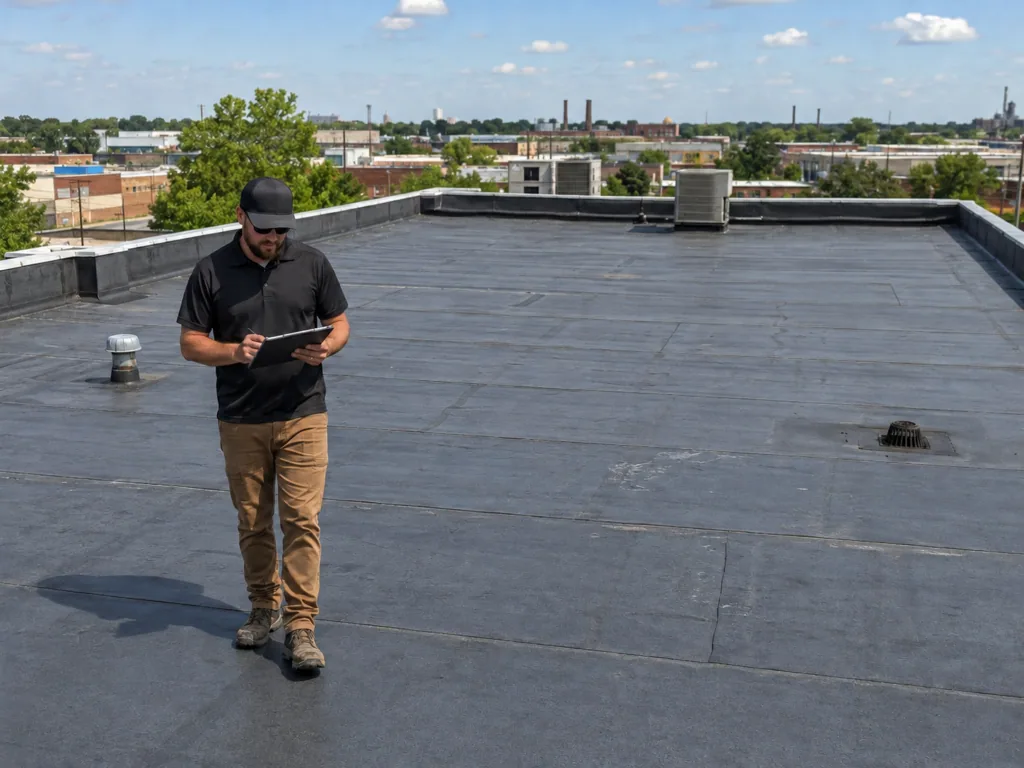
Our roof condition reports are written to be attached to a board packet. Every campus is one page, every roof section is ranked with its cost of waiting, and the board can take the list in a single sitting. Other public owners, such as cities and agencies, use the same format.
Read the Layers on Older Buildings
Older school roofs hide surprises. Multiple layers, wet insulation, deteriorated decking and, on very old buildings, roofing materials that must be tested before they are disturbed all affect the scope. We cut cores to read the layers, take moisture readings and recommend testing where the age of the building calls for it, so the district knows conditions before bid day, not after tear-off. Allowances for deck repair and wet insulation are written as unit prices with an expected quantity from the cores.
Where a roof is dry and the deck is sound, a recover may avoid tear-off. Where the insulation is wet, tear-off is the right scope.
Look Hard at Gyms, Kitchens and Bus Loops
Some school roofs carry more than weather. A gymnasium has a long span and a floor that a single storm can ruin. A cafeteria and kitchen send grease-laden exhaust through the roof. A canopy over a bus loop collects leaves, sheds water onto a walkway and is attached to a wall by whoever was on site. We inspect those sections first, check the kitchen exhaust curb and grease containment and look at the gym roof from above and below for stain lines along the framing. A leak over a gym floor gets a temporary cover the same day. Boiler and chiller rooms, which may have curbs and penetrations nobody has reviewed since they were added, get the same walk, and we note every opening so the file shows which ones are flashed and which are only sealed.
Bus loops deserve a second look from the ground. A canopy that sheds water onto a walkway creates a slip hazard on a cold morning, and a leaning bracket is a sign that fasteners have backed out. We photograph each bracket and add it to the ranked list with a price.
Turn Findings Into a Capital Line
A board funds roofs through capital cycles, and the ask lands better with a ranked list. Each campus gets a page, and each roof section gets a rank and a cost of waiting, so a board can see why one roof goes ahead of another. Where a district has no roof records at all, the first deliverable is a plan of every roof, which is a useful document in itself. A roof capital plan staggers replacements over several years, and preventive maintenance carries drains and seams between them. Each spring the register is updated after the winter walk, so the board sees a current ranking, not one that is three years old.
Districts that run construction programs with general contractors can fold roof review into the contractor's schedule. Mechanical upgrades are a common trigger: every new rooftop unit needs a curb flashed to the membrane, and the roofer should see the plan before the deck is cut. We ask the facilities office to include roofing in the equipment project and review curb heights, support rails and walk pads so the new unit does not become the next leak.
Plan for the Storms That Have Already Happened Here
Storms are part of the calendar here. The May 2024 EF-1 tornado cost an East Gastonia warehouse part of its roof, and another tornado crossed the county in May 2020. We check edge metal and attachment on every school roof and walk the buildings after each storm line, so findings are dated and tied to a section. Before a replacement is bid, we confirm with the building official which code edition governs the permit. For campus programs in Belmont, Mount Holly or Gastonia, the same routine applies.
Commercial Roofing Questions
How early should a summer reroof be planned?
The winter before. Bids, board approval and material lead times take months, and the summer window is short.
What happens to leaks during the school year?
They are mapped, covered and ranked. Permanent repairs go to the next break or the summer, depending on severity.
Do older roofs need testing before tear-off?
Often, on very old buildings. We read the layers, cut cores and recommend testing where age calls for it.
How is student safety handled during roof work?
With fencing, separate delivery times, protected air intakes, a fire watch for hot work and daily cleanup of the roof and ground.
Can one report cover many campuses?
Yes. Each campus gets a page, each roof section a rank and the whole list reads in one board meeting.
Topic
School Districts
Roof Types
Low-slope and metal
Related Roofing Work
Roof Condition Reports
Cities, Counties and Public Agencies