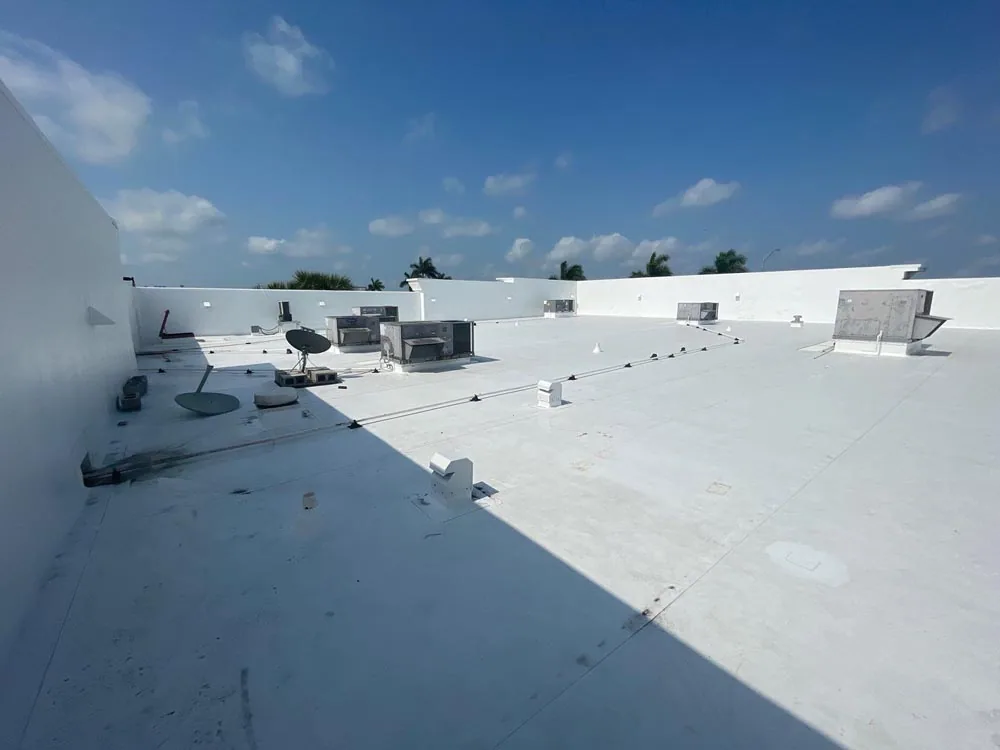
Roof Recover and Overlay Systems in Gastonia, NC
A recover is the cheaper path only if the roof underneath is dry. That one condition decides the rest of the job. In Gastonia, NC, owners with aging flat roofs ask about an overlay because it skips the tear-off, keeps the building open and avoids a disposal bill. Those are real savings. They disappear the moment a new membrane is laid over wet insulation, because the trapped water keeps working against the new roof from below.
So we never quote a recover first. We test the existing roof, decide whether it can carry another layer, and only then put a number on paper. If the answer is no, we say so and price the tear-off instead. The test costs far less than a failed overlay.
Testing the Old Roof for Moisture and Strength
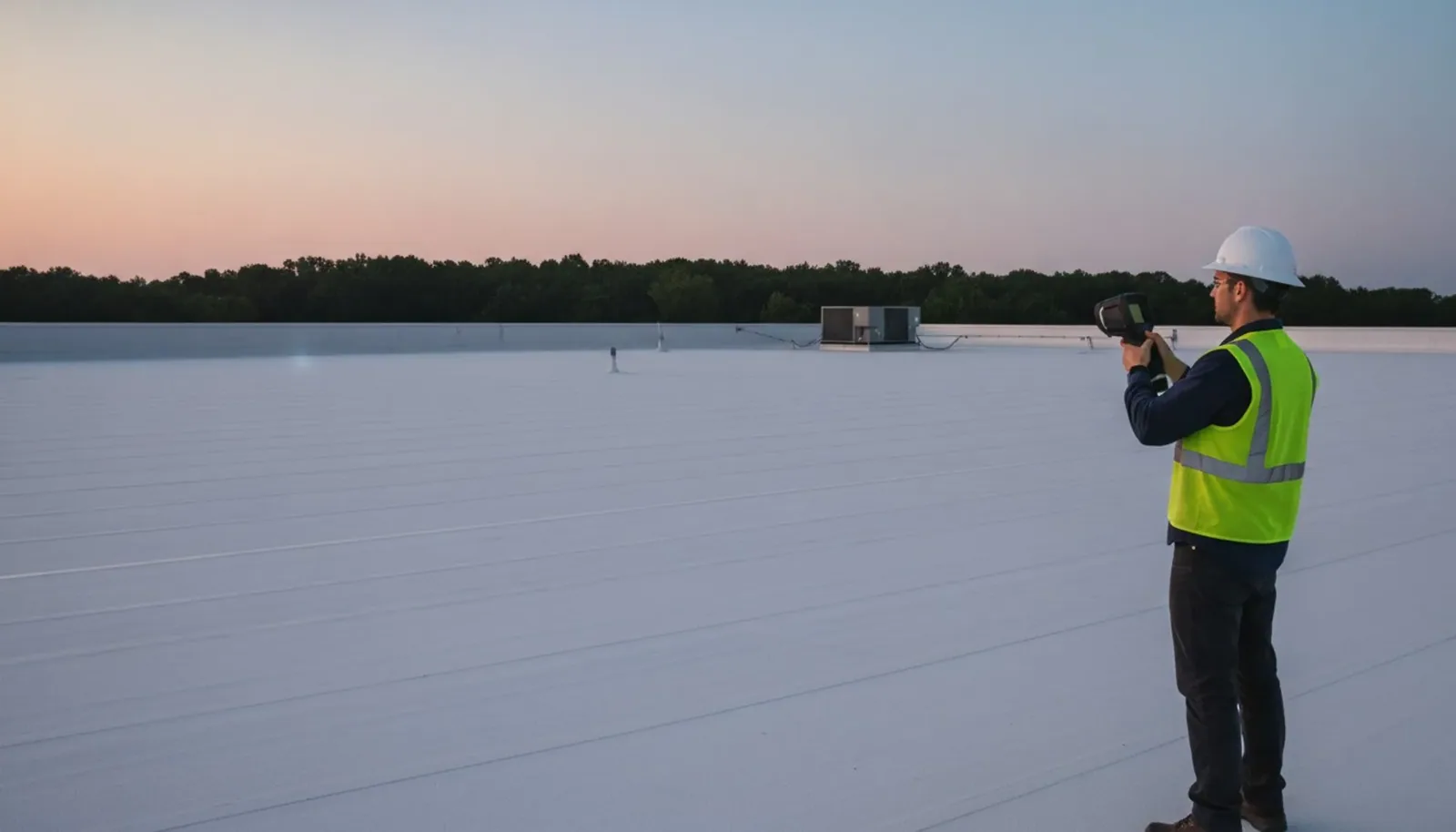
The first question is how wet the existing system is. We run a moisture survey on larger roofs and confirm it with core cuts at the readings that matter. Dry cores at the sampling points mean the insulation can stay. A pattern of wet readings near drains, curbs and seams means the water has a path in, and an overlay would only hide it.
The second question is whether the deck and structure can take the extra weight and the extra fastening. A recover adds a layer, sometimes a cover board and often new insulation. We check the deck where fasteners will bite and look at the framing where the roof sags. If the deck has soft spots, those areas have to be opened and repaired before anything goes over them. Our infrared and core-cut survey is the usual starting point for that decision.
Fastener pull-out is a third check. On a steel deck we test how well existing fasteners hold, because a recover that relies on mechanical attachment needs a deck that will hold new screws. On a concrete or wood deck the test differs, but the point is the same: the new roof is only as secure as the surface it is tied to. If readings come back low, we adjust the attachment plan or recommend a different route before any material is ordered.
Deciding Between Overlay and Tear-Off
The two options are not rivals. They answer different conditions. An overlay fits a roof whose membrane has aged but whose insulation and deck are sound, where the owner wants a fresh waterproof surface and a longer service life at lower disruption. A tear-off fits a roof with wet insulation, multiple prior layers or deck damage.
Layer count matters. Building codes limit how many roof coverings can sit on a deck, and a roof that has already been recovered once may be out of room. We check the existing layers before we propose anything and confirm the local rules with the building department. North Carolina still enforces the 2018 State Building Code, and owners may ask to use the 2024 code as an alternative method of construction, so we confirm which edition governs the permit before we price insulation and fastening.
If the answer is a full commercial roof replacement, we price it beside the overlay so the difference in cost, disruption and expected life is visible at a glance.
Pricing the Overlay Line by Line
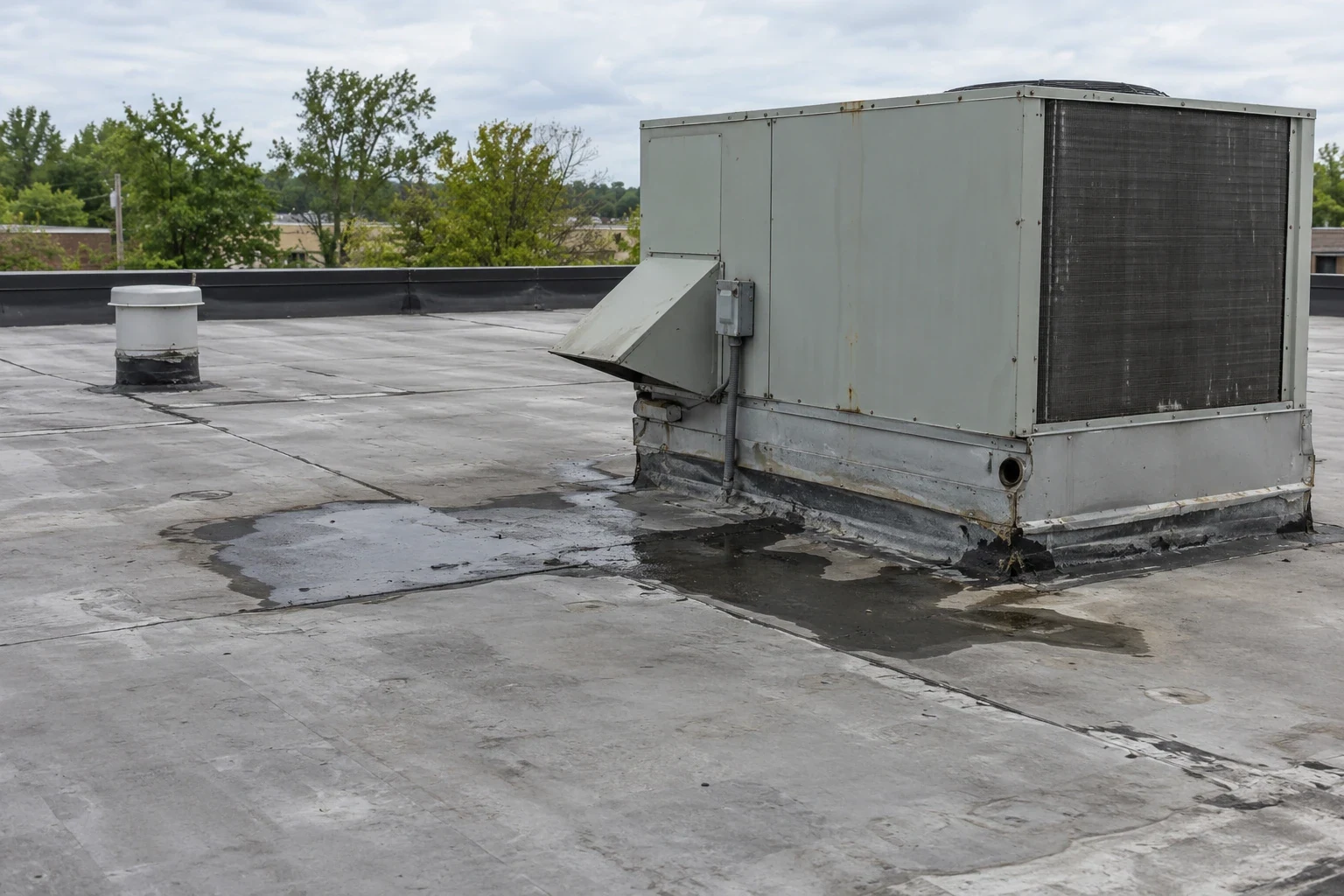
A recover scope has fewer lines than a replacement but each one carries weight. We list surface preparation (cleaning, removal of blisters and loose seams), any repair of wet or damaged sections, insulation or cover board, the new membrane, flashing upgrades, edge metal and cleanup. Flashing is often the surprise. New membrane sits higher than the old surface, so base flashings at walls, curbs and penetrations usually need to be extended or replaced to keep the right height.
The membrane choice follows the building. A TPO membrane over a mechanically attached system is common for large, open roofs, and a silicone coating can restore a sound metal or smooth surface in some cases without adding a full layer. We explain each choice in terms of cost today, maintenance later and what it means for the next owner or lender.
Edges and drainage deserve their own line. A recover raises the roof surface, so scuppers, drains and perimeter metal may need to be lifted to keep water moving off the roof. If a drain sump sits below the new surface, ponding follows, and ponding is where overlay jobs most often disappoint. We note every drain elevation on the plan and price the adjustments before work begins, so the change shows up in the estimate and not as an add-on later.
Matching the Overlay to Gaston County Buildings
Gaston County has a long textile history, and many of Belmont's mills have been torn down or converted, while the Loray Mill district in Gastonia is being redeveloped. Conversions carry their own roof questions. Occupied units below the deck make moisture control and noise planning more important, and an overlay that avoids heavy demolition can be attractive when residents or tenants are already in place. We evaluate each roof on its own deck and insulation, not on the building's age.
Newer industrial buildings, including those in the Gateway85 park between Gastonia and Lowell, raise a different question: how the next owner will view the roof. A clean overlay with documented moisture testing is easier to explain to a buyer or lender than an undocumented patchwork. For a building that has to stay open, reroofing around occupants is a matter of splitting the overlay into sections the tenants can live beside.
Scheduling Around Spring Storms and Summer Heat
An overlay goes down faster than a tear-off, but it still needs dry weather and stable surfaces. Gastonia afternoons in July average about 91 F, and hot membrane is soft and easy to scuff, so we plan foot traffic and staging accordingly. Spring thunderstorms can interrupt a day with little notice, and the May 2024 EF-1 tornado that tracked from west of Gastonia toward McAdenville is a reminder that a loose, half-attached roof is a hazard in wind.
We stage the work so each section is sealed before the crew leaves. If you are in Belmont or elsewhere in the Belmont area, ask for a start window that avoids the heaviest storm weeks.
Commercial Roofing Questions
How many layers can a roof carry before it needs a tear-off?
Codes limit the number of coverings on a deck, and the structure has to carry the weight. We count the existing layers, confirm the local rule with the building department, and tell you whether another layer is allowed.
What happens if the insulation under my old roof is wet?
A recover is off the table until that insulation is removed. A new membrane over wet board traps moisture, which shortens the new roof's life and can corrode metal decks. We cut out the wet areas or recommend a full replacement.
Does a recover change the roof warranty?
The system and the manufacturer set the answer. We read the warranty terms before work begins and give you the conditions in writing, including what testing the manufacturer expects.
Can the building stay in use during a recover?
In most cases, yes. A recover creates less noise, dust and debris than a tear-off, and we can plan hoisting, access and noisy work around your operating hours.
Is an overlay always cheaper than a replacement?
Often, but not always. Repair of wet sections, new flashing heights and cover board can narrow the gap. We price both so you can compare the full cost and the expected service life.
Topic
Roof Recover and Overlay Systems
Roof Types
Low-slope and metal
Related Roofing Work
Infrared Roof Moisture Surveys
Commercial Roof Replacement