Infrared Roof Moisture Surveys in Gastonia, NC
Wet insulation is the finding that changes the budget. A roof with dry insulation can often be repaired or recovered at modest cost. A roof with wet insulation across a wide area needs that material removed, and sometimes the deck beneath it, before a new membrane can be trusted. The trouble is that wet insulation is hidden. In Gastonia, NC, where annual rainfall is around 44 inches, it can sit under a membrane that looks serviceable from above.
An infrared moisture survey finds it. We scan the roof with a thermal camera at the right time of day, mark the areas that behave like wet material, and confirm them with core cuts and meter readings. The result is a map. Owners can use it to decide how much of the roof is sound, how much is not, and what each path will cost.
How the Survey Finds Water Inside the Roof
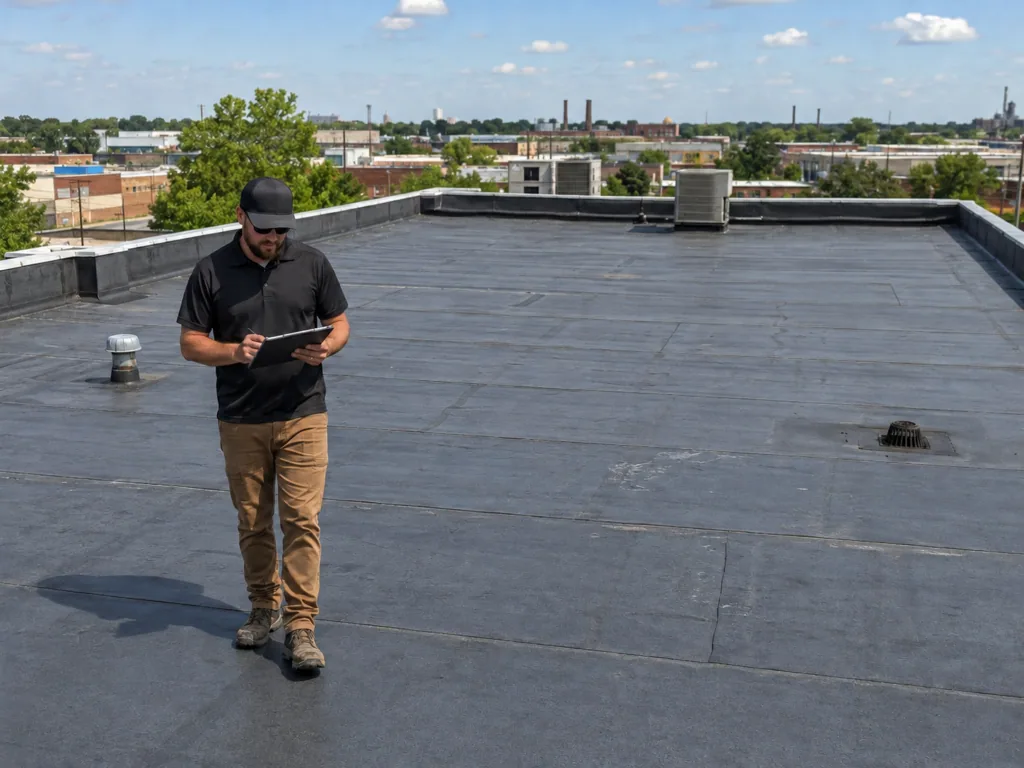
Wet insulation holds heat differently from dry insulation. After a sunny day the roof surface cools in the evening, and wet areas stay warmer longer because the water stores heat. A thermal camera sees that difference. We scan in the hours after sunset on a dry, clear day, mark every warm area with paint or flags, and record the pattern on a plan.
Thermal images show where to look, not what they have found. Shadows, patches, ballast, rooftop equipment and even surface debris can create false readings. So we verify each suspect area with a moisture meter and, where the answer matters, a core cut. The core shows the actual insulation: whether it is wet, how deep the water goes, and whether the deck below is sound. We patch every cut on the spot with matching material.
The scan covers more than the field of the roof. We look at the areas around penetrations, along parapet walls, near drains and at the base of rooftop equipment, because those are the places where water usually gets in. A warm patch at a drain sump points to a leak at the drain flange. A warm band along a wall points to a failed termination. Seeing the pattern often tells us the cause as well as the extent, which makes the repair cheaper to specify and easier to verify afterward.
Every finding is tied to a coordinate on the roof plan, with a photograph and a note on what confirmed it. That level of detail matters when a scope is bid or when an insurer asks what was wet and when it was found.
Using the Moisture Map to Set the Budget
Once the wet areas are mapped, the cost of each option becomes clear. If the wet area is small and tied to a failed detail, a localized repair can remove and replace the insulation and flash the entry point. If it is wide, a full replacement is more likely to make sense, because piecemeal repair across a large wet area costs nearly as much and leaves the rest of the roof aging.
The map also helps owners avoid a bad recover. A recover over the existing roof only works if the insulation is dry or if the wet areas are removed first. The survey tells us which, and it also tells us where the wet material ends, and it lets us price the removal as a defined quantity instead of a guess. Insulation type matters as well, and so does the roof's service history: the roof condition report we prepare ties the moisture map to age, repairs and drainage so one document carries the whole picture. Foam boards, fiberglass and perlite respond to water differently, and we note which one the cores show.
Knowing What the Survey Cannot See
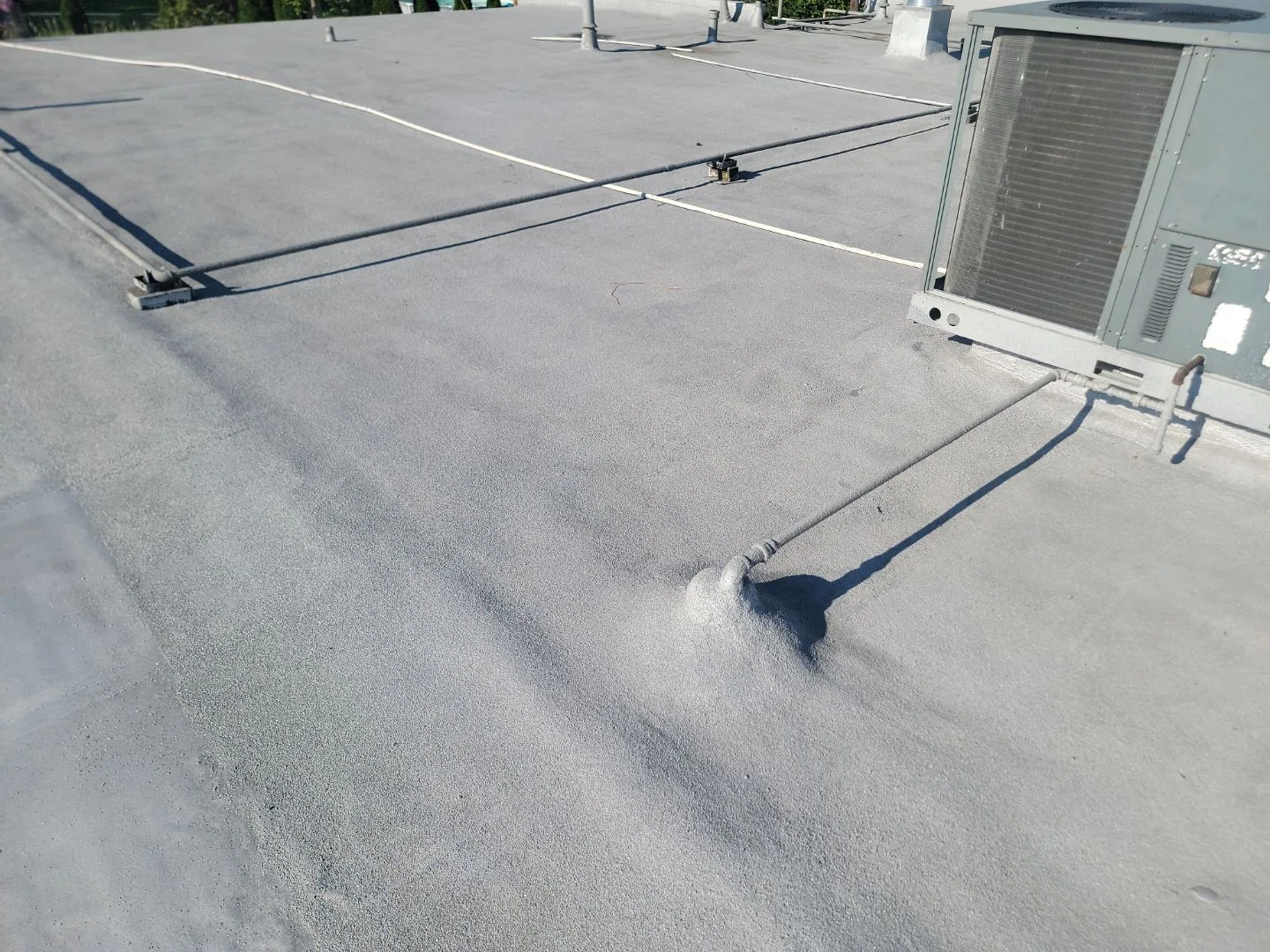
Infrared works best on certain roofs. Ballasted systems, heavily textured surfaces and metal roofs with insulation underneath do not show moisture as clearly, and a roof that is wet on top from recent rain can hide the pattern. We schedule scans for dry, clear conditions with enough sunshine earlier in the day. When conditions are poor, we say so and reschedule, because a bad scan can mislead.
On roofs where infrared is limited, we use other methods: a capacitance or electrical impedance scan, handheld moisture meters and a grid of core cuts. We choose the method to fit the roof, state the method in the report and give a confidence level for each wet area. If a roof is suited to a drone-carried thermal camera, our drone roof inspection can speed up the scan.
Moisture Problems in Gaston County Buildings
Moisture surveys fit three kinds of Gaston County buildings. Older mill buildings in Belmont and the Loray district may carry roofs with a long repair history, and we check the deck at the cores. Newer industrial buildings, such as those in the Gateway85 area between Gastonia and Lowell, are good candidates for a baseline survey that shows the roof is dry at the start and gives a comparison point for later years. Buildings changing hands, whether in Gastonia, Kings Mountain or elsewhere in the county, benefit from a survey during due diligence.
Weather adds its own pressure. After the May 2024 tornado crossed Gastonia and left minor roof damage on several buildings, a moisture check can reveal whether a torn seam let water in before it was patched. The same logic applies after heavy rain or a long summer of storms. A survey for due diligence pairs naturally with a buyer or lender request.
Deciding What to Do With the Results
We deliver the map, the core results and a written recommendation. The recommendation names the roof areas that can stay, the areas to remove and the order to do the work. For roofs with limited wet areas, we price a targeted repair and a monitoring plan. For roofs with wide damage, we price replacement and explain what happens if the work waits through another storm season.
Wet insulation does not dry out by itself under a sealed membrane, and it can lower the roof's insulating value. Delay allows moisture to spread, corrode metal decks and shorten the life of any new membrane laid above it. A prompt decision costs less than a delayed one, and the survey gives you the facts to make it. If the answer is to wait, we set a date to rescan, so the choice to hold off is a tracked one and not a drift.
Commercial Roofing Questions
When is the best time to schedule an infrared scan?
After a clear, sunny day, in the first hours after sunset, when wet areas hold heat longer than dry areas. The roof should be dry on top and the wind light.
Do core cuts damage the roof?
Each cut is small and patched at once with matching material and sealed. We take only as many as needed to confirm the infrared findings.
Can a survey tell me how much life my membrane has left?
Not alone. It maps moisture. Membrane age and condition come from a walk and sample testing, which we combine with the survey in one report.
What if the scan shows no wet insulation?
That is useful news. It means repair or recover stays open, and the scan serves as a dated baseline for future comparisons.
Does my roof type matter for infrared?
Yes. Smooth, single-ply membranes over insulation read well. Ballasted and metal roofs read less clearly, so we pick another method and say which one we used.
Topic
Infrared Roof Moisture Surveys
Roof Types
Low-slope and metal
Related Roofing Work
Commercial Roof Replacement
Roof Recover and Overlay Systems