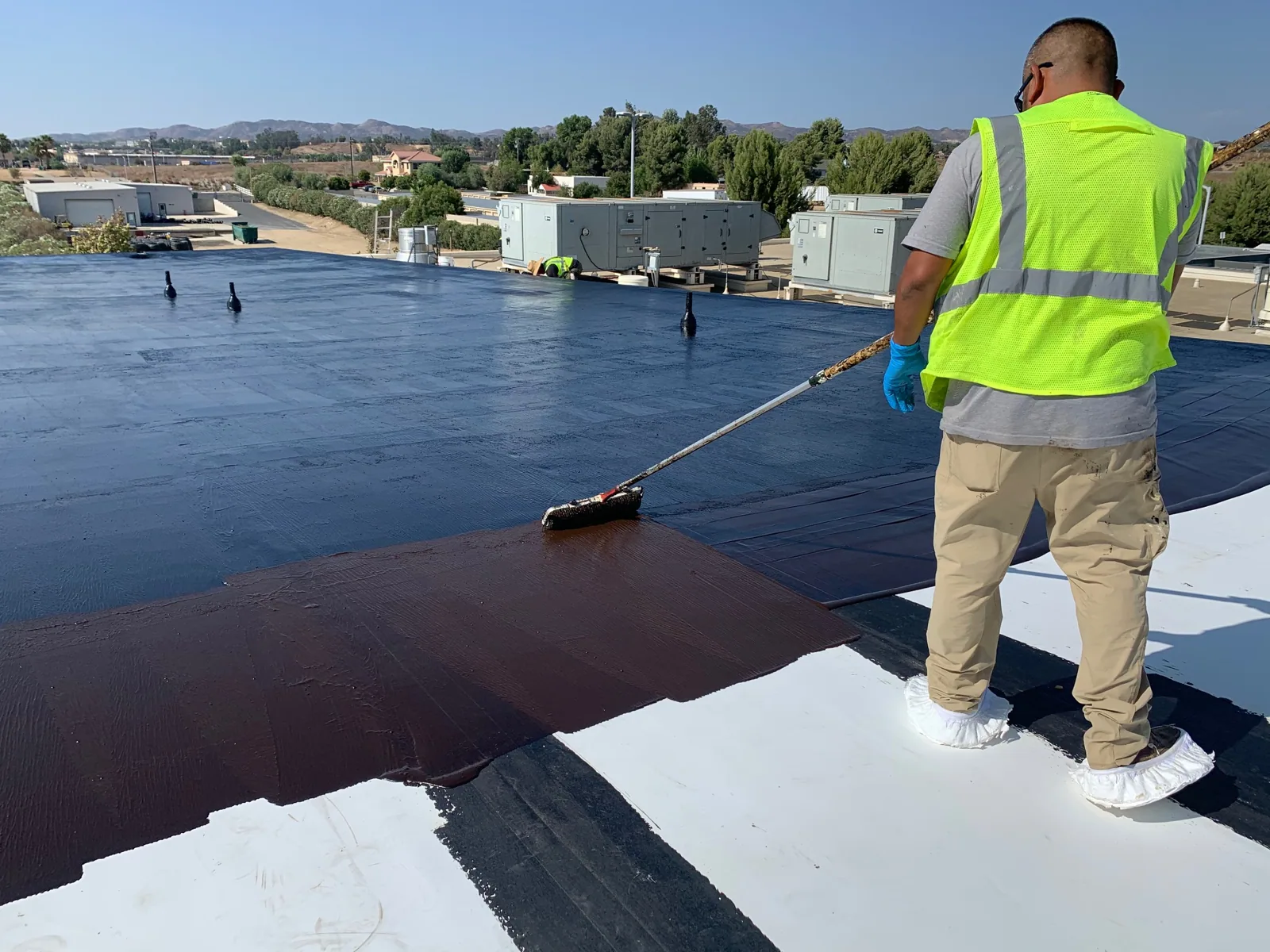
Shopping Center and Strip Retail Roofing in Gastonia, NC
A strip center with one leaking bay and a long shared roof has a question every landlord knows: whose repair is it, and what does it cost if the tenant next door starts to leak too? The likely cause is a rooftop unit curb at the leaking bay with a cracked sealant joint, and a shared drain at the low end of the roof that holds water after every storm. Neither is dramatic on its own. Together they produce a ceiling in a tenant's space, a call to the landlord, and a repair bill that grows with every storm.
Eastridge Mall at exit 20 on North New Hope Road is the area's only indoor regional mall and draws a large retail strip around it in Gastonia, NC. A center in that corridor shows the usual pattern: many tenants, shared drainage, and rooftop equipment installed on a schedule nobody wrote down. We walk the roof and put a number beside each finding. The May 2024 EF-1 tornado's minor damage to several county roofs is a reason to schedule the edge and coping check before storm season as well as after.
Map Each Bay to Its Roof
On a strip center, one roof covers many tenants, and a leak in one bay can start at a unit on the roof two bays away. We lay the roof plan over the tenant plan, so each finding has a bay, a tenant, and a landlord responsibility attached. A curb leak over a nail salon, a drain problem at the end cap, and a flashing crack at the parapet each become a line item with a location.
The plan gives the property manager a way to talk to tenants about what is going on, and it gives the owner a way to see what each bay costs to keep dry. Photographs go with each item. The plan also notes which parts of the roof are shared walkways for the units, because foot traffic wears a path, and the membrane under a path is where punctures happen. Walk pads go in before the membrane tears, and the pad locations are marked on the plan so the next service technician uses the same route.
Fix the Curbs Before the Ceilings
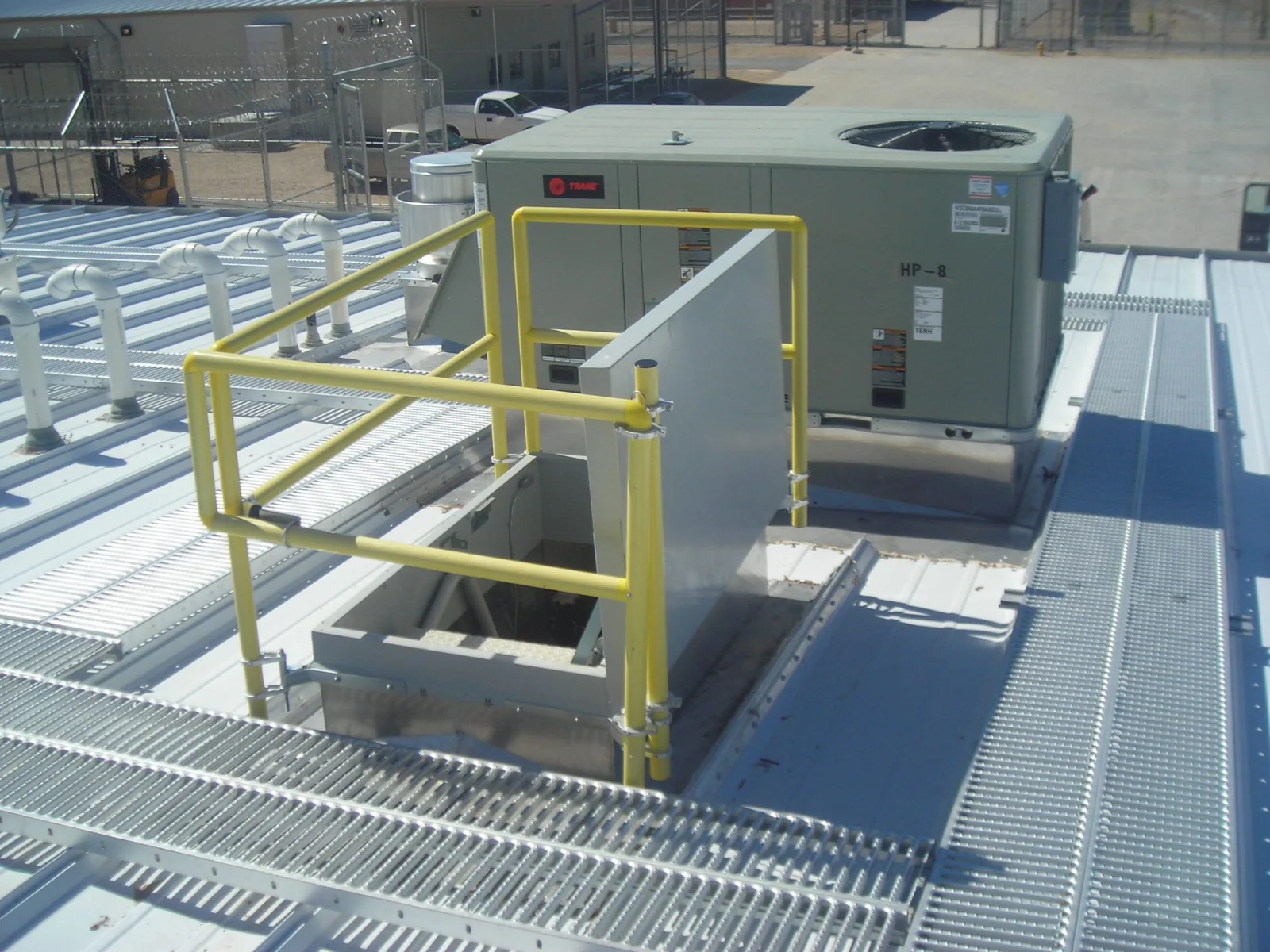
Rooftop units are a leading suspect in retail roof leaks. Tenants add or replace units, and each change leaves another curb, another flashing, and another set of lines through the membrane. Heat movement works on those details every day, and July highs near 91 F make the roof surface far hotter. We check curb corners, sealant, and condensate lines at every unit, and we keep a count of units with their tenants named.
A curb and equipment support repair costs little compared with a ceiling and a tenant dispute. We recommend it before the leak, not after. Units that tenants replace without telling the landlord are a recurring item. A new unit may sit on an old curb with a different footprint, leaving a gap, or on a patched curb that was never rebuilt. We photograph each unit and write down its size, so a landlord can see which ones are original and which have changed, and so the next change goes through the roofing contractor.
Clear the Shared Drains
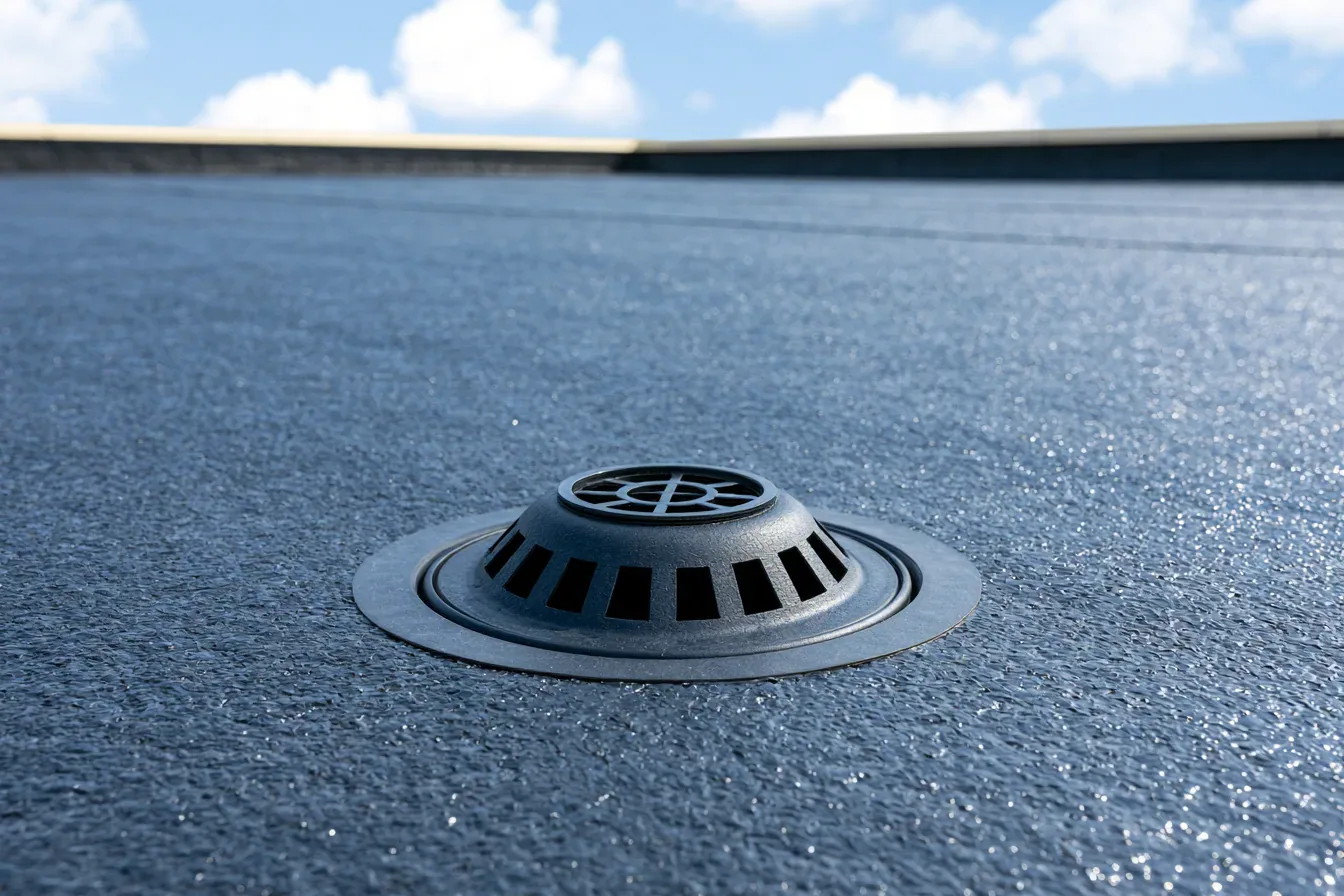
Strip centers drain to a small number of low points, and those drains serve many tenants. Gastonia gets about 44 inches of rain a year, and a drain with a clogged strainer turns an ordinary storm into a pond on the roof. Ponded water ages the membrane, adds weight, and finds seams. Drains get cleared, pond time gets measured and the scuppers are checked for free discharge.
Should water still stand after cleaning, tapered insulation or an added drain is the next step, priced as its own item. Our drain and scupper work begins with cleaning because it is the cheapest repair on the roof and often the only one needed. Where a strip center sheds water toward the rear service lane, leaves, litter, and loose gravel from the lot clog the drains first. A short cleaning visit before each storm season, with photographs, keeps the water moving and gives the owner a record that the maintenance was done.
Sort Landlord Items from Tenant Items
Who pays for a roof repair depends on the lease, and an inspection report can help. Each finding is tagged either as a roof-wide item, like a failed seam or a clogged shared drain, or as a tenant item, like a unit the tenant installed. A landlord can then see which repairs belong on the common-area budget and which belong in a conversation with a tenant. Records matter in that conversation: dated photographs, the location of each unit, and the history of past repairs.
A lease is the owner's document to read. The roof facts we supply let a manager hold it up against what is actually on the roof. When two tenants share a leak, the plan shows where the water came in and which bays it reached, so the conversation starts from the roof and not from assumption. That record also helps when a tenant moves out and the space is re-let, because a clean roof file tells the next tenant the space is dry.
Decide on Repair, Recoat, or Replacement
A retail roof that is dry and sound may need only repairs and a coating restoration to extend its life. Wet insulation across several bays turns the answer into a replacement. Cores and an infrared moisture survey settle which it is. The building department confirms which edition of the state code governs the permit, and that answer is in hand before a replacement is priced.
For a center with active tenants, we phase the work in sections so that stores keep trading and entrances stay clear. Noise hours are agreed with the property manager, deliveries are scheduled away from the busiest part of the day, and the crane or lift goes where it does not block a lane customers use. The sequence is written down so each tenant knows which week the crew is above them.
Match the Work to the Corridor
Retail roofs along New Hope Road, Franklin Avenue, Garrison Avenue, and Hudson Avenue differ in age and system, so we read each. The nearby big-box store, grocery store, and restaurant each carry their own roof questions. For owners in Gastonia and Belmont, a single walk of the center can turn up the items that drive next year's budget. A center close to I-85 adds a delivery-timing question for cranes and trucks, and lift days are planned around peak traffic.
Commercial Roofing Questions
How do you find which unit is leaking?
We trace from the stain to the nearest curb, seam, or drain, then check the line from the unit across the roof. A moisture scan shows where wet insulation ends.
Can the roof be repaired with the stores open?
Yes. We section the work, fence the area, and keep entrances and fire lanes clear.
What records should a landlord keep?
Dated photos, a unit list with tenants named, past repair invoices, and the findings summary from each walk.
How often should drains be cleaned?
At least twice a year, before spring storm season and after leaves fall, and after any heavy storm.
Does a tenant's new unit affect the roof?
Yes. Every new unit adds a curb and penetrations. We ask that the landlord approve the roofer for that work.
Topic
Shopping Center and Strip Retail Roofing
Roof Types
Low-slope and metal

Related Roofing Work
Rooftop Equipment Curbs and Supports
Roof Drains and Scuppers