Restaurant Roofing in Gastonia, NC
The first thing a roofer sees on a restaurant roof is a dark, slick patch around the kitchen exhaust fan where grease has been landing for years. The membrane there is softer than the rest of the roof, stained, and often cracked at the edge of the fan curb. It is not a leak yet. It is the place a leak will start, and a restaurant owner who knows that has a decision to make before the next busy weekend turns a drip into a closed dining room.
The Downtown Gastonia Historic District has been revitalized with many locally owned businesses, and a restaurant roof in Gastonia, NC might sit there, on a pad site, or in a strip-center unit. Each roof carries kitchen exhaust, makeup air, and refrigeration, and each sits under July heat near 91 F and steady rain. A walk produces photographs, a plan and two prices, one for acting now and one for waiting.
Stop the Grease Before It Eats the Membrane
Kitchen exhaust throws fat, oil, and moisture onto the roof surface. Some membranes shrug it off for years. Others soften, swell, or crack. We check the area downwind of every fan for discoloration, tacky spots, and a sheet that has lost its sheen, and we press with a thumbnail to feel whether the surface has softened. Grease traps and splash pads under the fan catch most of the discharge, and cleaning them on a schedule keeps fat from baking in.
Where the membrane is already damaged, the repair is to cut out the soft area, install a patch compatible with the sheet, and add a pad. A membrane built for grease, such as KEE, is worth considering at replacement. The cost of that choice is the difference between two sheets, and the saving is a longer life in the fan zone. We put both numbers in the findings so the owner can decide with the actual difference in front of them. Where the whole roof sees little grease and only the area around one fan is damaged, a local repair and a pad may be all the roof needs.
Check Every Curb and Line
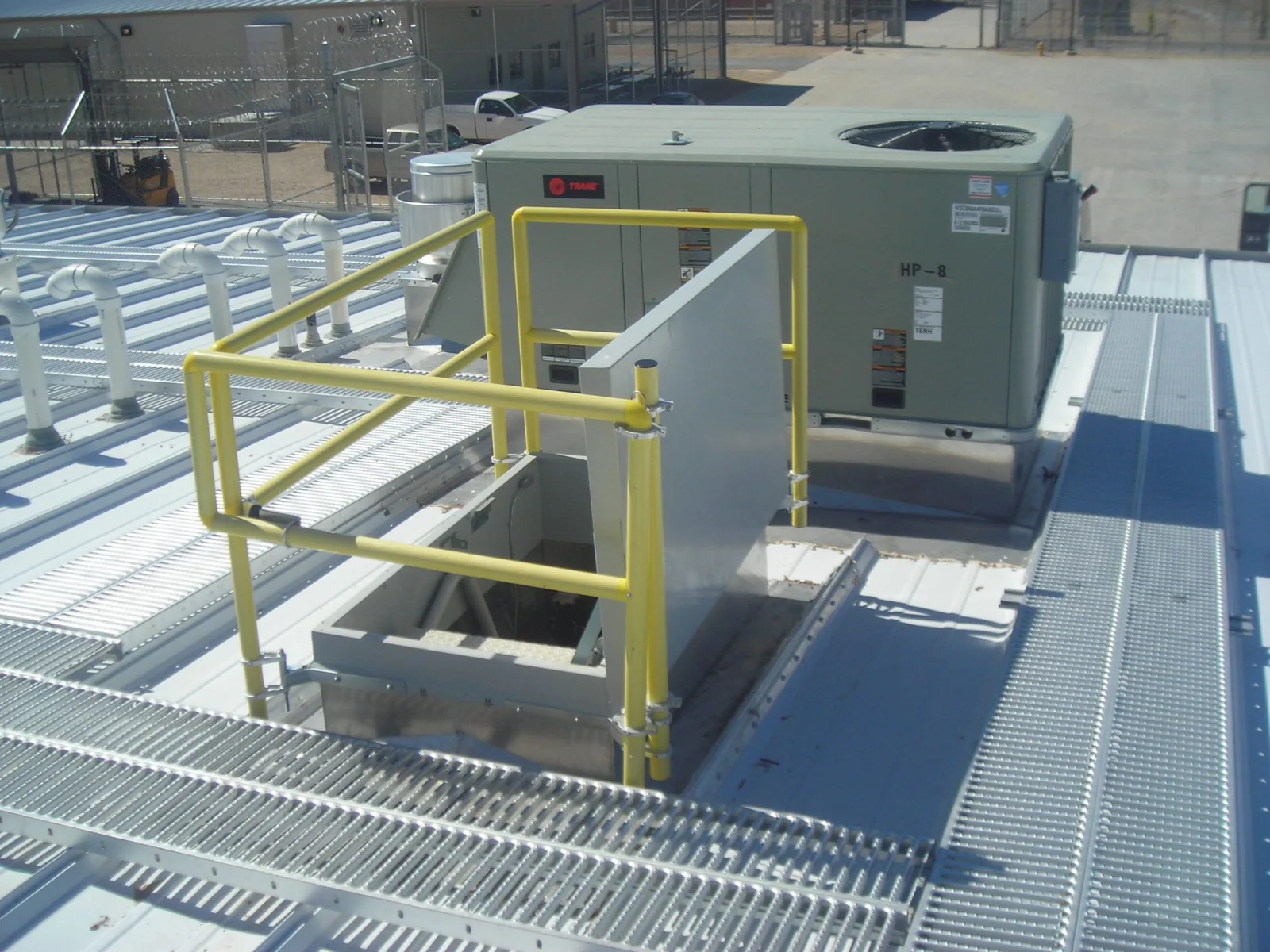
A restaurant roof carries an exhaust fan, a makeup air unit, a refrigeration condenser, and often gas and electrical lines. Each sits on a curb or support with flashing that moves with the heat. Sealant cracks, fasteners back out, and condensate runs where it should not. We check each curb, trace each line, and count the penetrations. A leak over a kitchen is serious because water and electrical equipment share the ceiling space, and a repair to a curb and equipment support is far cheaper than a kitchen closed for inspection. Gas lines and electrical conduit cross the roof as well, and the supports under them wear the membrane where they rest. We replace flattened pads and add protection under lines that have started to rub, and we note each location on the roof plan so a later service call does not undo the work.
Keep Ponded Water Off a Flat Roof
Small buildings often have small drains, and one clogged strainer can leave a pond on a roof not designed to hold it. Standing water adds weight, ages seams, and finds weak points. Drains get cleared, and the dirt ring on the sheet tells us how often and how long water collects. If cleaning leaves the pond, a taper or an added drain fixes the slope, priced as its own line.
A ponding water repair is a small cost compared with a dining room ceiling. The photo log shows the owner what we saw, and the dated pictures give a landlord or lender something to look at besides a phone description. We also check the parapet, if there is one, and the scuppers through it. A scupper choked with leaves or grease will back water onto the roof just as a clogged drain will, and the water can find the top of a wall flashing and run behind it. That kind of leak shows up inside as a stain on an exterior wall, far from any drain.
Work Around Service Hours
A restaurant cannot lose a lunch rush for a roof job. We plan work for the hours a kitchen is slowest, stage away from the delivery door and the guest entrance, and protect the interior over prep areas. Noisy steps are scheduled for morning or between services, and the roof is sealed by the time the crew leaves each day. A food business has extra concerns: debris must not fall into open ventilation, dust must not reach prep surfaces, and the health inspector should not find roofing material in a food area. We cover intakes, protect the ceiling below the work, and clean the access route daily. A grocery store faces many of the same rules at a larger scale. If a fan has to be lifted, we coordinate with the kitchen so the exhaust is off only when it is not needed, and a temporary cover goes over the opening before the crew steps away.
The sequence follows the same method we use for occupied building reroofing, scaled for a small footprint and a fast schedule.
Decide Whether to Repair or Replace
A restaurant roof with dry insulation and a sound sheet can carry on with repairs and a maintenance program. A roof with grease-soaked insulation, repeated patches, and ponded water is closer to replacement. We scan and cut samples to know. The building department confirms which edition of the state code applies. For a tenant, the lease decides who pays, and a findings summary helps both sides. Cost drivers on a small restaurant roof are the amount of soaked insulation, the number of penetrations to reflash, and the access, since a small roof can still need a lift. We price those separately, so an owner can see whether a repair this season and a replacement later is cheaper than a replacement now.
Watch the Storm Season
The May 2024 EF-1 tornado left minor roof damage on several Gaston County buildings. After a storm, we check the fan housings, the grease traps, and the edges for displacement. Owners downtown near the FUSE District and in Gastonia get the same walk, and a shopping center roof shared with other tenants adds a landlord to the conversation.
Grease pads and splash trays are the pieces that blow away first. A pad that has shifted leaves bare membrane under the discharge, so after a hard wind we check each pad, reseat it and photograph the result. The fan housing gets the same look, with hinges and latches tested, because a lifted lid sends grease where it was never meant to land.
Commercial Roofing Questions
How do I know if grease is damaging my roof?
Look for dark, soft, or tacky areas downwind of the fan. We check them by touch and photograph them.
Do I need a special membrane?
If heavy grease reaches the roof, a grease-resistant membrane helps. We assess exhaust and sheet condition first.
Can the work happen while we serve?
Usually yes. We schedule loud steps for slow hours and keep the kitchen and entrances clear.
How often should a fan pad be cleaned?
On a schedule tied to how much the kitchen discharges. We set the interval after the first walk.
What if I rent the building?
The lease decides who pays. Our findings summary shows what is roof-wide and what is tenant equipment, so the conversation with the landlord starts from the roof.
Topic
Restaurant Roofing
Roof Types
Low-slope and metal

Related Roofing Work
KEE Roofing
Rooftop Equipment Curbs and Supports