Grocery Store Roofing in Gastonia, NC
A grocery store roof carries more mechanical equipment than almost any other retail roof, and the first thing an inspector finds is a tangle of refrigerant lines, condensate drains, and condenser units with a membrane that has been cut and patched around every one. Each of those is a place where water can enter, and the store below is full of things that cannot get wet: produce, dairy, frozen cases, and electrical gear for the refrigeration. A drip over a freezer aisle is not a ceiling problem. It is a product loss and a food safety call.
In Gastonia, NC, July highs average 90.7 F, and heat adds to the load on refrigeration and on the roof surface above it. About 44 inches of rain a year gives water many chances. We walk grocery roofs with that equipment in mind, and we hand back a plain summary: what leaks now, what will leak next, and what each fix costs.
Map the Equipment Before You Map the Leak
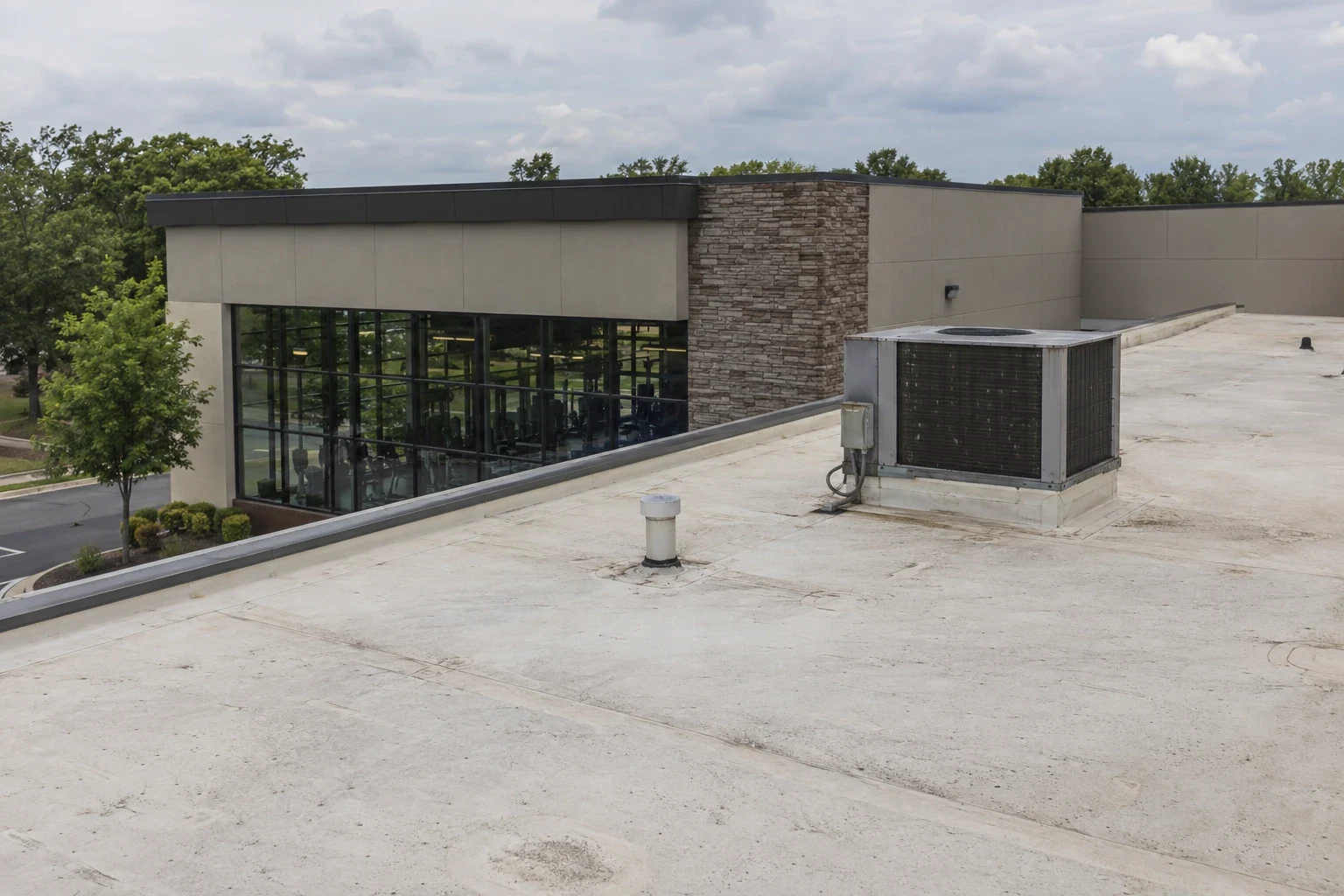
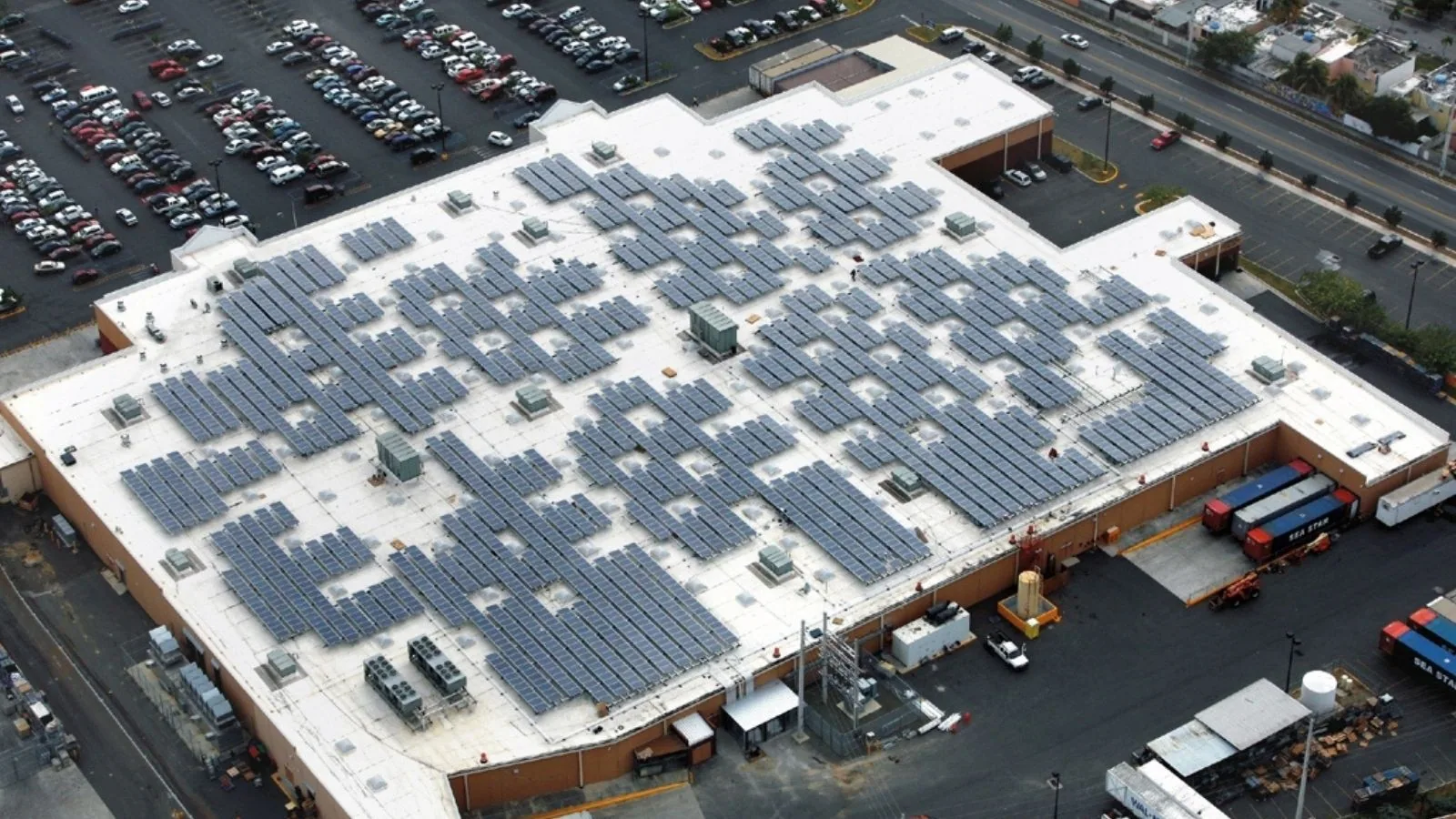
On a grocery roof, the equipment tells the story. Condensers, compressors, rack housings, exhaust fans, and air handlers each sit on supports or curbs, with lines running between them across the membrane. Lines on blocks wear the sheet where they rest. Supports that were moved leave old holes. We draw the equipment layout, mark each penetration, and note the condition of each curb and pad. Most grocery leaks start at one of these points, so the map is where the search begins. We also note which equipment is original to the building and which was added later, because added equipment tends to be flashed by whoever installed it, not by a roofer. A condenser rack added in a renovation, for example, often sits on a new curb with new lines, and the membrane around it is where we expect to find the thinnest workmanship. The map lets a manager see that history on one page. A big-box store has fewer pieces of equipment per square foot, and the walk is shorter as a result.
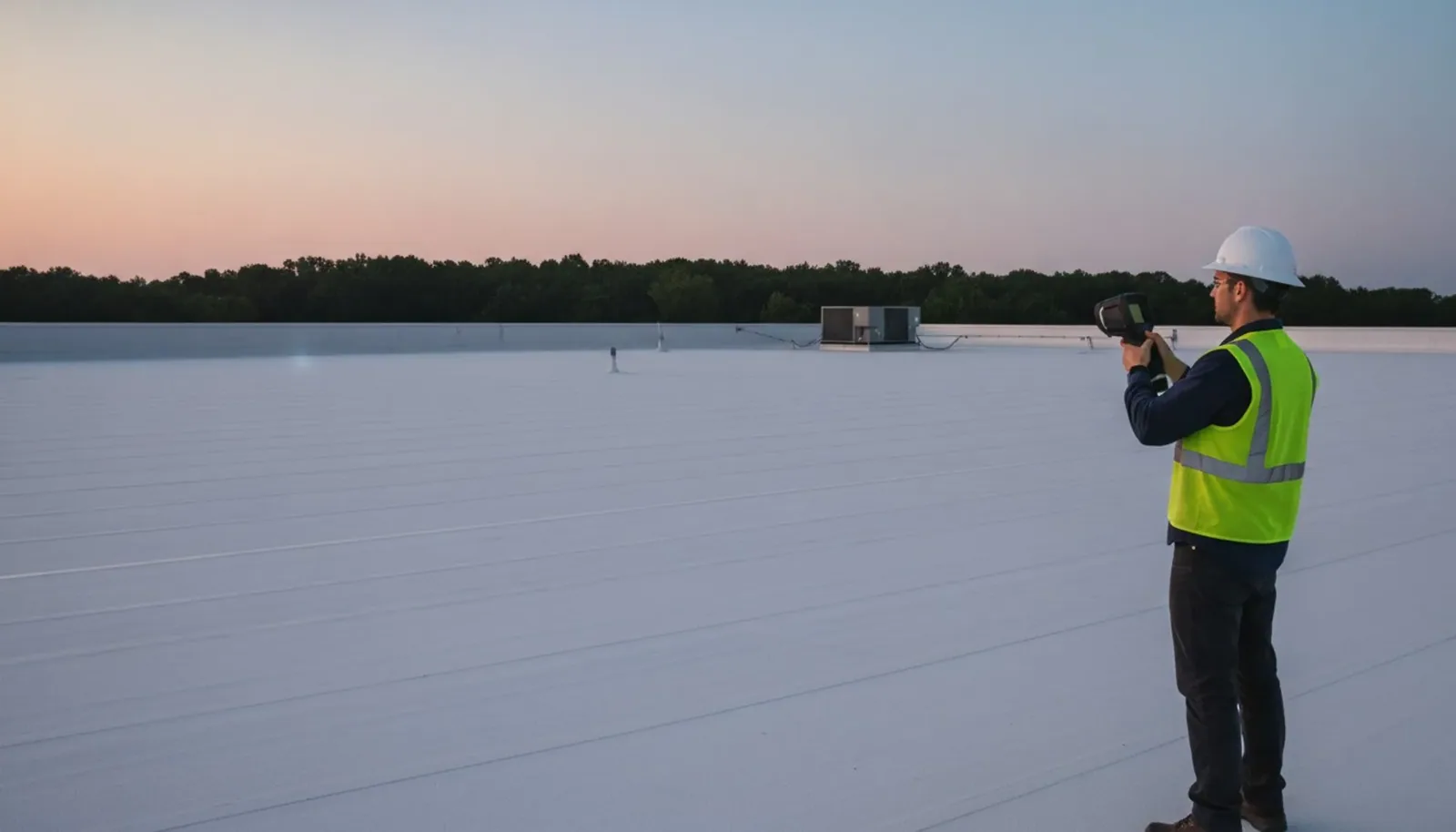
An infrared moisture survey then shows where water has spread from the entry point, which helps keep a repair small.
Check Condensate and Drain Lines
Condensate lines carry water from cooling coils, and when they drain onto the membrane they create a permanent wet spot that ages the sheet. A line that discharges at a drain bowl or a scupper is safer than one that spills onto the roof. We trace every condensate line, check that it ends at a proper outlet, and look for staining that shows where it has been leaking. Drain strainers are cleaned, because a clogged drain on a roof full of equipment can flood a curb in a heavy storm.
Small piping repairs are cheap. Rebuilding a membrane after months of constant wetting is not. Where a condensate line drains onto the roof for lack of a nearby drain, a short run of piping to the nearest bowl, or a splash pad under the discharge, protects the sheet. We record every line, its outlet, and its condition, and we photograph the discharge points with a date. The record makes the next walk quick, and it shows whether a line has been moved or modified since.
Price the Cost of a Leak over Perishables
A deferred repair at a grocery store has an unusual price tag. A leak that reaches a case can mean discarded product, a closed aisle, a health department visit, and a repair crew working around customers. A small roof patch becomes a much larger line once those costs are counted. We state this in the findings, in plain numbers where we can and in plain words where we cannot, so a store manager or a regional facilities director can argue for the roof budget with real stakes.
Deferred repair is a choice. We make the cost of that choice visible. For a chain, the same format can be used at every store, so a regional facilities director can compare roofs across a district and send money to the one with the worst findings first. That comparison is hard to make from phone calls and invoices, and easy to make from a consistent photo log and a consistent rating scale.
Keep the Store Open While the Roof Is Worked
A grocery store runs long hours, and receiving trucks arrive on a schedule. Roof work plans around both. We stage away from the receiving dock, mark lanes for trucks and shoppers, and schedule noisy steps for the quietest hours. Interior protection goes over sensitive areas, and sections of roof are dried in by evening. If a unit has to come off for a curb repair, we coordinate the mechanical contractor so refrigeration is off for as short a time as possible and the plan states who will check temperatures. Cranes and lifts are scheduled away from delivery windows, and the work area is fenced so customers never walk under a load. At the end of each day the roof is sealed and the log lists what was opened, what was closed, and what comes next.
The same sequence applies to any occupied building reroofing, adapted to a building that cannot close.
Choose Between Repair and Replacement
A grocery roof with dry insulation and a sound membrane is a candidate for repairs and a preventive maintenance program that cleans drains and checks curbs twice a year. A roof with wet insulation in the equipment zones, repeated patches, and ponded water is closer to replacement. The building department names the governing code edition before a price is final. The number of units to lift, the area, and the access equipment each get their own line. If a store is nearing the end of a lease or a remodel is coming, we say so in the summary, because a roof decision can be timed to match, and a remodel is the cheapest moment to fix a curb that will otherwise be fixed twice.
Equipment records belong in the roof file. Refrigeration racks, condensers and exhaust fans carry nameplates with dates, and a unit near the end of its service life is a good moment to rebuild its curb. We photograph each nameplate, record the curb height and list the units the store plans to swap, so the roof work and the equipment work share a crane day and the owner does not pay for two.
Plan for Spring Storm Season
Gaston County has seen two tornadoes in recent springs, an EF-1 on May 8, 2024 and another in May 2020. Wind lifts edges and can shift equipment on curbs. After a storm we check the edges, the unit tie-downs, and the flashing. Stores in Gastonia, Belmont, and Mount Holly get the same checklist, and a restaurant roof nearby has its own grease and exhaust concerns.
Commercial Roofing Questions
Can you repair a grocery roof without shutting down refrigeration?
For most repairs, yes. Curb and unit work needs coordination, and we plan a short, scheduled shutdown with temperature checks.
Why do grocery roofs wear faster?
More equipment means more penetrations, more foot traffic, and more places for heat and water to work on the membrane.
Who handles the refrigeration contractor?
We coordinate with the store's contractor. They disconnect and reset the unit while we repair the curb and flashing.
What records does a regional office want?
Dated photos, a unit list with curb condition, repair history, and a remaining-life estimate.
How often should drains be checked?
Twice a year and after any major storm. Condensate outlets get checked every visit.
Topic
Grocery Store Roofing
Roof Types
Low-slope and metal
Related Roofing Work
Big-Box Retail Roofing
Infrared Roof Moisture Surveys