Commercial Roofing in Mount Holly, NC
A drain that holds water after every storm on a long plant roof is a finding that fits Mount Holly, NC, and the useful question is what that standing water has been doing to the seams beneath it. Mount Holly had 17,703 residents in 2020 and lies about 12 miles northeast of Gastonia, just west of the Catawba River. Its employers are mostly industrial, with commercial and mill-era buildings mixed in.
American & Efird, a major thread maker, has six plants and corporate offices in Mount Holly. A Freightliner truck plant has been a major employer since 1979, and National Gypsum has run a wallboard plant in town since 2007. The Mount Holly Cotton Mill, started in 1875, is the oldest mill still standing in Gaston County. Plants like these turn the roof into a capital decision, not a maintenance afterthought.
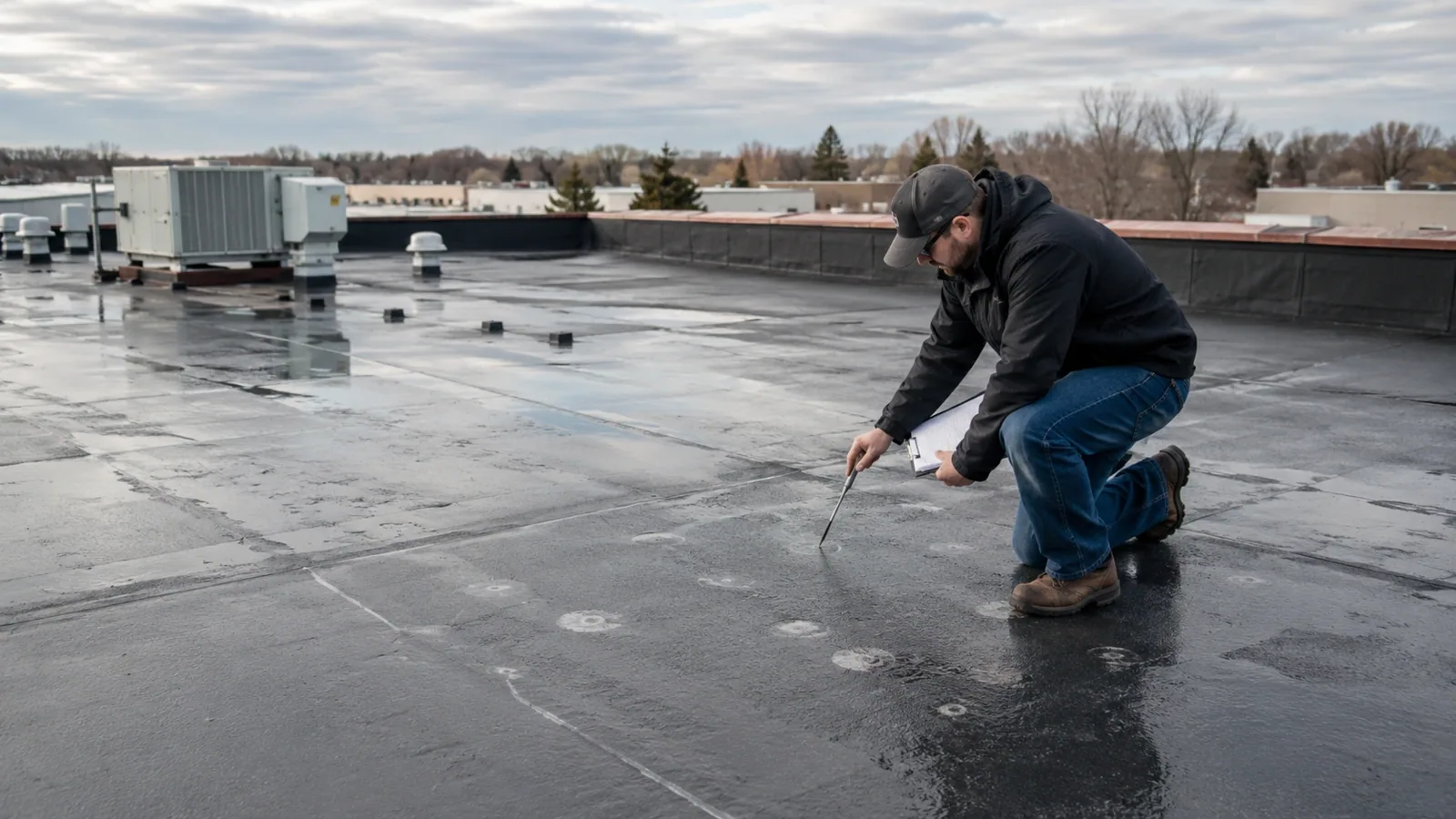
Walk the Plant Roof Zone by Zone
On a manufacturing roof, we divide the surface into zones and walk each one. We start at the drains and sumps, move along the longest seam runs, and finish at the edges and rooftop equipment. Process exhaust, vents and stacks put more penetrations on an industrial roof than on a warehouse, and each one is a place where flashing can fail.
Chemical and heat exposure matter too. A plant that vents steam, oils or fine fibers can change how a membrane ages near the discharge. We look at the surface downwind of each vent for staining, softening or residue, and we record it. July afternoons in Gastonia average 90.7 F, so ambient heat adds to what the process gives off. The result is a photo log and a ranked list that tells the owner which items are routine and which carry real risk to production.
Interior drains and sumps get a hose test, since a cracked leader inside a wall can mimic a membrane leak. We also look at skylights and roof hatches, which are easy to overlook and often the first places a plant roof leaks after years of use.
Read Older Mill Buildings on Their Own Record
The Mount Holly Cotton Mill dates to 1875, and older mill buildings are common across Gaston County. Their roofs often combine heavy decks, large flat areas, parapets and a history of repairs that nobody recorded. Cores and moisture scans show us what is under the surface and tell us whether the insulation is dry and the deck is sound.
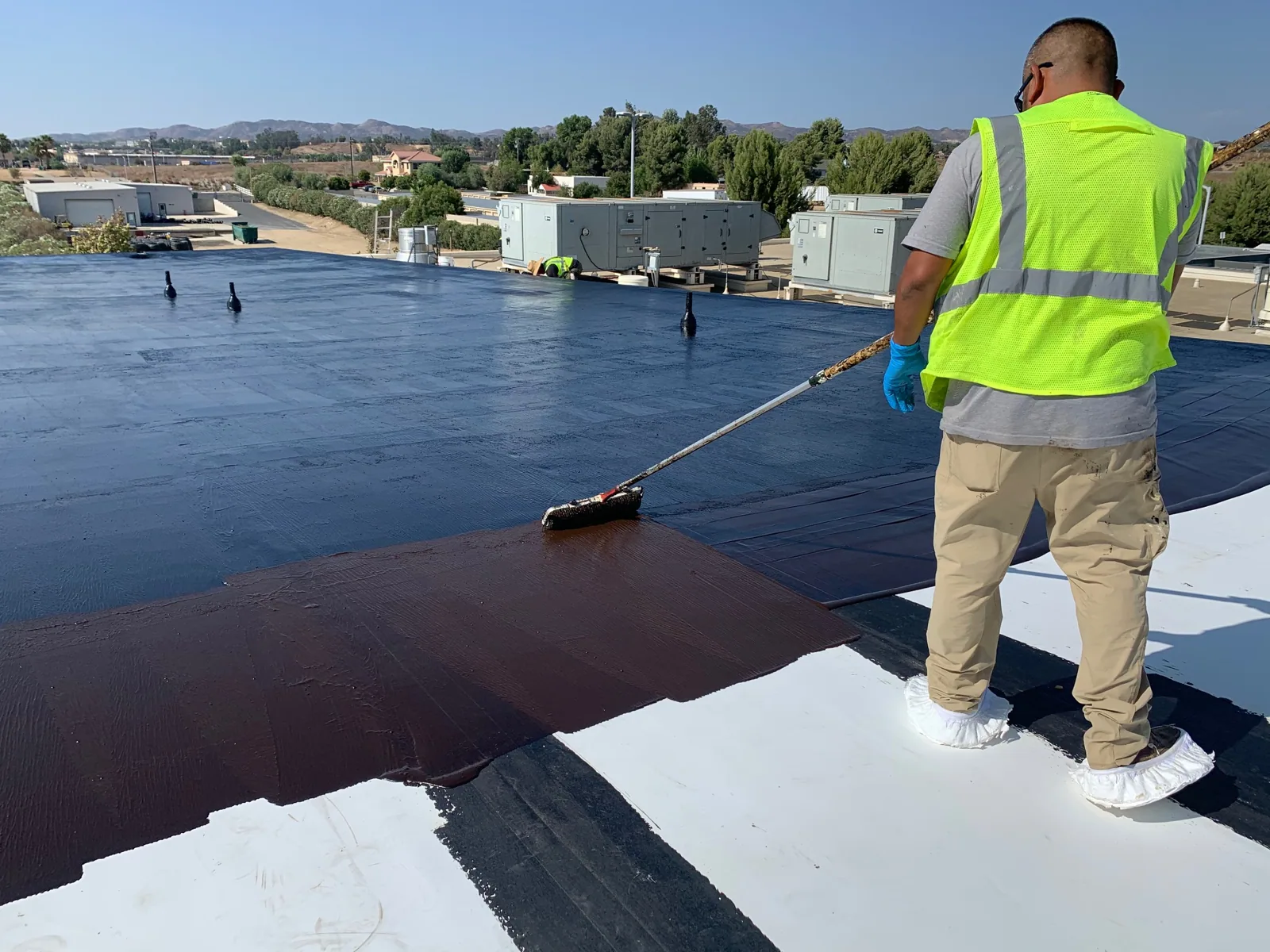
When a mill building is being reused, the roof question gets bigger. New tenants mean new loads, new penetrations and new expectations about leaks. We write the options as repair, restoration or replacement, with cost drivers beside each, and with a decision date the owner can plan around. A roof coating restoration can stretch a sound roof, and a commercial roof replacement is the answer when moisture has taken the insulation.
Count the Cost of Waiting
Rain near 44 inches a year, and spring storms on top, test every deferred item. A seam that opened a quarter inch in April can wet insulation by June, and wet insulation on a plant roof means a bigger project. We put two numbers on each finding: the fix this quarter and the likely cost if it waits.
For a plant, the cost of a leak is not only the roof. Water on equipment, stock or electrical gear can stop production, and that cost sits beside the repair on the same page. Owners then choose with the full picture. In some cases a repair now with a replacement planned a few years out is the right call. Planning ahead also lets work fit shutdown weeks, which cuts the disruption.
Check Edges Before Storm Season
The county's May 2024 tornado took part of a warehouse roof in East Gastonia, and a smaller tornado had crossed the area in May 2020. Large plant and warehouse roofs have long perimeters, and the edge is where wind starts a failure.
We pull on coping and edge metal, check fastener patterns and look at rooftop equipment tie-downs. Repairs go on the list in order of exposure. After any storm, the walk looks for the same signs as on any wind-damaged roof, and the photographs go into the claim file when needed.
Protect Stock, Equipment and People Below
Before the first panel comes off, we ask what sits under each roof zone. Whatever a plant makes or stores, from thread to wallboard to vehicle parts, reacts differently to water, and so does the electrical gear that runs the plant. Zones over the most sensitive material get temporary covers staged in advance, extra drainage and a slower tear-off.
People are the other concern. Roof work above a production floor means noise, vibration and falling debris risk, so we agree safety rules with the plant: exclusion zones, debris netting where needed and a clear signal for stopping work. Contractors who share the site are briefed on the plan, and our crew leader attends the shift meeting if the plant wants it.
The same planning covers fire safety. Hot work on a roof needs permits, watches and extinguishers, and we follow the plant's rules and the manufacturer's detail for every torch or hot-air tool on the job.
Hand Back a Record the Next Manager Can Use
At closeout, the owner receives the photo log, the core results, the moisture map and a short narrative of what was found and done. Warranty documents join the file, with inspection duties on a calendar. When a manager changes, or a plant is sold, the record travels with the building. A roof record keeps each roof's history in one place, so the next decision starts from facts.
Write a Scope With Production in Mind
A plant scope names the tear-off limits, the staging area, the crane days and the dry-in method, and it states the hours when noisy work can happen. We ask the maintenance lead for shift patterns, sensitive areas and shutdown weeks before we draw the plan. Truck routes and loading docks stay clear, and at closing time the crew leader walks the interior with the facility lead.
An owner who holds more than one building can bundle the roofs into a multi-site program with one calendar and one ranked budget. Neighboring work in Belmont and Gastonia follows the same steps, and the photo logs line up across sites.
Commercial Roofing Questions
Can you reroof a plant that runs three shifts?
Yes, with planning. We size each day's opening to what can be sealed, agree noise hours and access with the facility lead and keep temporary protection ready for any change in weather.
How do process vents affect a membrane?
Heat, oils and residue can age a membrane faster near the discharge. We inspect downwind of each vent, record the condition and recommend a compatible surface or a protective pad where needed.
What do you do about a roof that is half wet?
We map the wet zones with a scan and cores, then price repair of the sound areas and replacement of the wet ones. Treating the roof in parts often costs less than replacing all of it.
Do you offer a second opinion on a bid?
Yes. Send us the bid and the plan, and we will walk the roof and mark each place our findings agree or differ.
Which building code is in force for a reroof?
The 2018 State Building Code still governs until a date is set for the 2024 edition, and an owner can ask for the newer one. We settle which applies with the plan reviewer.
Topic
Mount Holly
Roof Types
Low-slope and metal

Related Roofing Work
Roof Coating and Restoration

Commercial Roof Replacement