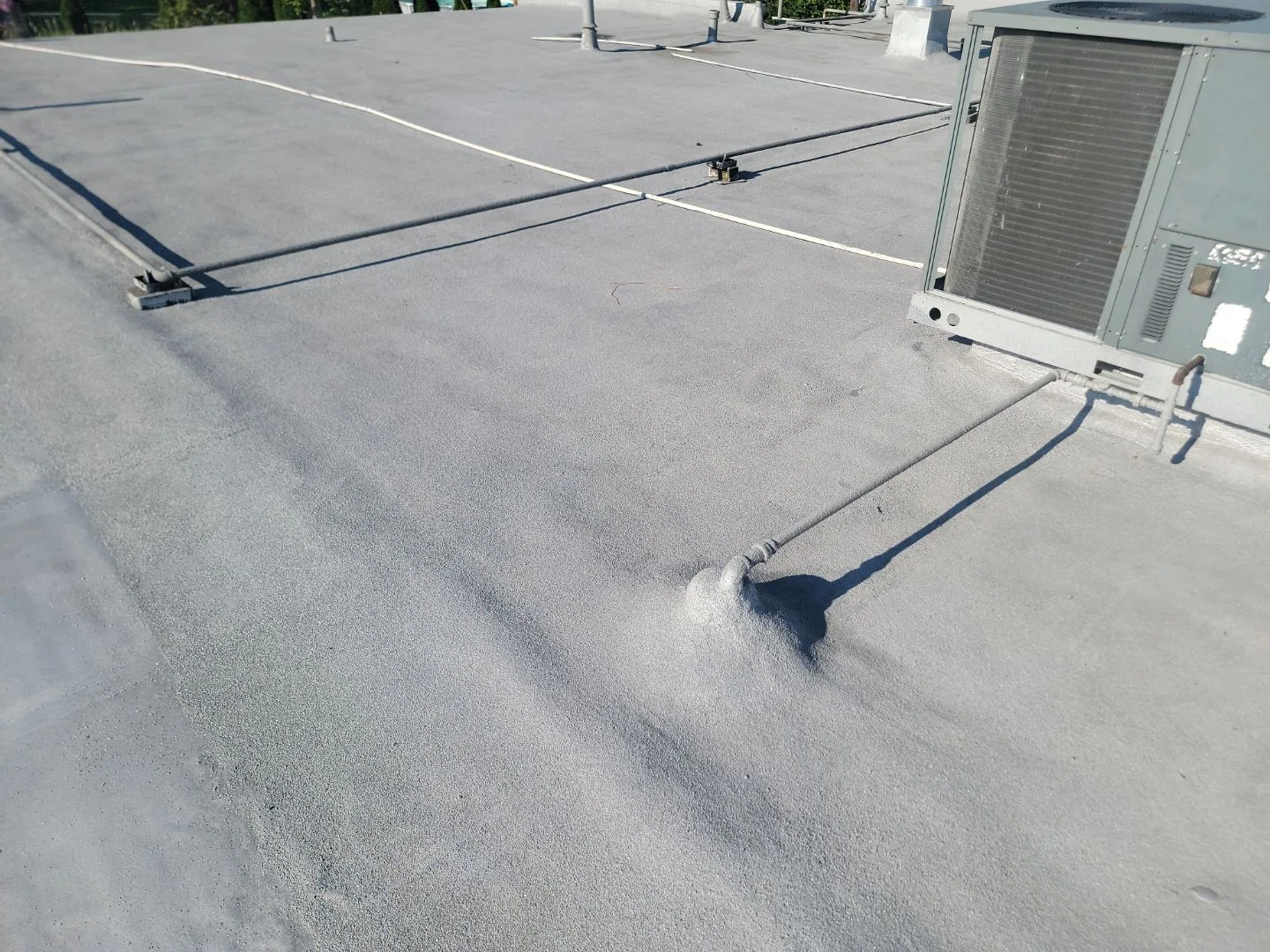

Roof Asset Management in Gastonia, NC
A roof file with no dates in it is a guess. On many roofs the repair history lives in three places: an invoice drawer, a facility manager's memory and the patches themselves. When the manager moves on, the memory goes with them, and the next owner pays to learn the same lessons again.
Roof asset management puts that history in one record, roof by roof, with a photo log, a remaining service life estimate and a line item for every deferred repair. In Gastonia, NC, where July highs average 90.7 degrees and spring storm season can hit a building with wind that lifts part of a warehouse roof, a record like that separates a planned year from a bad afternoon.
Build the Record Roof by Roof
Each roof gets a number, a plan and a baseline walk.
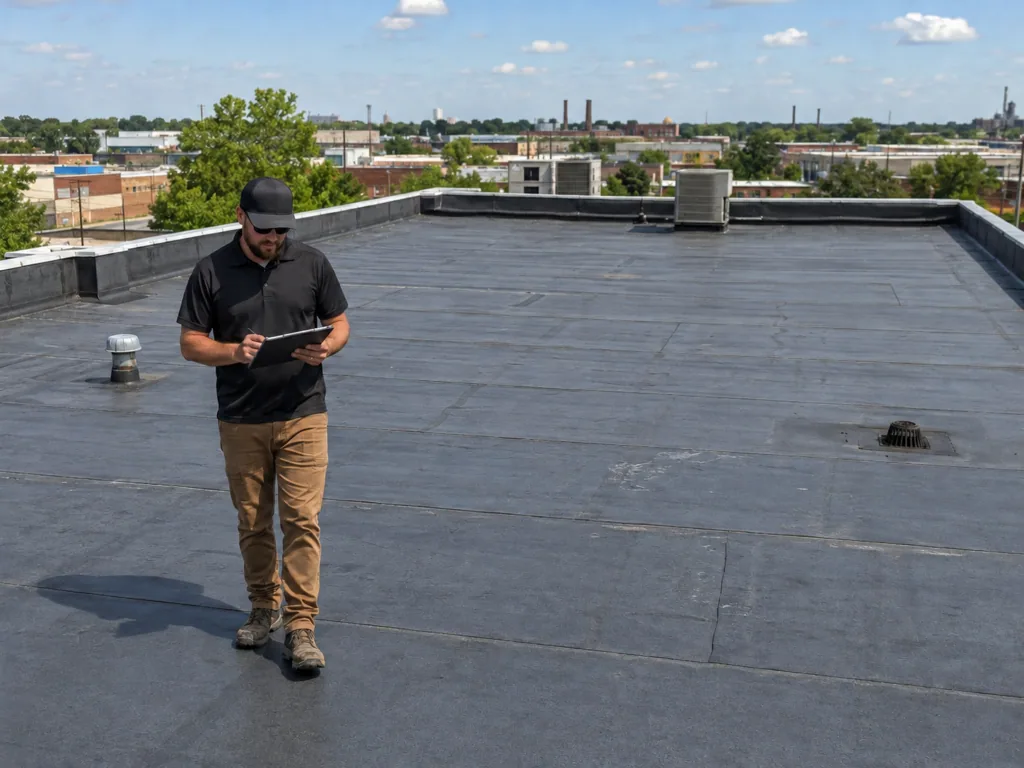
On the walk we photograph the membrane, seams, drains, flashings and penetrations, and we note what is there: roof type, approximate age, insulation where a core has been cut, and any warranty. Every finding becomes a line in the log with a date, a photograph and a plain description. Owners can read it without us in the room. When a building has several roof areas of different ages, as old mill-era buildings and later additions often do, each area gets its own entry so the oldest one does not hide behind the newest.
Each roof area keeps its own record from the first walk onward, however many owners it passes through.
Access notes go in the record too. How the roof is reached, where the hatch or ladder is, what the tenants need and whether a lift is required are facts that change the price of every later visit. A line in the file now saves a phone call later.
Estimate the Remaining Service Life
Age alone does not say how much life a roof has left. A fifteen-year-old membrane with dry insulation and tight seams can outlast a ten-year-old one that has ponded water at every drain. We estimate remaining service life from what we found: moisture, seam condition, surface wear, the repair count and how the roof drains.
The estimate is a range, not a promise, and it moves when the roof changes. The value of the range is that an owner can place it on a budget calendar. A roof with three years left is a capital line next to the decision date. A roof with ten years left is a maintenance line. The photo log shows why we chose each range, so a second opinion can check it against the roof.
With the range in hand, the owner can plan the year.
Heat does more of the work here than snow does. Snow in Gastonia is a minor 1.2 inches a year while precipitation sums to about 44 inches, so wear comes from summer sun, heavy rain and the occasional hard wind. That is why surface condition, seams and drains carry more weight in our estimates than snow load does, and why a roof in full sun on a long warehouse ages differently from a shaded one.
Price the Deferred Repairs
Every roof has a short list of things somebody saw and put off. A drain that holds ponded water. A seam that has opened along a parapet. A flashing that has pulled at a unit. None of them ruins a budget year alone, and two or three together, followed by a spring storm, can land a leak on racking or a tenant's ceiling.
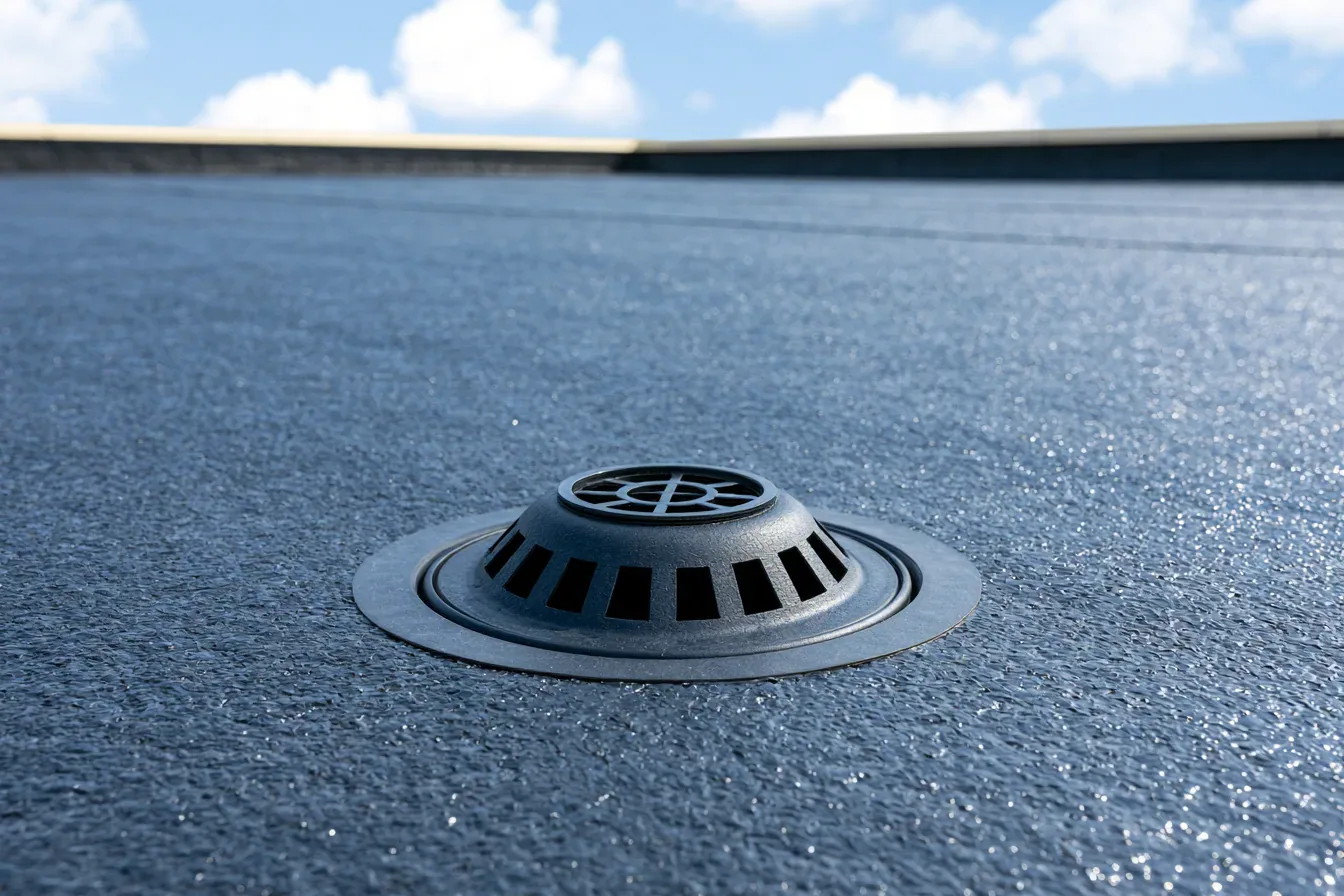
We price the list. Each deferred repair gets a line item, a scope of work and a note on what it costs to wait. Fixing a drain this quarter is a small line. Replacing wet insulation after a winter of ponding is a much larger one. Seeing both numbers on paper lets the owner choose the timing with open eyes. Roof drain and scupper work is usually the first item on the list.
The list is sorted by consequence. A leak over stored goods outranks a leak over an empty bay. An open flashing at a unit outranks a worn walk path. The order shows the owner which item protects the most value for the least money, and it makes the budget conversation shorter.
Cover Mills, Warehouses and Everything Between
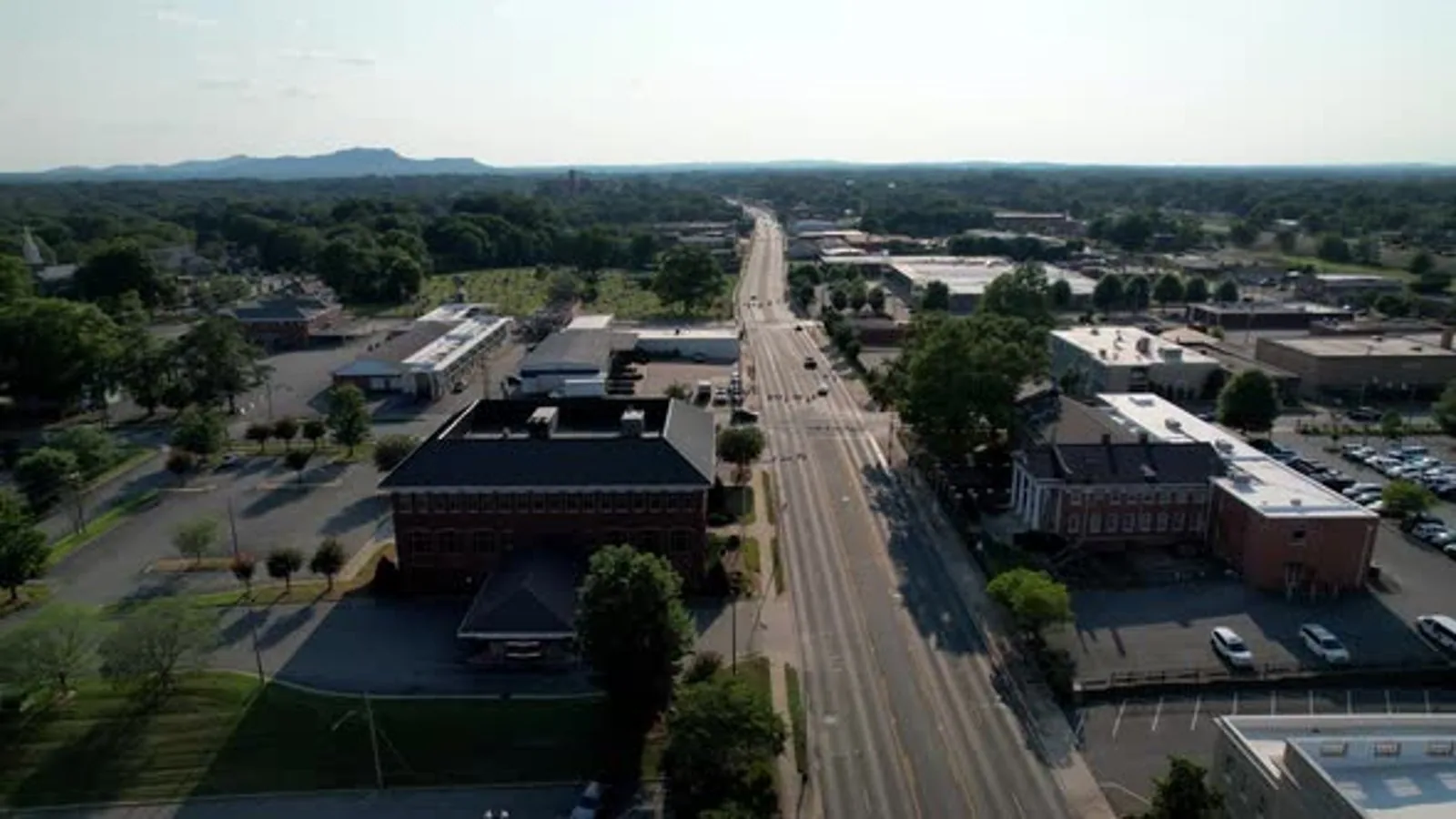
Gaston County holds an unusual mix. Gateway85 spans roughly 365 acres between Gastonia and Lowell and holds 2.4 million square feet of delivered space, among it a distribution center of 1.5 million square feet. Gastonia Technology Park covers 422 acres, and beside Gaston Memorial Hospital sits Summit at Court Drive, a 60-acre medical and office park. Next to them sit the legacy mills, including the five-story Loray Mill, which are being converted to apartments and mixed use.
A record built for that mix has to hold both a newer industrial roof and a century-old mill roof in the same format. That is what lets an owner with buildings in Gateway85 and a mill conversion near Loray compare them on one list.
Update After Every Visit and Every Storm
A record that is not updated is a snapshot. We add to ours after every maintenance visit, repair and storm. A tornado rated EF-1 followed a track on May 8, 2024 that began west of Gastonia and ended near McAdenville and Belmont. Several roofs were damaged, and one East Gastonia warehouse lost part of its roof. After an event like that, a dated photo log from before the storm is worth more than any description afterward.
We also record work by other trades. When someone mounts a unit or runs a conduit across the membrane, we log it, because that is where leaks start. Our preventive maintenance visits keep the log current, and they keep small things small.
Ice is part of this region's history too. Charlotte's ice storm of December 2002 left more than 1.3 million people without power, and Hurricane Hugo's 87 mph gusts arrived there on September 22, 1989. The log does not predict the next event. It shows what each roof looked like before it, which is the only way to separate new damage from old wear.
Put the Record to Work
The record has three uses. It sets the budget, because every line carries a cost and a date. It supports a loan, a sale or an insurance conversation, because it shows what the roof was before. And it ends arguments about whose job a repair was, because the photo log shows who touched what.
Owners with many buildings can move to a multi-site roof program, and the same record feeds a capital plan. The record belongs to the owner, and each visit also produces a written condition report that anyone can read.
Commercial Roofing Questions
What does it cost to start a roof record?
The first step is a baseline walk, and we quote it by roof area and access. After that, updates are part of each visit.
Can you build a record for roofs another contractor maintains?
Yes. We walk them, log what we find and leave repair work with whoever the owner chooses.
How do you estimate remaining life without cutting the whole roof?
With a moisture scan, a few cores, a seam probe and the repair history. The range comes from those findings.
Who owns the photo log?
The owner. It is delivered as files that can go to a lender, a buyer or another contractor.
How often should a record be updated?
After each visit, repair or storm. Two scheduled visits a year is the usual minimum.
Topic
Roof Asset Management
Roof Types
Low-slope and metal
Related Roofing Work
Roof Drains and Scuppers
Gateway85 Industrial Corridor