Commercial Roofing in the Gateway85 Industrial Corridor, Gastonia, NC
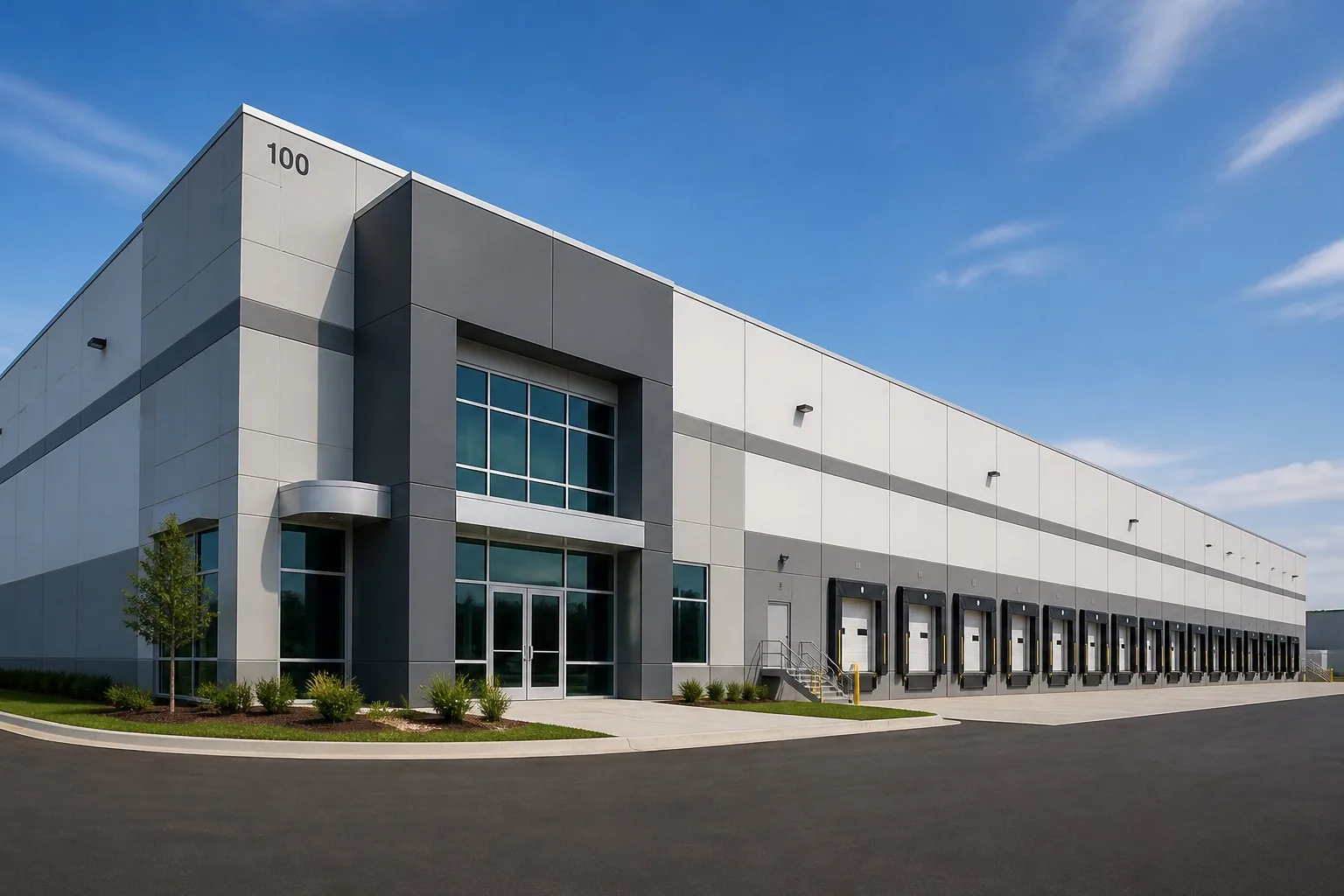
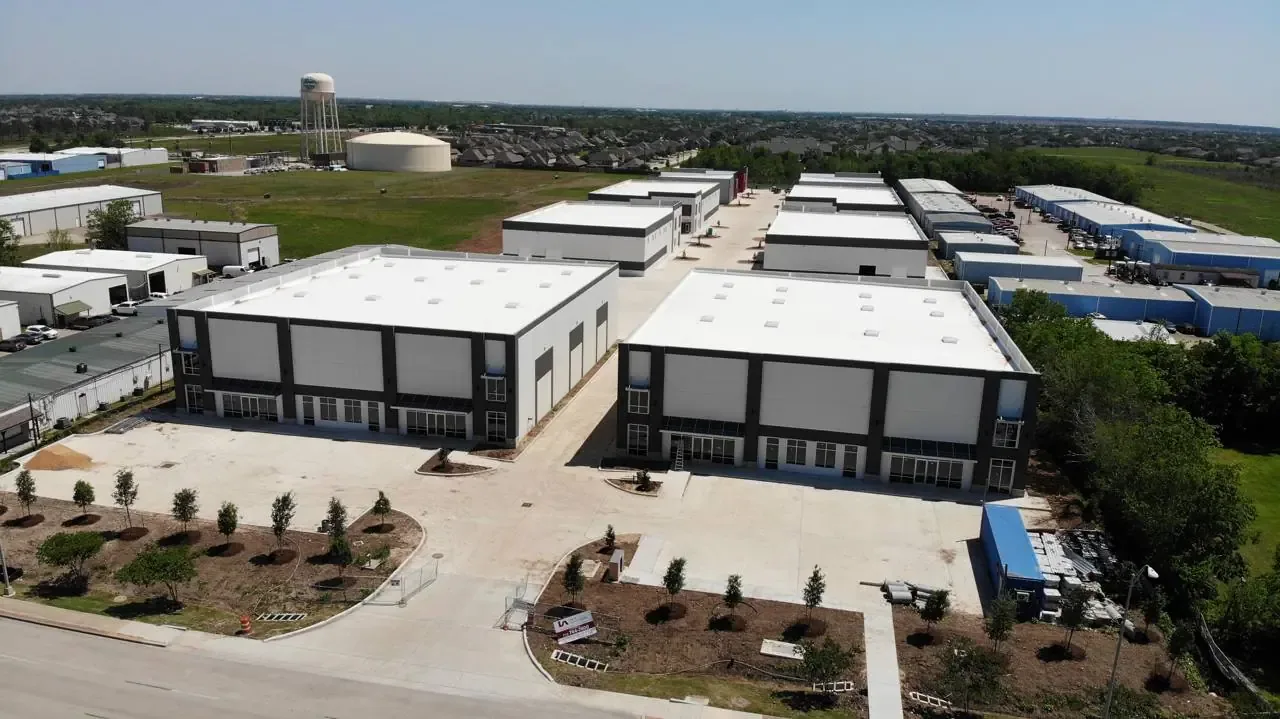
A long distribution roof that holds water at a drain is the first thing we check at Gateway85, because the finding shows up early and costs little to fix. NorthPoint Development built the Gateway85 Industrial Corridor on about 365 acres between Gastonia and Lowell. Buildings delivered so far add up to 2.4 million square feet, among them a 1.5 million square foot distribution center that opened in April 2023, with Amazon and the US Postal Service in other buildings.
Roofs in an area like this are large, and the work on them is mostly about drainage, seams, edges and rooftop equipment. At least another million square feet is planned, so owners and tenants here have warranty files, maintenance schedules and wind exposure to manage. We write that down before the first leak.
Walk the Drains and Long Seams First
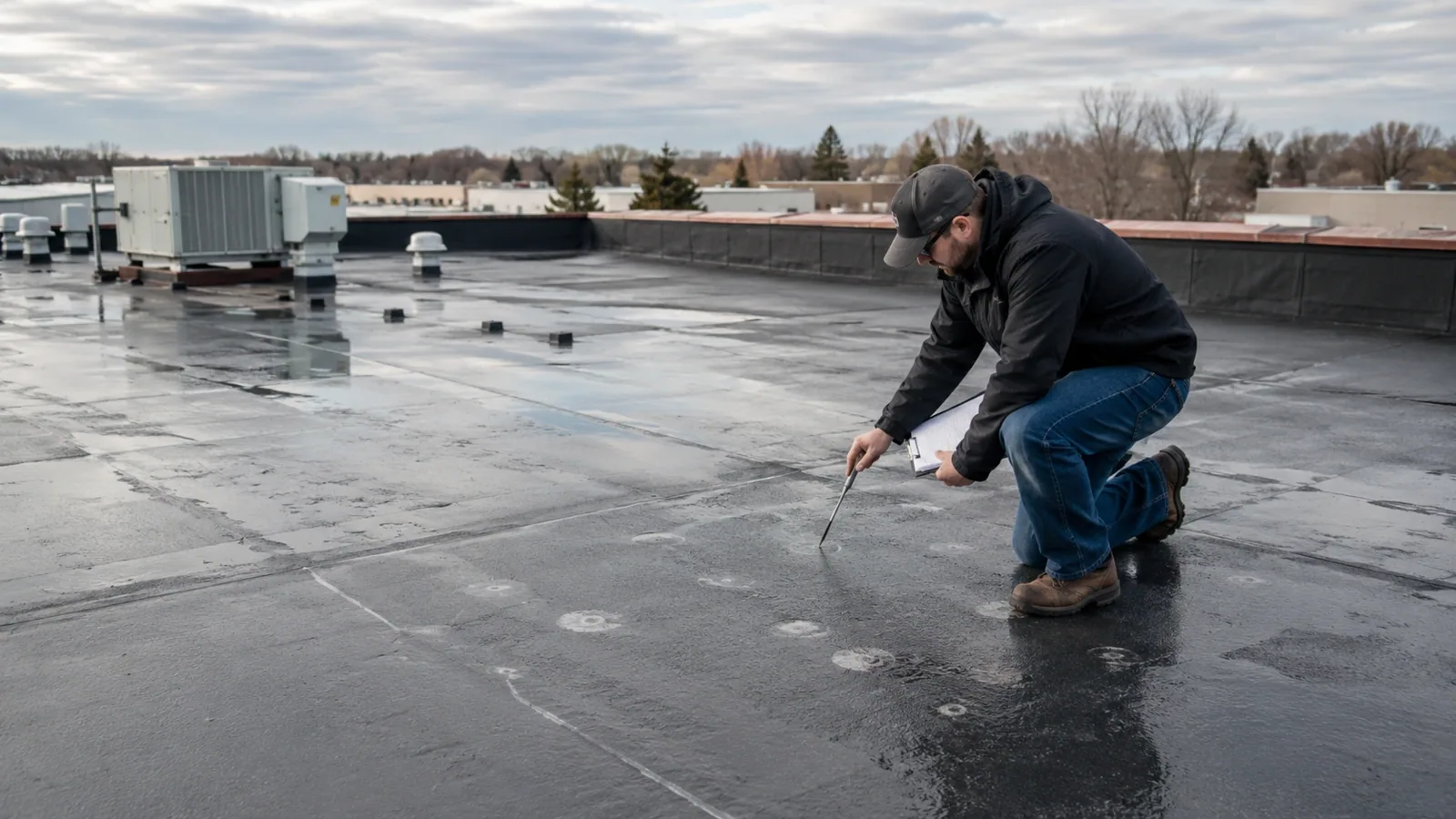
On a distribution roof, we begin at the drains and work out along the longest seam runs. Water on a large, low-slope roof has a long way to go, and one blocked outlet can hold water over thousands of square feet. We measure ponding depth, test the flow at each drain and mark any scupper that discharges poorly.
The edges come next. A large roof has a long perimeter, and perimeter metal is where wind starts a failure. We check coping, drip edge and the membrane termination, and we pull on a sample of pieces to see how they are held. A loose edge is cheap to fix before a storm and expensive after one. With July highs around 91 degrees in Gastonia, we also look at how the membrane has taken the sun at seams and flashings.
Rooftop equipment on these buildings is mostly mechanical and often added after the roof was finished. We note each unit, its curb and its flashing, and the walking path between units. Punctures along service paths are common, and walk pads cost little compared with a leak over inventory.
Plan for Wind Before It Arrives
In the May 8, 2024 EF-1 tornado, one East Gastonia warehouse lost part of its roof. The storm carried estimated 110 mph winds across the county and left minor roof damage on several buildings. An earlier May 2020 tornado, rated at about 85 mph, traced roughly 8.7 miles toward the Gastonia airport. Together they show why edge securement belongs in every roof conversation here.
The question for each owner is whether the edge and attachment details match the exposure, and a walk answers it. Where the answer is no, the fix is a continuous cleat, a tighter fastener pattern or a rated edge system, priced as a line item. After any storm, the post-event walk is the same one a wind-damaged roof gets: edges first, then equipment.
Price Repair Against Replacement
Rain totals near 44 inches a year, and warehouse roofs that hold water pay for it in seam and insulation damage. For a newer building, the usual path is repair and maintenance under the existing warranty, so the first thing we read is the warranty and its inspection duties. For an older roof nearing the end of its service life, the path is a coating, a recover or a replacement.
Cost drivers are roof area, drain count, access by lift, the amount of wet insulation and the number of penetrations. We list them in plain terms and do not invent figures. For owners who hold several buildings, multi-site roof programs put every roof on one calendar and one ranked budget, and a distribution center roof gets the same ranked list as any other building in the program.
Timing has a price too. Heavy work in spring storm season carries weather risk, so the schedule aims for settled stretches and keeps temporary protection staged. Planned work scheduled well ahead usually costs less than the same work done after a storm, when crews and materials are in demand.
Work Around Docks and Shifts
Distribution buildings run on schedules. Trucks arrive, docks cycle and shifts overlap. A roof job cannot block a dock apron or trap trailers, so the staging plan starts from the yard. We agree the crane pick, the lay-down area and the access hatch with the facility lead, and we set the roof opening so each day's work is dried in before evening.
Interior risk is the other concern. A leak onto racking or stock costs far more than the repair, so we ask where the sensitive inventory sits and plan temporary protection over it. Roof traffic is kept off the dock side during loading hours when possible.
Keep the Warranty File Clean
Newer buildings usually come with a manufacturer warranty, and the file is only as good as the paperwork behind it. We ask for the warranty document, the installer's closeout and the inspection record on the first day. Many warranties require periodic inspection and prompt repair, and a missed duty can give the manufacturer grounds to deny a claim.
Tenants matter here as well. A tenant's HVAC vendor, security installer or racking contractor may be the next person to put a hole in a membrane. Access rules and a roof log, posted at the hatch, record who went up, when and why. If damage occurs, the photographs before and after settle responsibility and protect the owner's coverage, which is the whole point of warranty management.
Repairs are made to the manufacturer's published detail and logged with date, weather and photographs. That small habit keeps a warranty claim from falling apart over a missing record.
Look Beyond the Corridor
Gateway85 sits between Gastonia and Lowell, so a crew can work both sides. The Lowell side adds older textile-era buildings and rail frontage, and work at Gastonia proper adds retail and medical roofs. The same walk, photo log and written findings apply wherever the building sits.
Closeout is the same everywhere. The owner walks the roof with the crew leader, checks each drain, edge and tie-in, and receives the photo log and the written findings the same week. If a repair has a condition attached, such as a retest after the next heavy rain, it is written on the closeout sheet with a date.
Insurance and lenders ask about roofs on large buildings. A dated photo log, the warranty file and the maintenance record answer most of what they ask, and they are cheap to keep current when the walks are scheduled.
Commercial Roofing Questions
How do you handle a roof with an unknown warranty status?
Paperwork comes first. We match it to the roof, record any gap, and hold off on work that could jeopardize coverage until the owner confirms the terms.
Can maintenance be done without stopping dock operations?
Yes. Drain clearing and seam checks happen on the roof and do not touch the docks. Larger repairs are scheduled with the facility lead, and roof traffic stays off the dock side during loading hours when possible.
What do you inspect after a tornado warning?
Edges, coping, rooftop units, skylights and any loose debris. Photographs go in the file before cleanup, and temporary seals go on any opening the same day.
How often should a large roof be walked?
Twice a year is a good rhythm, before and after the spring storm season, with extra walks after major storms. Photograph the same spots each time so change is visible.
Do you service tenant-managed roofs?
Yes, with the landlord's approval. We record in the file who is responsible for which roof area, so repairs and warranty duties do not fall between owner and tenant.
Topic
Gateway85 Industrial Corridor
Roof Types
Low-slope and metal
Related Roofing Work
Wind Damage Roof Repair
Multi-Site Roof Programs