Wind Damage Roof Repair in Gastonia, NC
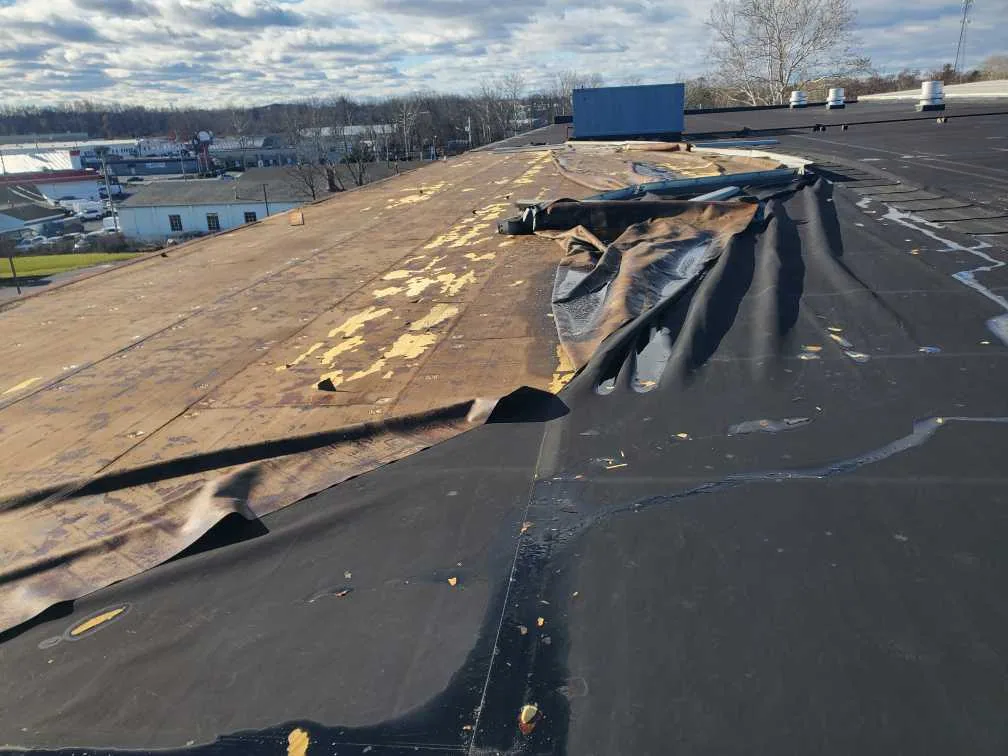
Wind finds the edge first. After a storm line crosses Gaston County, the first thing a roofer sees on a commercial building is a strip of edge metal pulled away from the parapet, a corner of membrane lifted and rippled, or flashing peeled back from a rooftop unit curb. Each one looks small from the ground. Each one lets water behind the sheet at the first rain.
The question for the owner is not whether the wind did something. It is how far the damage runs under the surface, what repairing it costs this month and what leaving it costs by the end of the season. We write both numbers down.
Walk the Perimeter Before the Field
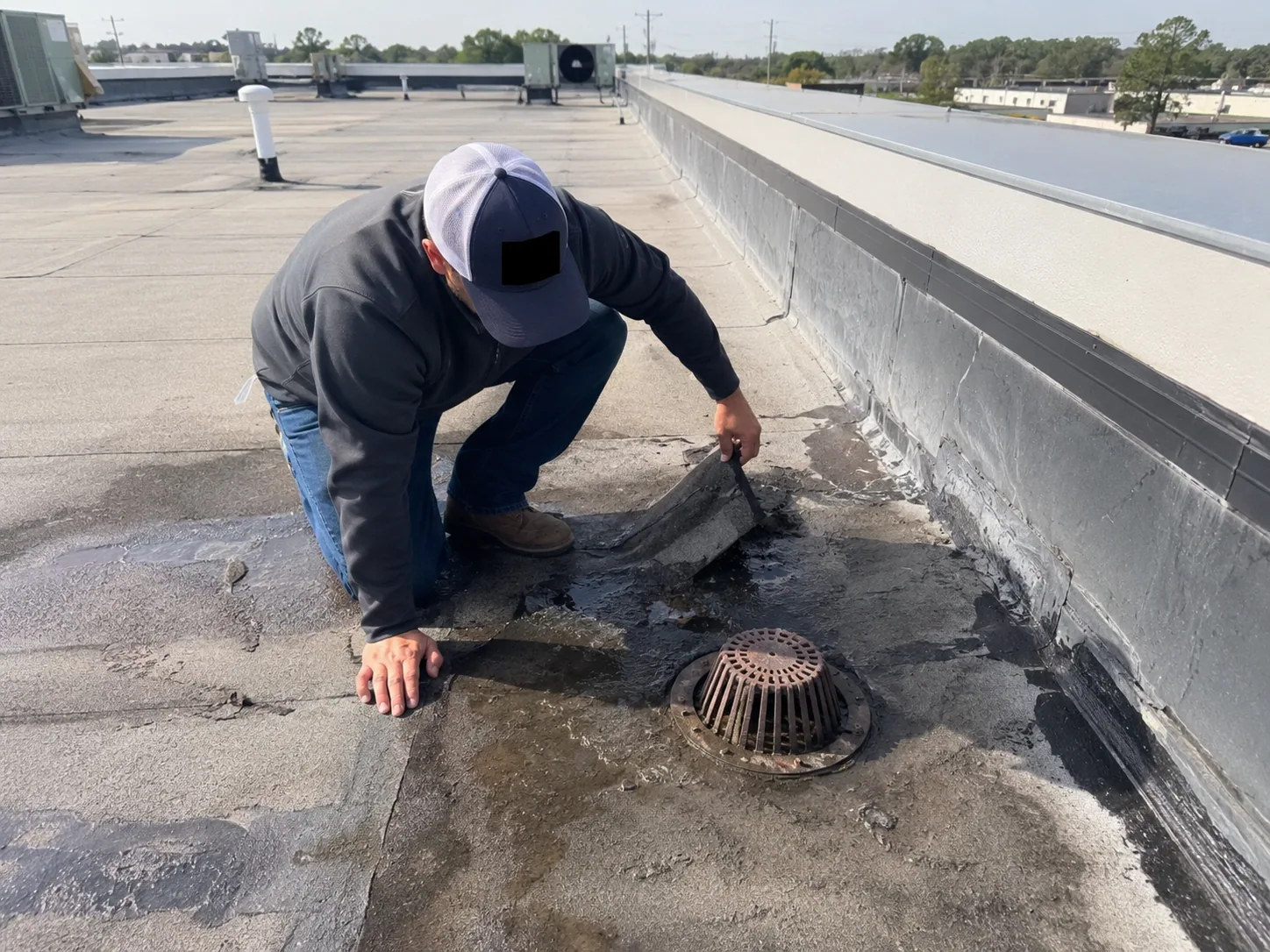
Uplift starts at corners and edges because the wind accelerates around them, so we start the walk at the perimeter. We check the edge metal and coping for loose fasteners, open joints and bent drip edge, then the base flashing at every parapet and wall for lifted or torn sections. Next we look at the membrane near the edges for billowing, creases and pulled seams, and the fasteners or adhesive beneath for signs the sheet moved.
On the field of the roof we look for punctures from debris, dented rooftop unit housings, displaced vent caps and drains packed with leaves and trash. Every finding is photographed with a date and marked on a plan, so the owner, the carrier and the next contractor can follow it.
Where the membrane is mechanically attached, we also look at the fastener plates near the perimeter, since a plate that has pulled through the sheet leaves a visible dimple. On an adhered system we press along the edges and seams to find areas where the bond has let go. If the roof has gravel or pavers for ballast, we note where they have shifted, because wind moves ballast toward the edges and leaves the center bare.
Measure the Damage Against the Storms This County Has Had
Gaston County has seen real wind. Wind in the EF-1 tornado of May 8, 2024 was estimated at 110 mph, and the storm left minor roof damage on several buildings while it took part of one East Gastonia warehouse roof. A weaker tornado came through in May 2020, and Hurricane Hugo's gusts of 87 mph reached Charlotte in 1989, which shows that tropical remnants can bring damaging wind this far inland.
Those events are the reason edge metal, attachment and flashing deserve a look after any strong line, and the reason we inspect before drawing a conclusion.
Price the Repair Against the Cost of Waiting
A lifted edge repaired the week after a storm is a fastener-and-sealant job. The same edge left alone through a wet month lets water into the insulation, rusts the deck and turns into a section replacement. Rainfall near 44 inches a year makes a wet month likely, not hypothetical. We give the owner a repair figure for now, the likely figure if the roof waits until the next budget cycle and a note on what changes in between. A fourth figure helps when the building is leased: who pays under the lease, and whether the tenant's inventory or equipment is at risk while the roof waits.
That is the version of the number that survives a budget meeting. The choice comes down to fixing the edge this week or planning to fix the deck next year.
Fix the Attachment, Not Just the Hole
Wind damage repair means restoring attachment. Edge metal is re-secured with the right fasteners at the right spacing, coping joints are sealed, torn flashing is replaced back to sound material and lifted membrane is re-adhered or re-fastened to its original standard. If the fasteners have pulled out of a weak deck, we say so and reset them into sound material. A patch over a sheet that is still loose will fail in the next wind.
Temporary protection comes first when the roof is open. A crew can tarp a torn section, strap down loose metal and clear drains within hours, and the tarp is fastened to the structure rather than the sheet so it does not add a second loss to the first. Temporary measures are logged with a date, because the carrier will ask what was done to keep the building dry and when.
Where damage is widespread, the answer may be a storm damage repair across several sections or a replacement. For smaller losses, flashing failure repair and membrane puncture repair cover the details.
Check the Buildings Wind Hits Hardest
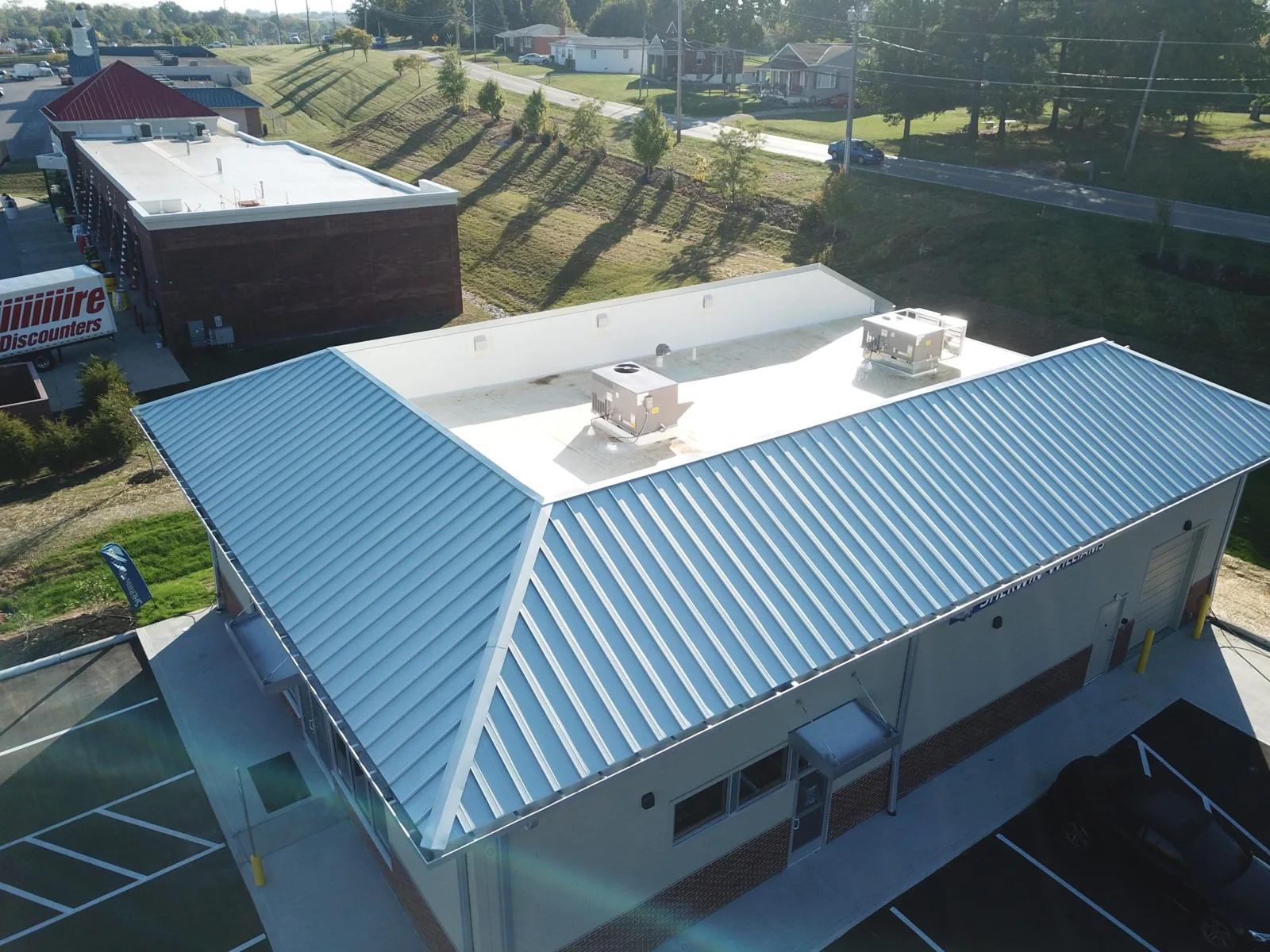
A long, low industrial building has little to slow the wind, so the perimeter at Gateway85 and along I-85 is where a walk starts. Old mill-era buildings near Loray can fail differently, by letting wind get behind aged coping. A retail strip near Eastridge Mall or along New Hope Road may have canopies and parapets that catch gusts. Each building type gets its own list of what to look at first. Metal roofs add ridge caps, panel laps and eave closures to the list, and a short walk of those details often finds a loose run that a membrane-style inspection would miss.
Plan Access So the Repair Does Not Cause a Second Problem
Repairs happen on occupied buildings, and the crew should not create a new problem while fixing the first. Before the crew arrives we settle the roof access route, who holds the keys and which tenants sit below. Lifts and staging stay clear of docks, fire lanes and customer entrances, and noisy tasks are kept to hours the tenants can live with. If the forecast turns, the crew closes any open section before leaving, and a short daily note tells the property manager what was opened and what was sealed.
Where a building has rooftop equipment near the damaged edge, the owner's technician handles any shutdown while we log the hours the unit is off. That log protects the owner if a tenant later asks why the air handler was down.
Debris on the ground tells part of the story. Pieces of coping, loose screws and scraps of membrane found around the building show which edge let go first, and photographing them before cleanup helps place the failure on the roof plan.
Build the File the Carrier Will Ask For
A wind claim depends on dates, photographs and a plan. We record each finding, separate new damage from old wear and note moisture readings where insulation may be wet. Where an approved scope covers only part of the damage, we state what it covers and what it leaves. An infrared moisture survey on a dry evening maps the wet areas so the repair removes only what is wet. The same file feeds a later roof condition report, and our claim documentation keeps measurements and photographs together.
Commercial Roofing Questions
How fast should wind damage be repaired?
Edges and open flashing within days, before the next rain. Temporary cover goes on the same day if the roof is open.
Can I tell wind damage from age?
Often. Damage at corners and edges, with a direction, points to wind. Worn sealant and old patches point to age.
Will a patch hold on a loose membrane?
Rarely. Attachment is restored first, then the patch goes over a sheet that is firmly in place.
Does wind damage always mean replacement?
No. Many losses are edge and flashing repairs. Replacement enters when insulation is wet across much of a section.
What should I photograph before you arrive?
The ceiling stains, any loose metal on the ground and the date. We handle the roof-level documentation.
Topic
Wind Damage Roof Repair
Roof Types
Low-slope and metal
Related Roofing Work
Storm Damage Roof Repair

Commercial Roof Replacement