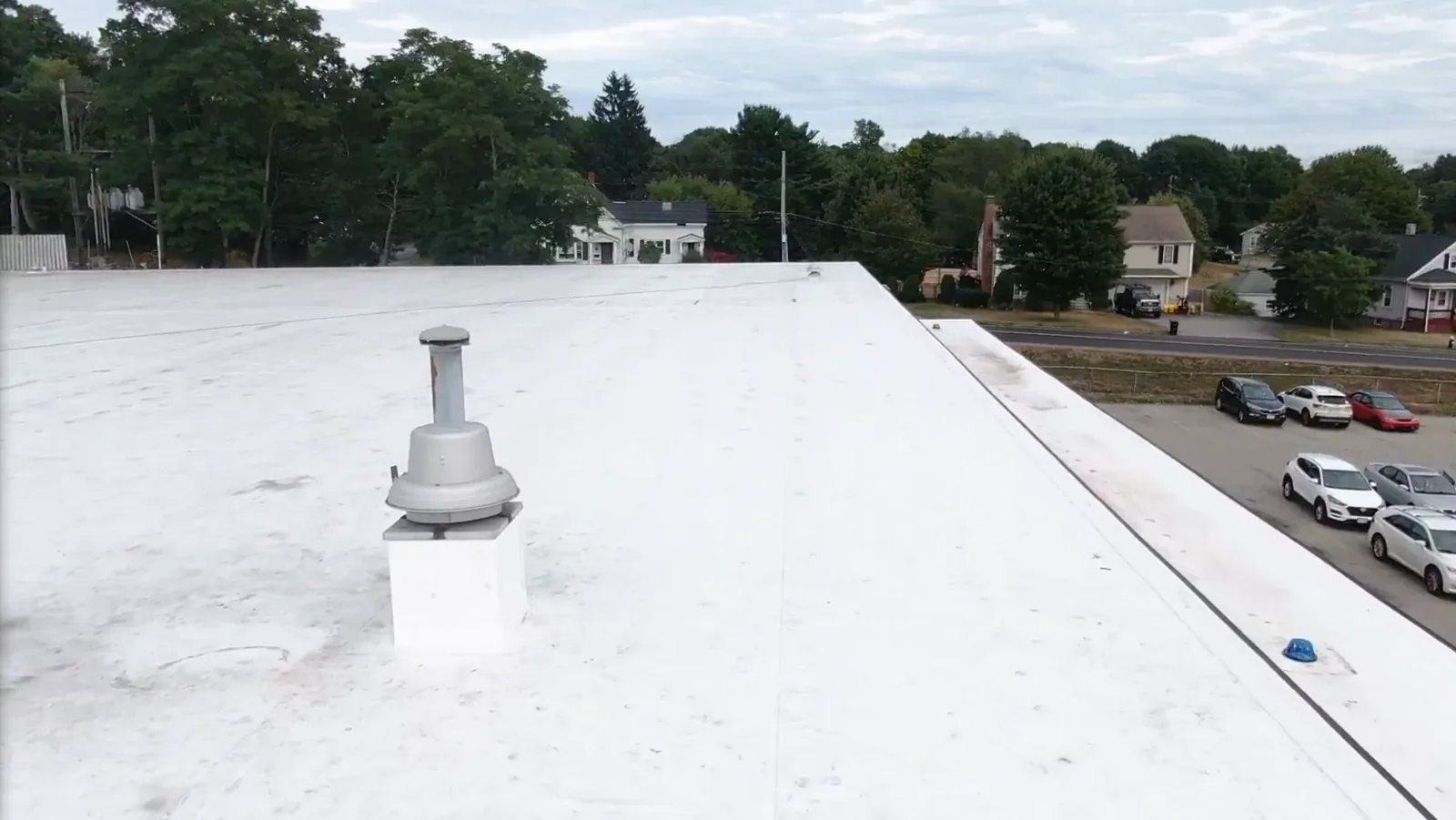

Membrane Puncture and Foot-Traffic Damage Repair in Gastonia, NC
A puncture on a Gaston County roof is rarely dramatic. A technician steps back from a rooftop unit with a screwdriver in his hand. A dropped tool lands on the sheet. A tree limb scrapes a corner during a storm. The hole is small, the sheet seems fine and nobody tells the owner. Water does not need a big hole. It gets under the membrane, wets the insulation and travels, and the first sign of it is a stain in a room that has nothing to do with the roof edge.
The owner's question is how many holes there are, what each one cost to leave and how to stop adding new ones. We answer those with a count, a price and a plan.
Look Where Feet and Tools Go
Punctures cluster along service paths. We start at the roof hatch or ladder and follow the route a technician would take to each rooftop unit, exhaust fan and drain. Along the way we look for cuts, scuffs, depressions where the sheet is thin, fastener heads pressed through the surface and debris such as screws, wire and broken tile that has been left behind. Then we check around equipment curbs, where kneeling and dragging do the most damage, and around drains, where people step to clear leaves. Roof hatches and ladders get a look as well, since the landing zone below a hatch takes the heaviest boot traffic on the building.
Every finding is numbered on a plan with a photograph. We probe each puncture and the area around it to see whether the hole is through the top ply or through the whole sheet, and we check the insulation beneath for moisture. Where a roof surface is coated or granulated, we look for the exposed base layer, since a scuff that has gone through the surface granules is the beginning of a puncture even when it is not yet a hole.
Sort Punctures by What Caused Them
A puncture from a dropped tool is a one-time repair. A worn path from a hatch to a unit is a pattern, and the fix includes a walk pad. A puncture from storm debris, such as limbs and flying material, belongs in a claim file and should be photographed with a date. A puncture caused by a failing fastener that has backed out of the deck is a symptom of attachment trouble, and a patch over it will not last. Gravel and ballast can also cut a sheet when it shifts in wind, and we look for scrapes where the stone has moved.
The repair differs by cause. The report says which kind each puncture is, so the owner does not pay twice for the same problem.
Heat plays a part. A membrane surface in a Gastonia July, with a mean daily high near 90.7 F and roof temperatures well above that, is softer than it is in March, and a boot or a dragged tool does more damage in August than it would in winter. Service contractors who visit on hot afternoons should know that a pad, a plank or a kneeling mat protects the sheet, and the facilities manager can say so in the service contract.
Count the Cost of a Small Hole
A puncture patched the week it happens costs very little: clean, patch, test. The same hole left through a wet month lets water into the insulation, and wet insulation costs far more than the patch. One bad pattern is three or four punctures near a rooftop unit leaking quietly for a year, with a stain that only recently showed indoors. By then the repair is a cut-out, a dry-in and a re-roof of the area.
Rain adds up to about 44 inches a year, so a hole will see water. We give the owner the patch cost, the cost if the hole waits a season and the point at which a damaged section is cheaper to replace than to patch. If the roof has dozens of punctures, a recover or a coating restoration may beat patching one by one, once the holes are sealed and the insulation checked. The choice is to patch it now or dry it later.
Patch It Right and Protect the Path
On a thermoplastic sheet such as TPO or PVC, a puncture is cleaned and sealed with a welded patch that extends well beyond the hole. On EPDM, it is cleaned, primed and covered with a cured or uncured patch. On modified bitumen or built-up roofs, it means cutting out damaged plies and building the area back up with matching material. We probe the edges of every patch, test the weld or bond and photograph the finished repair beside the original hole, so the owner can see exactly what was done.
The second half of the repair is prevention. Walk pads go on the service path, raised supports lift conduit and piping off the sheet and a housekeeping note goes to the facilities manager and the HVAC contractor. We also pick up and bag any debris left on the roof, since a screw or a strip of wire is the next puncture waiting to happen. Related problems such as seam failures and flashing failures are often found along the same path.
Know Which Buildings Get the Most Foot Traffic
Retail centers and restaurants carry a lot of rooftop equipment and see frequent service calls, so their roofs are where worn paths show up. Stores and strip centers along New Hope Road near Eastridge Mall are the kind of building to check. Medical and office buildings around Gastonia have chillers and air handlers that need regular access. Distribution roofs at Gateway85 have fewer units but are large enough that a single wandering service path can cut across the whole building. Old mill-era roofs near Loray and in Belmont add a different risk: aged sheets that have gone hard and brittle puncture more easily, and a walk across an old built-up roof can crack the surface where a new roof would flex.
Document Storm Debris Punctures for the Claim
After the May 2024 EF-1 tornado crossed Gaston County, a roof in its path could have collected limbs and fragments that cut the membrane. Debris punctures belong in a dated file with photographs, location marks and moisture readings. If a carrier is involved, our claim documentation separates storm damage from foot traffic wear, and an infrared moisture survey outlines the wet insulation so the repair removes only what has to go. Debris punctures follow tropical systems as well as spring tornadoes, since Hugo's gusts reached 87 mph in Charlotte in 1989, and the same dated record serves either.
Commercial Roofing Questions
Is a small puncture worth a visit?
Yes. Water through a small hole can wet the insulation for months before a stain shows. A patch is quick and a moisture check shows whether more is needed.
What is a walk pad?
A protective membrane strip along the route to equipment. It takes the wear so the roof sheet does not.
Can a technician's visit cause a puncture?
Yes. Service traffic along the same path wears and cuts the sheet. Walk pads and a note to the service contractor reduce it.
Does a patch last as long as the roof?
A correct patch on a clean, dry sheet can. A patch over wet insulation or a moving fastener will not.
Will the warranty cover punctures?
Most warranties exclude foot traffic and impact damage. We read the terms and tell the owner what applies.
Topic
Membrane Puncture and Foot-Traffic Damage Repair
Roof Types
Low-slope and metal
Related Roofing Work
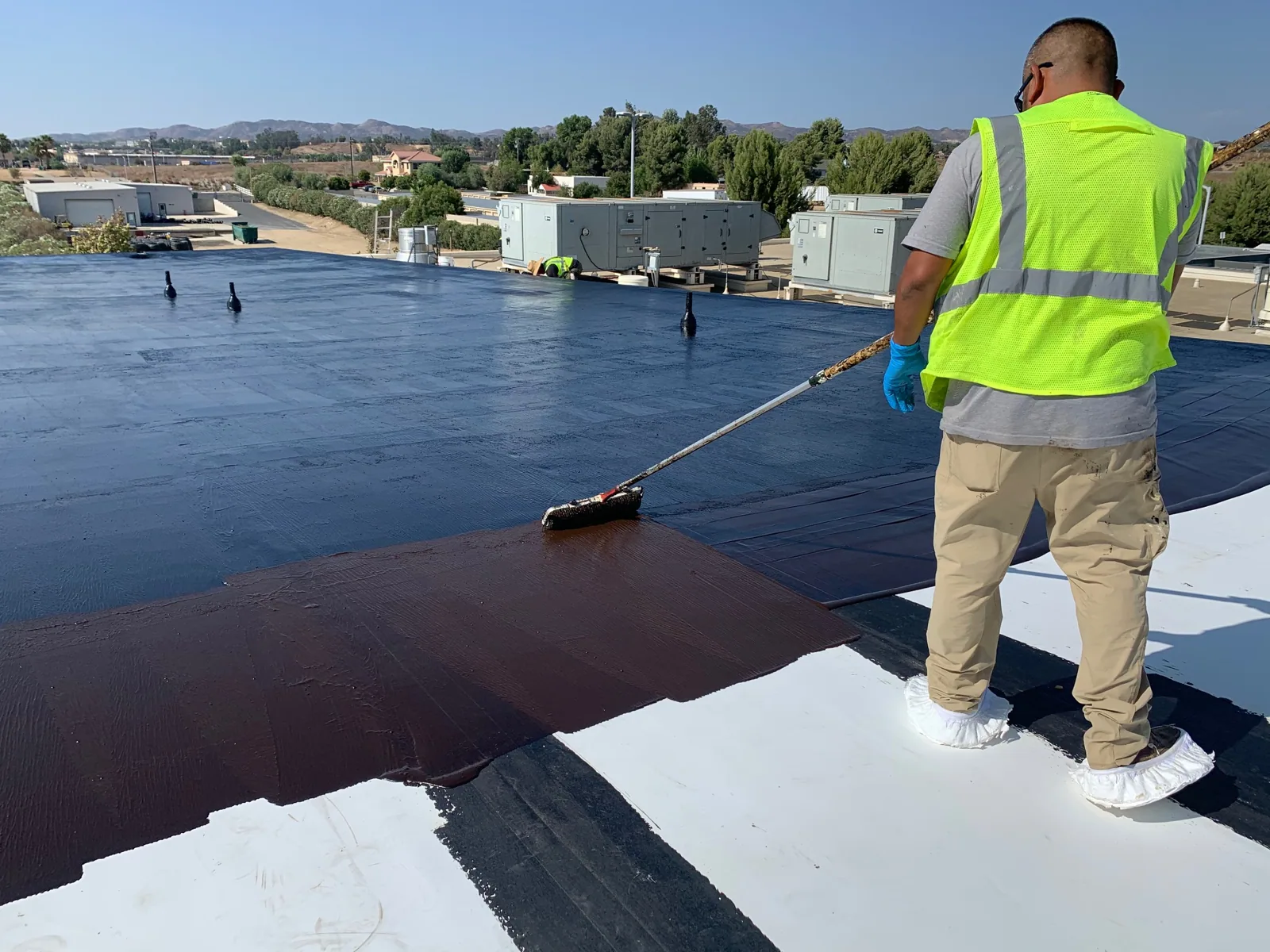
Roof Coating and Restoration
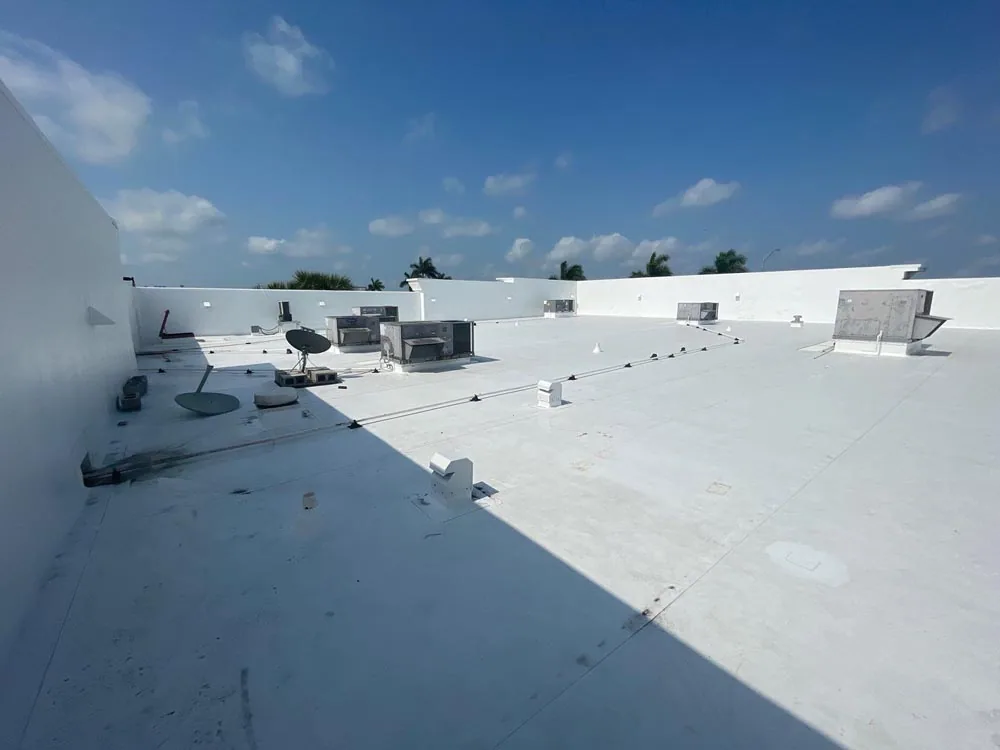
TPO Roofing