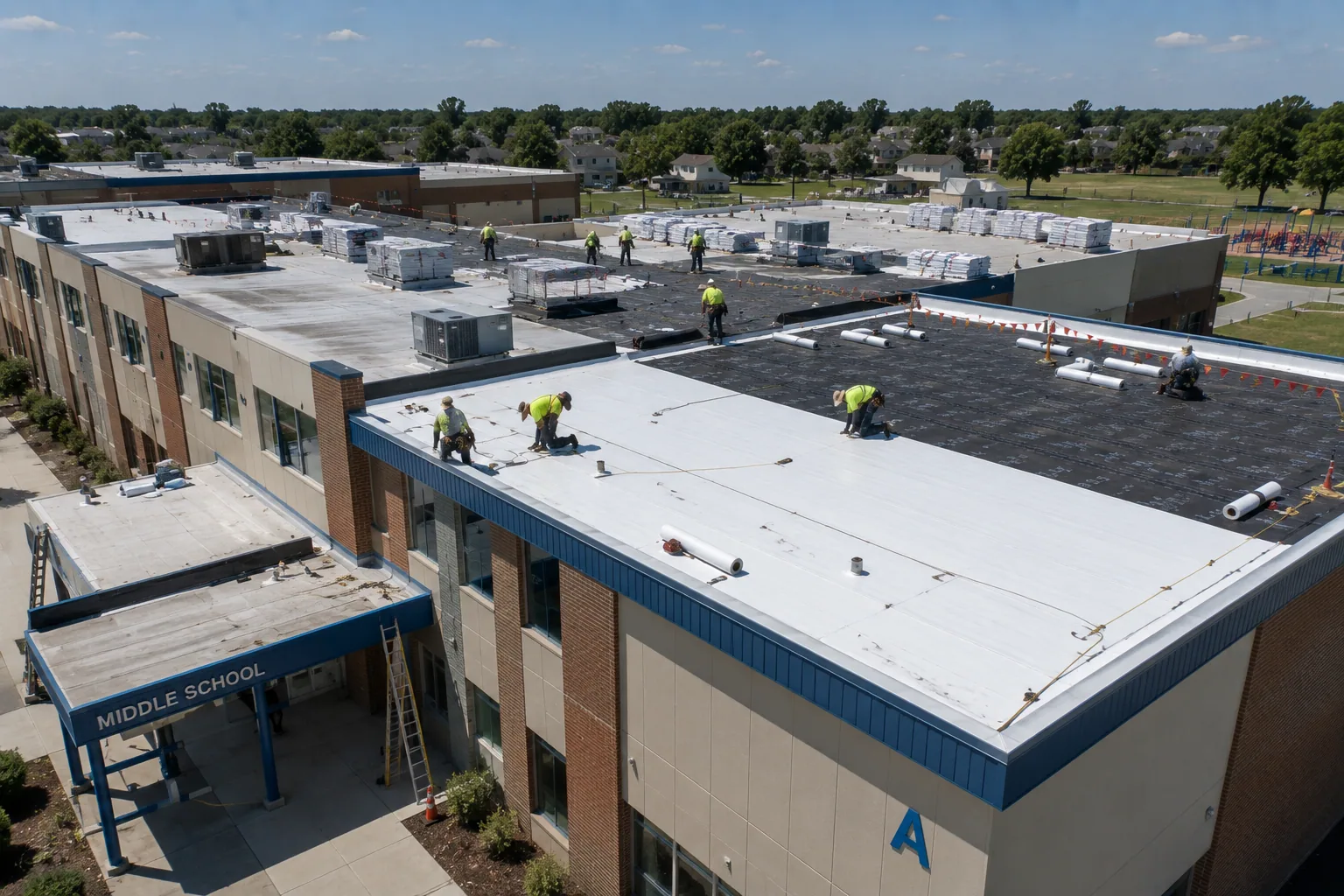
Roof Coating and Restoration in Gastonia, NC
A flat roof that is chalky, faded and dotted with small patches, but dry underneath. That is the roof a coating was made for. The membrane has lost its surface, not its structure, and a new reflective layer can add years for a fraction of what a replacement costs. The trouble is that a coating also gets sold to roofs it cannot help. The first job on any restoration quote is to find out which kind of roof you own. A coating over wet insulation is money spent hiding a problem.
The budget question has three parts: what the roof costs to coat, how long the coating will buy and what happens at the end. A fair answer names the range for each, says what was tested to reach it and sets a date to decide again. The coating is a bridge to a later replacement, and the bridge has a length that should be written down.
Test the Roof Before You Coat It
Coating decisions start with evidence. We walk the roof and look for open seams, blisters, ridges, cracks and ponded water. We take an adhesion test to see whether a coating will bond to the existing surface. We run a moisture survey, because a coating seals the top of the roof and traps whatever is already inside it. Core cuts at suspect spots show the layers and confirm what the scan suggests.
Three results end the coating idea fast. Wet insulation over a wide area. A membrane that has shrunk or split along most of its seams. A deck that has rusted or rotted. Any of those means the roof needs removal, not a coat of paint on top. We say so in writing, with the photographs beside the conclusion, so you do not have to trust a salesman's word.
Weather sets the schedule. Coatings need dry surfaces and moderate temperatures to cure properly, and an afternoon thunderstorm in a Piedmont summer can ruin a day's work. We watch the forecast, apply in sections and keep material covered. A section left uncured when rain arrives is a section that has to be redone, so the crew works in sections small enough to close in. The photo log records each pass so the thickness can be checked later.
Weigh Coating Against the Cost of Waiting
The window for a coating is narrow. Once water reaches the insulation, the roof leaves the coating category and joins the replacement list. In Gastonia, July highs average 90.7 F and rainfall averages about 44 inches a year, so a roof that is losing its surface is also losing its ability to shed heat and water. Each season of delay adds wear, and wear that was cosmetic last year can be structural next year.
Compare the numbers. A restoration typically costs a fraction of replacement and avoids tear-off, disposal and the disruption of a full reroof. It can extend service life by a stated range, and it often reduces surface heat. But it is a one-time lift, not a permanent fix, and the roof will still need replacement later. Put the decision date on the calendar.
One blunt line for the budget memo: a coating that skips the repair of known leaks is a replacement postponed at the price of a coating. Do the repairs, test the result, and then coat. If the tests say the roof is past saving, the savings from skipping them will not cover the leak that follows.
Choose the Coating Chemistry for the Roof
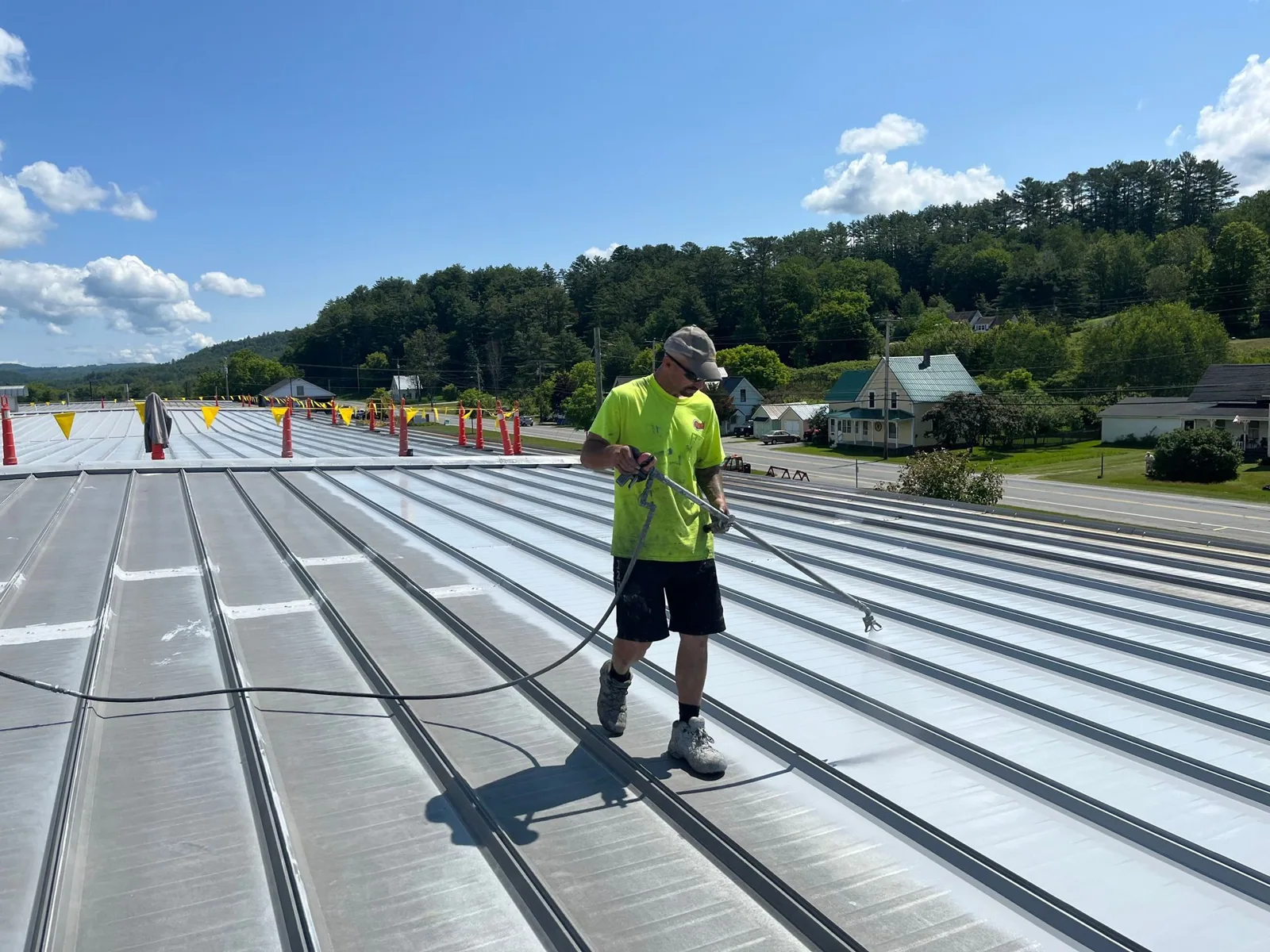
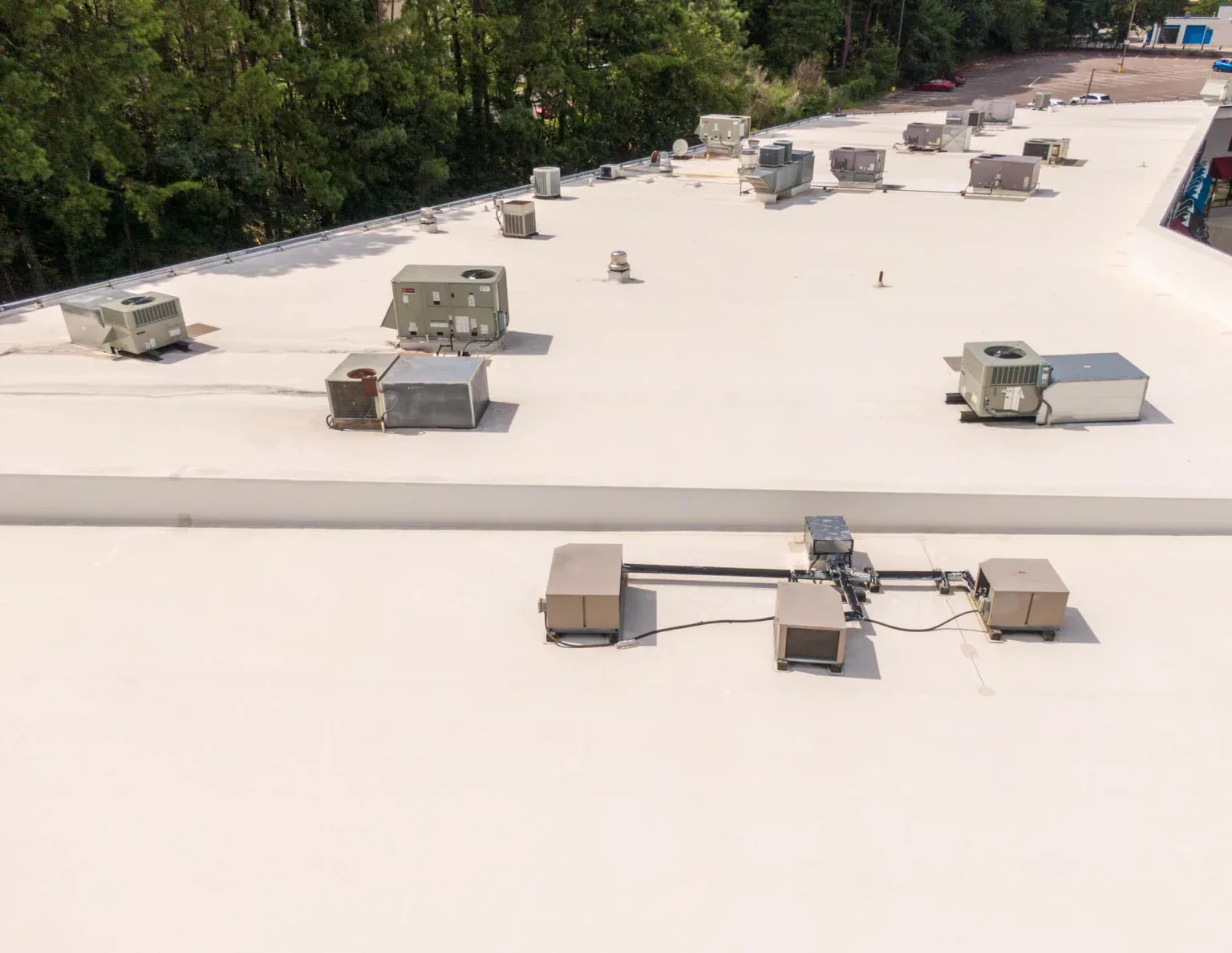
Different coatings suit different roofs. Silicone tolerates ponded water better than most and holds up under heavy rain, which makes it a common choice for a flat roof with slow-draining low spots. Acrylic is easier to apply and costs less, but it does not like standing water. Polyurethane and other systems have their uses on specific substrates.
Substrate matters as much as chemistry. A coating over a metal roof needs rust treatment and fastener sealing. Over modified bitumen or built-up, it needs a clean, sound surface. Over single-ply membranes, adhesion testing decides everything. We recommend a system based on the test results and the drainage, not on a catalog preference, and we say what the manufacturer's directions require before anyone applies material.
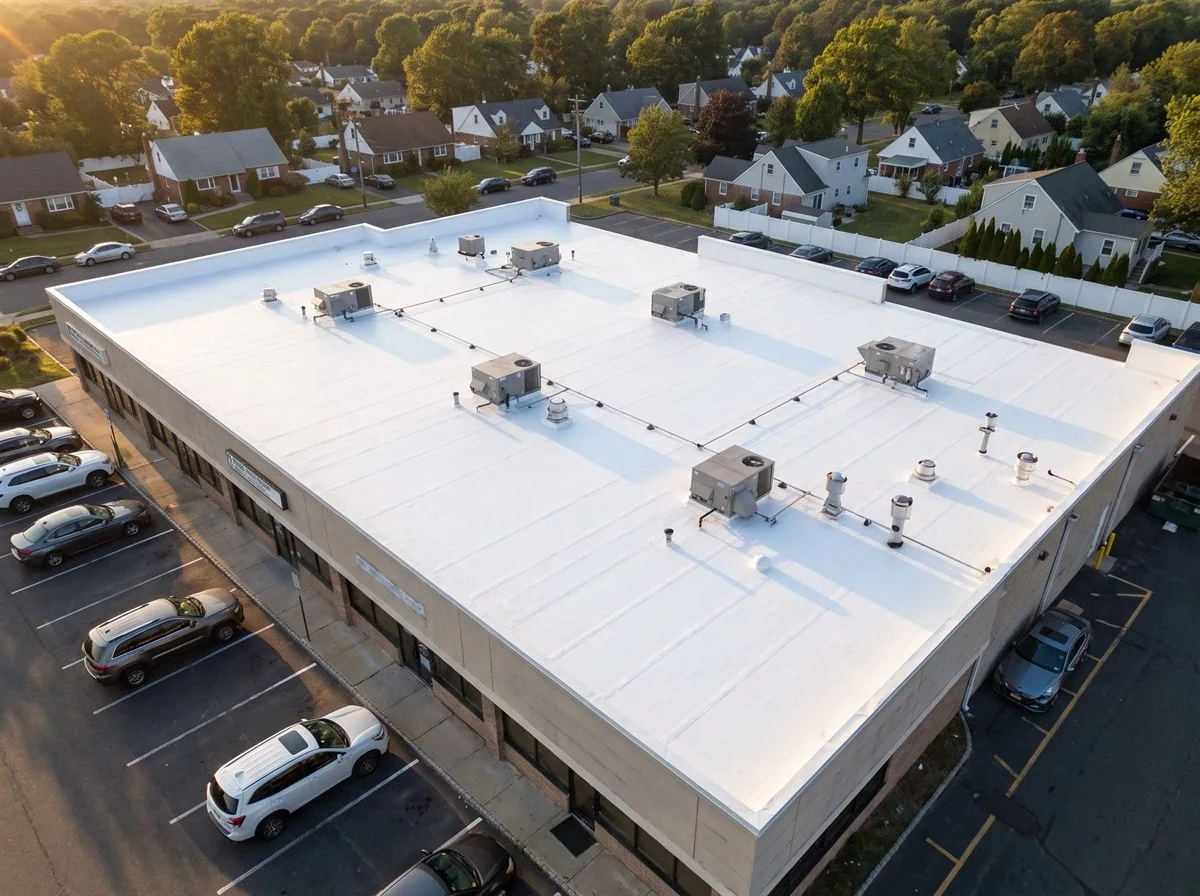
Reflectivity is worth a line of its own. A white or light coating reflects more sunlight than a dark membrane, so the surface runs cooler on a hot afternoon and the roof moves less across the day. That can reduce wear on seams, and it can ease the cooling load under a building with little roof insulation. The size of the effect varies with the building, so we describe it as a direction, not a number.
Write the Scope Line by Line
A restoration scope lists the steps in order: pressure wash, repair of seams, flashings and punctures, reinforcement at penetrations, primer where required, base coat, top coat, and the dry film thickness. Cost drivers are roof area, the amount of repair needed before coating, the number of penetrations, the condition of the substrate, access, and the coating system chosen.
Ask every bidder for the same line items and the thickness in mils. A cheaper quote that skips seam repair or thins the coating can fail early, and the warranty will not cover a defect the prep should have caught. We put the prep first because it decides how long the result lasts. A written scope also lets you compare a coating bid against a recover or a replacement on equal terms.
Apply Coatings Where Gaston County Roofs Need Them
Good candidates anywhere are sound, low-slope roofs that have simply aged. In this market that can include distribution buildings near Gateway85 and I-85, manufacturing plants in Gastonia and Mount Holly, and metal roofs on warehouses and shops. Older buildings need more care. The mills that made the county a textile center, Loray Mill among them, are being converted for new uses, and the age and layers of any mill-era roof must be confirmed on the roof before anyone talks about a coating.
Coatings also help with heat. A reflective top coat lowers surface temperature on a dark roof, and the effect shows up on summer afternoons. That matters in a county where July highs average about 90.7 F. When energy cost is part of the case, a cool roof installation is the other route to a lower surface temperature. The cooling effect depends on the building, so we describe it without promising a number.
Metal roofs deserve a note. Many warehouse and shop buildings carry metal panels, and a coating can seal fastener heads, laps and small rust spots when the panels are still sound. Rusted-through panels, loose clips or a failed substrate end the coating conversation. We tap, probe and photograph the panels before recommending anything, and the report marks each section as coat, repair or replace.
Commercial Roofing Questions
How do I know if my roof qualifies for a coating?
It needs dry insulation, a sound deck and a membrane that has not failed at the seams. A moisture survey, core cuts and an adhesion test settle it.
How long does a coating last?
It depends on the system, the thickness and the roof beneath it. We state a range with the reasoning and do not promise a number of years.
Can I coat over a leaking roof?
Only after the leak is found and fixed. A coating over wet insulation traps the water and shortens the life of the whole roof.
Does a coating replace a warranty?
Coating manufacturers publish their own warranty terms, which depend on thickness and prep. We give you the terms in writing and tell you what the coating does not cover.
What is the cheapest mistake to avoid?
Skipping the prep. Seams, flashings and punctures must be repaired first, because a coating does not bridge a failed detail.
Topic
Roof Coating and Restoration
Roof Types
Low-slope and metal
Related Roofing Work
Silicone Roof Coatings
Acrylic Roof Coatings