
Roofing for Manufacturing Companies in Gastonia, NC
A plant roof rarely fails in the middle of the field. It fails where something was added: a new exhaust fan, a conduit run, a unit curb cut for last year's expansion. A plant manager in Gastonia, NC knows the building is only as good as the weakest of those penetrations, and knows that a leak over a production line costs more than any roof invoice. Gaston County lists automotive, chemical products, textiles, health services and electrical goods among its industry clusters, and Gastonia is home to Parkdale Mills, the world's largest spun-yarn manufacturer, alongside Wix Filtration, Freightliner, Stabilus, Curtiss-Wright and Radici.
The roof is a capital line like any other, and it competes with equipment for the same dollars. We walk it, write down what we found and put a number on waiting.
Start With the Equipment on the Roof
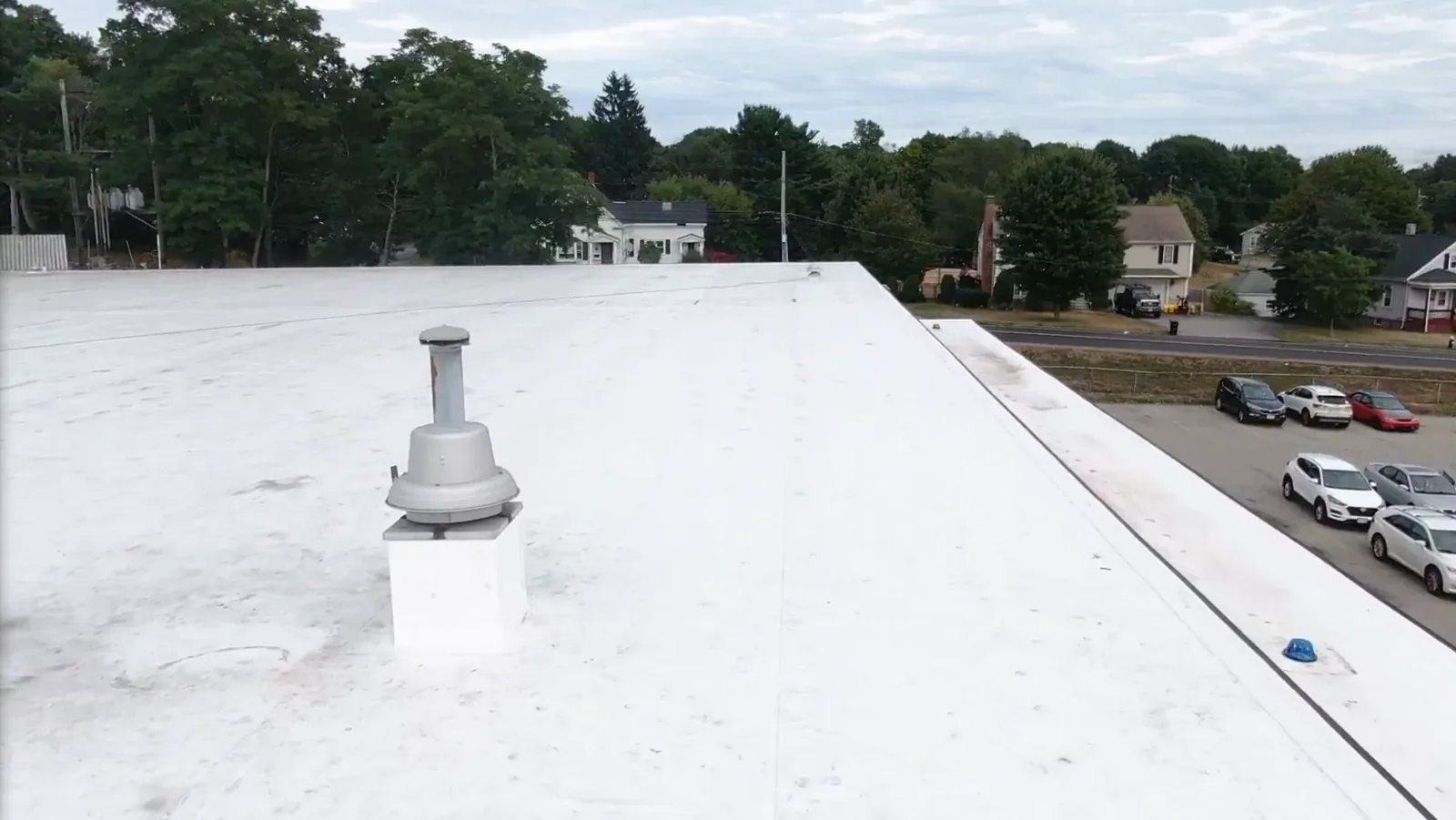
Process exhaust, make-up air, dust collection and cooling equipment make a plant roof crowded. Every item on that list was added by someone, in a certain year, with a certain flashing. We check each stack, fan and curb for flashing height, sealant, cap condition and a base that has not shifted. Then we look at the membrane around each one, since hot, damp or chemical discharge can soften or stain a sheet within a few feet of a vent. Piping and conduit lying on the membrane wear through it over time and trap water underneath.
We cut a core where the insulation feels wrong. A wet core in a plant roof is usually a long-running leak from a curb or drain, and the repair must remove the wet material, fix the cause and restore slope to the drain, not just patch the stain. Skylights, smoke vents and roof hatches over the production floor get the same scrutiny, because gaskets dry out, curbs crack and a vent that must open in a fire cannot be bound by a membrane laid carelessly over its curb.
Schedule Around the Line, Not the Weather Alone
Most plants cannot stop for a roof. We ask which parts of the roof sit over operations that cannot be disturbed, such as paint, controlled-environment rooms or sensitive assembly, and which can tolerate noise and vibration at certain hours. We map the roof against shifts, planned shutdowns and holidays, then place loud, dusty or hot work in the windows the plant manager approves.
The lift, the crane and the material stack go where trucks and forklifts do not pass. Fire lanes and gates stay open, hot work follows the plant's permit and exhaust discharge near the work zone is discussed with the engineer so the crew is not working in a plume. A short note to the shift supervisor at the end of each shift says what is open, what is sealed and where the temporary protection sits. If a rush order or a line trial forces a pause, the crew can stop at a clean edge, because each strip is opened, dried in and inspected before the next begins.
Respect the Old Mill Building Under the New Tenant
Gaston County led the country in cotton spindles, and some of its legacy mill buildings, the five-story Loray Mill among them, are now being converted. Where a mill-era building still houses manufacturing, the roof over it carries years of patches. Heavy timber or masonry framing, parapet walls, monitor roofs and old drains all need reading before a new membrane goes on. We probe the parapets, check the drains and sump bowls and walk each seam where an addition meets the original roof, because that joint between old and new is a common starting point for leaks.
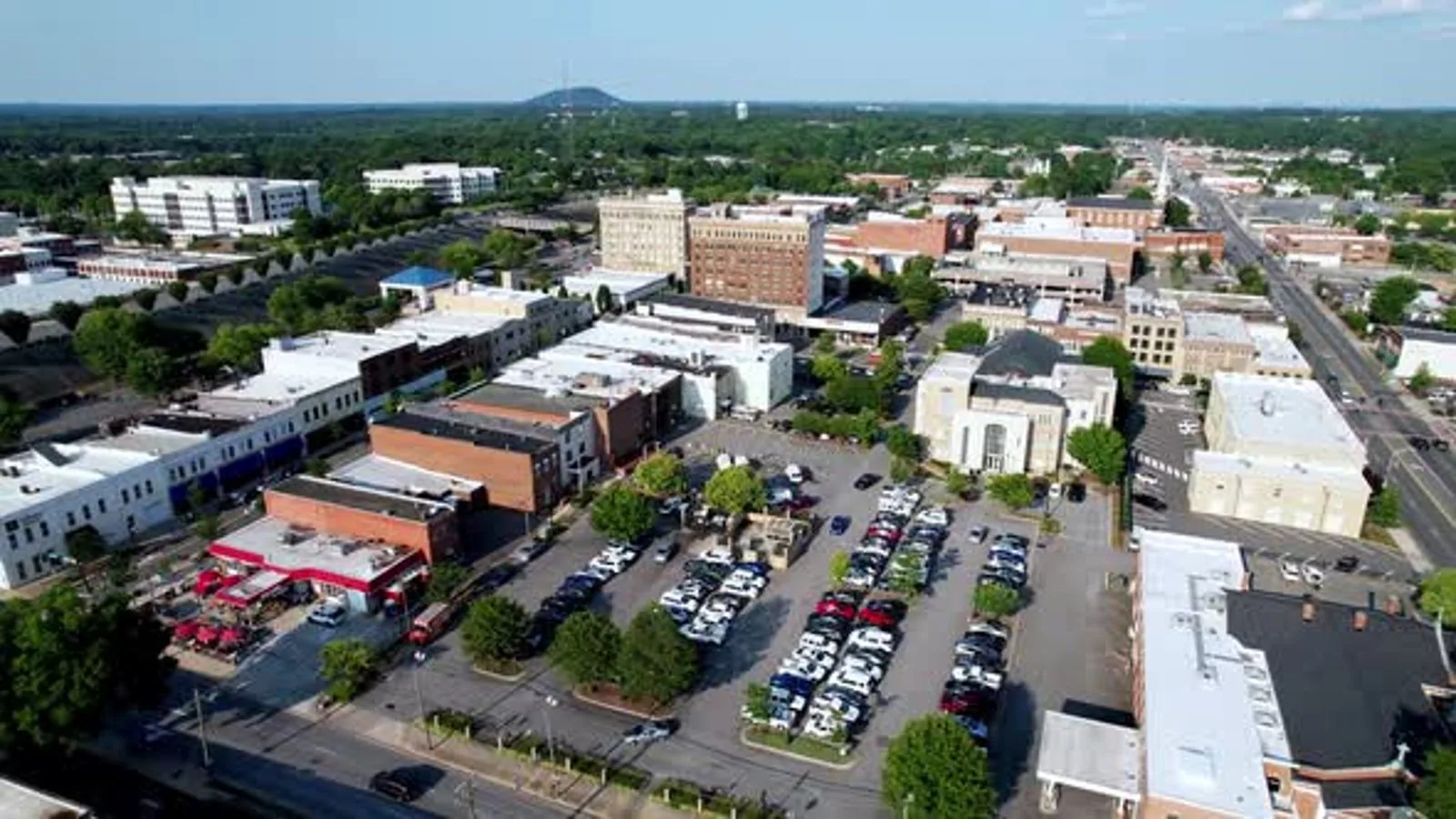
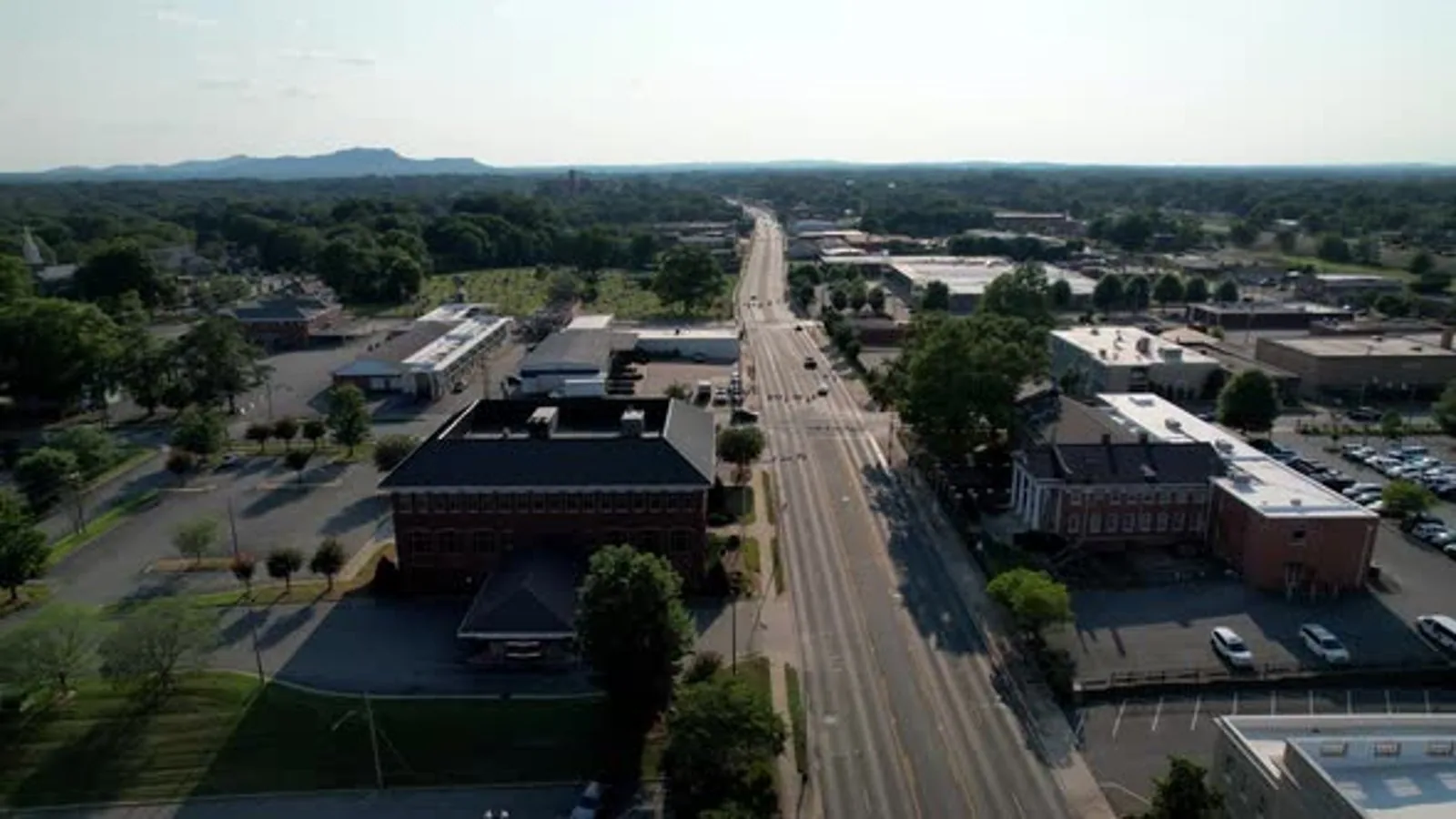
Where a plant runs in a newer building in Gastonia Technology Park or along Gateway85, the roof is a different story, usually larger, flatter and with drains far apart.
Match the Membrane to What the Plant Exhausts
The wrong sheet near the wrong exhaust fails early. Oils, greases and some vapors attack certain membranes, and others shrug them off. A chemical-resistant PVC sheet is a common choice near grease and oil, and a heat-welded TPO sheet suits large clean areas. We ask the plant engineer for the exhaust list and any known chemicals, then specify a membrane, walk pads and a cleaning routine that match. Lint and fine dust that settle on a roof hold moisture against the sheet and clog drains, so plants with heavy settling need a sweep routine in the maintenance plan.
Plan for Heat, Rain and the Next Storm Line
A plant roof here is baked and soaked every year: July's mean high is about 90.7 F and annual rainfall averages around 44 inches. The May 2024 EF-1 tornado removed part of a warehouse roof in East Gastonia. We record the edge metal and attachment on every section and walk the roof after each storm, tying findings to a date and a section for the insurer. Plants with a long perimeter should know that the corners and edges take the highest uplift, so a pull test on edge metal is a small cost against a membrane that peels in the next line.
After a storm, the photographs go to the plant manager the same day, tied to a section of roof and a time, which is what an insurer wants to see first.
Decide Between Repair, Recover and Replace
The decision rests on moisture and layers. A dry roof with seam and flashing failures can be repaired or restored with a coating. A dry roof on a sound deck can take a recover that shortens the open period. A roof with wet insulation over much of its area needs replacement, staged by bay so production continues. We write each option with its cost and the cost of leaving it alone, and we put a decision date on the page. The plant manager can take that page to a budget meeting and defend it line by line, because every number traces to a photograph, a moisture reading or a core cut from the roof itself. Code timing matters to a plant too. The 2018 edition governs for now, and the 2024 edition can be requested as an alternative.
Owners who share a park with a logistics operator, or who hire a general contractor for an expansion, can use the same format.
Expansions deserve their own note. A new bay, a new dust collector or a new line usually means new penetrations and a new tie-in between old roof and new, and the tie-in is where plants leak first. We review the drawings for curb locations and roof loads, ask that the roofing scope ride in the same package as the mechanical work and walk the tie-in before it is covered, so the plant does not pay twice for the same opening.
Commercial Roofing Questions
Can roof work happen during a production shift?
On some areas yes, on others no. We map the roof against the plant's operations and place loud or hot work in windows the manager approves.
How do you protect the crew from exhaust?
By finding discharge points first, working upwind where possible and asking the engineer to adjust or pause fans near the work.
Which membrane resists oils and grease?
A chemical-resistant sheet such as PVC is common near grease. We confirm the exhaust list before choosing.
What if a section sits above a process that cannot be disturbed?
We plan it for a scheduled shutdown, add temporary protection and isolate the work zone with the plant engineer.
How do we budget a large plant roof?
With a section-by-section ranking that shows repair cost, replacement cost and the cost of waiting for each section.
Topic
Manufacturing Companies
Roof Types
Low-slope and metal

Related Roofing Work
Gastonia Technology Park
Gateway85 Industrial Corridor