Commercial Roofing in Gastonia Technology Park, Gastonia, NC
A roof over a building full of equipment is a different problem from a roof over an empty shell, and the first thing we ask a manager is what sits directly under it. The county built Gastonia Technology Park as a Class A campus of 422 acres, zoned I-2, with fiber optic service, a 50,000 KW substation on site and an ISO 3 fire protection rating. Charlotte is about 20 minutes away, and the park is aimed at advanced manufacturing and technology tenants.
Advanced manufacturing and technology users share a roofing concern: water and moisture are costly when electronics, precision equipment or clean processes are below. A small leak can stop a line. For an owner in Gastonia, NC, the roof is a protective layer over operations, and we plan the work from that fact.
Start With What Sits Under the Roof
On the first walk, we match the roof to the interior. We ask where process lines, electrical rooms, server space and clean areas sit, and we mark the roof zones above them as priority zones. A seam, drain or curb above a sensitive area gets a closer look and a tighter inspection interval than a seam over a loading bay.
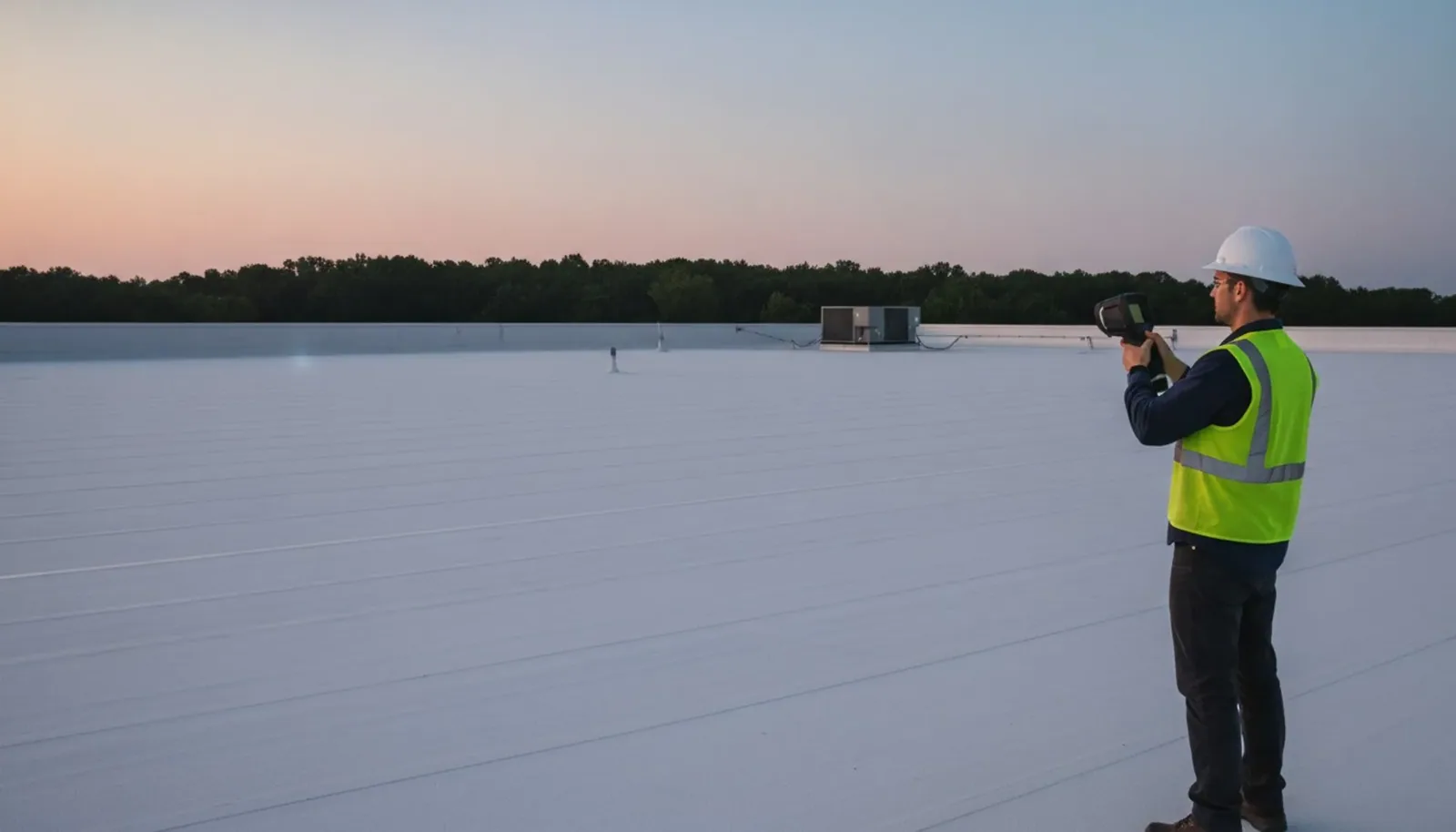
What a given building has on its roof stays unknown until it is cored, so we look at the roof and test it. Cores show the layers, and an infrared moisture survey maps any wet insulation. Rooftop equipment is common on technology and manufacturing buildings, so curbs, flashings and the paths technicians use get specific attention. You get dated photographs and a findings list with the priority zones marked.
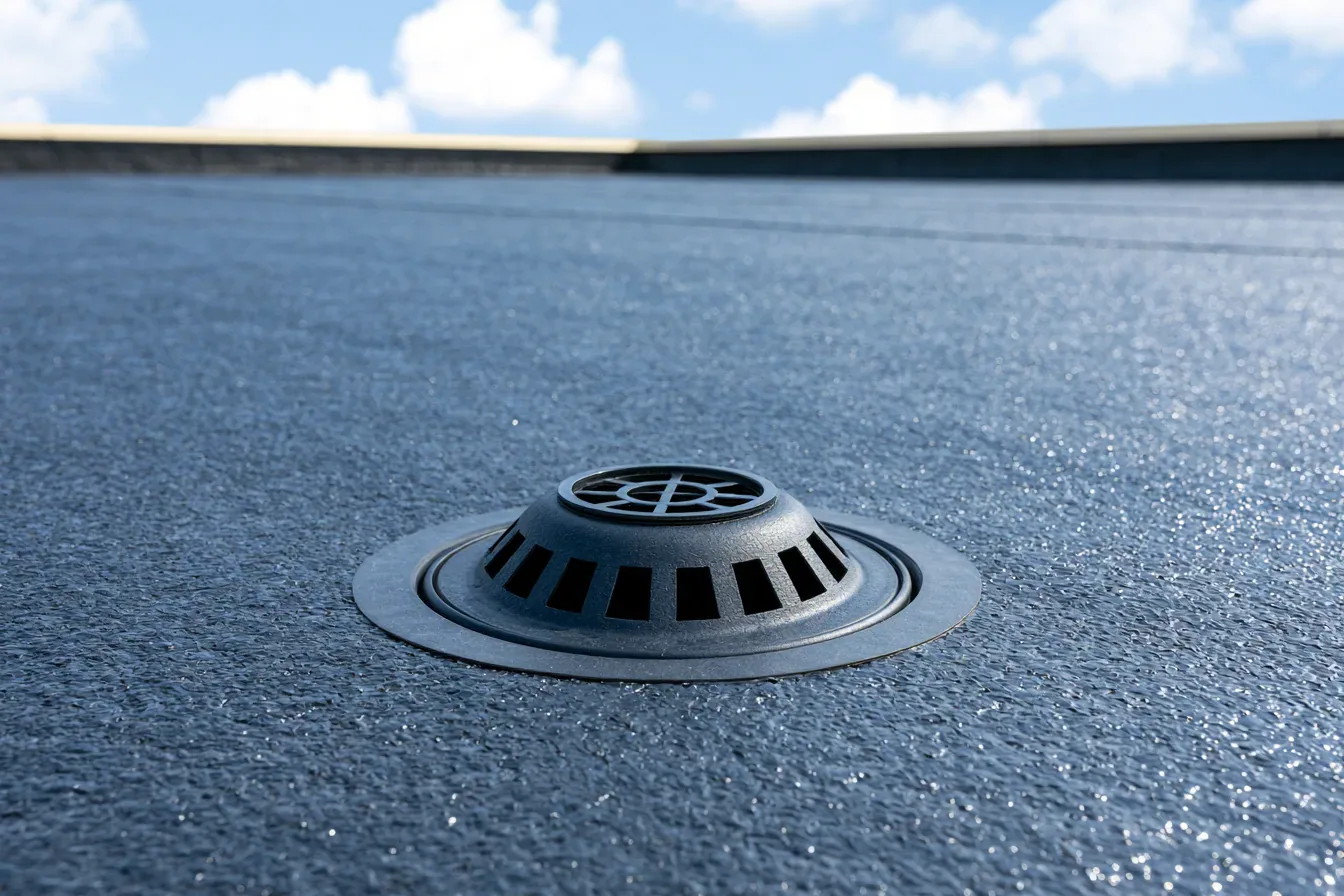
We finish with drainage. Interior drains, leaders and sumps are tested with water, because a failing pipe above a clean area is as damaging as a failing membrane. Overflow scuppers are checked for height and clear paths.
Control Moisture Before It Reaches the Floor
Gastonia's yearly rain runs around 44 inches, and July afternoons average 90.7 F. Heat expands the roof, rain tests it, and condensation can form inside an assembly that was never designed for the interior humidity of a process building. Vapor control and insulation detail matter on these roofs, and we check them during any reroof design.
For roofs over sensitive areas, we add redundancy where the budget allows. That might be a cover board over the insulation, extra drains or overflow scuppers, or a leak-detection survey after installation. Each addition is a line item with a stated purpose, so the owner can decide which ones fit the risk. Drainage details are handled with roof drains and scuppers work when the walk finds weak outlets.
Manage Rooftop Equipment and Service Traffic
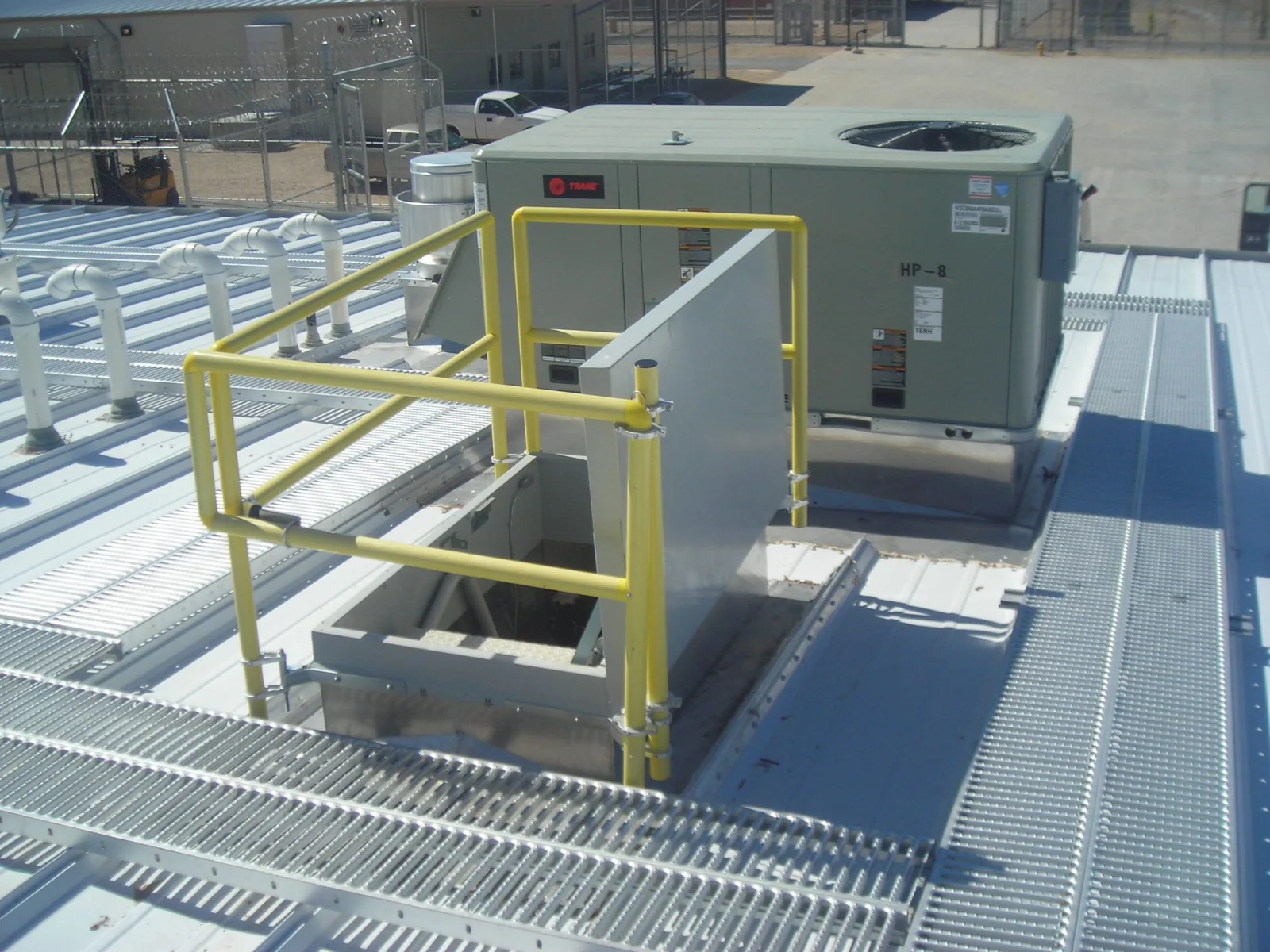
Technology and manufacturing buildings carry a lot of rooftop equipment: air handlers, exhaust, chillers and electrical gear. Each unit sits on a curb or a stand, and each needs its flashing checked. Vendors service the units, and each visit is a chance for a dropped tool or a loose panel. We install walk pads along service paths and keep a roof log by the hatch.
When equipment is added, the roof is part of the change. A new unit needs a curb, a flashing and a structural check, and the work should be coordinated before the crane arrives. The curb and flashing details for rooftop equipment are settled first, and the warranty file records who made the change.
Plan for Wind and Storm Season
In May 2024 an EF-1 tornado with estimated 110 mph winds stripped a section of one East Gastonia warehouse roof, and a smaller storm in May 2020 ran several miles toward the Gastonia airport. For any owner, those events raise one question: how are the edges and rooftop units held?
We check edge metal, coping and tie-downs, and we recommend repairs before the spring storm season. After a storm, a post-event walk looks for lifted edges and displaced equipment, and temporary protection goes on any opening the same day.
Schedule Work Around Production
Production does not stop for a roof, so the schedule starts with the plant calendar. We ask for shutdown weeks, shift changes, inspection dates and any period when noise or vibration would cost the operation. Loud steps such as tear-off and fastening go where the facility can take them, and the quietest steps are held for sensitive hours.
Access matters as much as time. Crane picks need a clear lay-down area, truck routes cannot cross emergency lanes, and roof hatches may be restricted. Each building has its own constraints, so the staging plan is drawn on the site plan and agreed in writing before mobilization.
Dry-in is the priority. We open only what can be sealed by evening, we stage temporary protection ahead of forecast rain, and at closing time the crew leader and the facility lead walk the interior together to confirm nothing has come through.
Keep Records for Audits and Insurers
Technology and manufacturing owners can be audited by customers, insurers or lenders, and roof records become part of the file. We hand back a photo log, a findings list, the core results, the moisture map and the closeout sheet, all dated and tied to a roof plan. If an insurer asks about prior condition after a loss, the file answers.
The record also supports capital planning, since the next owner or the next budget cycle will ask the same questions.
Photographs of every priority zone are retaken at each visit from the same standing points, so a change in a seam, a drain or a curb shows up when the pictures are laid side by side.
Decide on Repair, Restoration or Replacement
Newer buildings are typically repaired and maintained under warranty. Older or weathered roofs may justify restoration with a coating if the insulation is dry, or replacement if it is not. The decision rests on cores, moisture mapping and seam condition, not on age alone, and the answer is written plainly in the findings summary.
Owners with other holdings across the county can combine parks and buildings in one plan. A capital plan can span several parks, and the large-roof checks used at the Gateway85 Industrial Corridor carry over. For a park-wide view, work in Gastonia follows the same steps.
Whichever path is chosen, the decision date and the evidence behind it go on one page, so the facilities lead can take it to a budget meeting without rebuilding the argument.
Commercial Roofing Questions
Can you work on a roof over a running production line?
Yes, with planning. We protect the interior, size each day's opening to what can be sealed, and agree the schedule and the noise hours with the facility lead before the crew arrives.
What if we do not know the roof's makeup?
A core and a moisture scan will tell us. We cut small samples, patch them the same day with a compatible repair and record the layers in the file for the next owner.
How do you reduce leak risk over sensitive equipment?
With closer inspections, extra drainage, cover board and a leak survey after new work. Each addition is priced separately so the owner chooses what fits the risk.
Do you coordinate with mechanical vendors?
Yes. We set curb and flashing details with them, review any new penetration before it is cut and log each change to the roof so the warranty file stays whole.
What code governs a reroof here?
The plan reviewer decides which edition of the state building code governs, and we confirm it before design starts.
Topic
Gastonia Technology Park
Roof Types
Low-slope and metal
Related Roofing Work
Infrared Roof Moisture Surveys
Roof Drains and Scuppers