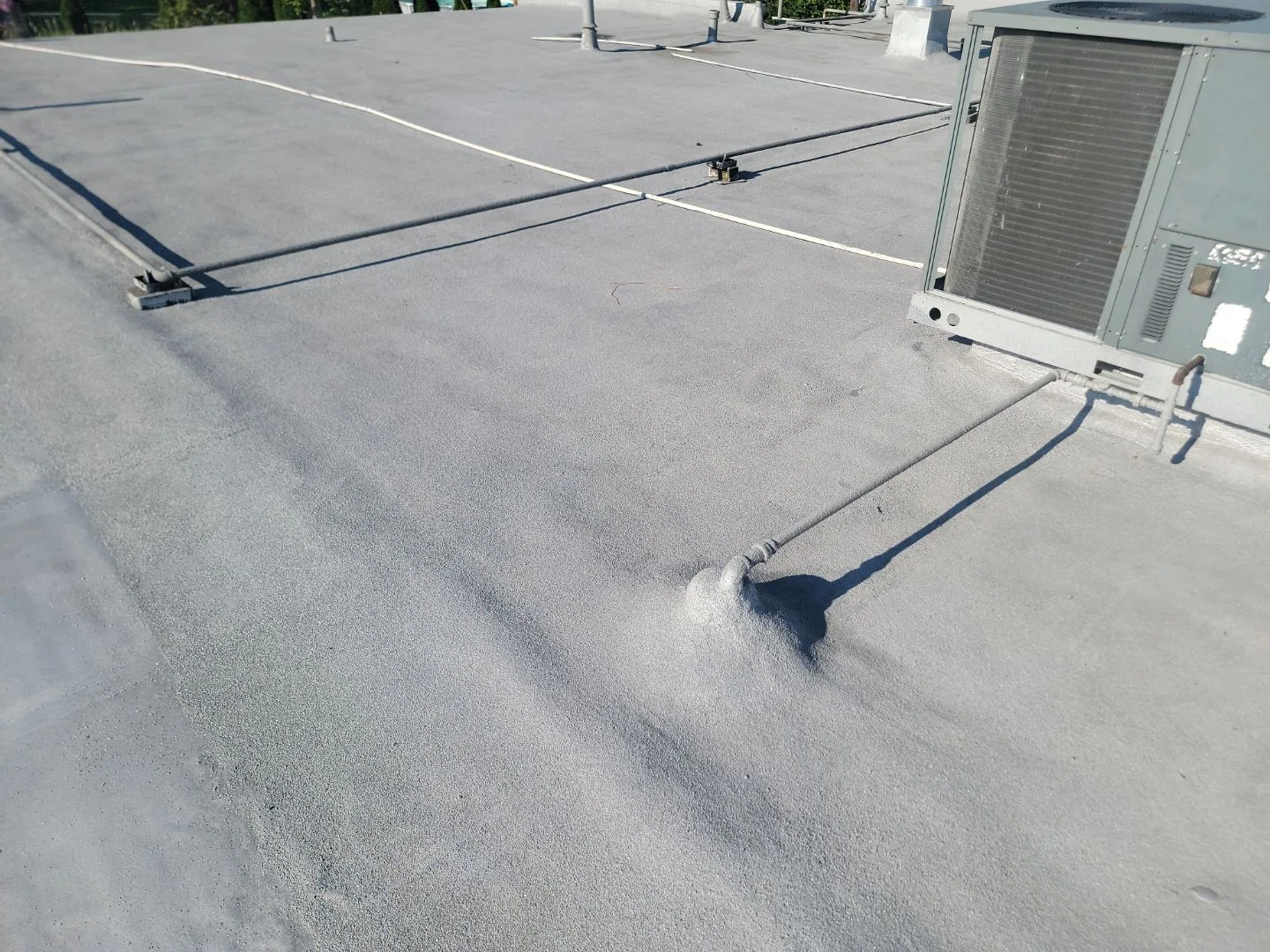

Rooftop Equipment Curbs and Supports in Gastonia, NC
A rooftop unit sitting a half inch off its curb, with a bead of old sealant cracked along one side. Nobody planned that gap. It opened over a few summers of vibration, heat cycles and one replacement unit that was a shade smaller than the one before. Now rain runs into the gap on every storm, and the leak shows up in the ceiling of whichever tenant sits below. Equipment on a roof is a second building on top of the first, and it comes with its own wear and its own repair bill.
The roof under the equipment tends to fail first, long before the field of the roof does.
Inventory Every Unit, Curb and Support
We start with an equipment inventory drawn on the roof plan. Each rooftop unit, exhaust fan, condenser, vent and pipe support gets a number. For each, we record the curb type, height, flashing condition, sealant state, nearby seams, the walking path and any lines that cross the membrane. Photographs are taken from two angles. We note the age of the unit if the plate is legible, since a unit replacement is the moment curbs get disturbed.
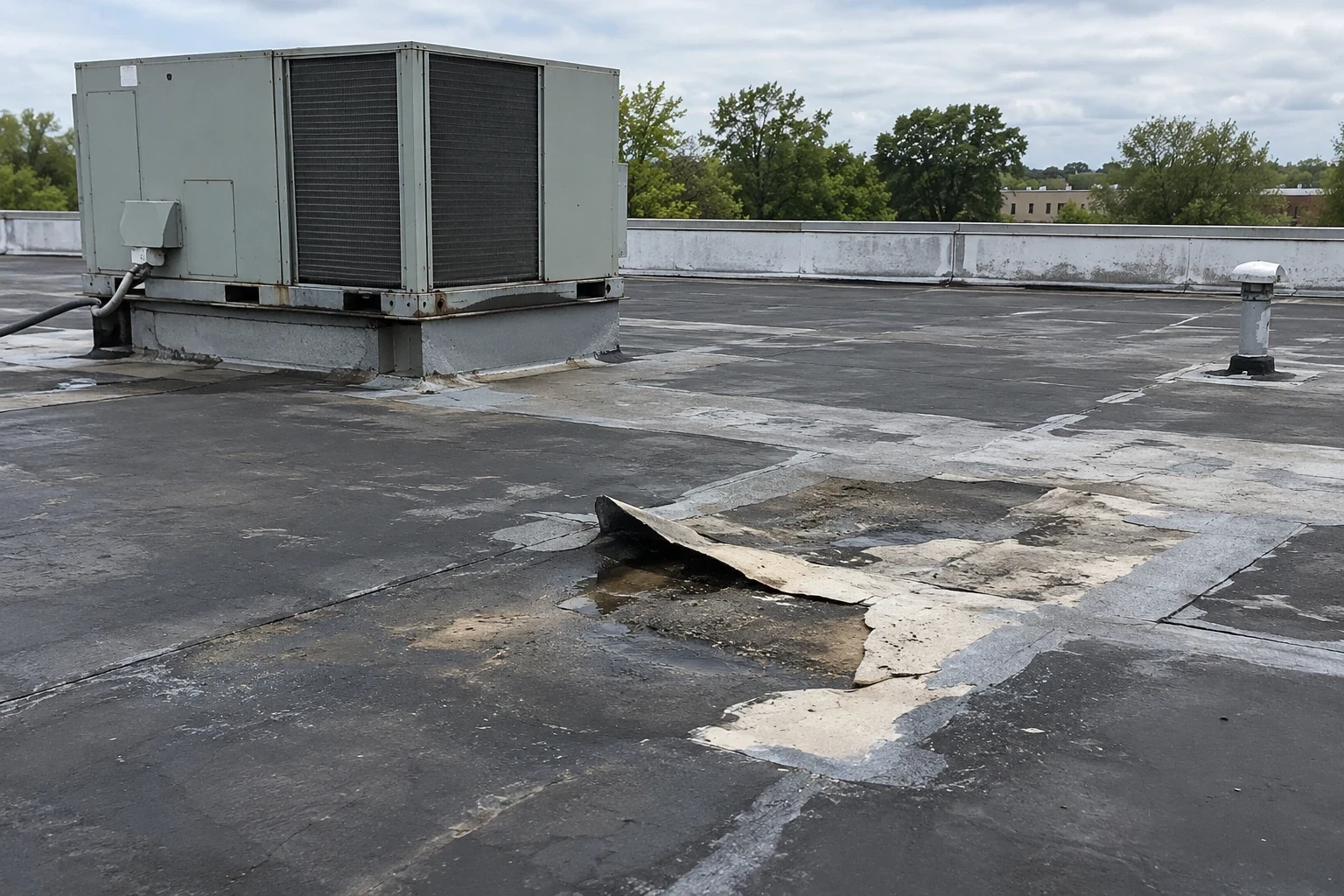
Then we look for the usual defects. Gaps between the unit and the curb. Cracked or pulled counterflashing. Membrane that has shrunk away from a curb corner. Pitch pans with dried sealant. Pipe supports sitting directly on the membrane, with no pad, wearing a hole. Condensate lines that drain onto bare roof. Each finding is rated and priced.
Structure comes into it too. Equipment supports that sit on the deck, on sleepers or on dunnage rails need to bear on something solid, and the membrane beneath needs to be protected from point loads. A support that has punched through the insulation shows as a depression and a pond. We note the type of support, the pad under it and the condition of the membrane around it.
Count the Cost of Equipment Leaks
Curb leaks are expensive because of what sits below them. A unit over a server room, a clinic corridor or a product aisle makes every drop a bigger bill. Gastonia's heat and steady rain already dry out sealants and flex flashings, and equipment adds vibration and foot traffic on top of the weather.
A curb flashing repair costs a modest amount. A wet ceiling, a damaged unit and a tenant complaint cost far more. If the water reaches the insulation, the repair grows into a section replacement. Deferred curb work is rarely a single leak. Where a roof has many units installed at the same time, the curbs age together, and one failure predicts a row of them. Fixing the batch in one visit is cheaper than answering calls one at a time.
One blunt line for the budget memo: a unit swap disturbs the curb, and the roof under it should be reviewed before every swap, not after.
Repair the Flashing or Rebuild the Curb
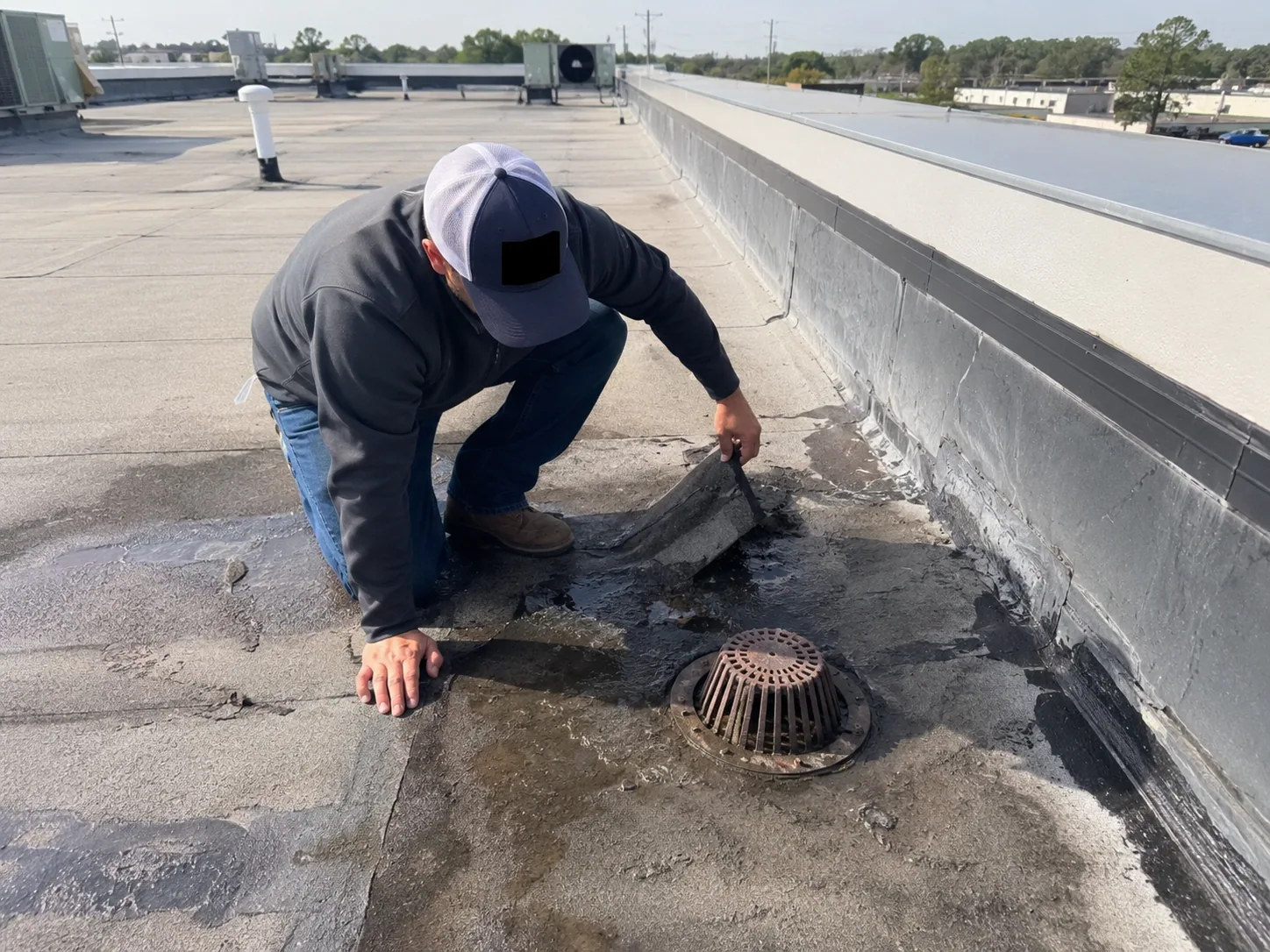
Repair options start small. Resealing a gap and replacing a cracked counterflashing is the first step. Reflashing a curb means removing the old base flashing, building a new one up the curb face, and installing new counterflashing. Rebuilding the curb is for curbs that are too short, rotted, rusted or out of level.
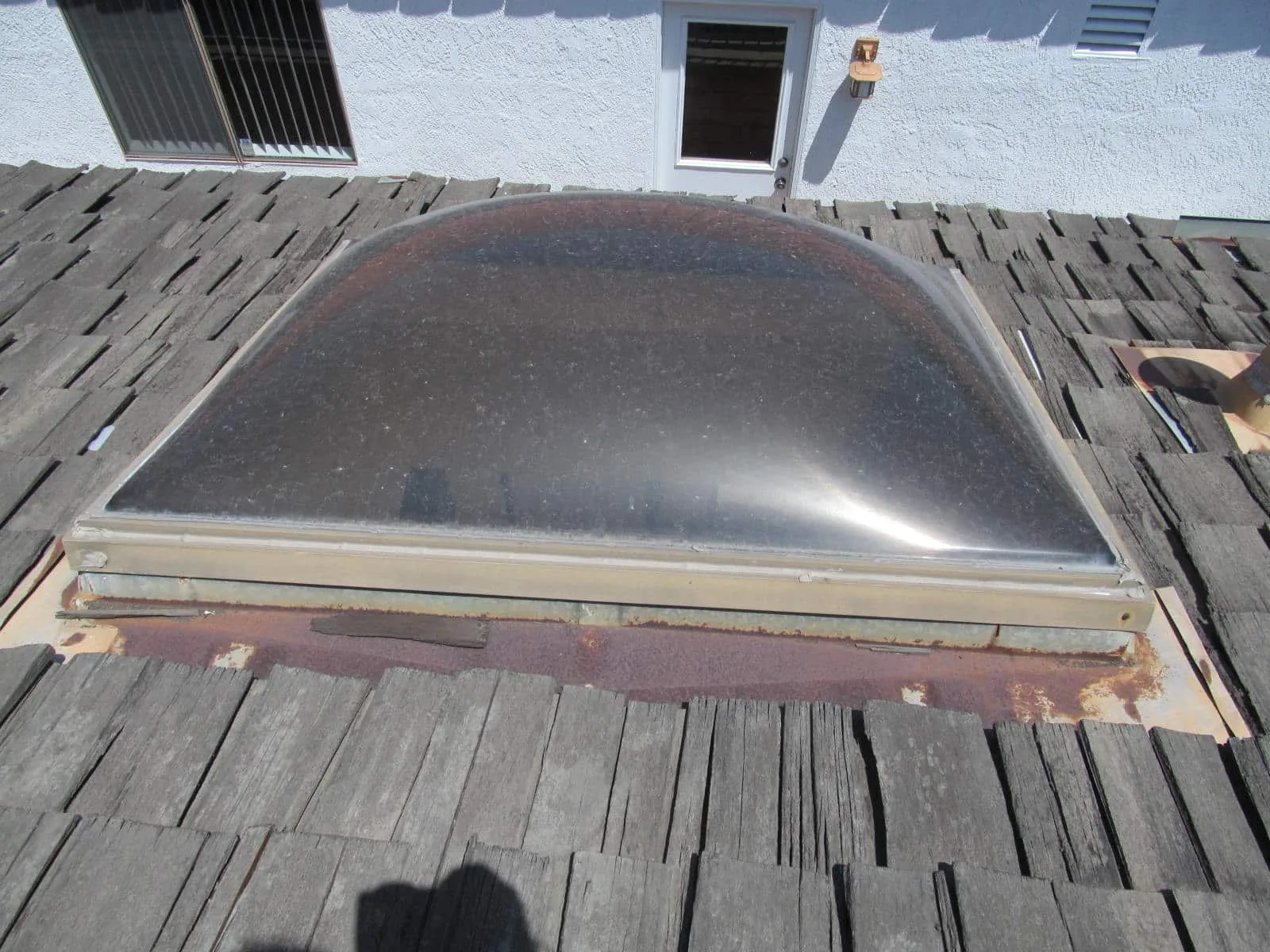
Height matters. A curb should rise high enough above the roof surface to keep water and snow from reaching the unit, and tall enough to allow proper flashing. Where the roof is being replaced, new curbs can be set to the new surface. Where the unit is being swapped, the curb adapter must match the new footprint. We coordinate with the mechanical contractor so that the unit change and the roof repair happen together. The same method applies to the penetration flashing around pipes and vents.
Pipe and conduit supports follow the same logic. Adjustable supports with pads let lines move without wearing the membrane. Rigid supports that rest on bare roof wear it down. Replacing them is a minor job, and it protects the membrane where the roof gets the most traffic and the most vibration. A preventive maintenance visit checks supports as part of the route.
Scope Equipment Work Line by Line
The scope lists every unit and support by number with the work at each: reseal, reflash, new counterflashing, new curb, walk pad, sleeper, pipe support replacement, condensate redirection. Quantities and unit prices follow. Cost drivers are the count of units, curb size, access, the need to disconnect and lift equipment, crane time and the membrane around each curb.
Disconnecting and lifting a unit is the cost multiplier. It requires a mechanical contractor, a crane or hoist, a shutdown and often a weekend. We combine curb work with planned unit changes whenever possible to avoid paying twice. Ask every bidder to price the same list, and ask who coordinates the trades. A low price that assumes the owner arranges the crane may not be low.
Equipment-Heavy Roofs in Gaston County
Some building types carry more equipment than others. Medical and office buildings, such as those in the Summit at Court Drive park beside Gaston Memorial Hospital, generally carry air handling and exhaust equipment. A manufacturing plant in Gastonia, where employers include Wix Filtration, Freightliner and Curtiss-Wright, may add process exhaust and makeup air. A retail strip along North New Hope Road near Eastridge Mall may carry a unit per tenant.
A distribution building like those at Gateway85 gets the same inventory, with extra attention to equipment near the dock walls. A mill-era building in downtown Gastonia converted to apartments may gain mechanical equipment on a roof not designed for it. Each of these needs an inventory first.
New equipment changes the roof's load, and we ask for the weights early. A heavier unit or a new support layout may need structural review by the owner's engineer. We can show where the membrane and insulation will be affected, and we leave the structural question to the engineer.
A thread plant in Mount Holly or a yarn plant in Belmont may vent process exhaust through its roof, and a plant that changes products can change what vents through it. We ask about process exhaust early, because it decides curb height, material choice and how often the flashing needs a look. After a storm like the May 2024 tornado, displaced units and loosened curbs are among the first things to check on a storm damage walk, before the next rain finds the gap.
Commercial Roofing Questions
Why do leaks start at rooftop units?
Curbs and counterflashings move with the unit and the weather. Sealant dries and gaps open, and technicians walking the roof add wear.
Can I add a unit to my roof without damaging it?
Yes, if the curb is set and flashed properly and a walk path protects the membrane. We review loads and details with your mechanical contractor.
Do I need walk pads?
On any route technicians use often, yes. A worn path is a repair waiting to be written.
Who lifts the unit for a curb repair?
A mechanical contractor, with a crane when needed. We coordinate the schedule and combine the roof work with the unit work when we can, so the owner pays for one shutdown and one lift.
Can condensate lines damage a roof?
A line that drips onto bare membrane leaves a worn ring over time. A splash pad or a routed line stops it.
Topic
Rooftop Equipment Curbs and Supports
Roof Types
Low-slope and metal
Related Roofing Work
Failed Flashing Repair
Skylight and Penetration Flashing