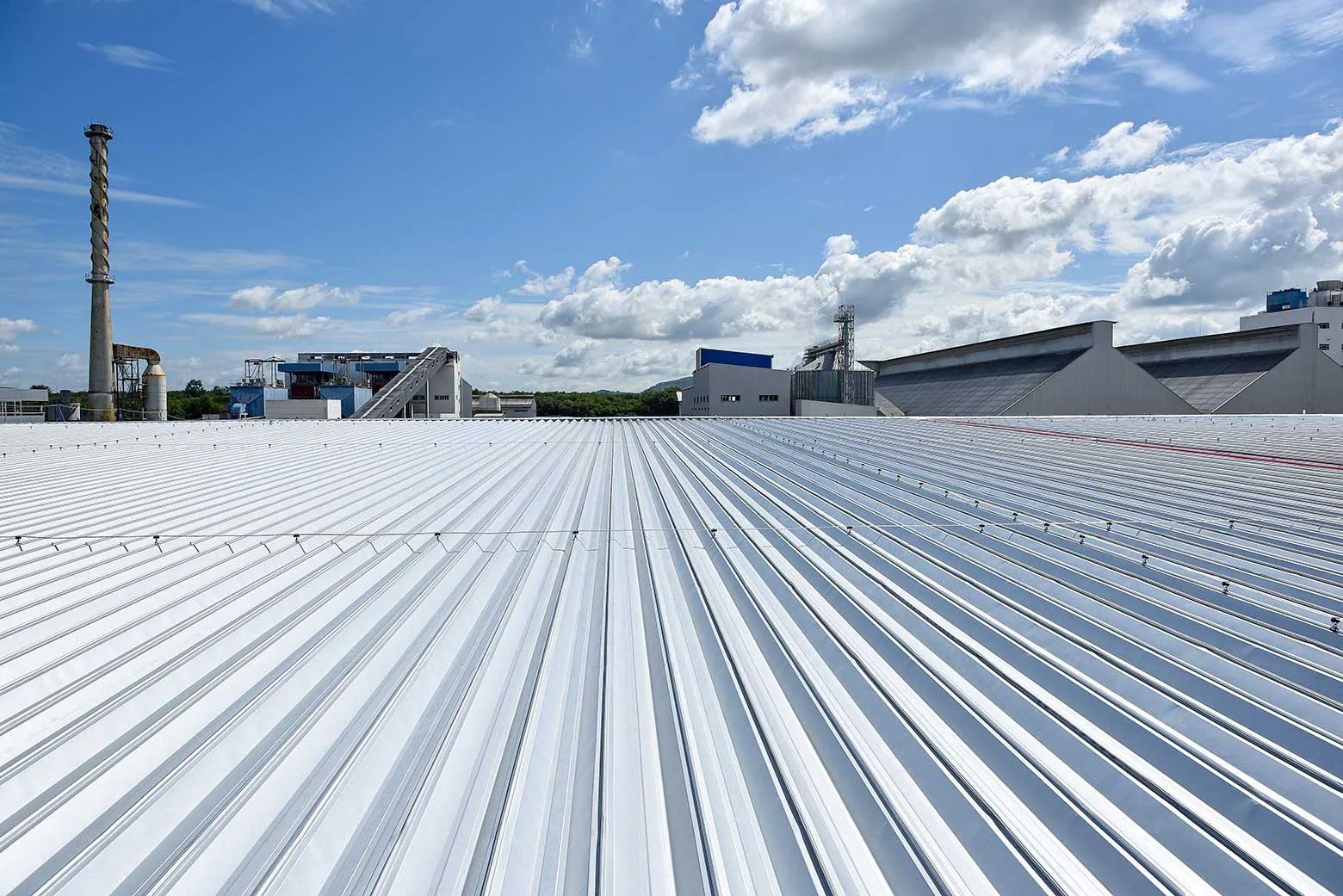
Warehouse Roofing in Gastonia, NC
Ponded water around a drain on a long warehouse roof, with a pale ring of dirt showing how far it spread, is a common finding on a Gaston County warehouse. The drain is not the whole story. It is the first place a bad afternoon will show up. What that means for the owner is a decision date: fix the drainage in this budget cycle, or accept that the seams around it are carrying the cost.
A warehouse in Gastonia, NC gets a walk of the roof, a photo log of the findings and a written answer on repair or replace. A leak over racking reaches a crew at any hour.
Read what the roof is telling you
A warehouse roof is large and plain, with few penetrations. That is good news for leaks, because there are fewer places for one to start. It is bad news for inspections, because trouble can sit far from the doors and go unseen for a season. So we walk it in a pattern: perimeter first, then drains, then the seams and curbs between them.
On a walk we probe seams, press for soft spots, check fasteners for back-out and look for ponded water. We photograph every finding, mark it on a plan and note its size. The photo log is what an owner takes to a partner or a lender. It also lets the next inspector see what changed.
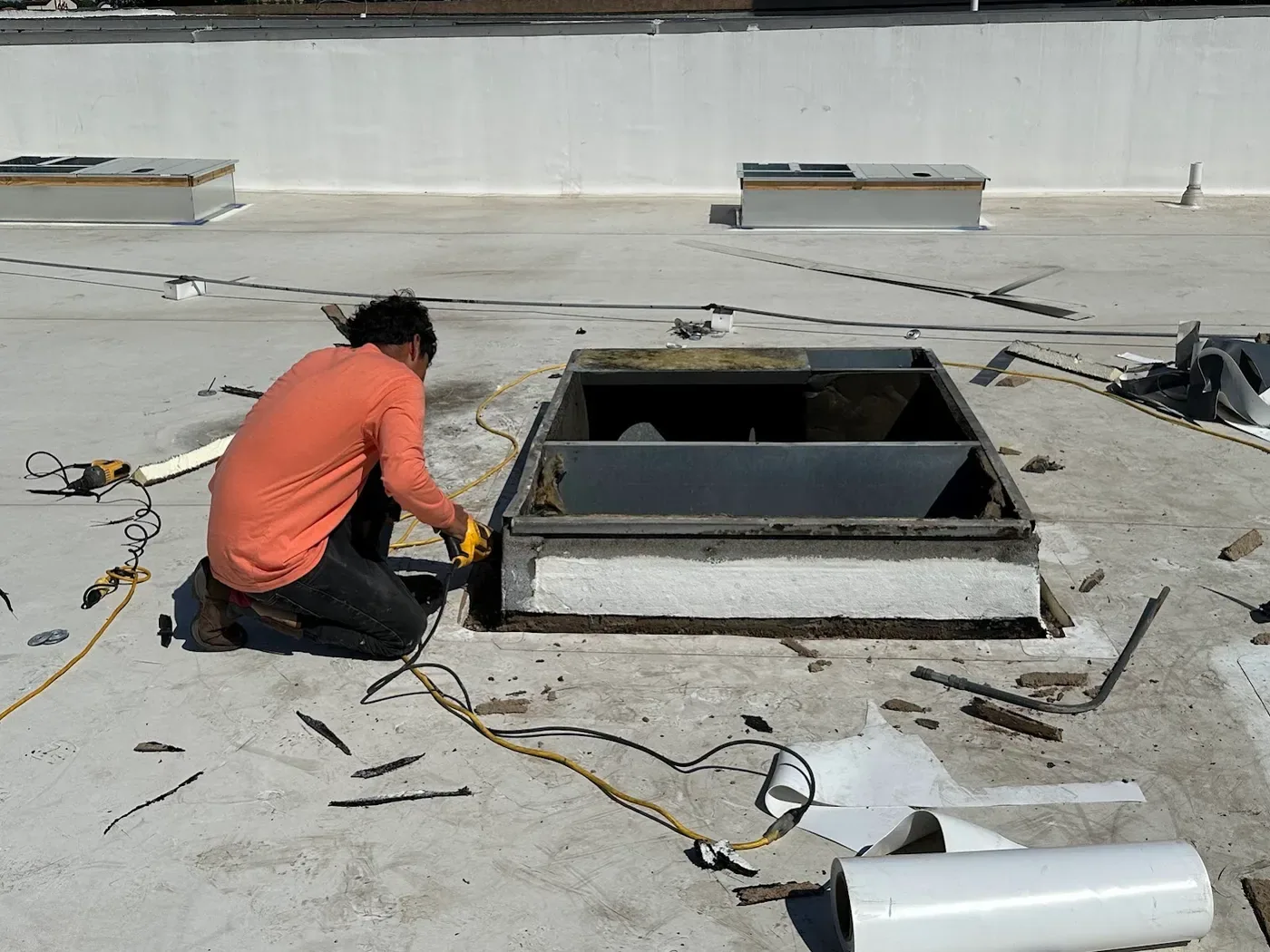
Penetrations still need a count. Smoke vents, skylights, rooftop units, exhaust fans and conduit runs are few on a warehouse roof, so each one carries more weight. A skylight with a cracked curb flashing or a vent with a dried-out gasket leaks onto the same racking every time it rains. We open each vent, check the gasket and photograph the curb, and we list the ones to replace in the findings.
Docks are the other busy spot. Dock canopies, wall terminations and levelers sit where trucks, forklifts and weather meet, and the flashing there takes more abuse than the field. We check the canopy tie-ins and the wall flashing at every door bank, since water at a dock often enters above the door and shows up on the floor.
Weigh the wind record
A warehouse in East Gastonia lost part of its roof on May 8, 2024, when an EF-1 tornado with estimated 110 mph winds passed from west of Gastonia toward McAdenville and Belmont. A tornado in May 2020, estimated at 85 mph, also uprooted trees and caused minor structural damage on its way toward the Gastonia airport.
Both are reasons for a warehouse owner to check the edge. Wind starts at the perimeter and corners, so we inspect edge metal, coping, termination bars and the fastener pattern first. A loose edge costs far less to fix than a lost section, and the photo log shows the condition before the next storm. After any severe event, we walk the roof within days.
Price the cost of waiting
A drain fixed this quarter is a small line item. A drain left to pond through a hot summer and a wet spring wears the seams, loads the deck and lets water into the insulation. Then the repair is a section of roof, and the leak lands on racking or product.
In Gastonia the July average high is 90.7 degrees, and yearly precipitation totals roughly 44 inches. The membrane moves with the heat, and rain finds the weak spot. Four choices get weighed: a quick repair, a limited repair that bridges a season, a recover or a replacement, each tied to a decision date. Wet insulation, access, drains, penetrations and the system chosen move the numbers.
Remaining service life shows up on the capital line as a plain number of years. A warehouse roof with dry insulation and a tired membrane stays in upkeep so the years already paid for get used. As the end nears, replacement is priced with room to compare bids and pick a start. Between those points the roof gets a limited repair, and if the same problem returns, the replacement moves into the budget cycle.
Choose repair or replace
Repair is the choice when the insulation is dry and the failures are few. On a dry warehouse roof the money goes furthest into commercial roof repair: clear the drains, rebuild the seams, replace the flashings and reseat the fasteners. A bondable old roof over dry insulation makes a recover worth considering.
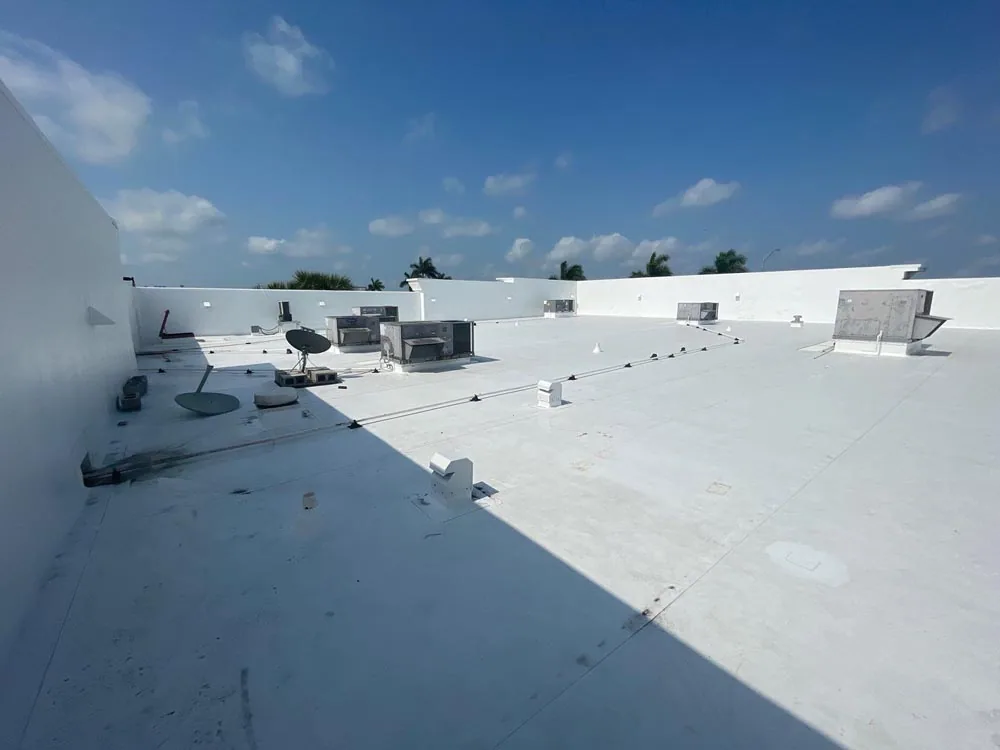
Moisture that has spread through the insulation, or a membrane that cannot hold a repair, means replacement. Systems such as TPO and standing seam metal are common for warehouses. Cores and a moisture survey support the choice, and the written answer states remaining service life.
Insulation condition is the deciding factor more often than membrane age. A membrane may look worn while the board beneath is dry, and a membrane may look fine while the board beneath holds water. A core cut and an infrared moisture survey separate the two. The map shows how much of the roof is wet, and the scope can be sized to it.
Place the work on the right Gaston County site
Gateway85 spreads over about 365 acres between Gastonia and Lowell, with 2.4 million square feet of delivered buildings and at least 1 million more planned. Near Bessemer City, a mile north of I-85, SouthRidge Business Park provides 425 acres for distribution and manufacturing, and The Oaks Commerce Center is a privately owned 280-acre industrial park. The 321 Interchange in Dallas adds six small-bay buildings, nearly 100,000 square feet in all, beside I-85 and US 321.
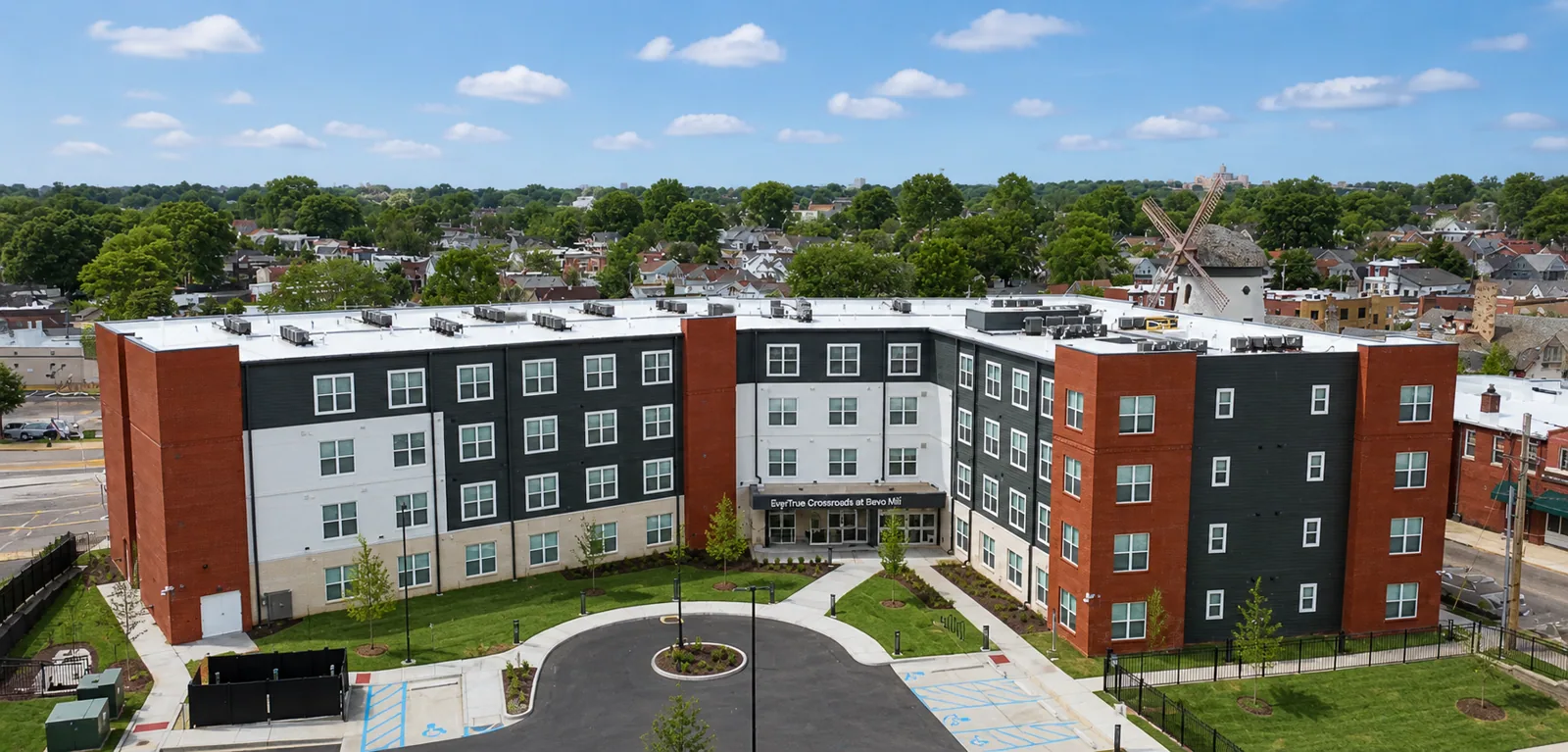
A Gateway85 building, a Dallas small-bay building and a plain distribution center are different jobs under similar names, and the findings summary says which one we saw.
Smaller buildings follow the same logic. A flex industrial building with an office front and a storage rear has two kinds of roof under one name, and the findings treat them separately.
Keep the log current
A warehouse roof lasts longer on a schedule. Spring storm season and leaf fall are the two natural times to clear drains, inspect seams and edges and add to the photo log. A maintenance program also catches damage from trades that use the roof. Once two or three small items accumulate, the log records it, and the owner can step in before a leak reaches stock.
Commercial Roofing Questions
Why do warehouse drains pond?
Clogged strainers, drains set high, deck sag or too little slope. We measure the pond, check the drain height and look for sag, then recommend the cheapest fix that works.
Can a warehouse stay in use during roof work?
Usually. We work in sections, keep dock lanes clear, protect racking and close in each section daily. Noisy steps are scheduled around shifts.
Why check the perimeter after a hard storm?
Wind pulls at a membrane from the edges inward, so edge metal, termination bars and corner fasteners are the first things we inspect after severe weather. Catching a loose run early costs a fraction of replacing a peeled section.
When is a recover better than a tear-off?
When the insulation is dry and the old membrane can carry a new one. A recover saves tear-off cost and downtime, and a core cut tells us whether it is possible.
What do you need for a warehouse walk?
Send the roof age, building use, leak history and past repair invoices. A written findings summary follows, with repair or replace answered plainly.
Topic
Warehouse Roofing
Roof Types
Low-slope and metal
Related Roofing Work
Commercial Roof Repair
TPO Roofing