

Flex and Light-Industrial Roofing in Gastonia, NC
A flex building has an office end and a bay end, and the roof finding a landlord usually gets is a stain at the wall where the two meet. Behind the stain there is a roof change: the office section sits lower or higher than the bay, the membrane turns up a wall, and the flashing at that turn has opened. Add a rooftop unit for the office suite and an exhaust fan for the bay, and the roof has more holes than the lease ever mentioned.
Flex space around Gastonia, NC sits in a market of parks that includes Gastonia Technology Park, a 422-acre campus-style park developed by Gaston County for advanced manufacturing and technology users, and privately owned industrial parks like The Oaks Commerce Center. Roofs there take July highs near 91 F, steady rain, and spring storms. Each walk ends with photographs and findings a landlord can budget.
Check Where the Office Meets the Bay
The wall between an office block and a warehouse bay is the busiest detail on a flex roof. Two roof levels meet, the membrane turns up the taller wall, and a termination bar or counterflashing holds it. Heat movement works on that joint every day, and the two sides move differently, because the office is conditioned and the bay often is not. We check the termination, the sealant, the corners, and the base of the wall for gaps.
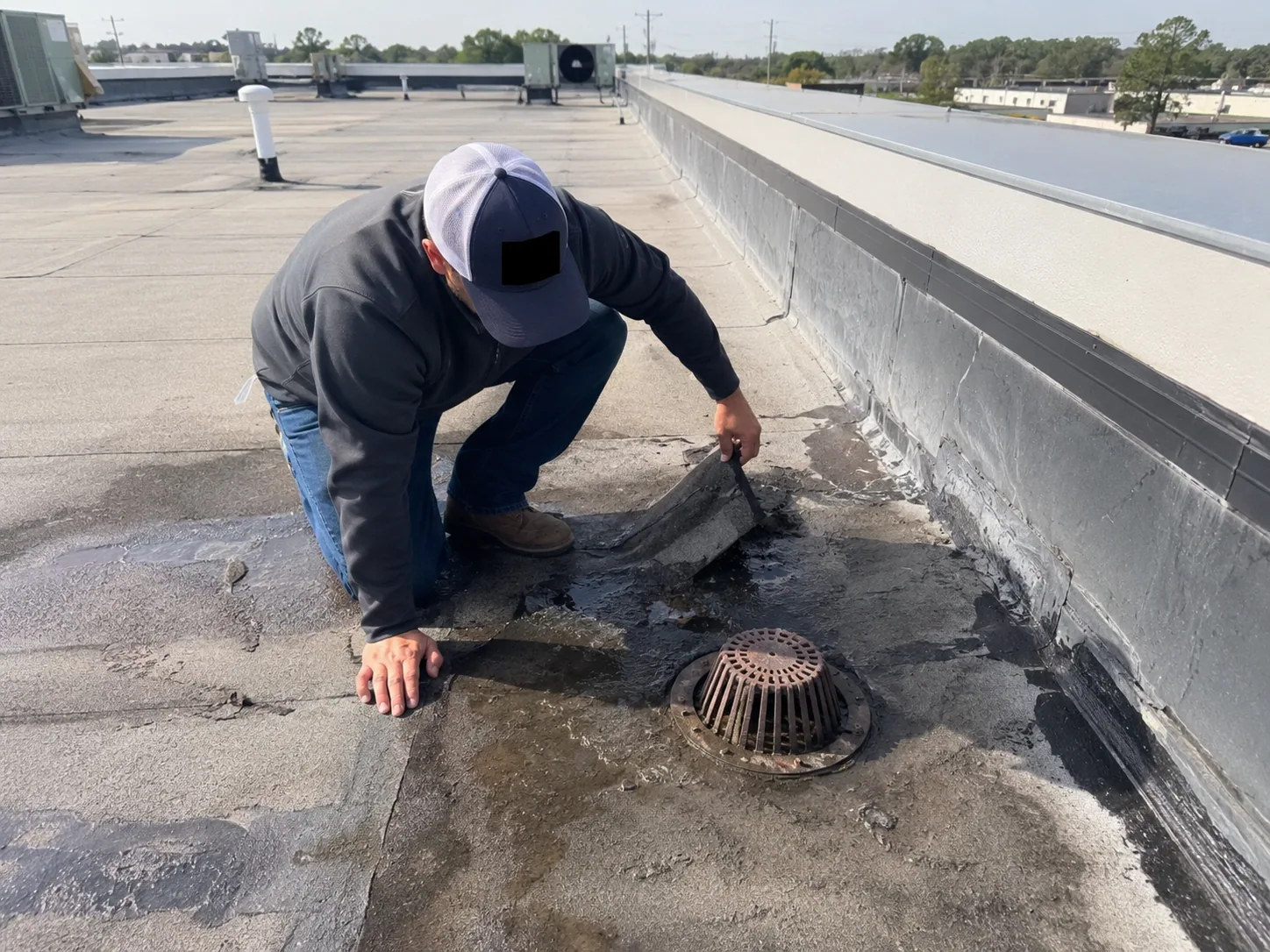
A flashing failure repair at that wall is a modest job when found early. When it is missed, water runs down the inside of the wall and shows up in the office carpet. We also look at how high the wall flashing climbs, since a low termination lets splash and wind-driven rain get behind it. On a tall wall, the counterflashing and the mortar or panel joint above the roofline are checked too. We photograph the full height of each wall that meets the roof, with the location marked on the plan, so a repair can be matched to the wall that needs it.
Count the Tenant Equipment
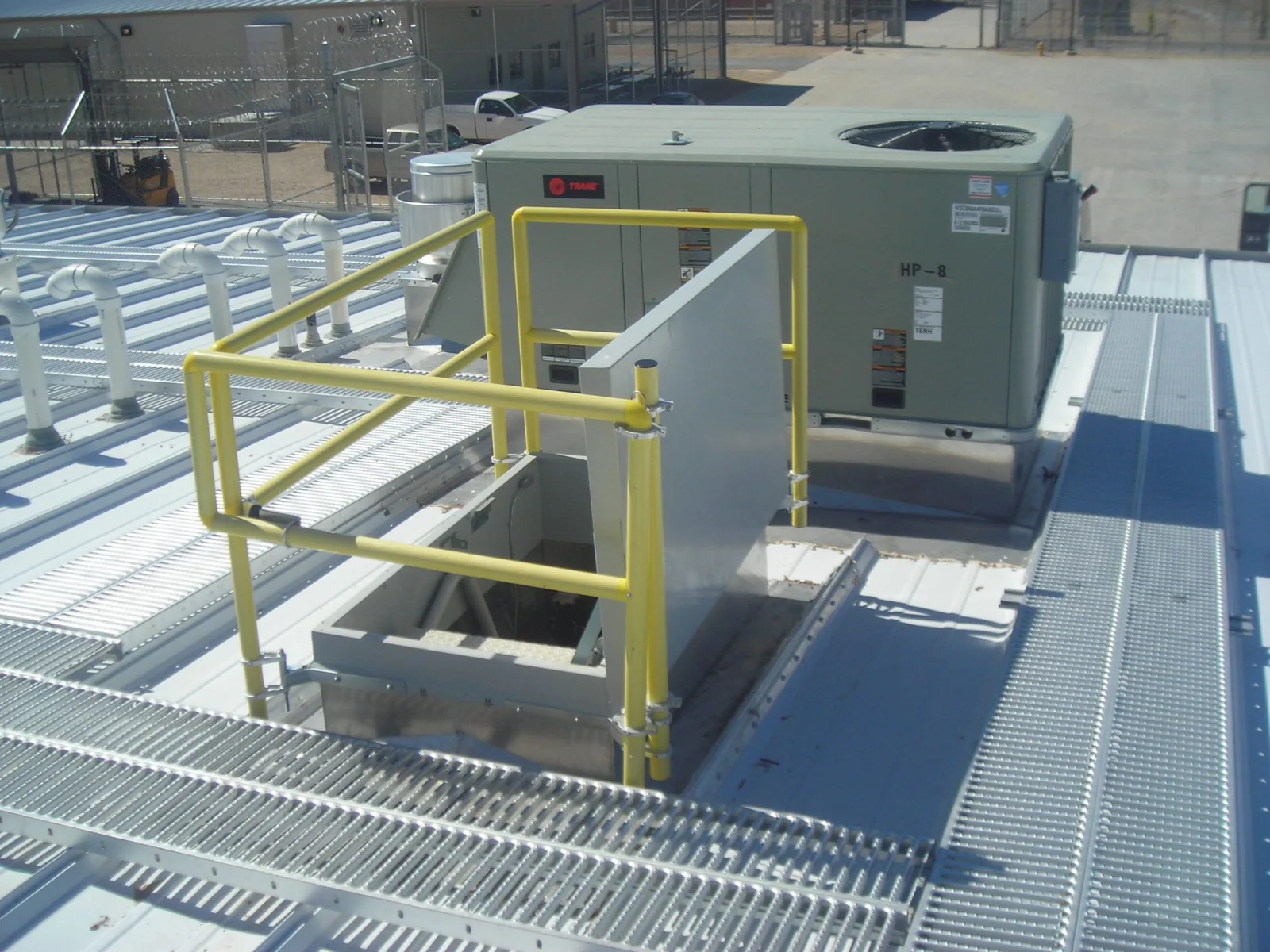
Flex space gets re-let, and each tenant brings equipment: a rooftop unit for the office, a vent for a light-assembly process, a fan for a workshop, a satellite dish. Each addition is a penetration. Over the years a flex roof can carry many holes flashed by different hands. We map every unit and penetration, note the flashing type, and flag abandoned openings. Cracked sealant at curbs is a common finding, and a curb repair costs far less than a tenant dispute.
A landlord who has the map can require a roofer for the next installation and keep the roof under one warranty. Many flex roofs have multiple age zones, because additions were built later. The seam between an old roof and a newer one is a classic leak line, and we record how the two are tied together. An office building roof with similar equipment follows the same walk, and an owner with both can use one format for the portfolio.
Clear the Shared Drains and Measure the Ponding
A row of flex buildings may share a roof or sit on adjacent roofs draining to a few low points. One clogged drain can park a storm's worth of water on the roof, and that water ages seams and adds weight. We clean the drains, measure how long water stays, and look at scuppers for free discharge. If water still stands after cleaning, the fix is a taper or an added drain, quoted apart from the rest.
The photo log shows the dirt ring where water sits, which helps a landlord explain the work to a tenant or a lender. Loading dock canopies and overhead door heads are checked too, since a leak at a dock door is a leak onto the loading apron and onto stock. Gutters and downspouts on flex buildings can be undersized for the roof area they serve, and we note any that overflow in a heavy rain.
Sort Landlord Items from Tenant Items
Who pays for a flex roof repair depends on the lease. We use plain labels. We label each finding as a building item, such as a failed seam or a clogged shared drain, or a tenant item, such as a vent a tenant installed. That sorting, together with the unit map, helps the landlord decide what goes to common area charges and what goes to a conversation with a tenant. We do not interpret a lease; we provide the facts the manager needs to read it against the roof. Dated photographs and a repair history help in that conversation. When a tenant moves out, the same file tells the next tenant the roof is dry. When a tenant disputes a charge, the file shows where the water came from, and when. A landlord with that record negotiates from facts, and the cost of keeping the record is one walk a year.
Decide Between Repair, Coating, and Replacement
A flex roof whose insulation is dry and whose membrane is sound can carry on with repairs and a coating restoration. A roof with wet insulation across several bays is a replacement. An infrared moisture survey and core cuts decide. The building department confirms which edition of the state code applies to the permit. Phasing the work by bay keeps tenants in place, and the price is broken into area, wet insulation, units to disconnect, and access equipment, so the landlord can see which line is moving the total. If a tenant lease expires soon, we say so in the summary, because the roof decision can be timed to the vacancy.
Vacancy timing deserves a line in the plan. When a bay is empty, roof work over it costs less in disruption, and a landlord who knows a lease ends in spring can ask for the loud work then. Where the landlord supplies the lease calendar, the findings mark which bays are leased, which are vacant and which turn over within the year, so the schedule follows the rent roll as well as the weather. Phasing by bay also lets a repair paid this year sit beside a replacement budgeted for the next.
Watch the Storms and the Park
The EF-1 tornado of May 2024 took part of an East Gastonia warehouse roof. Flex buildings in parks near Gateway85, a roughly 365-acre industrial site between Gastonia and Lowell, or at SouthRidge Business Park near Bessemer City, get the same post-storm walk of edges and equipment. Owners in Gateway85 and Gastonia Technology Park can use one report format across a portfolio, and a warehouse roof is the larger cousin of a flex bay.
Commercial Roofing Questions
How do you tell an office leak from a bay leak?
We trace from the stain across the roof plan, check the wall transition and curbs first, and confirm with a moisture scan. A stain that lines up with the wall between the office and the bay points to the transition. A stain far from it points to a unit or a drain.
Can tenants stay during the work?
Yes, with phasing. We work by bay, protect interiors, and give the manager a schedule.
Who approves a tenant's roof penetration?
The landlord should. We recommend the roofer for any new penetration to protect the warranty.
What if a tenant caused the leak?
The findings summary shows the cause and location. The lease decides who pays.
When is the best time for a flex roof walk?
Spring, before storm season, with a second walk after leaf fall to clear drains before winter. Drains and curbs head the list, and a major storm earns an extra visit.
Topic
Flex and Light-Industrial Roofing
Roof Types
Low-slope and metal
Related Roofing Work
Failed Flashing Repair
Rooftop Equipment Curbs and Supports