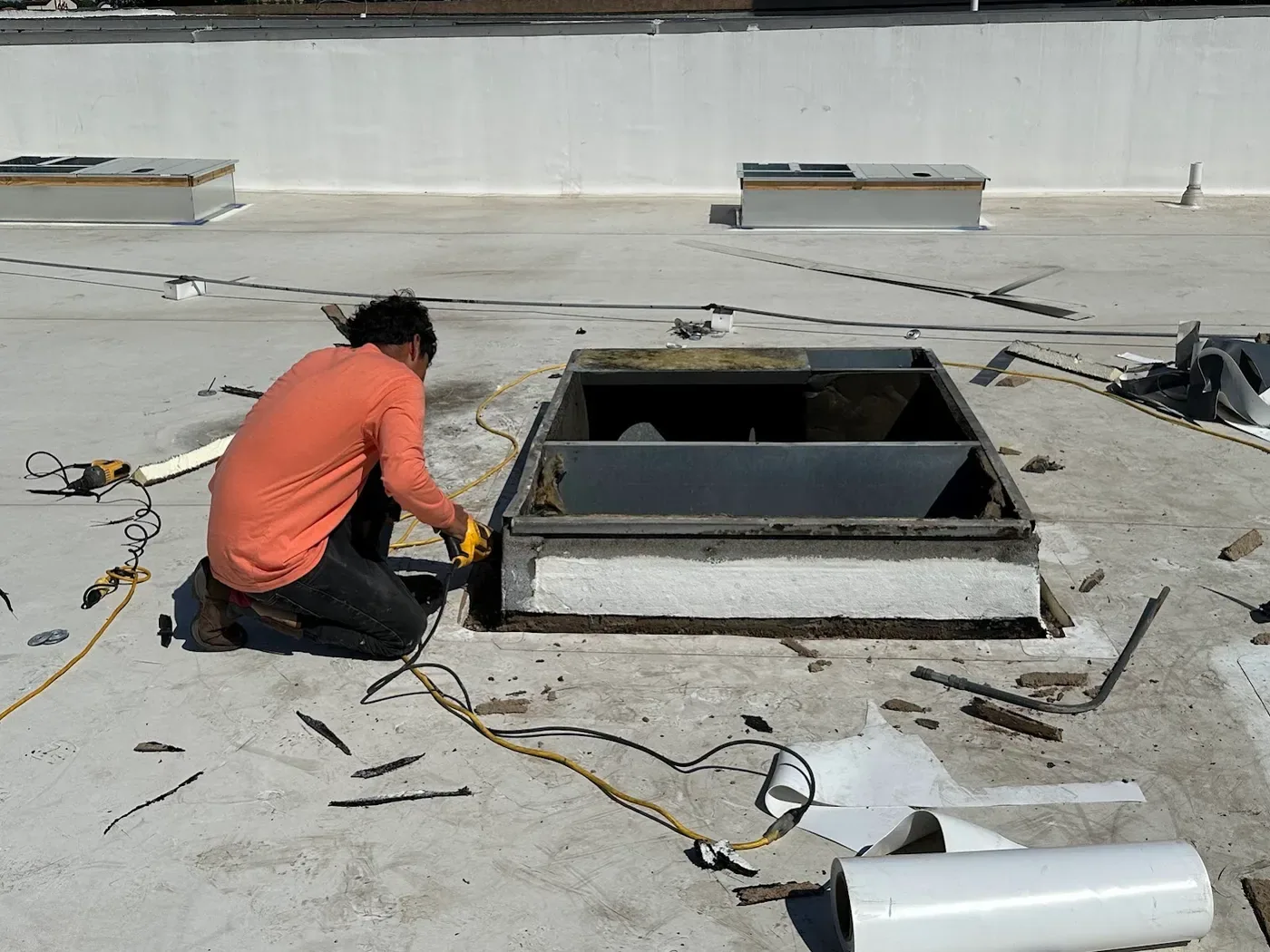
Standing Seam Metal Roofing in Gastonia, NC
A panel that has walked a half inch out of its clip at a transition is a finding a roofer sees on standing seam roofs after a few Piedmont summers. The panel is not broken. It has moved with the heat and is no longer where the clip expects it. What that means for the owner is a small fix now, a re-seated panel and a reset trim, or a leak at the next hard rain when the seam opens at that spot.
Standing seam roofs in Gastonia, NC are walked panel by panel. Each finding goes into a photo log, each roof gets a written answer to repair, restore or replace, and emergency work is available overnight.
Learn how the panels lock
A standing seam roof is made of long metal panels with raised seams that lock together. The panels are held by concealed clips that let them move with temperature, and few fasteners pierce the surface. That design sheds water well and lets the roof expand and contract. It also means the details matter most: clips, seam closures, end laps, penetrations and the transitions at eaves, ridges and walls.
On a walk we check the seams for opening, the panels for movement, the clips where we can see them, the finish for wear and every penetration for flashing quality. A fastener through the face of a panel, sealed with caulk, is a finding. We photograph each in the log, and a plan shows which panels and details need work.
Penetrations on a metal roof need curbs and boots made for the profile. A round pipe boot sealed to a raised seam, a curb fastened across several seams or a vent set on top of a rib without a base are all weak details. Each gets its own photo and a rating, and the rating drives the order of work. A metal roof can be tight across the field and still fail at five penetrations.
Plan for heat movement and wind
Metal moves. July highs in Gastonia average 90.7 degrees, and a long panel in the sun expands and contracts all day. Clips allow for it. A panel pinned by a stray fastener cannot move, and the stress goes to the seam, the fastener hole or the trim. We look for pinned panels and loose clips first.
Wind is the other force. Gaston County took an EF-1 tornado with estimated 110 mph winds on May 8, 2024, and Hurricane Hugo's 87 mph gusts reached Charlotte in 1989. Both explain why we check clip spacing, ridge and eave attachment, and trim fasteners after hard storms, since a metal roof lets go at its edges and ridges.
Condensation is a separate issue on metal. Warm, humid air meets a cold panel underside on winter nights and condenses, then drips like a leak. The stain looks like a roof failure. A look at the underside of the panels and the insulation separates the two, and the cure is a vapor retarder, ventilation or an insulation fix, not a bead of sealant on top.
A thermal-movement check is quick: with the panel in the afternoon sun, we look for oil canning, stressed trim and fasteners that have worked sideways in their holes, and each one is photographed beside a tape.
Count the cost of waiting
A re-seated panel and a resealed closure are modest line items. A seam that stays open through a wet spring lets water into the deck and insulation, and the finish below starts to rust. Metal roofs can last a long time, but a small opening that is ignored can shorten that life by years.
Rain, not snow load, drives the wear: Gastonia gets about 44 inches of precipitation a year but only about 1.2 inches of snow. Next to one another sit the options of repair, restore, recover and replace, each with a decision date. What changes the price is access, panel length, trim, penetrations, finish and any deck repair.
A metal roof's remaining service life is a number the capital line should show. Sound panels under a worn finish can be restored. Panels at the end of their life are priced for replacement early enough to compare bids and choose a season. A roof between the two gets a limited repair, and the next walk decides on replacement. Clip spacing, trim condition and the count of pinned panels go into the log each time, so the call rests on numbers.
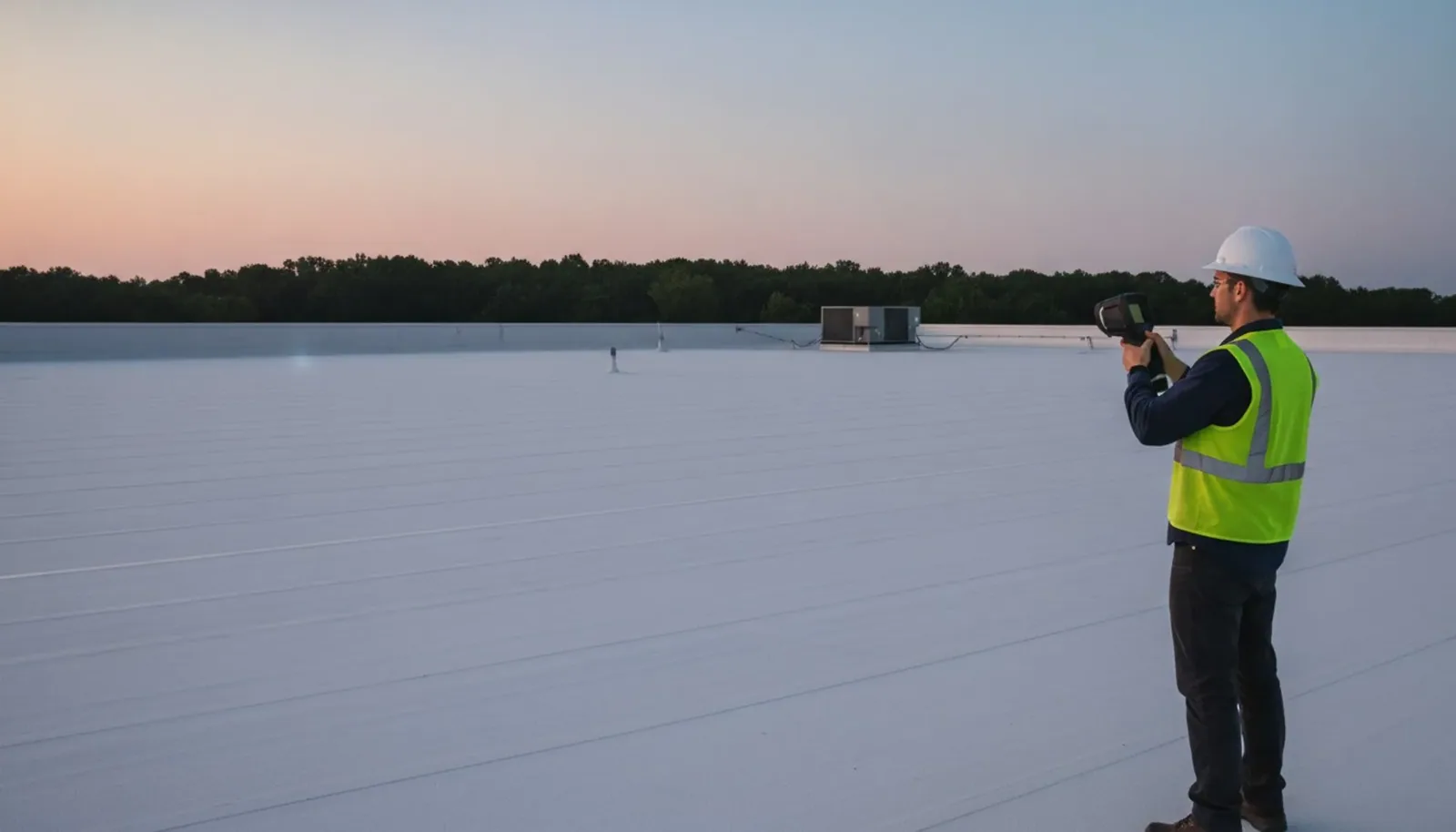
A scheduled maintenance walk costs little and catches loose trim and pinned panels early, and an infrared moisture survey checks the insulation under a leaking panel before any scope is written. Both go into the photo log.
Decide repair or replace
Repair when the panels are sound and the problems are details. Reseat panels, replace clips, rebuild flashings and reseal closures; commercial roof repair on a standing seam roof is often a matter of the right trim and sealant. Restore a worn finish with a coating when the metal is sound underneath.
Replace when panels are corroded, deformed or fastened so badly that repair cannot hold. A metal retrofit over an old roof is another path when the structure and the old surface allow it. Compare with a membrane such as TPO if the roof is low-slope and the budget is tight. Core cuts and a moisture survey back the choice.
Scheduling is simpler than on a membrane, since metal panels install in most weather, but wind during panel handling is a safety issue and long panels need space to be staged. We plan staging, lifts and a safe route for panels, close in each day's work and keep temporary protection ready in spring storm season.
Place metal on the right Gaston County building
Gaston County developed the 422-acre Class A campus of Gastonia Technology Park for advanced manufacturing and technology users, and The Oaks Commerce Center is a 280-acre industrial park in private hands. Gateway85 occupies about 365 acres between Gastonia and Lowell. Whether a given building in any of them carries metal is settled on the roof.
Metal roofs appear on many building types, from shops to institutional buildings. Work on a military site follows access and badging rules, and roofing there follows the Unified Facilities Criteria. A first walk at the technology park or on any other campus records the roof as it is.
Commercial Roofing Questions
What fails first on a standing seam roof?
Details, not panels: clips, seam closures, end laps, penetrations and trim. A panel pinned by a stray fastener also strains the seam. We check these and log what we find.
Can a fastener through a panel be sealed with caulk?
Caulk is a short-term patch. A fastener through the face of a panel can leak as it moves. We replace it with a proper detail or a repair that lets the panel move.
Can a worn finish be restored?
Often. If the metal is sound, cleaning and a coating can protect the surface. We check for rust and loose fasteners first, since coating over them hides the problem.
Is standing seam worth the cost over membrane?
On sloped roofs and long-life buildings, often yes. On a low-slope roof with tight budgets, a membrane may fit better. We price both and the owner decides.
What do you need to evaluate a metal roof?
The roof age, panel type if known, leak history and repair invoices. You receive written findings with repair or replace answered plainly.
Topic
Standing Seam Metal Roofing
Roof Types
Low-slope and metal
Related Roofing Work
Preventive Roof Maintenance
Infrared Roof Moisture Surveys