
Roof Drains and Scuppers in Gastonia, NC
Two days after the rain, water is still standing at the drain on a long warehouse roof. The dirt ring around it shows the pool has been there many times before. The roof was built to shed water, and instead it holds it, and every hour the water sits it adds weight to the deck, heat to the membrane and a chance for the seam below to open. Drainage is the least glamorous part of a roof and the part that decides most of the repair bills.
A drain that works costs almost nothing. A drain that fails costs the roof.
The owner usually sees the symptom first: a stain on a ceiling tile, a damp spot at a dock door, a gutter that overflows over a walkway. The cause is up on the roof, and it is often one clogged strainer or one low corner. Finding it takes a walk and a hose.
Check Every Drain, Scupper and Gutter
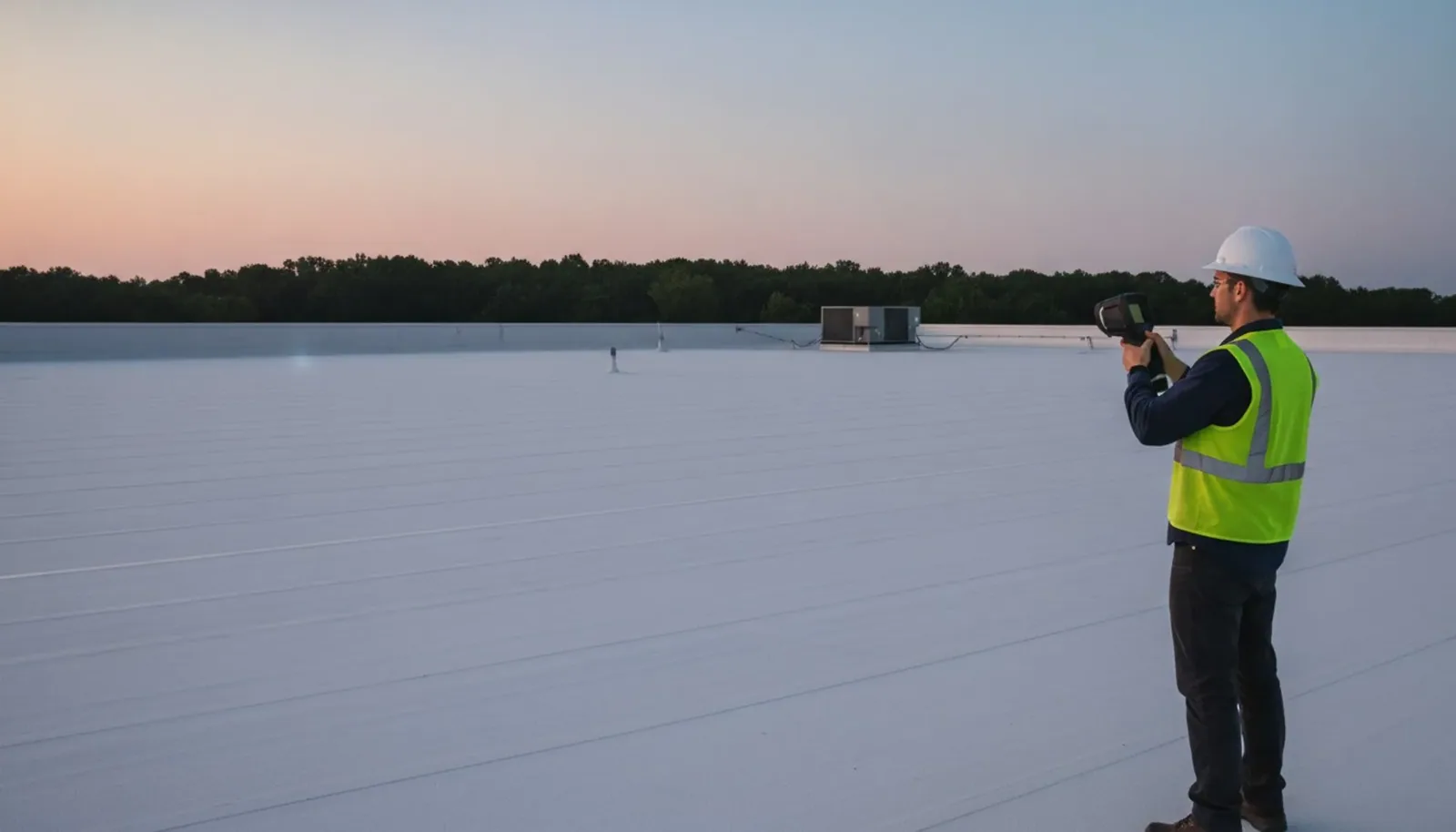
A drainage inspection follows the water. We find each drain, scupper, gutter and downspout on the plan and flush it with water to see whether it clears and how fast. We photograph strainers, clamping rings, sumps and the membrane around them. We look for debris, cracked bodies, sagging sumps, missing overflow scuppers and downspouts that discharge against a wall.
Then we look at the roof between the drains. A low spot that holds water more than a day after rain is a ponding water record: we mark it, measure the depth and photograph the dirt line. A pool that is a half inch deep after a storm is a different problem from one that is two inches deep and permanent. The depth tells us whether the answer is cleaning, a new sump, a tapered crown or a bigger repair.
Gutters and downspouts on sloped metal roofs get the same treatment. Loose hangers, sagging runs, missing splash blocks and downspouts that empty against a foundation all send water where it should not go. We record each by location and give a repair price per item.
Price What Standing Water Costs
Water is heavy. A pool two inches deep across a few hundred square feet adds real weight to a deck, and the weight pushes the deck lower, which makes the pool deeper. Membranes under standing water age faster, seams soften, and any small opening feeds water into the insulation. Gastonia averages about 44 inches of rain a year, and summer heat bakes the pooled area between storms.
Cleaning a drain is cheap. Adding a sump or a cricket is a moderate repair. Replacing wet insulation under a chronic pond is a large one. The longer the pond sits, the further the cost climbs. Manufacturer warranties often exclude damage from ponding water beyond a stated depth or time, so a roof that ponds can lose coverage as well as life. Put drains on the maintenance calendar before the budget.
The numbers behind a ponding roof are blunt. If the pool has soaked the insulation, the repair is a replacement of the wet area, and the drainage fix is added to it. If the insulation is dry, the drainage fix alone may save the section. A moisture scan before the work makes the difference between those two bills.
Fix the Slope, the Outlet or the Overflow
Ponding has three families of cause. The outlet may be clogged, undersized or set too high. The slope may be wrong, either from the original design or from deck deflection. Or the roof may lack an overflow path, so a clogged drain has nowhere to send water. Each cause has its own fix.
For clogged outlets, cleaning and installing better strainers is the first step. For low spots, a tapered system or a cricket can redirect water to the drain. For a lack of overflow, an added scupper through a parapet gives water a safe exit. For a deflected deck, structural repair may be needed before any roofing is done. A tapered insulation plan can rebuild slope during a replacement or recover. We state which fix the evidence supports and what it costs.
New drains and sumps must be set to the right elevation, tied into the plumbing and flashed into the membrane. A badly flashed drain leaks at the collar. We photograph the ring, the clamping and the flashing before the membrane goes over, so the detail is on record.
Scope the Work and Set the Budget
A drainage scope lists each drain and scupper by number, the work at each and the quantities: cleaning, new strainers, new clamping rings, sump rebuilding, crickets, added scuppers, downspout extensions. Cost drivers are the number of drains, access, the depth of ponding, the type of roof and whether insulation under the pond is wet. We scan wet spots with an infrared moisture survey before pricing, because wet insulation changes the scope.
Roof drains connect to plumbing, and some work belongs to a plumber. Overflow drains and secondary drainage are code matters, so we flag anything that looks undersized for the code official and the owner's engineer and leave the determination to them.
Drainage on Gaston County Roofs
Long, low-slope roofs concentrate water at few outlets. A newer industrial building such as the 1.5 million square foot distribution center that opened at Gateway85 in April 2023 still depends on its drains to move a thunderstorm off the roof, and dust and windblown trash reach those drains over time. An older building, such as one of the mills that survive in Belmont, may rely on whatever scuppers and edge outlets it was given, and leaves from nearby trees can block them.
The Piedmont storm pattern matters: summer thunderstorms drop a lot of water fast. A drain that handles light rain may overflow in a downpour, and the overflow path is what protects the roof. We test it, not assume it.
After the work, the drain check goes into the photo log with a date. Next spring's visit starts from that record.
Put Drain Checks on the Calendar
Two visits a year, spring and fall, catch most drain problems. A quick clearing after major storms catches the rest. A written record of each check turns a recurring leak into a documented pattern, and a scheduled preventive maintenance visit puts the flush test, the photographs and the ponding depths in one report the owner can file.
The blunt line is that most drainage failures are known before they cause a leak. Somebody saw the pool and put it off. Writing the pool down, with a depth and a date, is what makes the decision real.
Commercial Roofing Questions
How long can water sit before it is a problem?
Water standing more than 48 hours after rain is a concern. Chronic ponding shortens membrane life and may affect warranty terms.
Do I need an overflow scupper?
Often yes, and code may require a secondary path. A clogged main drain with no overflow loads the roof with water.
Can a cricket fix ponding?
It can redirect water around a low spot toward a drain. It works when the cause is slope, not a blocked outlet or a deflected deck.
Is cleaning enough?
For clogged strainers and shallow debris, yes. If the pool remains after cleaning, the slope or outlet is the cause.
What does a ponding repair cost?
It ranges from a cleaning visit to a tapered insulation rebuild. We price each option and put a photograph of the pond beside the number, so a partner knows what the money buys.
Topic
Roof Drains and Scuppers
Roof Types
Low-slope and metal
Related Roofing Work
Ponding Water Roof Repair
Roof Insulation and Cover Board