Roof Capital Planning in Gastonia, NC
Ponded water at the same drain on a long warehouse roof, three summers in a row, is a capital line that has not been written yet. The owner has been paying for it in repairs, and the roof has been telling them the date. What matters now is when to stop repairing and start replacing, and what each choice costs.
Roof capital planning answers that for Gastonia, NC owners. It takes what we found on the roof, assigns a remaining service life, prices the repair-or-replace choice for each section and puts the result on the budget calendar. Owners can lift any page into a budget memo. That is the point.
Start From What the Roof Shows
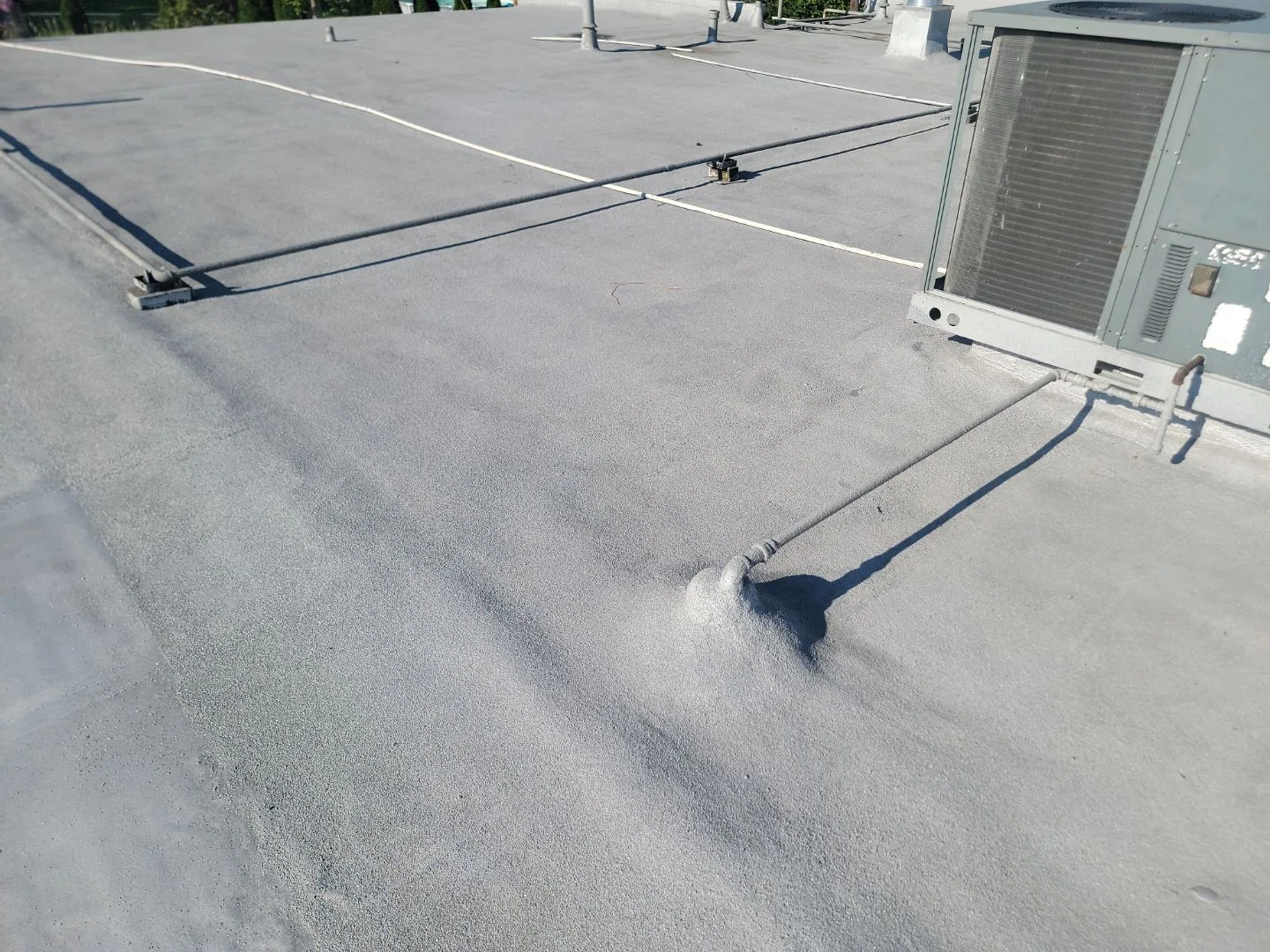
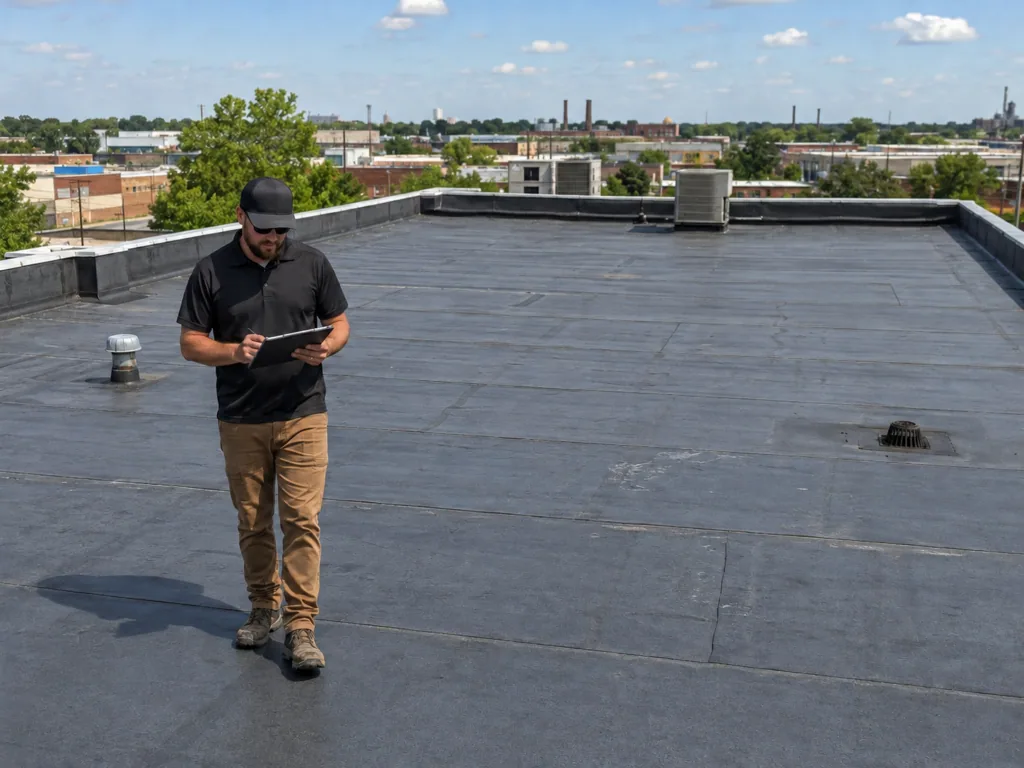
A plan built on age alone is a guess. We start from the findings: moisture in the insulation, seam condition, the repair count, ponded water and surface wear. Each one gets a photograph and a place on the roof plan, and a written condition report collects them.
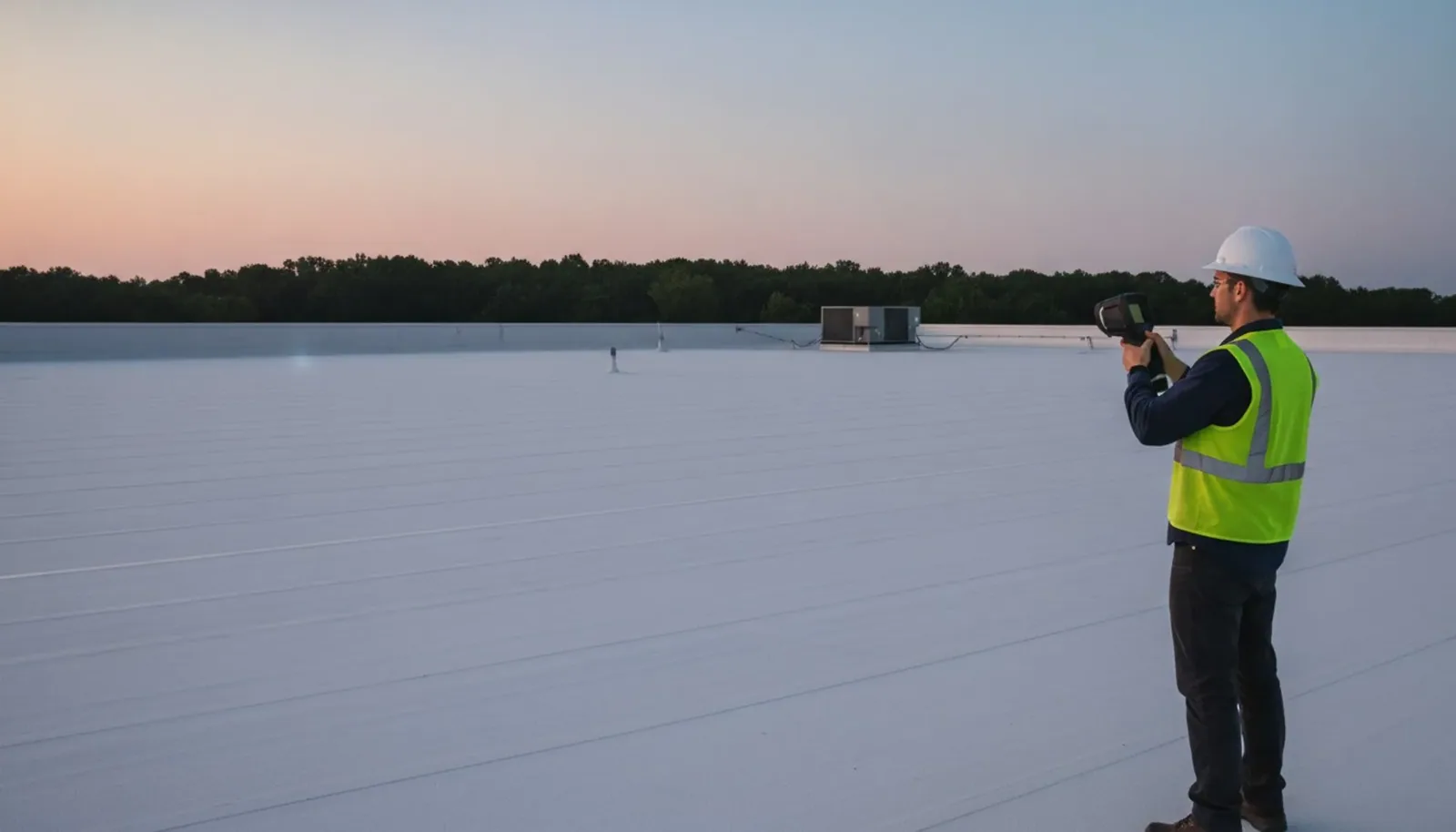
Where water may be hiding, an infrared moisture survey narrows the cores. From the findings we set a remaining service life for each roof area. A roof with dry cores and tight seams gets a long range. A roof with wet cores and a repair every spring gets a short one. Each range names the evidence it rests on.
Buildings that sit side by side can differ. A mill-era roof near Loray, a roof in Gastonia Technology Park and a medical office roof at Summit at Court Drive each age at their own rate, and we plan them one at a time. The plan shows the evidence for each, so an owner can see why two buildings of the same age end up on different dates.
Lay Out Two Futures for Every Roof
For each roof we write two scenarios. In the first, the owner acts this budget cycle: repair what can be repaired, and plan the replacement for the date the evidence supports. In the second, the owner waits, and we describe what the roof is likely to do in the meantime, including what a bad spring storm could cost.
The comparison is the useful part. A repair this quarter is a small line item. A replacement after a winter of ponded water on wet insulation is a larger one, and it comes with an emergency attached. Putting both on paper takes the guessing out. The owner picks the timing, and preventive maintenance buys time on any roof the evidence says can wait. We do not push either one.
The blunt line is this: waiting is a choice, and it has a price. Some roofs can wait, and we will say so when the findings support it. Others cannot, and the plan shows the date the cost starts to grow. We prefer a repair this month and a replacement in four years when that is what the roof calls for.
Plan Around Heat, Rain and Wind
A typical July day in Gastonia peaks at 90.7 degrees, yearly precipitation is about 44 inches and snowfall is a modest 1.2 inches. Summer heat and heavy rain wear roofs here more than snow load does. Wind adds a harder test, and the county's EF-1 tornado of May 8, 2024, estimated at 110 mph, damaged roofs on several buildings and removed part of one East Gastonia warehouse roof.
That event is a dated trigger, not a typical year. For a plan, it means each roof in the path gets an edge and attachment check before its capital date is set, and any roof with open edges moves earlier. We keep the plan flexible for that reason.
Heat deserves a line of its own. Rock Hill, in the southern part of the service area, has an average July high of 91 degrees and a record of 106, and Charlotte has recorded 104. A dark membrane in full sun runs far hotter than the air, and the plan flags roofs with that exposure for a surface check before their capital date.
Budget for the Code the Permit Will Apply
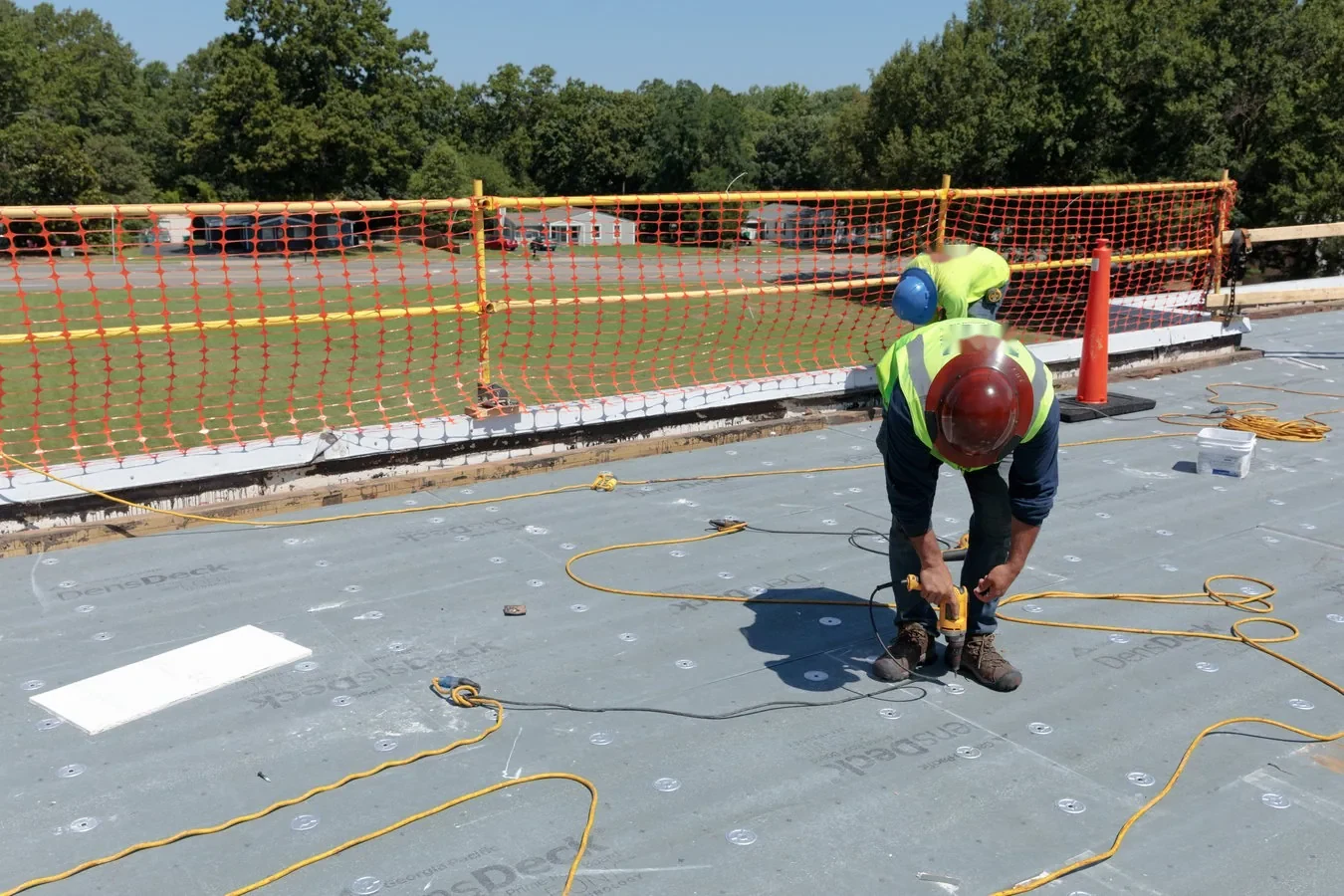
A replacement can bring code items a repair does not. Section 102.5 of the 2018 NC Administrative Code allows a building owner or agent to put forward the 2024 code as an alternative route for a project, and the 2018 State Building Code governs until the 2024 code has an official effective date.
For a capital line, that means insulation thickness and attachment details belong in the scope before the number is set. We note the code basis in the plan and confirm with the local building department. A figure that leaves out required insulation is a figure that will grow, and nobody wants a budget memo that needs a correction.
Permit review adds time. Allowing a few weeks for plan review and for the code question to be settled keeps a replacement from sliding out of its weather window. We list that time in the schedule, next to material lead times, so the decision date reflects the whole path from approval to dry-in.
Sequence Many Roofs Across Several Years
An owner with a distribution building near Gateway85, an older building near Loray and an office in Gastonia cannot replace all three at once. The plan sequences them. Roofs with active leaks over valuable contents go first, roofs with worn seams but dry layers go second, and sound roofs stay in maintenance.
Spreading replacements across years also helps with crews, materials and cash. We show the schedule and what each year's budget covers. A multi-site program carries the same schedule across more buildings, and the roof record keeps it current.
Set the Decision Date
Every capital line ends in a decision date. It is the last date on which the owner can choose a repair and still protect the replacement plan, or the date by which a replacement must be ordered to be built in the right season. We put that date in the plan and flag it a quarter ahead.
A decision date is not a deadline we invent. It comes from lead times for materials, the weather window for the chosen system and the findings on the roof. If the owner needs a second opinion, the photo log and core results are there for anyone to check. A replacement scope built from the same findings is the natural starting point for bids.
When the date arrives, the plan hands the owner a clean package for bidding: the scope, the roof plan, the core results and the photographs. Bidders then price the same work, and the owner compares like with like instead of reading five different guesses.
A lender or a partner can read the same package, so the plan is built to be shared. It carries the photograph, the core result and the cost range for every line, and a reader with no time for the roof can still follow the ranking from the summary page.
Commercial Roofing Questions
How far ahead should a roof plan look?
Five years is common, with the first two in detail. We revise the later years as each season adds findings.
Does the plan include prices?
It includes scope, quantities and assumptions. Prices come from current bids so they match the market on the day you approve.
What if the budget cannot cover everything?
We rank the work by consequence and show what is deferred and what interim repair keeps it dry.
Can the plan go to a lender?
Yes. It carries photographs, core results and the reasoning behind each date, so a third party can check it against the roof.
Who updates it after a storm?
We do, after a post-event walk. The update adds findings and shows how the budget years change.
Topic
Roof Capital Planning
Roof Types
Low-slope and metal
Related Roofing Work
Roof Condition Reports
Infrared Roof Moisture Surveys