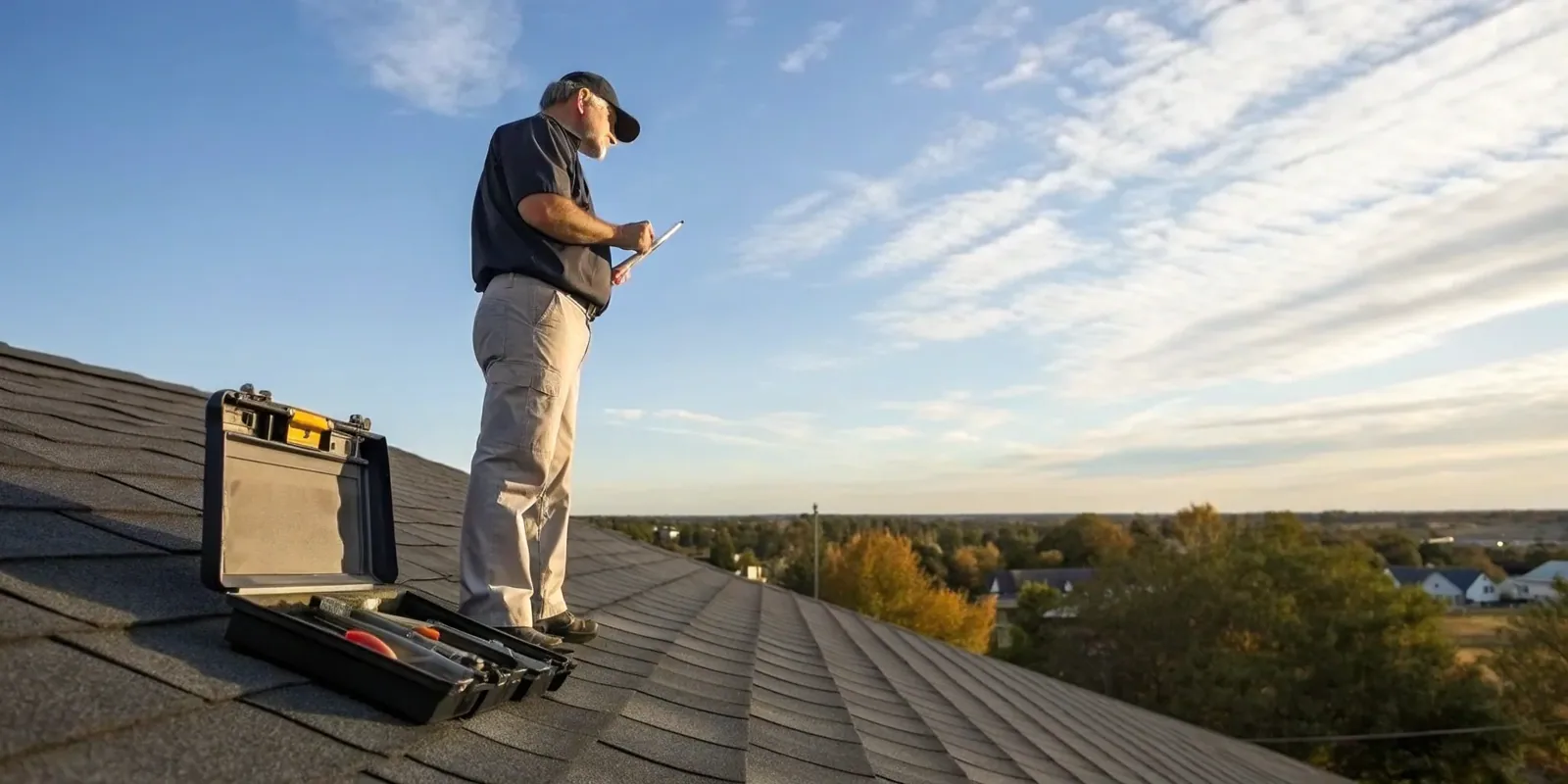

Multi-Site Roof Programs in Gastonia, NC
Five buildings, five reports, five formats. That is what a multi-site owner can end up holding when the question is which roof should get money first. One report says good, another says fair, a third gives a number nobody can explain, and the budget meeting turns into an argument about whose scale is right.
A multi-site roof program replaces the five formats with one. From Gastonia, NC the work runs along I-85 into Charlotte, about 21 miles east, and across the metro into York County, South Carolina. Every building gets the same walk, the same photo log and the same ranking, so a property manager can lay them side by side and see the order.
Use One Format for Every Building
The program starts with a template. Each building gets a roof plan with numbered areas, the same condition scale and the same photograph standard. A finding on a mill-era roof and a finding on a distribution roof use the same fields, with a date, a photograph and a cost range.
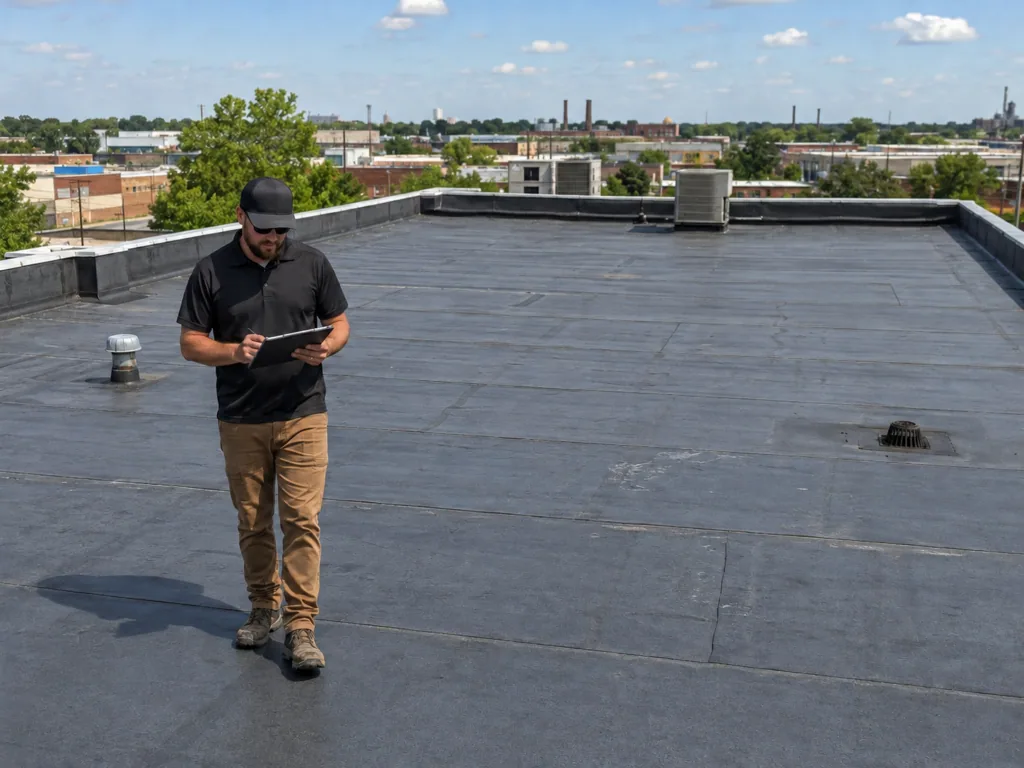
That turns separate reports into one dataset. The owner can sort by urgency, by cost of waiting or by decision date, and compare buildings without translating between writers. The condition report is the base document, and the roof record holds every site in one place.
The template also includes a building profile: roof area count, membranes by area, rooftop equipment, access method, tenant hours and safety notes. A crew arriving at a Gateway85 distribution building and a crew arriving at an older building near Loray carry the same profile sheet and know what to bring. When a manager changes, the profile explains each site in a page.
Rank Roofs by Cost of Waiting
With every building on the same scale, ranking is direct. Roofs with active leaks over stored goods or tenant ceilings come first. Roofs with worn seams and dry layers come second. Sound roofs stay in maintenance. The cost of waiting is written beside each line, so a partner can see why a small building outranks a large one.
We avoid clustering all replacements in one year. Crews, materials and cash are all limited, and a program that spreads work across budget cycles is easier to fund and easier to build. The capital plan shows which sites move first and what interim repairs keep waiting sites dry.
The ranking is not fixed. A storm, a tenant change or a sale can move a site up or down, and the program reflects that within a week. We would rather re-rank on evidence than defend a list that no longer matches the roofs.
Run the Route Across the Metro
Gaston County is part of the Charlotte-Concord-Gastonia metro area, estimated at about 2.8 million people in 2023. A program here can reach Gastonia, Belmont, Mount Holly and Bessemer City in North Carolina, Pineville and the Paw Creek area along I-485, and Rock Hill and Fort Mill in South Carolina. Travel is part of the cost, so we plan routes by corridor.
A spring route might start with the buildings that took the most wind and move outward. The route runs the same way each year, with fixed dates, so tenants and managers know when to expect us. Sites at Belmont and Mount Holly fall on one leg, and Charlotte-side buildings on another.
Industrial parks cluster along the corridors, which helps. SouthRidge Business Park sits one mile north of I-85 near Bessemer City, Gastonia Technology Park covers 422 acres, and Kings Mountain Corporate Center is a 164-acre privately owned industrial park in Kings Mountain. An owner with buildings in two of them can have both walked on one leg of the route.
Plan for Weather That Differs Across the Route
July highs in Gastonia average 90.7 degrees. Rock Hill averages 91 in July and has reached 106, while Charlotte has hit 104. The tornado of May 8, 2024 ran from west of Gastonia toward McAdenville and Belmont, and gusts of 87 mph reached Charlotte with Hurricane Hugo on September 22, 1989. Weather does not stop at a county line, and a program that spans several has to watch all of it.
After a storm, we check the buildings in the affected corridor first, using the same edge-and-attachment checklist for each. That lets the owner see damage on every site at once, and it gives an adjuster a consistent record.
Track Code and Permit Differences by Site
North Carolina and South Carolina do not share a building code. In North Carolina the 2018 State Building Code stays in force until an effective date is set for the 2024 code, which an owner or agent may ask to use as an alternative method. South Carolina sites follow their own state and local rules.
Each building profile carries a short jurisdiction note: the building department, the permit steps and the code edition confirmed with that office. When a replacement is planned, the scope names the insulation and attachment details required where the building stands, and the permit time goes into the schedule at the start.
Report Once a Quarter
The program delivers one reporting file a quarter. A summary page shows each building, its current condition, open repairs, completed work and upcoming visits. Building sheets follow. The owner has one contact for all of it.
When something breaks at a site, that contact already holds the roof plan, the last photographs and the repair history. Emergency response starts with information in hand. The program also feeds preventive maintenance visits, and each visit updates the file. Annual reviews close the cycle: sites that stayed quiet move to a lighter schedule, and sites with new findings move up.
The quarterly file is also what a lender asks for. When a refinancing or a sale comes up for one building, the program hands over that building's sheet, with photographs, repair history and ratings, and the rest of the portfolio stays private. The format never depended on the other sites.
Add and Remove Sites Without Starting Over
Portfolios change. A building is bought, sold or closed. When a site is added, we run a baseline walk, assign roof area numbers and enter the building into the file. The next quarterly report includes it beside the others.
When a building is sold, its file is exported and handed to the owner or the buyer's team: roof plan, photo log, repair history and warranty papers. Because the format is the same everywhere, the export is clean and the buyer can read it without us.
A program can start small, with two or three buildings, and grow. The earlier records stay comparable with the later ones, and the budget calendar extends as buildings join. For owners who also need an acquisition review, a due diligence roof survey becomes the first entry in the file.
A new site slots into the ranking the week it is walked.
Commercial Roofing Questions
How many buildings make a program?
Two or more benefit from a shared format. The program scales as sites are added.
Can sites in both Carolinas be covered?
Yes. We keep a jurisdiction note for each site and confirm code and permit requirements locally.
What if another contractor holds some roofs?
We can inspect and log those roofs in the same format. Repair work stays with whoever the owner chooses.
How are emergencies handled?
One contact answers. The building profile and last inspection are already on file.
Does the program affect warranties?
It adds inspection and maintenance records that help keep warranty conditions in view. The terms stay as written.
Topic
Multi-Site Roof Programs
Roof Types
Low-slope and metal
Related Roofing Work
Roof Condition Reports
Roof Asset Management