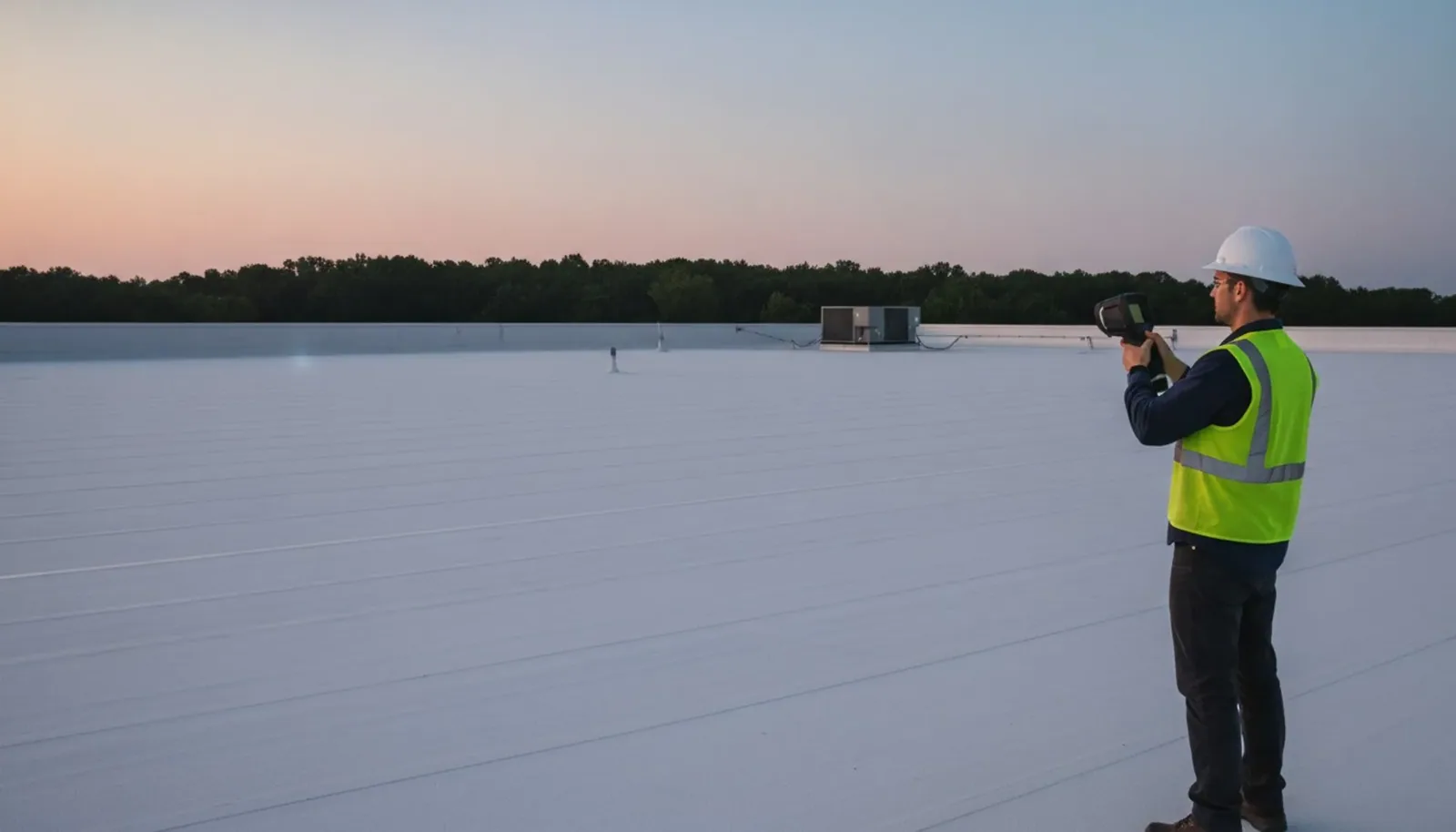
Due Diligence Roof Surveys in Gastonia, NC
Ponded water at the drains of a long warehouse roof, in the photographs from a seller's broker, is a number waiting to be negotiated. Nobody on the buyer's side knows yet whether it is a clogged strainer or a roof that has been holding water for five years. A due diligence roof survey answers that before the contingency period runs out.
For acquisitions and refinancing in Gastonia, NC, we walk the roof, cut cores where the evidence calls for it and return a written report that separates three things: what must be repaired before closing, what should be repaired soon after and what belongs in the reserve. The buyer, the lender and the broker can all read it.
Define What the Survey Covers
We survey every roof area on the property. On foot we examine the field, seams, edges, drains, flashings and penetrations, and photograph each finding with a date. We cut cores where moisture is suspected and where the record needs the layer sequence: membrane, insulation, deck. Each core is patched the same day.
We also ask the seller for records: warranties, prior reports, repair invoices and installation dates. Where records are missing, the report says so. The result is a written condition report. Every roof area ends with a condition note and a remaining service life range, so the buyer can compare areas on one scale.
Roof access, equipment and tenancy go in the report. A roof reached through a tenant suite, a roof with a dozen rooftop units and a roof with solar racks each cost more to maintain, and a buyer should price that before closing. We list the units, the access method and any tenant restrictions the seller discloses.
Sort the Findings Into Three Lists
Buyers and lenders think in lists. List one is repairs before closing: open seams, failed flashings, clogged drains and places where water is entering now. List two is repairs in the first year: items that are not leaking yet but will. List three is the reserve: roof areas near the end of their service life, with a timing range the evidence supports.
The lists feed different decisions. List one supports a price adjustment or a seller credit. List two sets the first-year budget. List three sets the lender's reserve and the buyer's long-term plan. We put a cost range on each item and a cost of waiting beside it. The line for a buyer to remember: an inspection that finds nothing on a wet roof was not an inspection.
Heat is part of the cost of waiting. A small open seam in a Gastonia summer gets sun at a typical July high of 90.7 degrees and water from roughly 44 inches of yearly precipitation, and it gets both every week. A list-two item left through one wet season is often a list-one item the next spring.
Know the Buildings in This Market
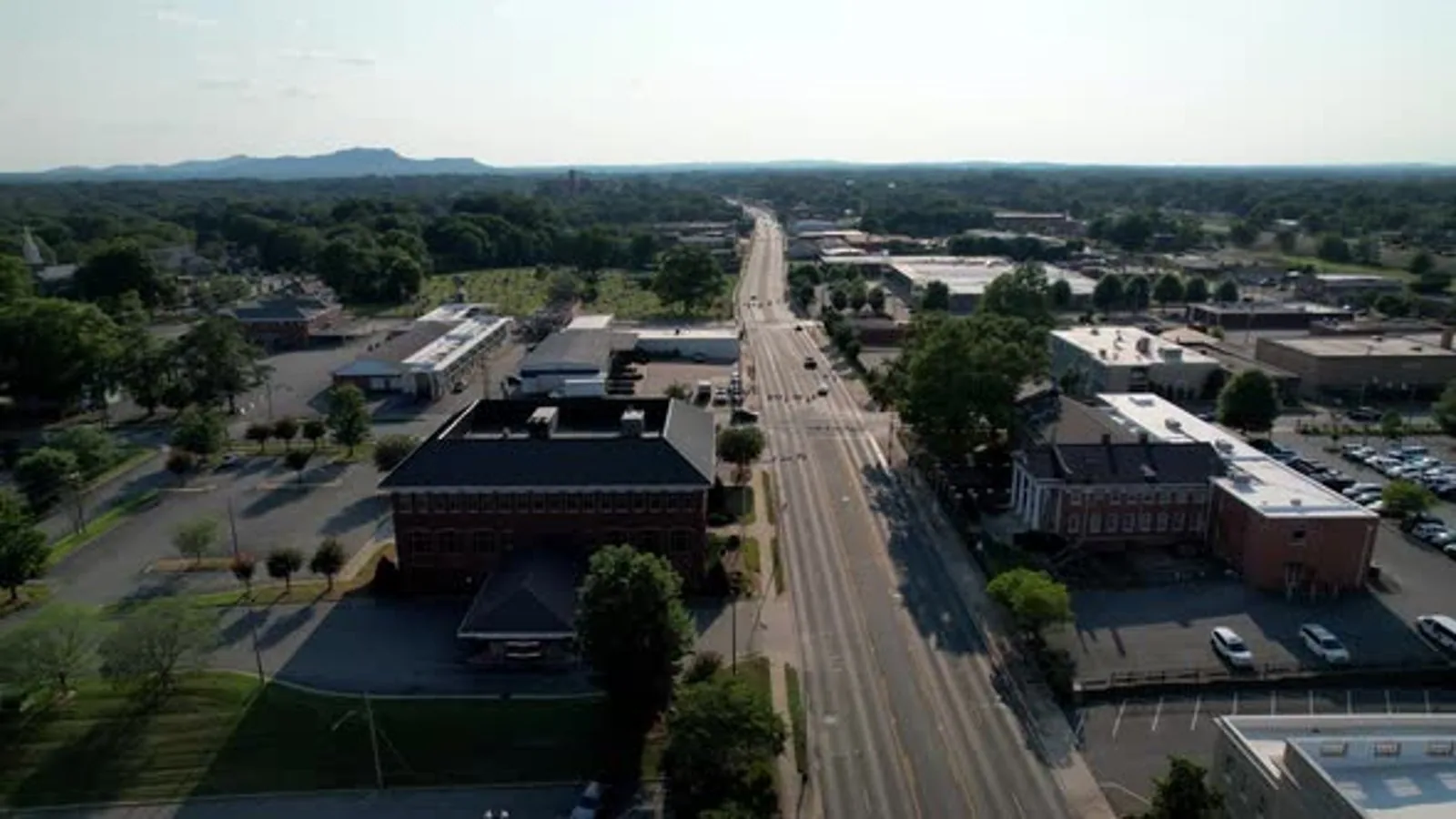
Gaston County trades in a particular mix. Between Gastonia and Lowell, Gateway85 occupies roughly 365 acres and has delivered 2.4 million square feet, with a 1.5 million square foot distribution center among its buildings. SouthRidge Business Park, near Bessemer City and one mile north of I-85, spans 425 acres of distribution and manufacturing space, and The Oaks Commerce Center adds 280 privately owned acres. In town, beside Gaston Memorial Hospital, Summit at Court Drive covers 60 acres of medical and office space.
Older stock sits alongside, including legacy mill buildings such as the five-story Loray Mill, now converted in part to apartments and mixed use. A survey for a mill conversion looks at parapets, old layers and what is over the new units. A survey for a distribution building looks at drains and seams over a large field.
Retail and medical buildings add other questions. The area's only indoor regional mall, Eastridge Mall, sits on North New Hope Road with a large retail strip around it; strip centers like that share walls, drains and rooftop equipment among several tenants. A survey for a strip building maps each tenant's roof area, so responsibility for each finding is clear to the buyer.
Check for Storm History
A buyer should ask what the roof has been through. A buyer weighing a Gaston County building should know that the EF-1 tornado of May 8, 2024 took part of one East Gastonia warehouse roof and lightly damaged several other roofs. A tornado in May 2020, estimated at 85 mph, covered about 8.7 miles from Crowders Creek Road over US 321 to the vicinity of the Gastonia airport.
For a building near either path, we look hard at edges, attachment and patches, and we ask the seller what repairs were made and by whom. Repair records from that period belong in the file. Asking costs nothing and the answer shapes the reserve.
Work Inside the Contingency Window
Contingency periods do not wait for good weather. We schedule the walk first, call in urgent findings the same day and deliver the written report on a date fixed at the start. If heat or rain interferes, the report says what could not be examined, and we recommend either a follow-up walk or a holdback tied to the unseen area.
Access is the usual delay. A seller who arranges the roof hatch, the keys and the tenant notice in advance saves a day. We write the access plan into the schedule and confirm it a day before the walk. Where a moisture scan will narrow the number of cores, an infrared moisture survey goes first.
Winter surveys come with limits. Winter ice is rare here, but the December 2002 ice storm in Charlotte left more than 1.3 million people without power, and a cold, wet week can still hide a roof; snow adds just 1.2 inches in an average year. When that happens, the report states what was not seen, and the buyer decides whether to wait for a drier day.
Carry the Survey Into Ownership
After closing, the survey becomes the baseline. Its photographs, ratings and costs move into the roof record and the capital plan, and the first scheduled visit compares the roof against the survey. Open items are tracked until they close.
A buyer with several properties can use the same format across all of them through a multi-site program. The lender gets a clear document, the buyer gets a plan and the seller gets a survey that explains the adjustment. Everyone can see the same photographs.
The survey also leaves the buyer with a list of questions for the seller that are specific to the roof: who installed it, when the last repair was made and whether any warranty is transferable. Answers go into the same file, so the roof's history is in one place from the first day of ownership.
Commercial Roofing Questions
How long does a survey take?
The walk is usually a day or two, depending on roof area. We confirm the report date when we book.
Do you cut cores on a roof the buyer does not own?
Only with the seller's permission. Cores are limited, patched the same day and photographed.
Will the survey estimate remaining life?
It gives a range supported by the findings, such as moisture, seam condition and repair count.
What if the seller has no records?
The report says so and relies on field evidence. That limits some conclusions, and the report names them.
Can the survey be used for refinancing?
Yes. It carries photographs, core results and reserve ranges a lender can check against the roof.
Topic
Due Diligence Roof Surveys
Roof Types
Low-slope and metal
Related Roofing Work
Roof Condition Reports
Gateway85 Industrial Corridor