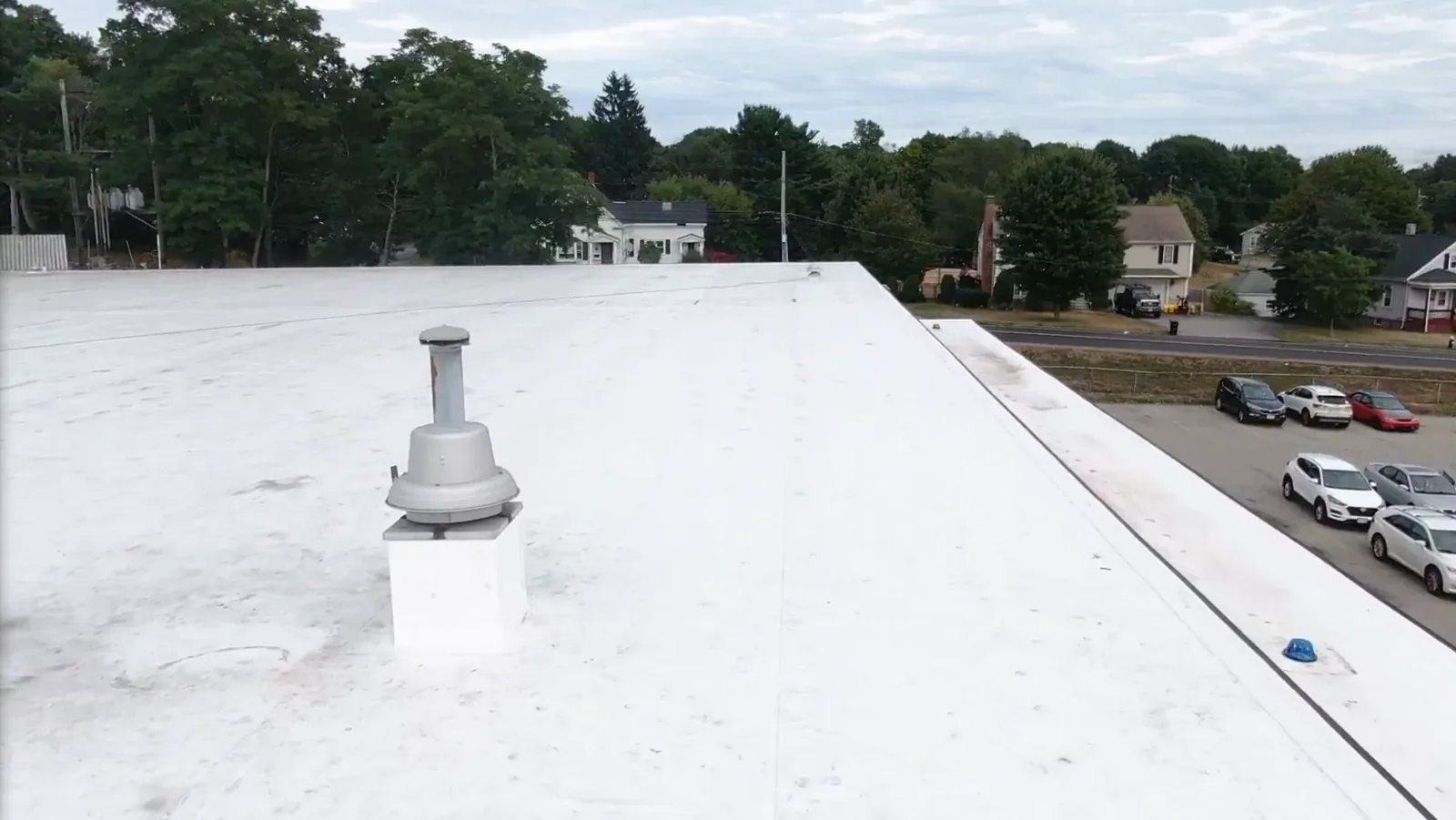

Split and Open Seam Repair in Gastonia, NC
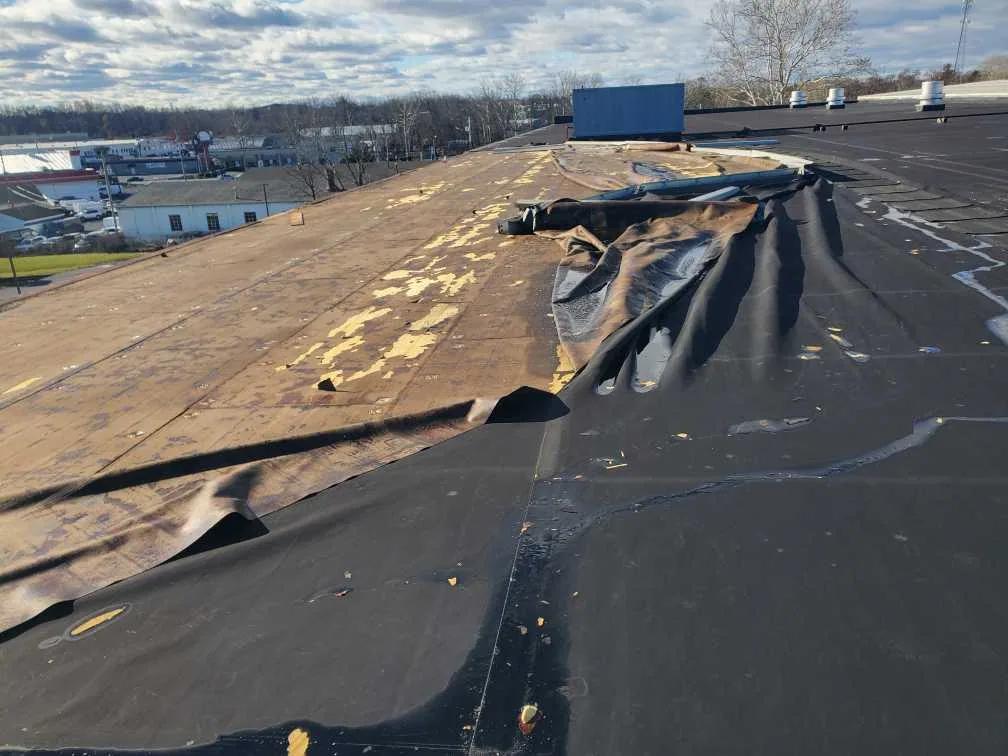
A seam that has opened a quarter inch is not dramatic. On a long roof in Gaston County it shows as a thin dark line, often near a parapet or along a run where two sheets meet, and an owner could walk past it for a year. The water does not. Every rain finds the line, wets the insulation underneath and moves along the deck until it finds a place to drop.
The question for the owner is how far the seam has gone, how much of the roof has the same condition and what the repair costs now versus after another wet season. We answer all three on paper.
Walk the Seams, Not Just the Roof
Seam inspection is slow work, and it is the one a drive-by look or a drone image alone cannot do. On single-ply roofs, we probe heat-welded or adhesive seams with a tool to find places where the bond has let go, check the cut edges for signs of water and look at the intersections where three sheets meet, since those are the hardest spots to seal. On modified bitumen and built-up roofs, we check laps for lifting, slippage and exposed edges. On metal roofs, we check side laps, end laps and fastener heads for backing out or sealant loss.
Every opening is marked, measured and photographed, and the roof gets a count at the end of the walk: how many openings, how long each, how many sit near drains or walls. A roof with three isolated openings is a repair job, and a roof with dozens is a decision about the whole membrane. We also note whether the pattern repeats along one wall, one drain run or one sheet width, because a repeated pattern means a cause, not a coincidence.
Find the Cause Before Choosing the Fix
Seams fail for reasons. Heat cycling pulls at them every day, with July highs averaging about 90.7 F and roof surfaces much hotter. Standing water keeps pressure on laps. Foot traffic and equipment service wear a path along a seam. Poor welding or dirty surfaces at installation leave a weak bond that opens in the second or third summer. Shrinkage in older membranes pulls seams apart. Movement at a wall or parapet concentrates stress at the corner.
The fix depends on which one it is. A seam opened by shrinkage may need a flashing strip or a cap, a seam opened by ponding needs a drain fix first and a seam on a worn walk path needs a pad as well as a patch.
The count at the end of the walk drives the call. Three isolated openings read as a repair, while dozens along one wall or one drain run read as a cause.
Put a Price on the Open Seam and on Waiting
A small seam repair is one of the cheaper tasks on a roof: clean the area, apply a welded or adhered cover strip, test the edge and move on. A repair like that takes minutes per opening once the area is cleaned, and it can be done in a morning on a small roof. The cost grows with what the seam has let in. After a wet spring, a long open run can mean wet insulation, a rusted deck and a section to replace. Annual rainfall near 44 inches means the first heavy storm after a seam opens will find it. The owner who repairs in April pays for a patch. The owner who waits until August pays for the patch, the wet insulation and the tenant's complaint.
We give three numbers: the repair now, the repair next year if the roof is left alone and the point at which the roof stops earning its patches. The owner sees whether the seam is a maintenance item or a capital decision.
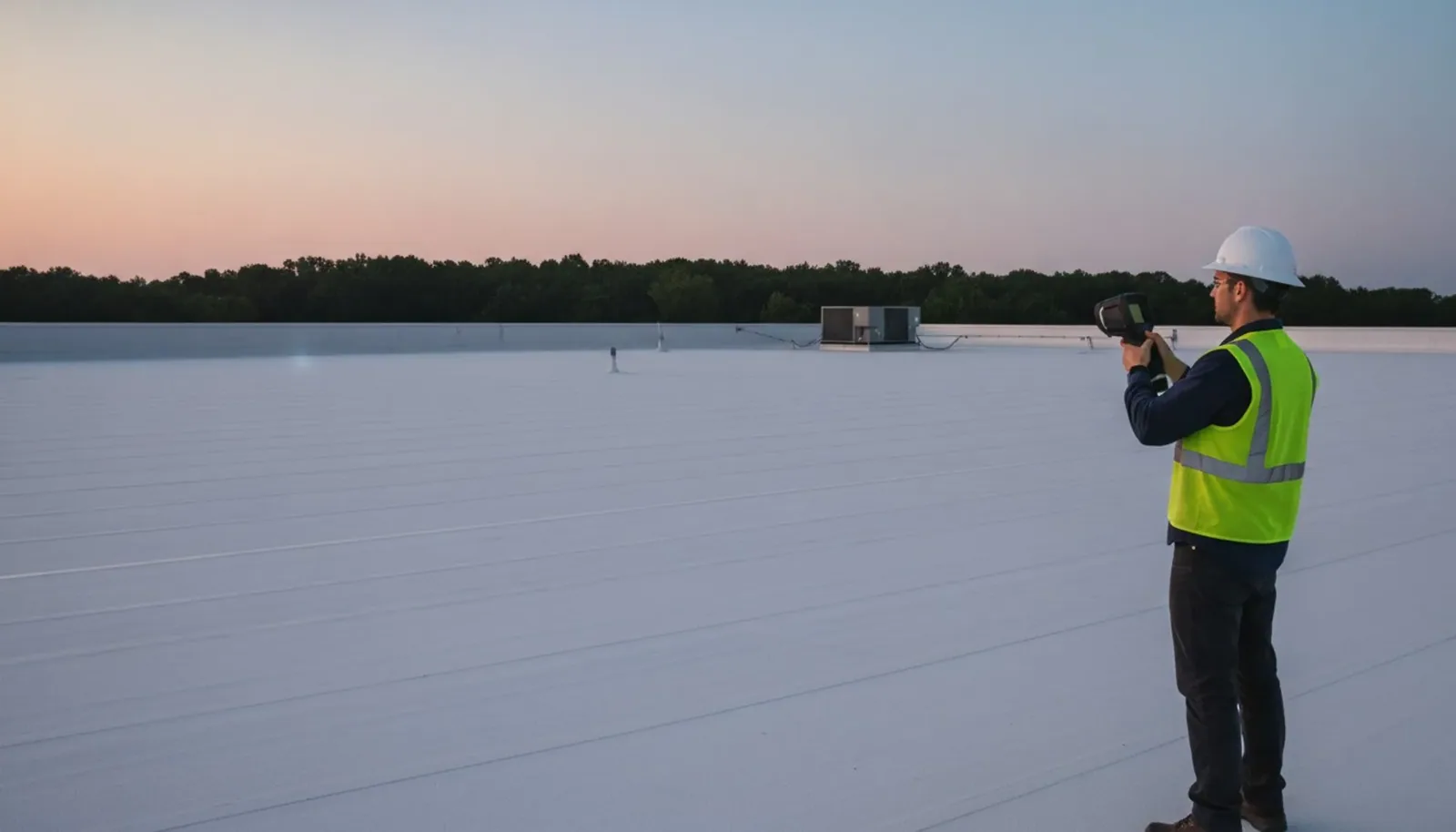
Moisture changes the answer. If an infrared moisture survey shows the insulation under an open seam is wet, the repair includes removing and replacing that insulation. A seam strip over wet board only hides the problem for a season, and the next owner finds it. We say plainly when a seam repair is not enough, because a roof whose insulation is wet over most of a section needs that section replaced, and the earlier the owner hears it, the more options remain.
Repair the Seam So It Stays Closed
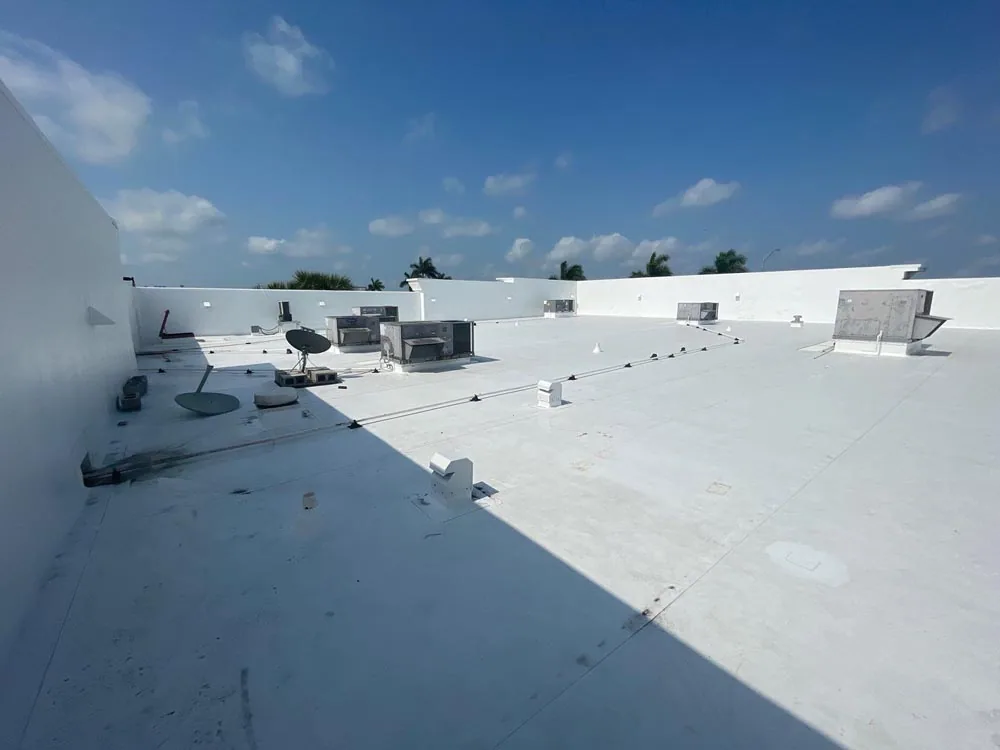
On a thermoplastic roof such as TPO or PVC, a repair often means cleaning the sheets, hot-air welding a cover strip across the opening and probing the weld edge. On an EPDM roof, it means cleaning, priming and applying a splice cover or tape. On modified bitumen, it means reheating or re-adhering the lap and sealing the edge. On metal, it means replacing fasteners, re-seating panels and renewing sealant at the lap.
Where seams are failing across much of a roof, patching them one by one is a losing game. A coating restoration over sound sheets, a recover or a replacement may cost less over time, and the decision belongs on a page with numbers, not in a conversation on the roof. Nearby problems such as flashing failures and ponded water usually come with the same visit.
Watch the Buildings Where Seams Run Long
A big industrial roof carries thousands of feet of seam, and one bad weld pattern can repeat across a building, so a newer building at Gateway85 or along I-85 earns a systematic seam check in its first summers. Older roofs near Belmont and Mount Holly are the ones to read for shrinkage and aging seams. Charlotte has recorded 104 F highs and Rock Hill has a 106 F record, so the regional heat load is real, and seams carry it. A spring storm adds wind and uplift to the same joints, and an EF-1 tornado crossed Gaston County in May 2024, so seams near edges deserve the closest look after any strong line.
Keep the Record for the Warranty and the Lender
Seam repairs should be documented with photographs, location marks and the method used, since a manufacturer's warranty often depends on correct repair. A warranty file keeps the paper together. If a storm opened the seams, the storm damage repair record helps the claim. The same moisture map shows how far water has traveled from an open seam, so the repair removes only what is wet. Access is simple but needs a plan. Roof access, key holders and the tenants below are settled first, and seam work is scheduled for dry mornings with surfaces clean and cool enough to weld or adhere. If rain threatens, the crew closes any open area before leaving and a short note tells the manager what was done.
Commercial Roofing Questions
How can I tell a seam has opened?
A thin dark line along a lap, lifted edges, loose sealant or a stain on the ceiling below. A probe check confirms it.
Is a seam repair permanent?
If the cause is fixed, yes. A repair over a pond or a worn path fails again, so the cause gets corrected first.
When are seams a sign of replacement?
When they are failing across much of the roof, or when shrinkage and age have made the sheet brittle. Then patches stop paying.
Will a coating close open seams?
Only small gaps, and only after the seams are repaired. A coating over a moving or open seam fails quickly.
Does a failed seam void the warranty?
It can if the repair ignores the maker's rules. We follow the required method and keep records.
Topic
Split and Open Seam Repair
Roof Types
Low-slope and metal
Related Roofing Work
Infrared Roof Moisture Surveys
TPO Roofing