
Occupied Building Reroofing in Gastonia, NC
A tenant's ceiling tile with a brown ring, a dock door that cannot be blocked on Tuesdays, a clinic that cannot take dust near its air intakes. Each of these is a constraint, and each belongs in the roof plan before anything is cut open. Many commercial buildings cannot close for a reroof. The roof has to come off in sections while the business below keeps running, and the plan for that is the difference between a project that disappears into the week and one that fills the owner's inbox.
The extra care costs money. Skipping it costs more.
An owner is usually holding a lease, a warranty and a schedule at once, and the plan has to make those three agree before the first panel comes off.
Map the Building by Use Before Planning the Roof
The first step is a use map. We walk the building with the owner or manager and mark what sits under each roof area: offices, a warehouse floor, a production line, a clinic, a data room, a storage room, a loading dock. We note what cannot be wet, what cannot be dusty, what cannot be loud and what needs to stay cool or stay running.
Then we mark entrances, loading areas, parking, fire lanes, air intakes, rooftop equipment and access routes. The map becomes the base of the sequence. A section over a production line may be done on a weekend. A section over a storage area can be done on a weekday. A section over a tenant who is leaving in four months may wait. The sequence follows the building's use, not the roof's convenience.
Safety zones follow from the map. Pedestrian routes under hoists, truck routes, fire lanes and exits are marked and kept clear. Crane picks over occupied space are scheduled for off hours or planned with a protected corridor. We ask for the owner's emergency contacts and the building's evacuation plan, and we walk the crew through both before the first day.
Count the Cost of Delaying Versus the Cost of Phasing
Phasing costs more than a full tear-off in one go. Mobilization repeats, temporary tie-ins add labor, and crews work in smaller areas. The extra cost is real and it should appear in the scope. The alternative is to wait for a convenient moment, which may not arrive. A roof that is leaking into occupied space is already disrupting the business, in a worse way than a planned project would.
The arithmetic is simple. Weigh the cost of the leak, the lost inventory and the tenant relations against the cost of phasing and protection. Gastonia gets about 44 inches of rain a year, with summer thunderstorms, so an open section is always at risk. The plan must close in every section before the crew leaves, and it must have temporary protection ready for a surprise storm.
One blunt line: an occupied reroof is a communication project with a roof attached. The roof is the easier half.
Pick the Method That Disturbs the Least
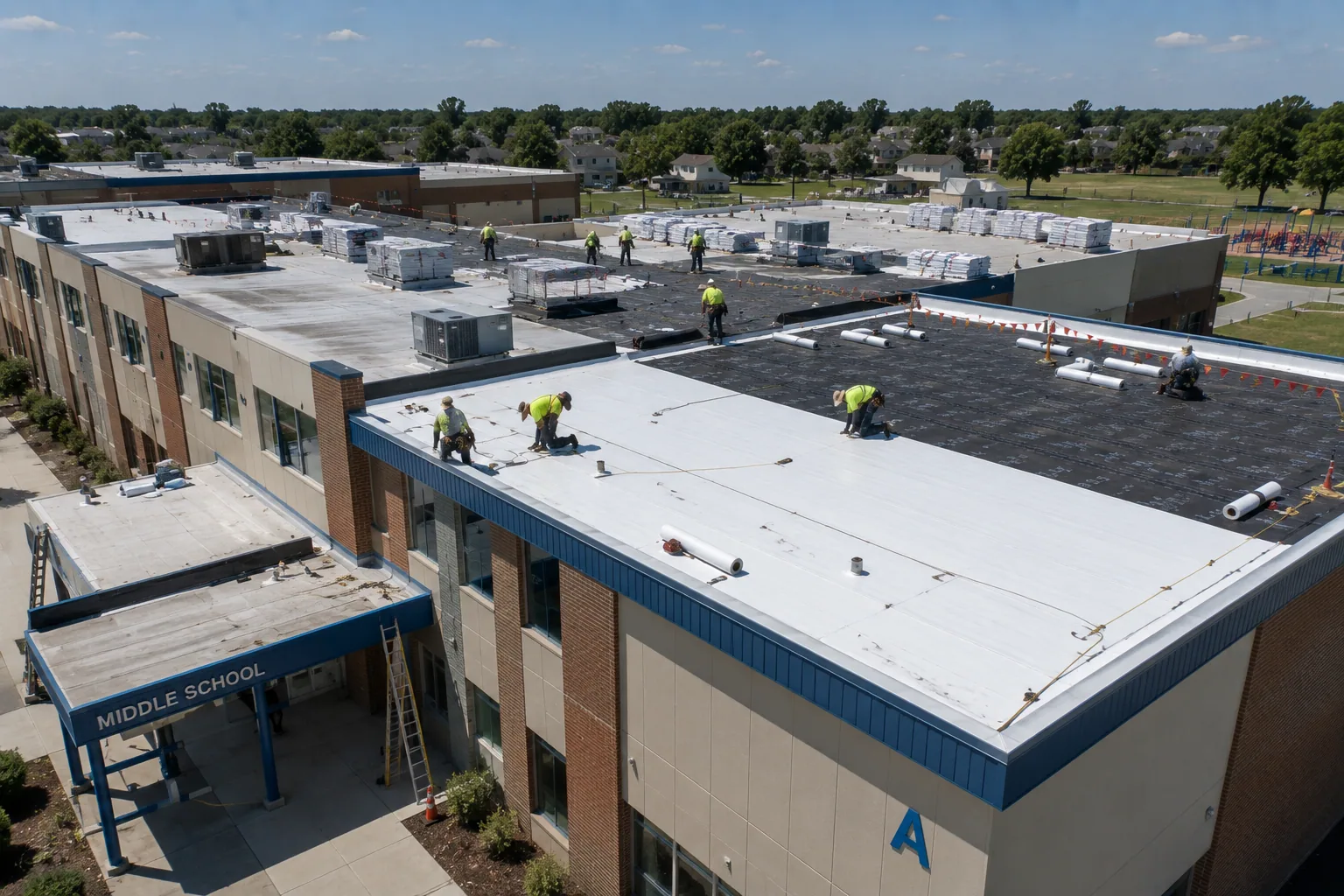
Method changes how much disruption a reroof brings. A recover adds a new membrane over a sound, dry roof and avoids tear-off, which cuts dust, noise and debris. A coating avoids even that. A full tear-off and replacement is the most disruptive, with debris, dust and a longer exposure to the weather. Where wet insulation requires removal, the work is done in strips and closed in each day.
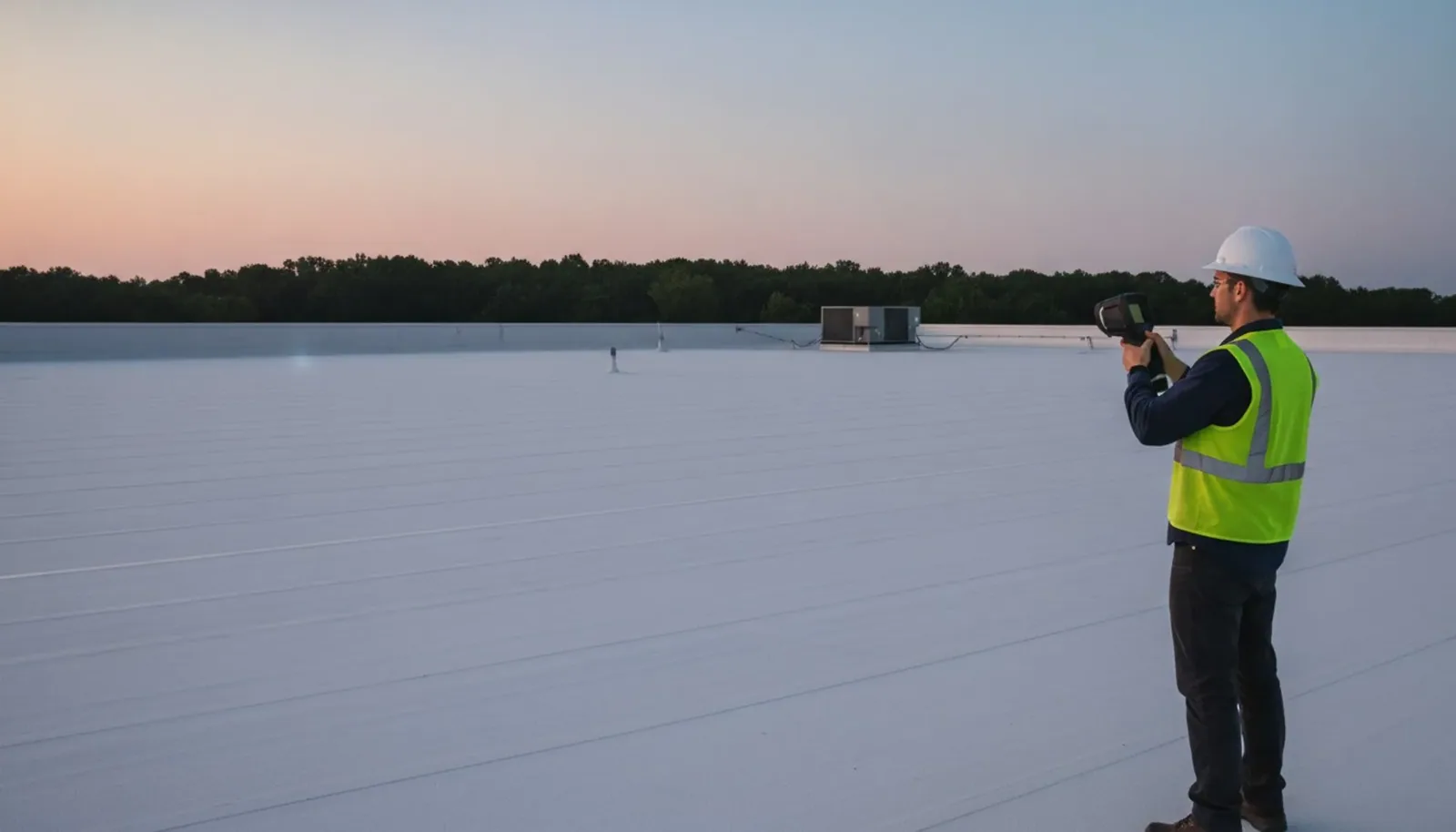
Welded and cold-applied systems avoid open flame over occupied space, which matters for fire safety and for odor near air intakes. Noise-heavy steps like tearing off gravel or mechanical removal are scheduled for hours when the space below is quiet. We state in the scope which steps are loud and when they will happen. An infrared moisture survey before the work shows how much needs to come off and avoids surprises in the middle of the project.
Equipment shutdowns need their own plan. Rooftop units that must be lifted or disconnected are scheduled with the building engineer, and the space they serve is told when it will lose cooling and for how long. Where a unit serves a critical space, a temporary unit or a different sequence is planned in advance.
Budget for Protection, Phasing and Communication
The scope adds lines that a vacant-building reroof does not need: interior protection, temporary dust barriers, protection of air intakes, off-hours labor, short temporary roofs, extra cleanup, notices to tenants and a daily report. Cost drivers are the number of phases, the shifts, the sensitivity of the space below, the roof area and the access.
Communication is part of the price. Tenants get written notice with dates, noise windows and the contact for problems. The owner gets a daily summary with photographs of what was opened, what was closed in and what the weather did. A single point of contact on site speaks for the crew. Ask every bidder how they communicate, because that is where an occupied reroof succeeds or fails. The contract should say who pays for interior damage and under what conditions.
Insurance and access paperwork belong in the budget as well. Tenants may require certificates of insurance, badge checks or escorts, and a hospital or school may need background checks for crew members. Those steps take days to arrange and should be listed in the schedule, so nobody discovers them on the morning the crew arrives.
Occupied Reroofs Across Gaston County
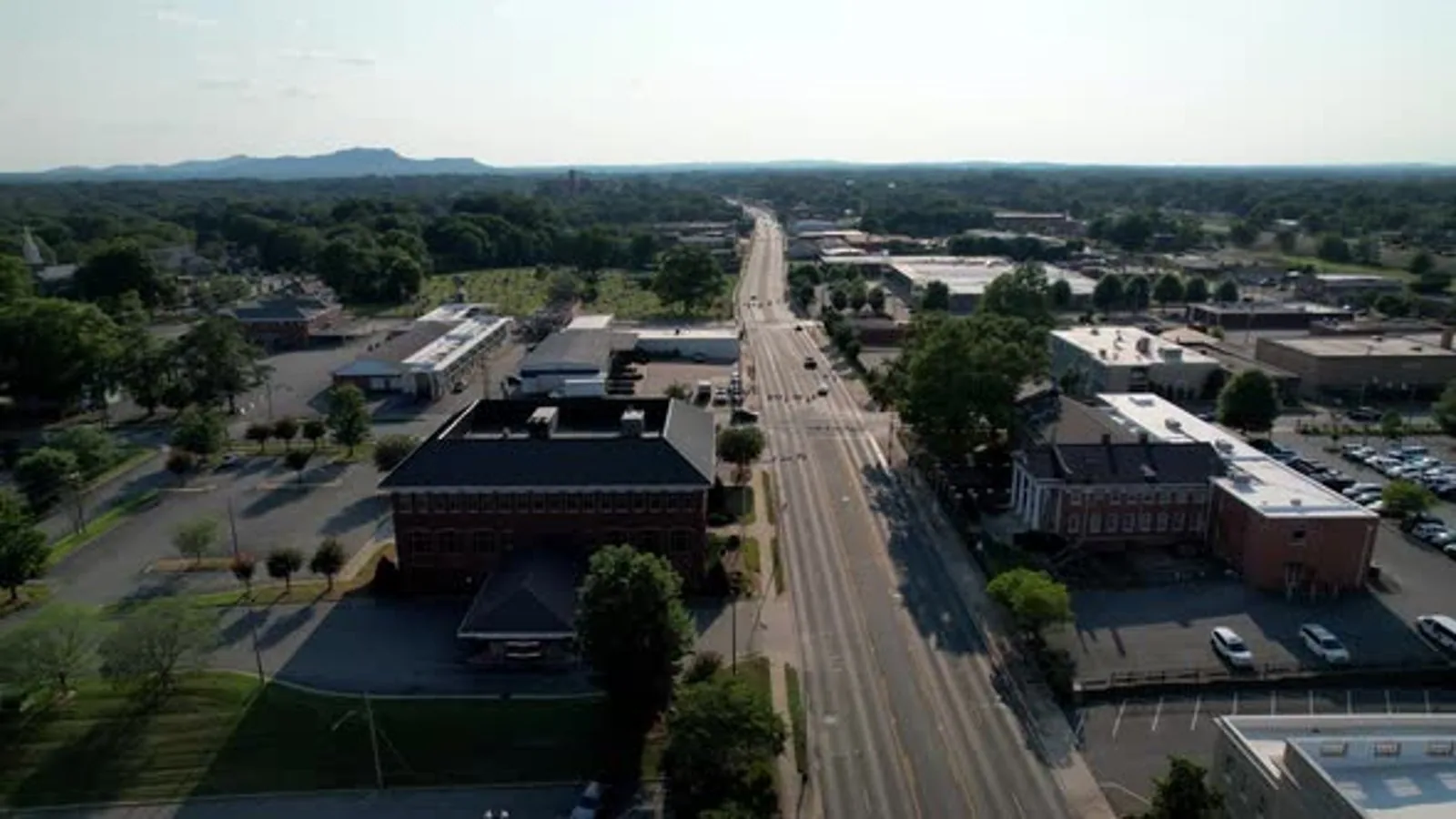
The mix is wide. Medical buildings near Gaston Memorial Hospital, such as those in the Summit at Court Drive park, need dust and noise control. CaroMont Regional Medical Center, Gaston County Schools and the City of Gastonia are among the area's major employers, and public buildings often run on fixed calendars. Manufacturing plants and distribution buildings at Gateway85 and in Gastonia run shifts, and roof work shares the site with trucks.
Mill conversions bring tenants into old buildings. The Loray Mill in downtown Gastonia is a five-story brick mill now being converted to apartments and mixed use, and residents are a different audience from workers on a floor. A multi-tenant building in Belmont or Mount Holly has its own sequence.
When a storm such as the May 2024 tornado hits, the occupied reroof plan doubles as the emergency plan: sections are small, material is staged and protection is ready.
Parking and deliveries get a line in the plan as well. A crane or hoist needs room, and a delivery of roofing material needs a lane. We mark both on the site plan, tell the tenants who share the lot and keep fire lanes open throughout.
Commercial Roofing Questions
Can tenants stay in the building during a reroof?
In most cases, yes. We work in sections, close in each day and protect the space below. Sensitive areas get extra protection or a schedule that avoids them.
How noisy is a reroof?
Tear-off is the loudest step. We schedule it for off hours when we can, and we state the noise windows in writing.
What if it rains while the roof is open?
Sections are small enough to close in before the crew leaves, and temporary protection is staged on site. The daily report records the weather.
Who pays if a tenant's property is damaged?
The contract decides. We recommend that it name responsibilities and conditions before work starts.
Does phasing add to the cost?
Yes. More mobilizations, protection and off-hours labor add cost. We show it as its own line so you can compare it with the cost of a leak into occupied space.
Topic
Occupied Building Reroofing
Roof Types
Low-slope and metal

Related Roofing Work
Roof Recover and Overlay Systems
Infrared Roof Moisture Surveys