
Tornado Damage Roof Repair in Gastonia, NC
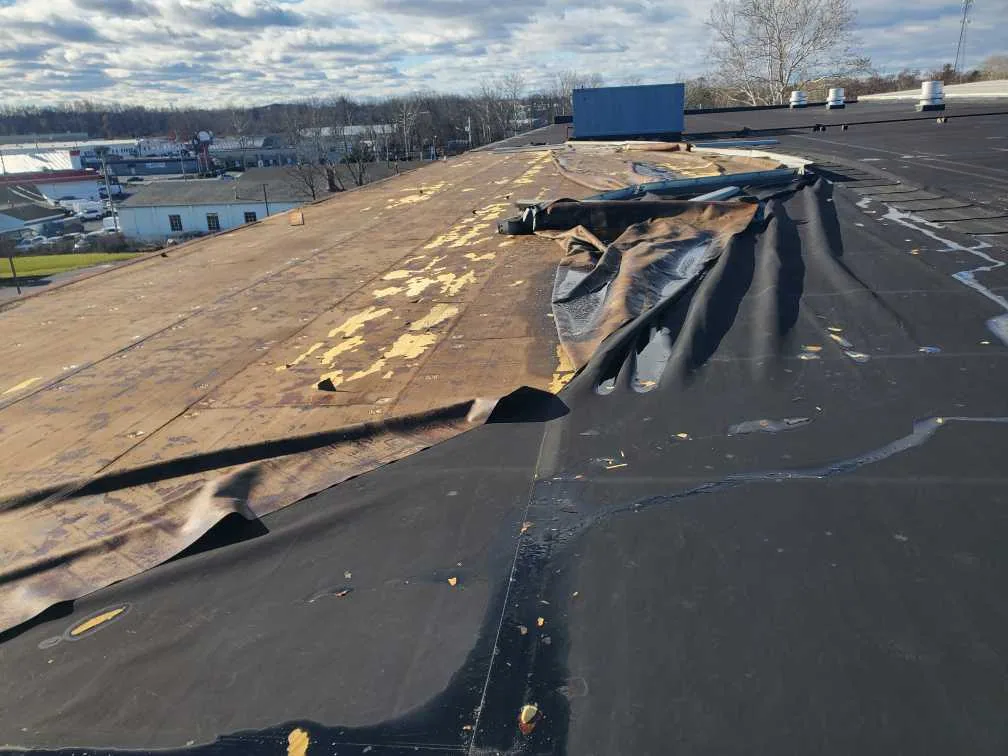
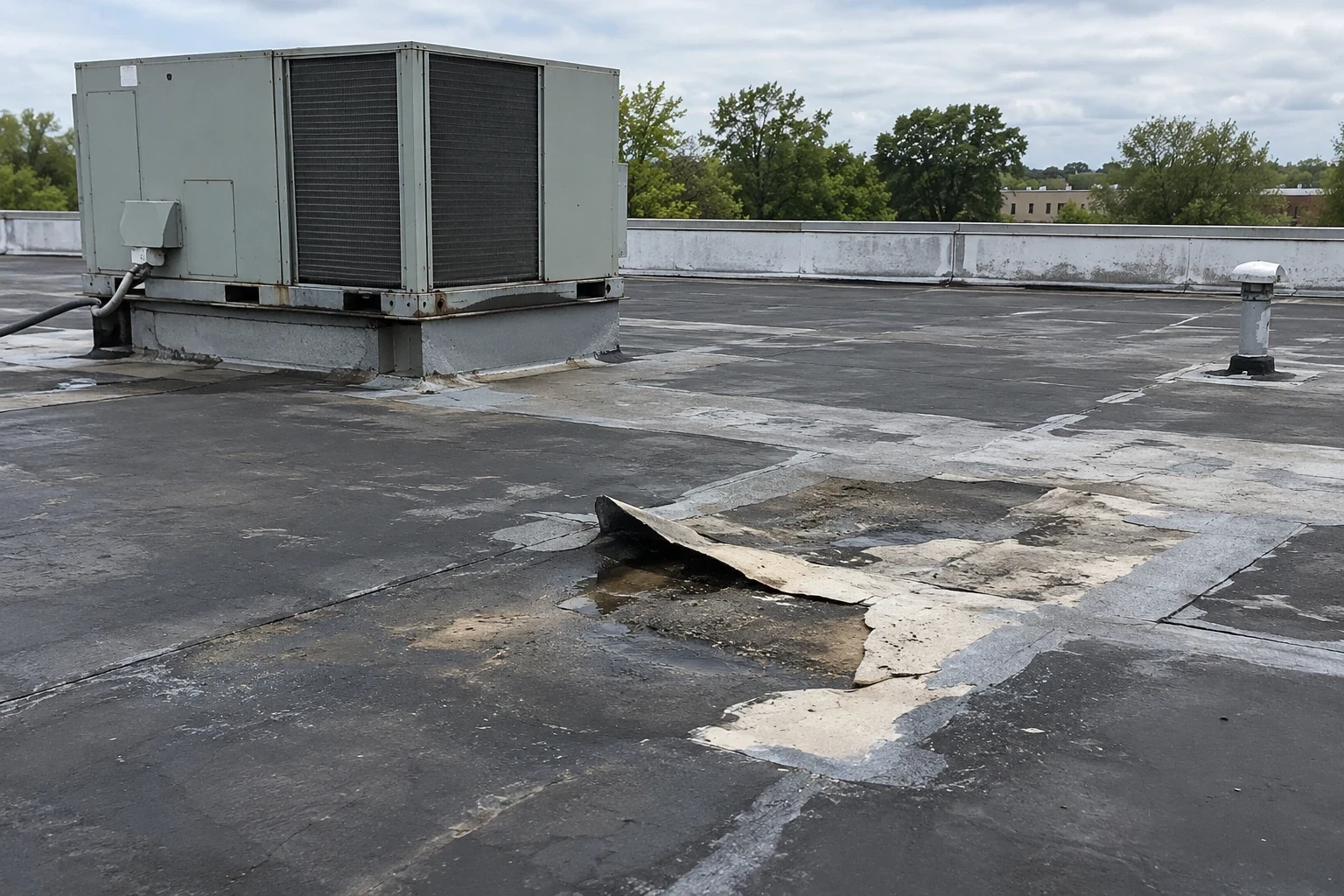
One East Gastonia warehouse came out of the May 2024 EF-1 tornado missing part of its roof. Tornado damage is not a lifted edge. It is a section of roof that is simply gone, with the deck exposed, insulation scattered and racking or product open to the next rain. For an owner the first hours are about stopping the loss, and the first week is about knowing how far the damage runs under what is still standing.
We close the roof, check what the structure can carry and write the scope in a form the carrier and the building official can follow. The cost of waiting is stated on the first page, along with the date by which the owner needs to decide.
Make the Building Safe and Watertight First
Tornado damage puts people at risk, so the first job is safety. We confirm with the fire department, the owner's engineer or the building official that the roof and the walls beneath it are safe to approach. Then the crew places temporary cover over open areas, straps down loose metal, clears debris from drains and secures what can be saved. A crew can be on the roof at any hour, holidays included. Tarps are fastened to sound structure, not to damaged deck, and every step is photographed with a date. Every material used for the make-safe work gets logged, because what it cost to keep the building dry belongs in the claim file.
Debris comes next. Insulation, membrane scraps, sheet metal and fasteners spread across a roof and a lot, and anything left on the roof is the next puncture. We pick up and bag what we can reach, clear drains and scuppers and keep a record of where large pieces landed, since the pattern of debris helps the adjuster read the wind direction.
If the building is occupied, we work with the owner to protect inventory and equipment from the next rain. A pallet of product under a tarp is worth more than an hour of paperwork.
Know What the Record Shows About This County
The record is specific. The May 8, 2024 EF-1 tornado carried estimated 110 mph winds from west of Gastonia to near McAdenville and Belmont, and several other buildings took minor roof damage. In May 2020 a smaller storm, estimated at 85 mph, uprooted trees and caused minor structural damage along roughly 8.7 miles that began at Crowders Creek Road and ended near the Gastonia airport. Charlotte recorded Hurricane Hugo gusts of 87 mph in September 1989. These events differ in strength, but wind of that kind goes first for edges, openings and weak attachment.
The lesson for an owner is that a roof in this county should have known attachment and secure edges before the next one.
Check What the Structure Can Still Carry
A roof that survives a tornado may still be compromised. Deck panels can be bent, purlins twisted, connections loosened and walls racked. Before we load a roof with equipment or new material, and before any crew steps onto a section that looks flat but may be dished, we ask for a structural engineer's opinion where damage is obvious or suspected, and we look at the deck from below where access allows. Metal decking is checked for buckling and detached fasteners, wood decking for splintering and exposed nail heads and walls for cracks at the roof line.
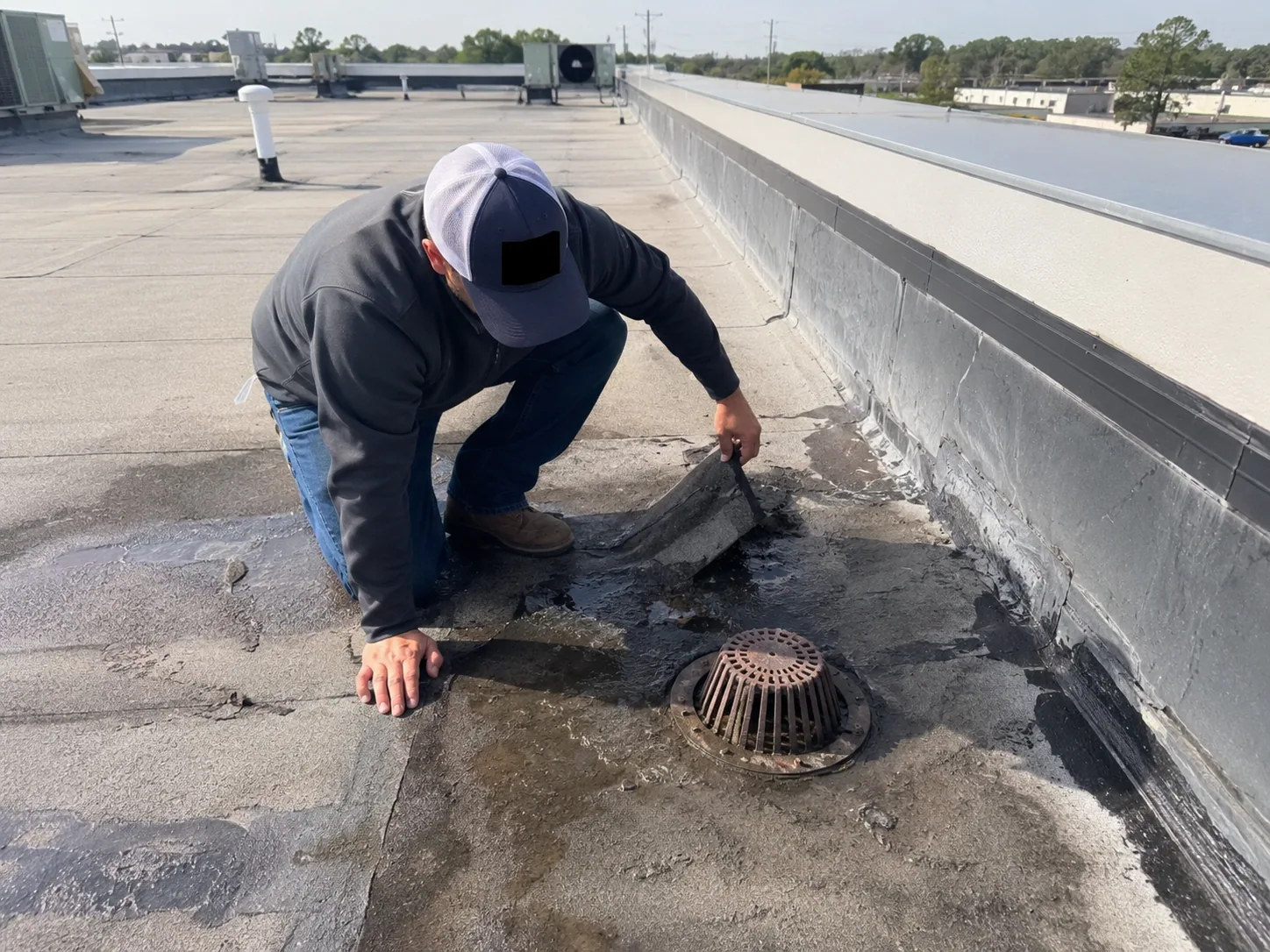
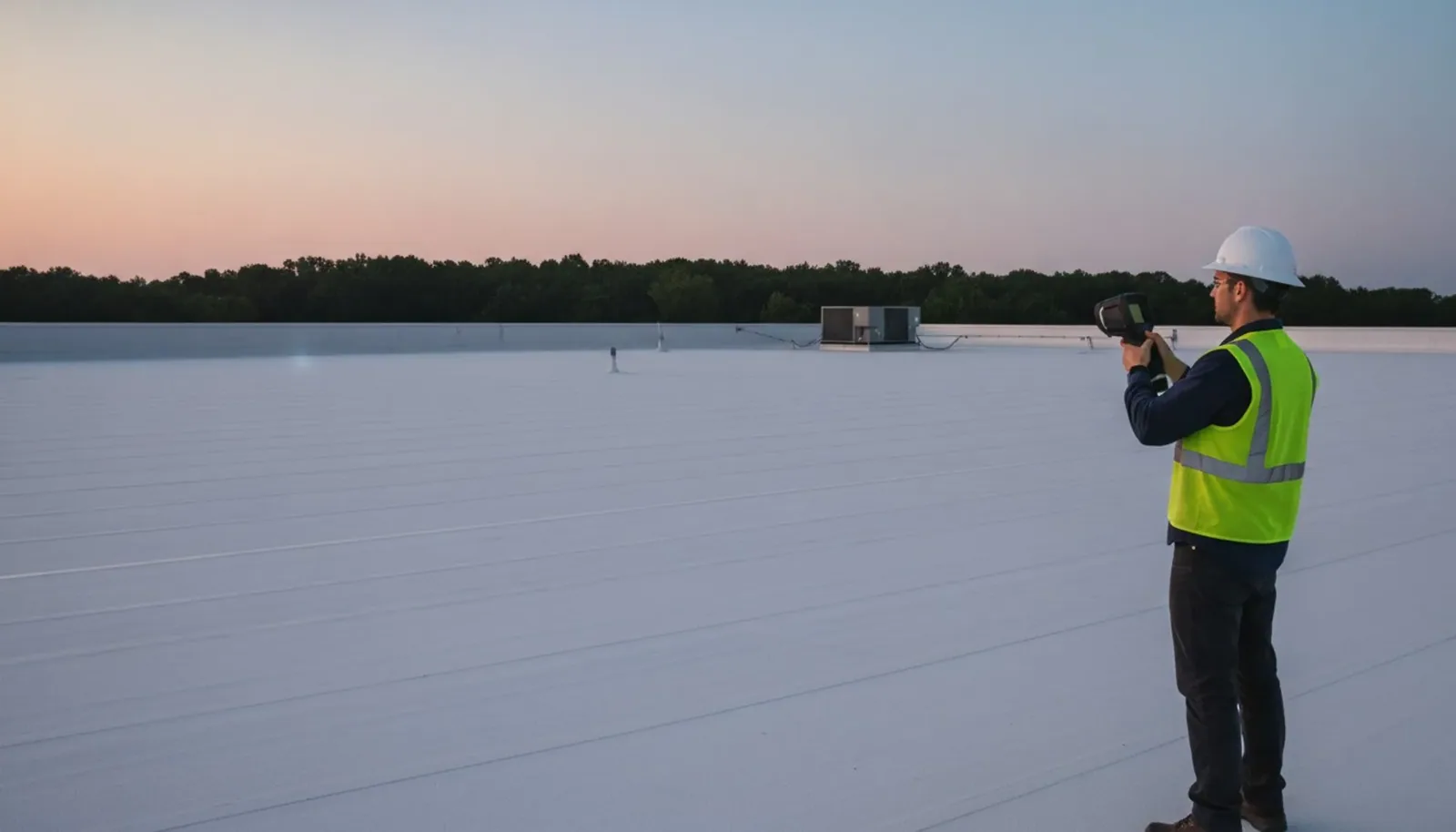
We cut cores to read the layers in damaged and undamaged areas. The cores give the carrier an objective record of what each layer is, how wet it is and whether the damage runs under the surface that still looks sound. Insulation soaked by rain after the roof opened is removed even where the membrane looks sound. An infrared moisture survey on a dry evening outlines the wet areas so the cut-out follows a measured boundary and not a guess.
Equipment on the roof gets the same attention. Units knocked off their curbs, conduit pulled loose and stressed gas lines go to the owner's technicians for review before we work near them, and curbs that moved are rebuilt with new flashing. The mechanical contractor and the roofer should be on the roof together for the reset, so the units go back on a flashed curb and not on a patched one.
Write the Scope for the Carrier and the Building Official
A tornado claim has two readers: the carrier and the building department. We document each roof section with photographs, a plan and moisture readings, separate new damage from earlier wear and price the work in line items that match the claim estimate. Code timing matters on a rebuild, so the building official is asked which edition governs before the rebuild is priced.
If the approved scope reaches only part of the roof, the report states what the approval covers and what it leaves, and claim documentation with storm damage repair notes keeps the record in one file.
Rebuild With Better Attachment, Not the Same Failure
A repair that restores a roof exactly as it was restores the same weakness. When we rebuild, we look at edge metal, perimeter fastening, deck attachment and the membrane's wind rating, and we price an upgrade where the original was thin. The upgrade is optional and separately priced, so an owner limited to the claim estimate can see exactly what the extra attachment costs and decide whether to fund it. Partial replacement is common: the damaged section comes off, the deck is repaired, new insulation and membrane go on and the tie-in to the remaining roof is detailed carefully. Related items such as wind damage repair and flashing failure repair are handled in the same scope, with a decision date on the page so the work does not drift into the next storm season, and replacement enters where damage is widespread.
Plan by Building Type Across the Service Area
Large industrial buildings near Gateway85 and in Gastonia have long perimeters where uplift concentrates. Retail and office buildings in Belmont and McAdenville may have parapets, canopies and rooftop units that catch debris and gusts. Older mill-era buildings with masonry walls need an engineer's eye after a strong wind. Each gets its own checklist. Gastonia's annual rainfall of about 44 inches means that a roof left open after a tornado will see rain within days, and the cost of waiting climbs with every storm that follows.
Metal-roofed storage and light industrial buildings lose trim and end panels first, and the loose pieces become debris for the roof next door. With the owner's permission, a walk after a storm checks the neighbor's edges as well, so the debris record is complete and the claim for each building is clear about where its damage began.
Commercial Roofing Questions
What should an owner do in the first hours?
Make sure the building is safe to enter, take photographs from the ground and call for temporary cover. Roof-level documentation is ours.
Why involve an engineer?
A roof can look intact and still have a bent deck or loosened connections. The engineer's opinion tells us what can be loaded and what must be replaced.
Is partial replacement realistic after a tornado?
Often. The damaged section is replaced and tied into the remaining roof, if that roof is sound and dry.
Will the rebuild need code upgrades?
It can. The building official decides the code edition, and that answer is written into the price before work starts.
How do I protect inventory?
Cover it, move what can move and tell us what sits under the open area. We prioritize temporary cover over those bays.
Topic
Tornado Damage Roof Repair
Roof Types
Low-slope and metal
Related Roofing Work
Infrared Roof Moisture Surveys
Roof Insurance Claim Documentation