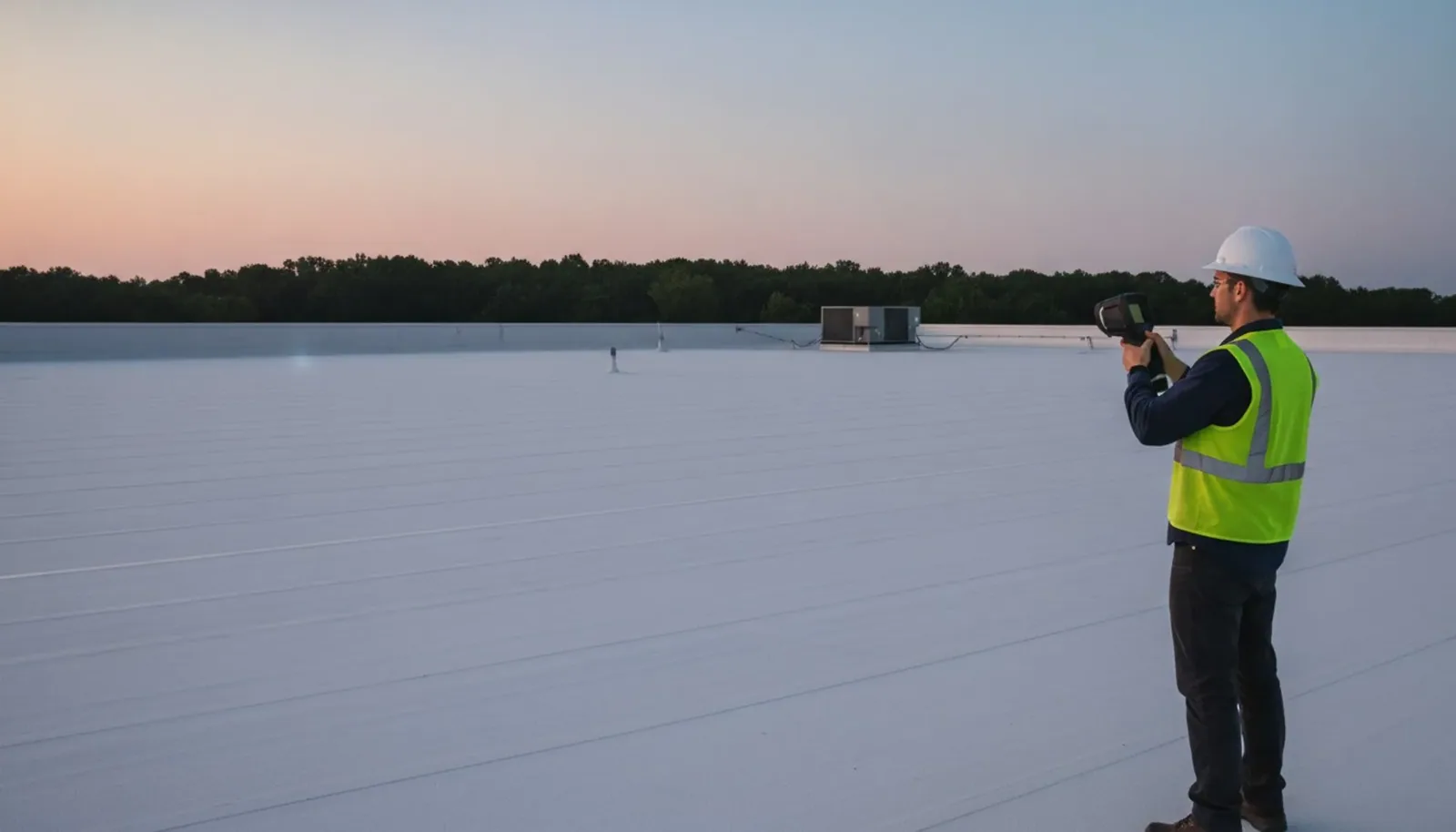

Apartment and Multifamily Roofing in Gastonia, NC
On an apartment roof the leak is rarely where the resident says it is. A tenant on the second floor reports water at a window, and the cause turns out to be a failed flashing at a parapet wall three units over. The finding is simple enough: water ran down the inside of the wall and came out at the first gap. What it means for the owner is less simple, because every unit leak is a work order, a possible rent concession, and a resident who is deciding whether to renew.
In Gastonia, NC, apartments sit alongside old mill structures that are turning into housing. The Loray Mill, a five-story brick mill built in 1900, is among the legacy mill buildings in Gaston County now being converted to apartments and mixed use. Whatever the building, its roof takes heat near 91 F and about 44 inches of rain a year. We walk the roof, map each finding to the units below it, and price the fix against the delay.
Map Findings to Units and Work Orders
Maintenance staff know the complaints by unit number. We know the roof by section, and the walk is where the two meet. The two lists should match, so we lay the roof plan over the unit plan and attach each finding to the apartments beneath it. A flashing crack above 3B, a clogged scupper above 3C and 3D, a pipe boot over the kitchen stack in 2A: each becomes a line item the property manager can place against open work orders.
That mapping lets the manager see which complaints share a cause, which saves repeated service calls. It also shows which units are at risk before the first drip. A manager who knows that three apartments share a roof drain can call the roofer once instead of three times. The record also helps at turnover: a unit with a past leak and a dated repair is easier to inspect and to turn.
Separate the Flat Sections from the Sloped Ones
Multifamily buildings often combine pitched roofs over most of the building with flat or low-slope sections over entries, corridors, stair towers, and additions. The pitched sections need shingle, panel, or tile checks at ridges, valleys, and eaves. The flat sections need drain, seam, and flashing checks, and they are where most leaks start because water has fewer ways to leave. We walk both, record each system, and rank the sections by risk.
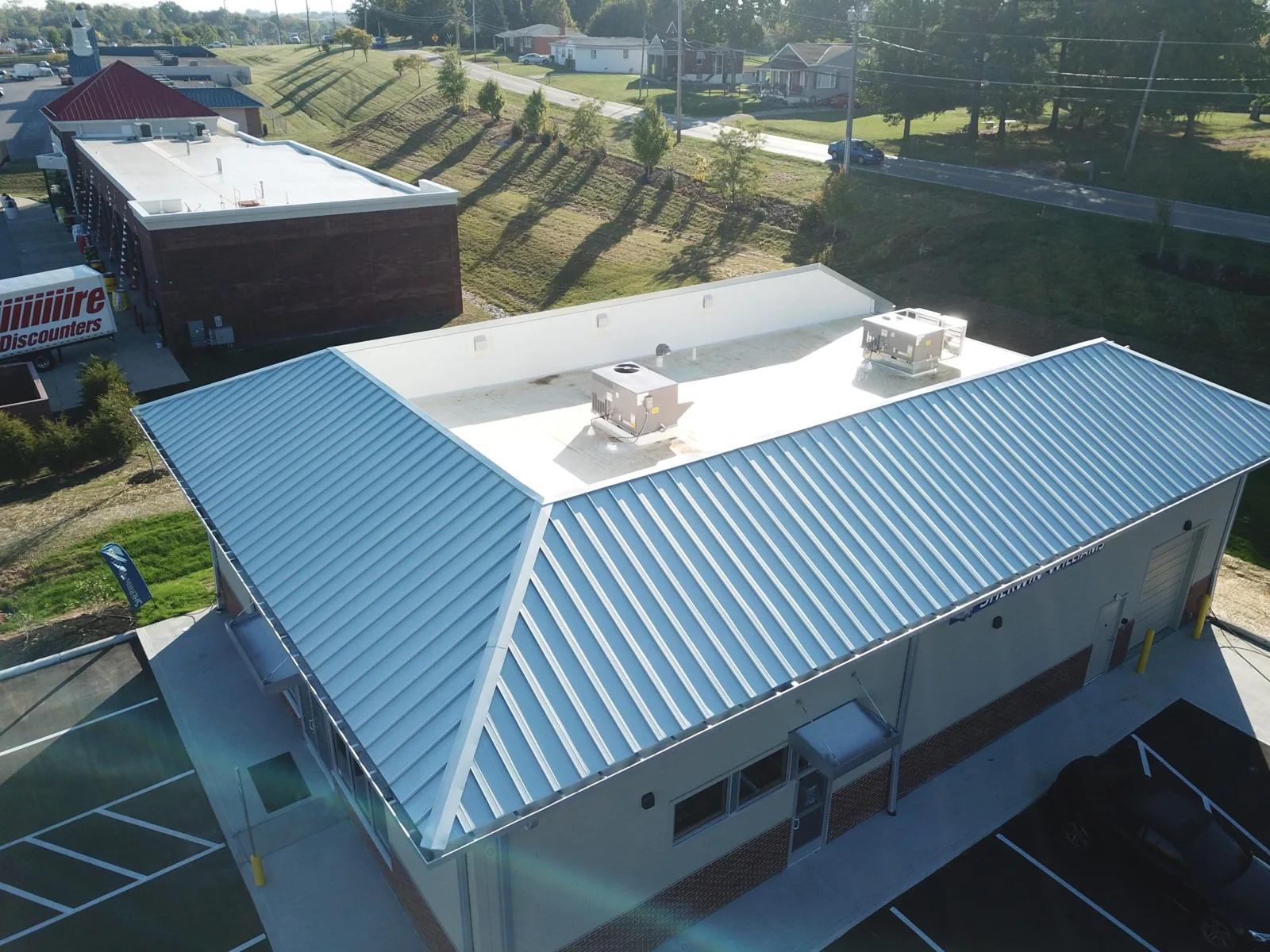
Ponded water on a flat section over a corridor ages the membrane quickly and finds every seam. A ponding water repair is usually the cheapest first step. For the pitched sections, we look for lifted shingles or panels at the eaves and rakes, exposed fasteners, and valleys packed with debris. Gutters and downspouts get checked too, since a gutter that overflows at a wall sends water into the building where no roofer would look. Photographs of each section go in the file with the date. The pitched roof over an apartment block also hides its attic from view, so we look for staining on the underside of the deck where we can reach it, and for daylight at the eaves. Those signs show a leak or a ventilation problem long before a ceiling shows it. Each is photographed and added to the roof file for the next walk.
Respect the Old Mill Roof
Converted mill buildings have thick masonry walls, deep parapets, and roofs that have been patched many times over many owners. The Loray Mill Historic District covers about 69 acres with 649 contributing buildings, and a conversion in a historic district comes with preservation questions that a new building does not. We check parapet caps, through-wall flashing, and mortar joints above the roofline, because water that gets behind a parapet shows up inside a unit as a stain on an exterior wall.
We open a mill roof, read the layers, and report what we found. The report gives the owner the repair scope and the information a preservation reviewer or a lender may ask for. Belmont built nearly twenty mills through 1930, and many are gone or converted. The oldest surviving mill in the county is the Mount Holly Cotton Mill, begun in 1875. A building that old has seen many repairs, and a conversion budget should reflect the cost of keeping it dry. Access can be tight, with narrow lanes near old buildings, so crane and staging plans are drawn early.
Tell Residents What to Expect
Residents are not tenants of the roof, but they live under it, and roof work disturbs them. We give the manager a short notice that says which days the work is above their building, what noise to expect, and where the crew will park and stage. Balconies and walkways are protected, and debris is kept away from entries. Crews start after a stated hour and stop by a stated time. A resident who knows the schedule is less likely to call the office. Pets, vehicles, and balcony items are covered in the notice, because a roof crew can drop debris and a car under a work zone is a claim waiting to happen. Quiet hours are respected, and the crew leader gives the manager a phone number that works during the job.
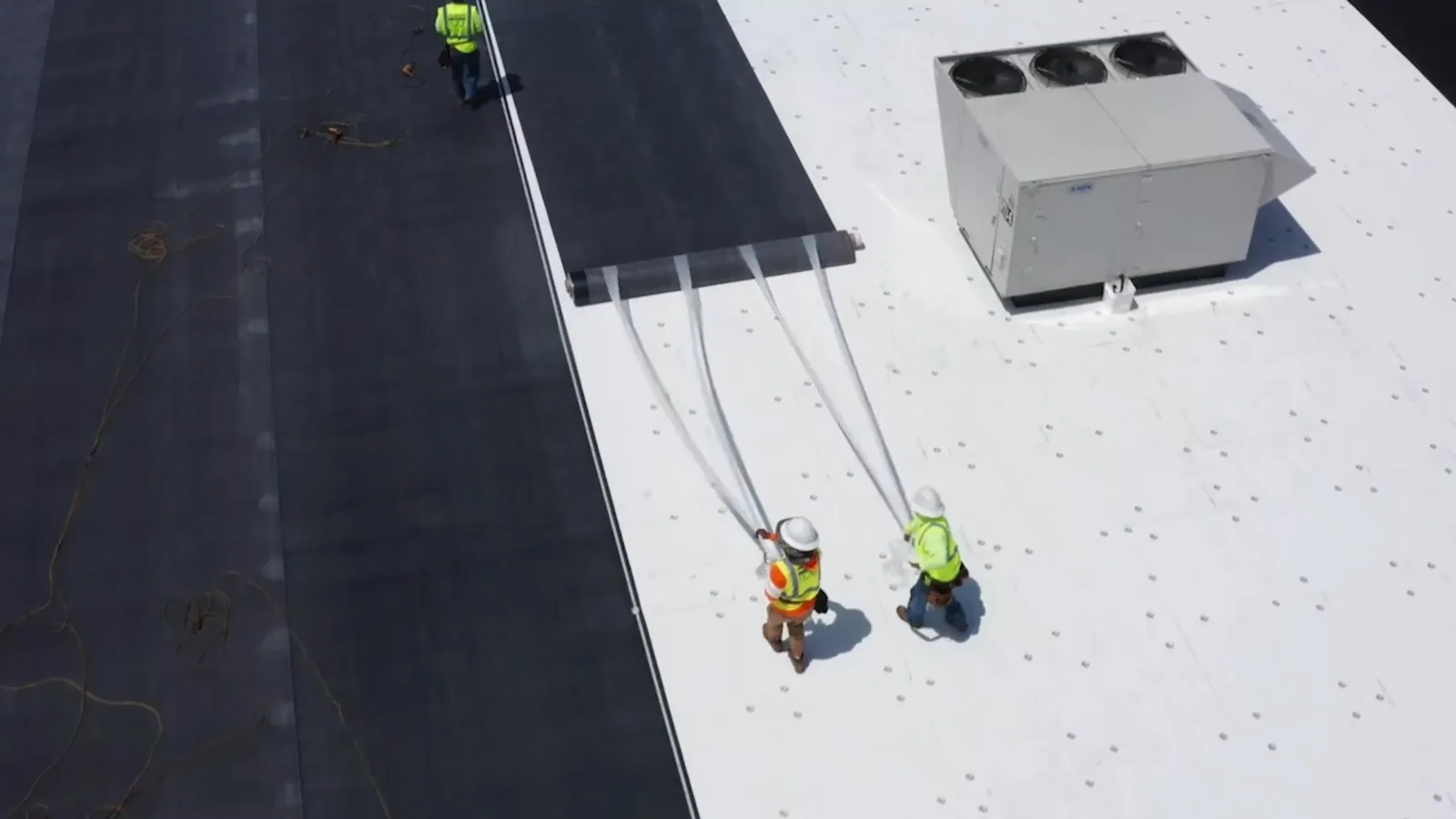
This is the same approach we use for occupied building reroofing, scaled for a residential community.
Plan the Capital Line
For an owner with several communities, the roof question is a capital question. A roof with dry insulation and a sound membrane can be maintained. A roof with wet insulation and repeated repairs needs replacement, and the date matters for the budget, especially for owners near I-85 who hold several buildings and need to spread the spending over more than one year. An infrared moisture survey and core cuts show the answer, and a roof capital plan turns it into a multi-year line. The building department confirms which edition of the state code governs each permit, and that answer goes into the plan.
Reserve studies and roof records often disagree about age, so the walk records what is on the roof today and lets the paperwork follow. The owner then budgets from evidence, not from the oldest invoice in the file.
Watch the Weather and the Neighbors
After the May 2024 EF-1 tornado, a multifamily roof near downtown Gastonia or in Belmont gets a post-storm walk of its edges, vents, and flashing, as any roof does. A senior living roof adds care and notification rules, and a hotel roof shares the room-below question.
Commercial Roofing Questions
How do you tell which unit a leak affects?
We trace from the stain to the roof plan and scan for wet insulation. The moisture map shows how far water has spread.
Can residents stay home during roof work?
Generally they can. We protect balconies, keep entries clear, and give the manager a notice for residents.
What is different about a converted mill?
Thick walls, deep parapets, and a long patch history. We open the roof and read it before pricing.
How do you handle many buildings?
One format for every roof, so the owner can compare and rank them for the capital plan. Each roof gets the same photo log, the same condition scale, and the same cost lines, so a roof in one community can be set beside a roof in another without translation.
Do you coordinate with the maintenance team?
Yes. We match findings to open work orders and hand back a list they can use.
Topic
Apartment and Multifamily Roofing
Roof Types
Low-slope and metal
Related Roofing Work
Ponding Water Roof Repair
Occupied Building Reroofing