
Duro-Last Roofing Systems in Gastonia, NC
A prefabricated roof arrives as panels cut to a building's measurements, and the first finding on an older one is often a field seam between two panels. The factory welds hold. The field welds are where the sequence starts, and they are repaired by a different hand than the ones that made the panels.
For a Gastonia, NC building with a Duro-Last membrane, the file maps panels, field seams and prefabricated flashings. Each visit adds to the map, and each finding carries a price to fix and a price to wait.
Understand How the Roof Was Built
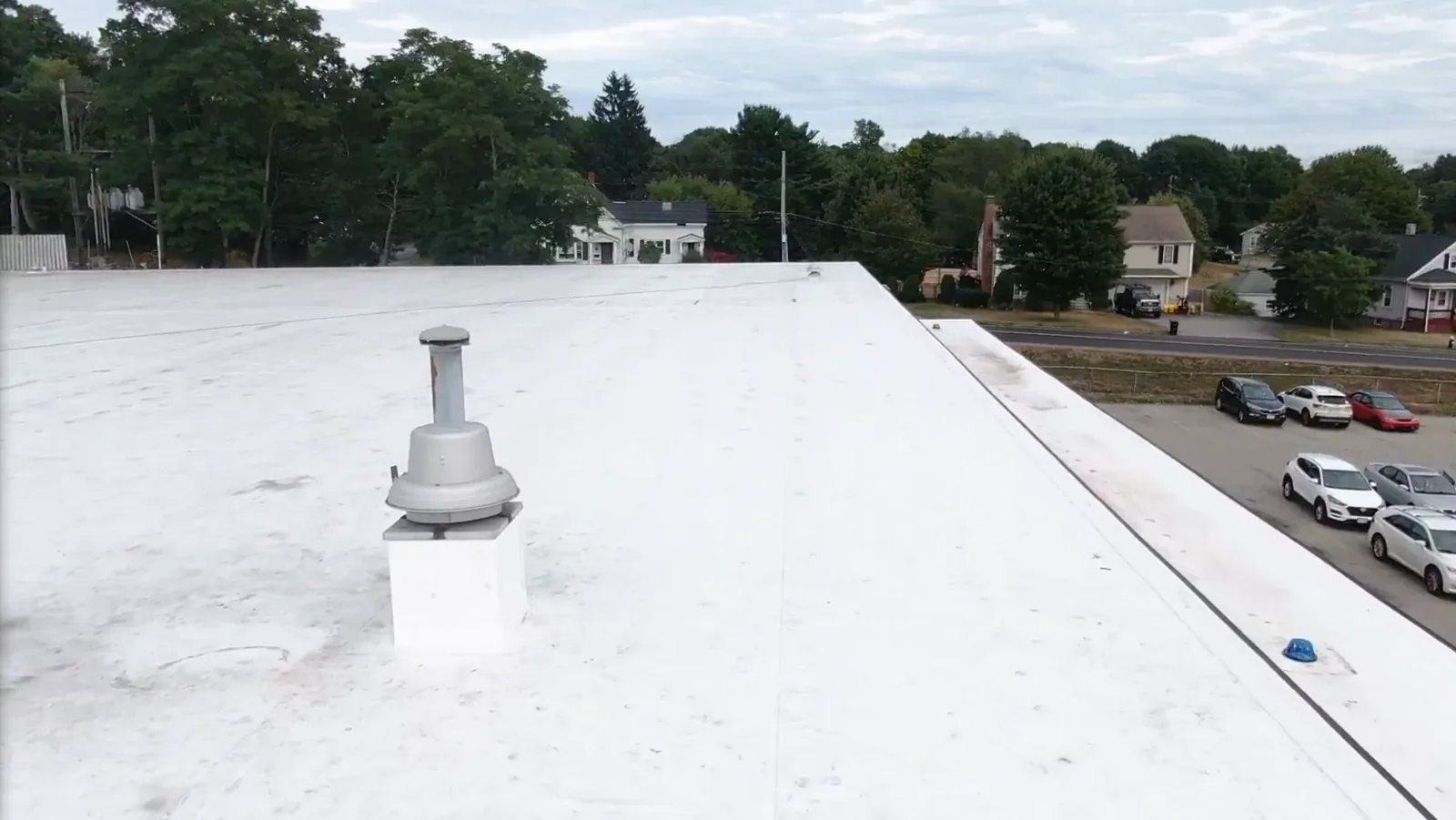
Duro-Last is known for factory-fabricated PVC membrane panels made from measurements taken at the building, with welded seams made in the factory and prefabricated boots and corners for penetrations. On site the panels are rolled out, attached and welded together at the field seams.
The approach reduces hand welding in the field, which is where much of the variation in a single-ply roof comes from. It does not remove the need for inspection. Field seams, panel edges, perimeter attachment and flashings all need checking, and a panel made to the wrong measurement leaves a gap that someone has to close.
Measurement is the step that decides fit. A surveyor records dimensions, penetration locations, curb sizes and edge conditions, and the factory builds panels from that data. An error shows up on the roof as a gap, a wrinkle or a stretched boot. On an older prefabricated roof we compare what is there with what a corrected survey would show, and we note any panel that appears to have been forced into place.
Probe Field Seams and Panel Edges
We probe field seams with a blunt tool, photograph any opening and rate the area. Panel edges at the perimeter are checked for attachment and for the condition of the edge metal. Where several panels meet at an intersection, we look for gaps and pinholes.
Repairs are hot-air welded patches on a cleaned surface. We probe the weld after it cools and log the result. Hot-air welds on PVC roofing have to survive every summer, so each repair entry gives the date, the weather and the method.
Perimeter attachment gets its own line. Panels are held at the edges with fasteners, plates or bars, and edge metal covers them. A loose cap or a missing fastener at the perimeter lets wind get under the sheet. We count fasteners in a sample length, check cover joints and photograph the edge before and after any repair.
Check Boots, Corners and Curbs
Prefabricated pieces fit standard penetrations well. They fit less well when the roof has odd shapes or when equipment has moved since the measurements were taken. A boot sized for a pipe that was later replaced with a larger one leaves a gap or a stretched collar.
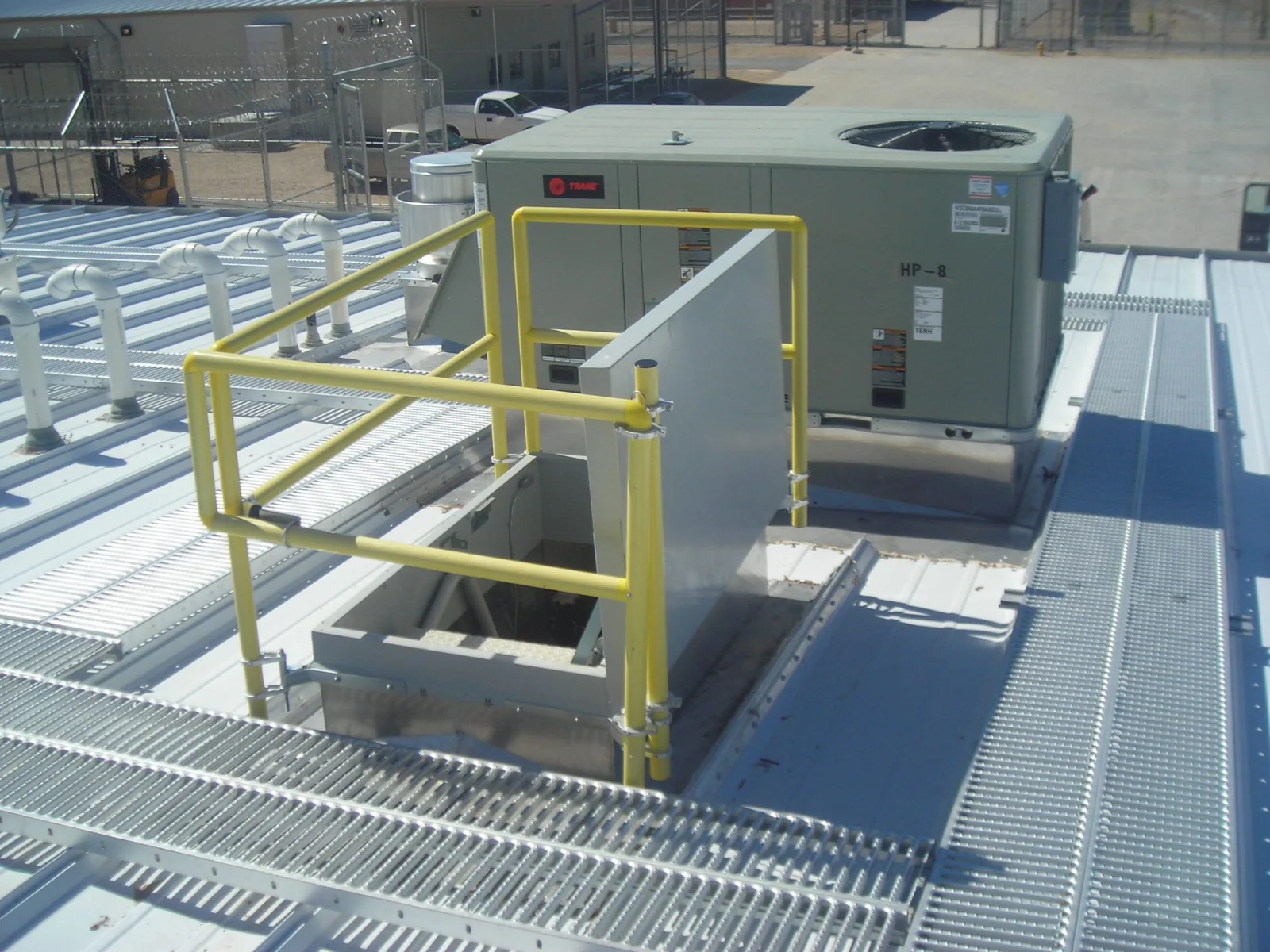
We check each boot, corner and curb wrap and log which were factory-made and which were formed by hand in the field. When a unit is added or moved, we inspect the flashing afterward. The rooftop equipment curb record keeps the history for the next trade that visits.
Drains and scuppers are checked with the same care. A prefabricated sump wrap seals the membrane to the outlet, and a clogged drain puts ponded water on top of it. We clear debris at each visit, photograph the outlet and record how long water stood after rain. A pond that returns after clearing points to a slope or outlet fix.
Watch Heat, Rain and Storm Marks
Gastonia's July mean daily high is 90.7 degrees, Charlotte has recorded 104 and Rock Hill has a 106-degree record. PVC expands in heat and pulls at its terminations. Annual precipitation averages about 44 inches, and snow is only about 1.2 inches a year, so the wear is sun and rain.
That EF-1 tornado of May 8, 2024, estimated at 110 mph, crossed the county, and an East Gastonia warehouse lost part of its roof. On a prefabricated roof, perimeter attachment takes the first load, and edge rows of fasteners are what we check after a storm. We photograph them with the date.
Hot afternoons add a second check. Rooftop units shed condensate, and a blocked line drips on the same spot every day, wearing that panel faster than its neighbors. We follow staining from each unit to the nearest drain and recommend walk pads along service routes, a small change that protects the sheet from the most common cause of punctures.
Walk Warehouses, Strip Centers and Parks
Large industrial buildings, such as those in Gateway85, raise questions about long panel runs and drain count. Strip centers around Eastridge Mall can put several tenants under one roof. Business parks such as SouthRidge, at 425 acres near Bessemer City, and The Oaks Commerce Center, at 280 acres, give a survey several buildings to compare.
The system on every roof is identified before work is recommended. Prefabricated panels are made to measure, which helps the replacement window: a survey can order the panels, and a crew can close in a section quickly.
Price the Fix and the Wait
Cores and moisture data decide. Dry insulation and sound welds point to repair. Dry insulation with widespread wear may allow a recover. Wet layers across areas point to replacement. The report lists the cost to act and the likely cost of waiting for each item.
A resealed boot is a small line this quarter. A boot left through a wet summer can mean wet insulation and a larger scope. The condition report puts both numbers on paper, and welded-membrane suppliers such as Sika Sarnafil and Versico are tracked in the same format.
Weather sets the schedule for any welded repair. Welds need dry surfaces, and a summer storm can end a day early. We cover open tie-ins each evening and log the conditions for every day of work, so the file shows what was done and when.
Keep the Warranty File Current
For roofs with coverage, the warranty file holds the document, installation records, inspections and repairs, and notes on work by other trades. When a trade adds equipment, the file records the date, the curb and the flashing detail. That entry is what a reviewer reads first if a leak appears near the new unit.
Every visit leaves a dated photo log and a list of findings. The close-out package goes to the owner and can be attached to a loan file, a sale or an insurance conversation. It grows with the roof and travels with the building.
A short maintenance calendar sits at the front: drain checks, seam probes, boot inspections and the dates of each. An owner who follows it keeps the small things small, and the file shows that they did.
Commercial Roofing Questions
Do you work on Duro-Last roofs?
We inspect, repair and maintain the prefabricated PVC system type Duro-Last supplies. Products and warranty terms follow the owner's documents.
What is different about a prefabricated roof?
Panels are made to the building's measurements and welded in a factory. Field seams and flashings still need inspection.
Can a field seam be repaired?
Yes, by hot-air welding a patch on a cleaned surface. We probe the weld after it cools and log the result.
What if equipment has moved since installation?
Prefabricated boots may no longer fit. We inspect the flashing and fit or form a new one.
What do I receive after a visit?
Dated photographs, numbered findings, costs to act and to wait, and updated ratings.
Topic
Duro-Last Roofing Systems
Roof Types
Low-slope and metal
Related Roofing Work
PVC Roofing
Rooftop Equipment Curbs and Supports