
Versico Roofing Systems in Gastonia, NC
Ponded water at the drain on a long warehouse roof, two days after the rain stopped. On a single-ply roof that is the classic early warning, and the pond is rarely new. It is a small item that somebody saw and put off, and it is how a membrane's life gets shortened without anyone deciding to shorten it.
Versico supplies single-ply membrane systems, and a Gastonia, NC building may carry one on part of its roof or all of it. The file starts with the drainage record, because on a low-slope roof the water path is the roof's first job.
Sort Out Which Single-Ply Is on the Roof
Versico is a commercial roofing brand supplying single-ply membrane systems, including thermoplastic and thermoset types, along with insulation and accessories. A building may have a welded membrane on one section and a rubber membrane on another, installed in different years by different crews.
We identify each section by core, label and record, and the roof plan carries the result. That tells the crew which repair method fits and tells the owner which warranty document applies. Where paperwork is missing, we rely on the roof and state the limits. The owner's warranty controls what the manufacturer will accept.
Insulation is part of the identification. Polyisocyanurate boards, cover boards and tapered pieces each have a thickness and a facer, and they vary between years. A core shows the layers from membrane to deck, and we photograph the open core beside a tape measure. The same core tells us whether the insulation is dry, damp or saturated, and that sets the scope.
Measure the Drainage Before Anything Else
A low-slope roof moves water by slope, and slope often comes from tapered insulation laid in a pattern toward the drains. When the pattern is wrong, damaged or settled, water ponds. Standing water adds load, shortens seam life and is a limit in many warranties.
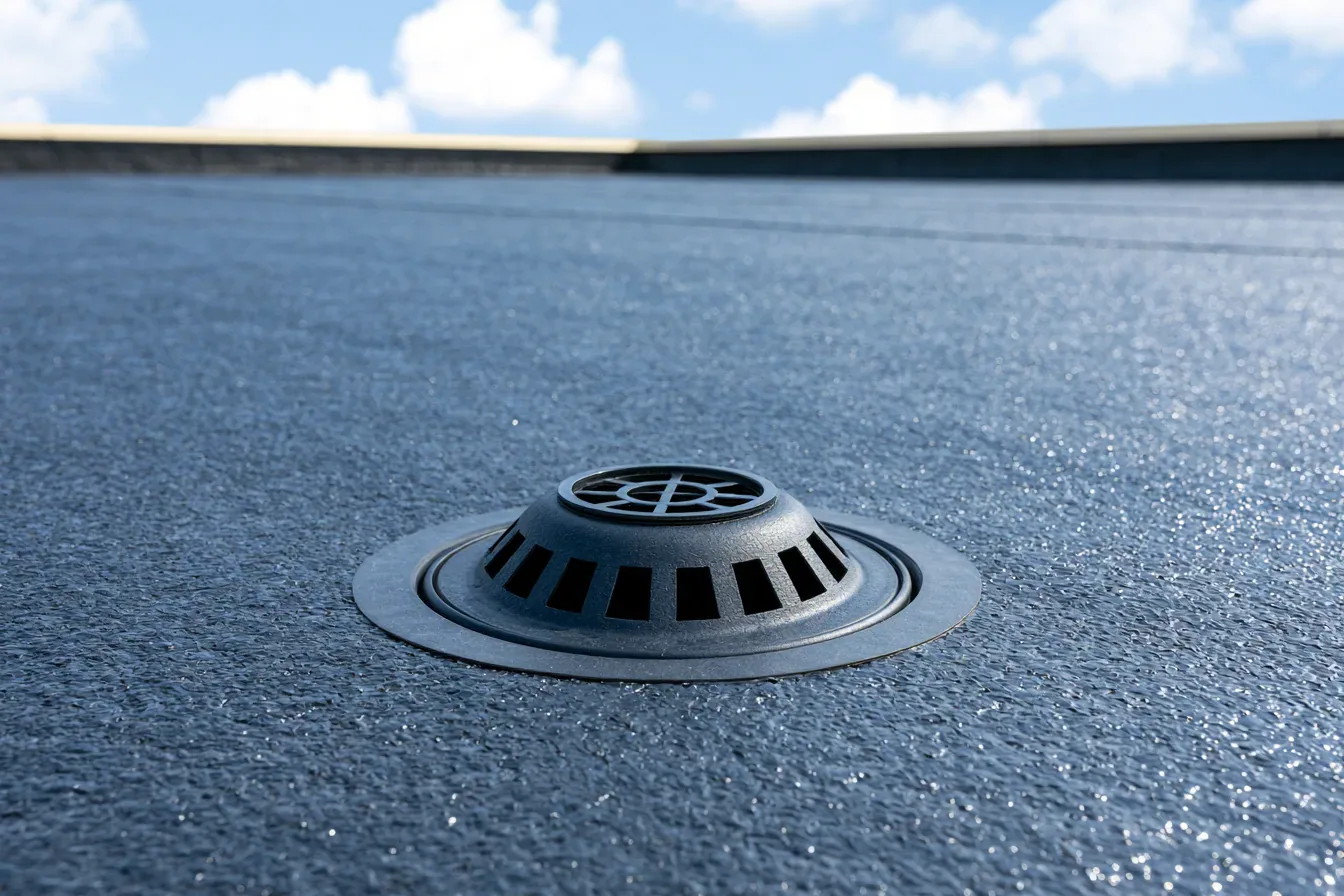
Our drain and scupper checks note whether each outlet is clear, whether it sits low enough and whether the area around it drains. We photograph ponds with a scale reference and record how many days they last. If the pattern repeats, we recommend a tapered insulation repair, a new drain or a cricket behind a curb, and we price it as its own line.
Scuppers and gutters get the same treatment. A scupper set too high leaves a pond behind it, and a gutter packed with leaves sends water back under the edge metal. Overflow outlets are checked too, since they are the last defense when a main drain clogs in a summer cloudburst.
Inspect Each Attachment Method for Its Own Failure
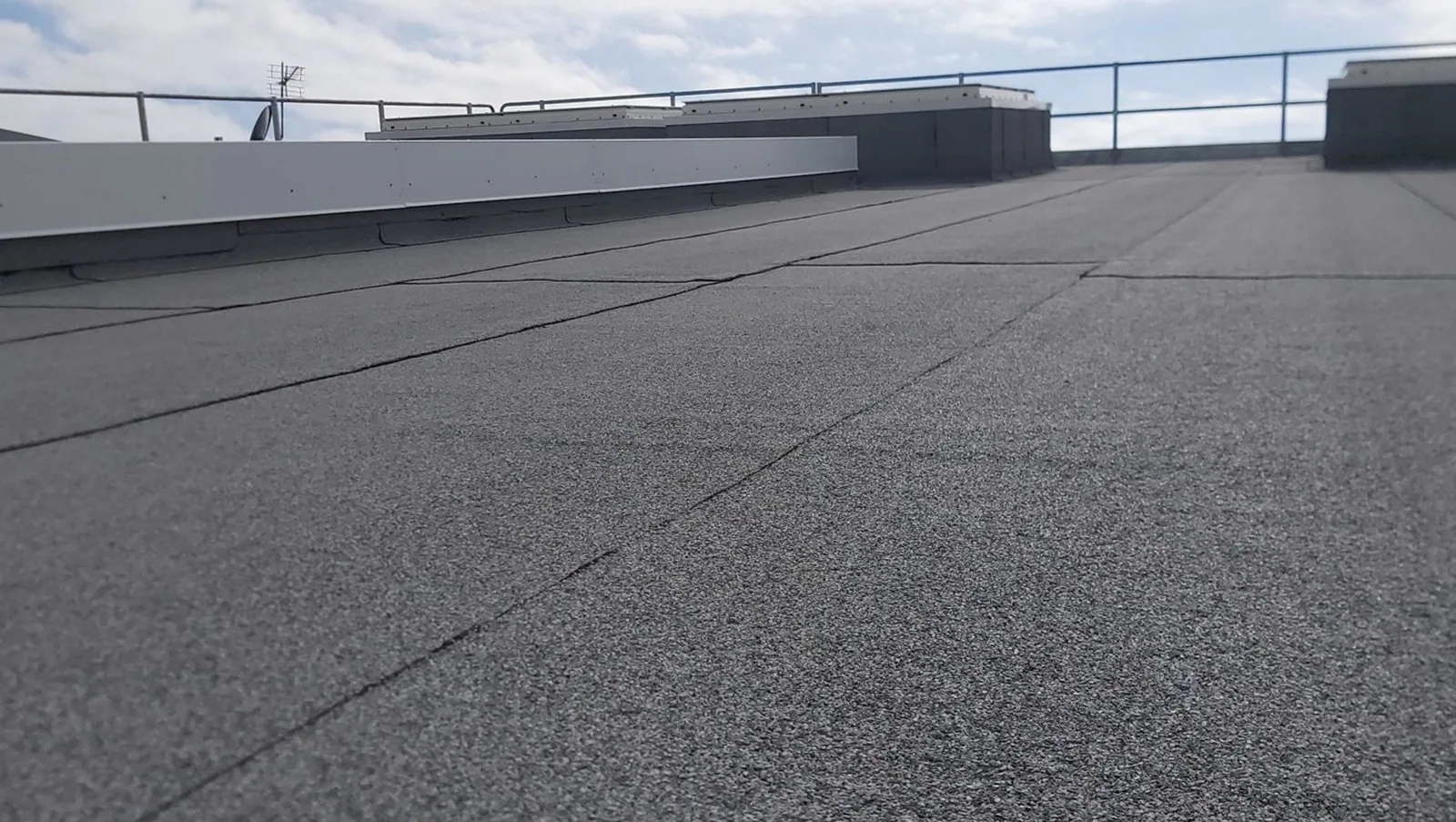
On welded sections we probe seams and check flashing welds. On adhered sections we look for bubbles, wrinkles and edge lift where the bond has failed. On mechanically attached sections we check fastener rows and look for flutter marks near edges.
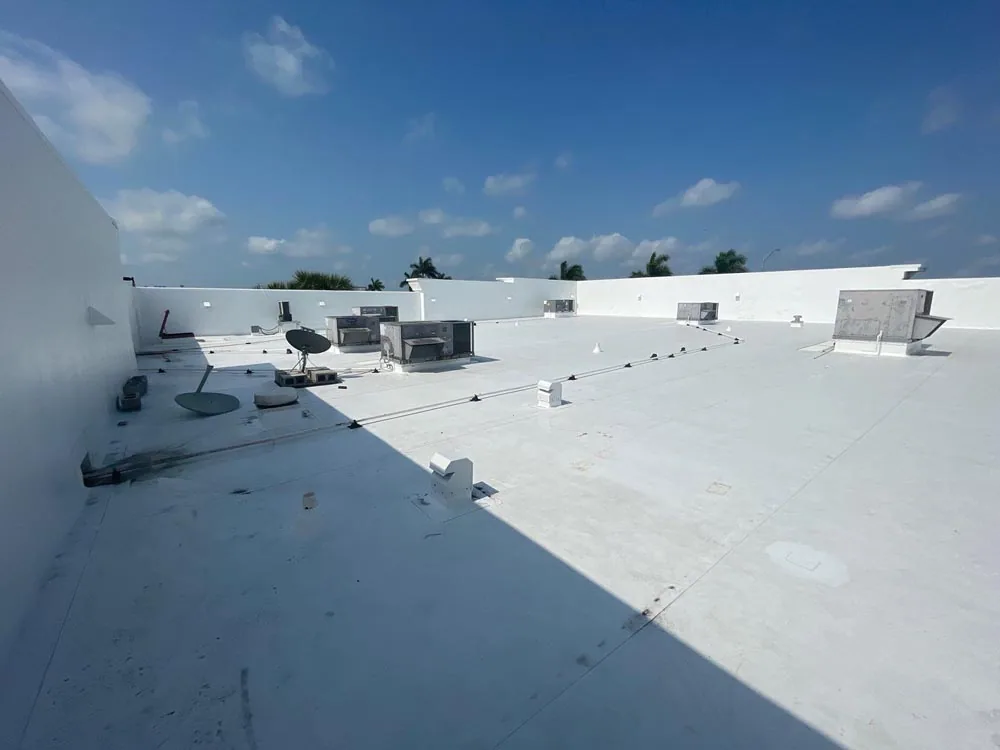
Each method fails differently, so each is repaired differently. A weld is cleaned and re-welded. A bond is cut out and re-adhered. A fastener row is restored to the pattern. In this heat TPO roofing tends to fail at welds and EPDM roofing at glued seams and flashings.
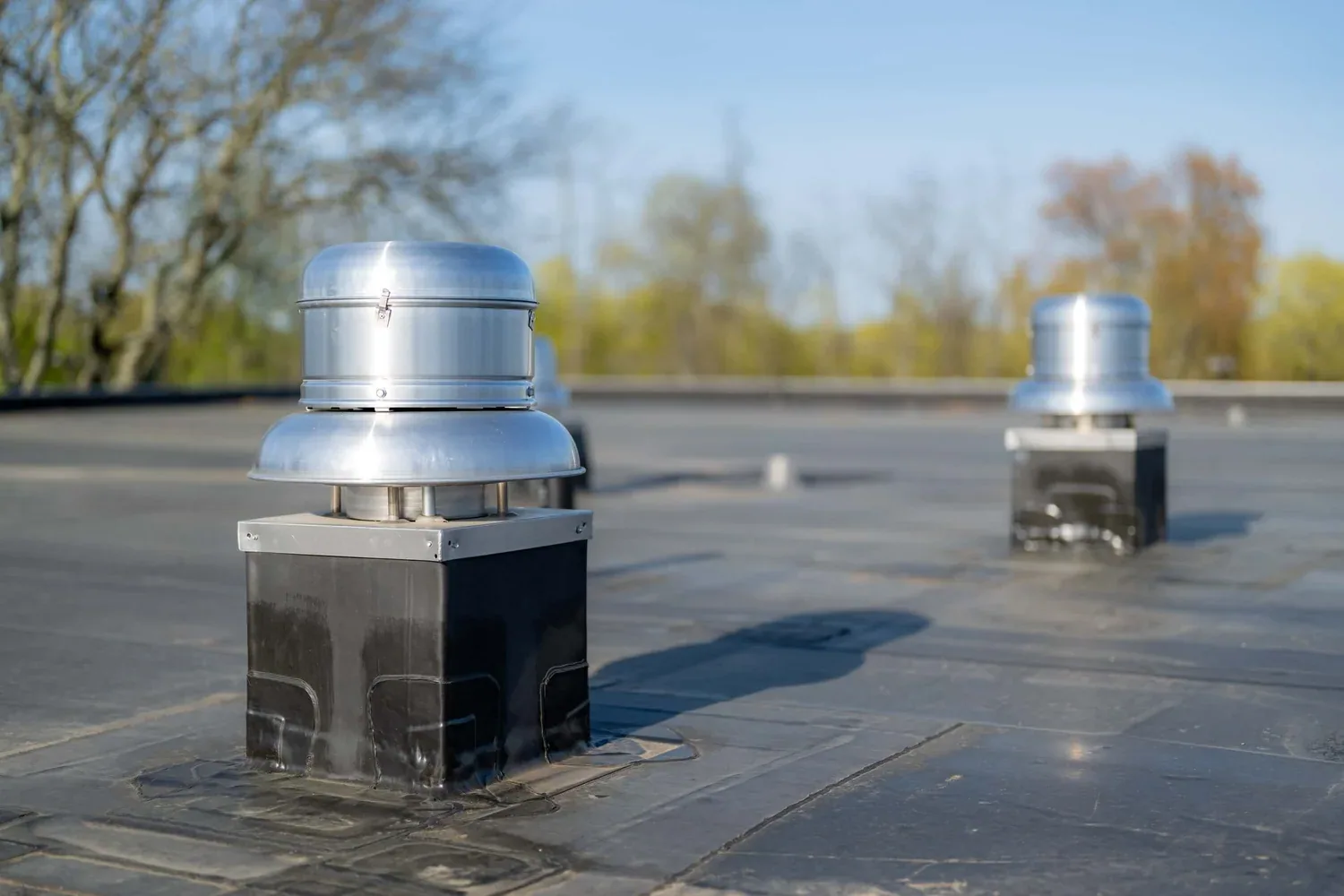
Penetrations and curbs round out the review. Each unit, vent and skylight has a flashing, and each flashing has an age. We list them by area, photograph the terminations and mark any sealant that has hardened or split. When a trade adds equipment, we inspect the new curb on the next visit and log it against the work.
Account for Heat, Rain and Wind
July highs in Gastonia average 90.7 degrees and precipitation adds up to about 44 inches in a year. Snow is rare, about 1.2 inches a year, so sun and rain wear membranes here. Sealants dry, seams relax and ponds sit in the afternoon heat.
Storm lines add wind. Gaston County's EF-1 tornado of May 8, 2024 reached an estimated 110 mph, and a warehouse in East Gastonia lost part of its roof. A tornado in May 2020 brought an estimated 85 mph and uprooted trees on its way toward the Gastonia airport. We check edges and attachment after any event like these.
Heat has a second effect on rooftop equipment. Units shed condensate, and a clogged line drips onto the same spot every afternoon, which wears that spot faster than the rest of the roof. Staining that trails from a unit to the nearest drain or edge points to condensate, and walk pads along regular service routes protect that stretch of sheet.
Walk Distribution and Industrial Roofs for Drains First
Large roofs concentrate water. Gateway85 sits on roughly 365 acres between Gastonia and Lowell and has delivered 2.4 million square feet, among it a 1.5 million square foot distribution center. SouthRidge Business Park and The Oaks Commerce Center add 425 and 280 acres of industrial space. On any large low-slope roof, one blocked outlet can load a whole section.
Every roof is treated as unidentified until the cores say otherwise. For the Gateway85 corridor and for older buildings in town, the first lines in the file are the drains.
Dock edges and truck court drains need their own attention. Runoff from a long field concentrates at a few scuppers, and a blockage can flood the roof edge in one storm. We list those outlets by number and check them first on each visit.
Price the Repair and the Wait
Each finding is priced two ways: acting now and waiting. Clearing a strainer is a few minutes. Replacing wet insulation after a season of ponded water is a larger job. The report puts both on paper, with a photograph, and the owner chooses.
Dry layers and local damage point to repair. Dry layers and a worn sheet may allow a recover. Wet layers across areas point to replacement, often with tapered insulation to fix the slope. The capital plan records the choice, and suppliers such as Carlisle SynTec and Johns Manville are logged in the same format.
The last page of the report is the short list: what to approve now, what to bid and what to leave alone with a date. The short list is the part meant to go into the meeting.
Time the Work Around the Season
Spring storm season runs through the areas we serve, and summer brings heat that makes adhesives and seam work harder on an exposed roof. A reserve plan that places a repair or replacement in early spring or late fall avoids both extremes and gives crews time to order tapered insulation, which has its own lead time.
We record weather on every day of application, and we cover open tie-ins each evening. A shower on a Friday afternoon should meet a finished edge, not an open one.
On occupied buildings, tenants and managers get a schedule with the sections that will be open each day, the access route and the safety zone. The owner approves the sequence before material arrives. That keeps a roof job from becoming a tenant complaint, and it keeps the decision date firm.
Commercial Roofing Questions
Do you work on Versico roofs?
We inspect, repair and maintain the single-ply system types Versico supplies; the owner's documents control products and warranty terms.
How long can water stand on a roof?
Terms differ. We record how long ponds last after rain and flag any that last more than a day or two.
Can ponding be fixed without replacing the roof?
Often. A tapered insulation repair, a new drain or a cricket can move water off the field.
What if my roof has two membrane types?
We log each section separately and repair each by its own method.
What do I receive after a visit?
Dated photographs, findings numbered one by one, priced options and updated ratings.
Topic
Versico Roofing Systems
Roof Types
Low-slope and metal
Related Roofing Work
Roof Drains and Scuppers
TPO Roofing