
Heat and UV Roof Damage Repair in Gastonia, NC
Nothing breaks a roof in a day when the sun does it. A Gaston County roof gets July after July, and what the owner sees is a surface that has gone chalky, sealant that has gone stiff and seams that have started to pull. The membrane still keeps the rain out on most days. The remaining service life, though, is shorter than the roof looks, and the owner who does not know that number is budgeting without it.
The owner's question is how much life is left, what a repair buys and when the line on the budget moves from patching to replacing. A facility manager can take that answer to a finance committee and defend it, because every figure traces to a photograph or a reading from the roof. We put a number on each.
Start With the Heat the Roof Actually Sees
Gastonia's July mean daily high is 90.7 F, and roof surfaces run much hotter than the air, especially dark ones. Rock Hill, in the southern part of the service area, averages 91 F in July and has a 106 F record high. Charlotte, the metro core about 21 miles east, has recorded 104 F highs. Those are regional air numbers. A black or aged membrane in full sun can run far above them, and the swing between a hot afternoon and a cool night works the seams, fasteners and flashings every day.
That daily movement is the damage. Over many summers, plasticizers leave some membranes, sealants harden and shrink, and surfaces crack or chalk. Ultraviolet light does its own work on top of the heat, breaking down the outer layer of membranes and coatings, which is why areas with no shade from taller walls tend to age first.
Rooftop equipment adds to the load. Condensers and exhaust fans throw hot air across the sheet beside them, and the membrane near a discharge ages faster than the field. A roof with many units may show a pattern of chalked and cracked patches that follows the equipment, not the sun.
Read the Surface and the Details
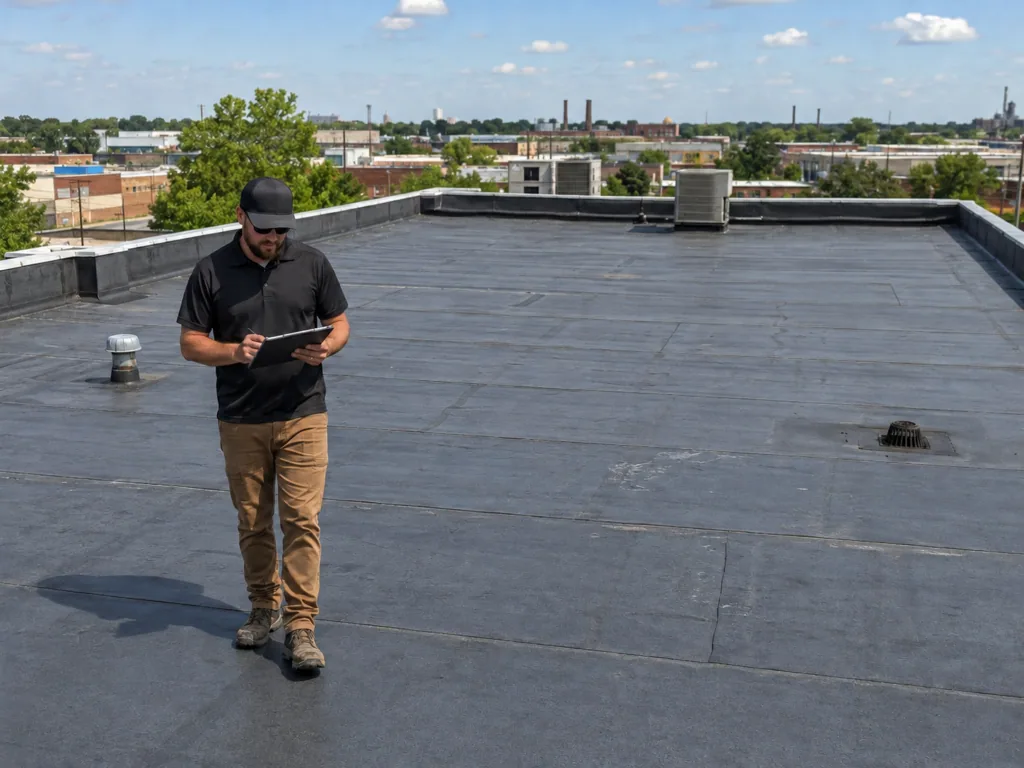
We walk the roof looking for what heat and sun leave behind. On single-ply membranes we check for chalking, hairline cracking, discoloration, shrinkage at walls and corners and seams that have started to lift. On modified bitumen and built-up roofs we look for granule loss, blistering, alligatoring and exposed felts. On coated and foam roofs we check for thinning, cracking and loss of reflectivity. On metal roofs we look at coating wear, chalking and sealant at laps and fasteners.
Then we turn to the details, because flashings and sealants age faster than the field. Mastic dries and cracks, boots split, terminations pull back as the membrane shrinks. Each finding is photographed and marked on a plan, and a probe shows whether the surface is brittle or still has give. We also bend a small cut sample where the owner agrees, since a membrane that cracks when folded has lost the flexibility it needs to move with the building through a cold night and a hot afternoon.
Estimate the Remaining Service Life in Plain Terms
How long a roof has left is the budget question, and the useful answer is a range with reasons. We look at the condition of the surface, how many seams and details show wear, whether the insulation is dry and how the roof has been maintained. A dry roof with a chalky surface and sound seams may have years left with maintenance and a coating. A roof with brittle seams, wet insulation and cracked flashings may have one more season. The report states the range, the evidence and the decision date, so the owner can set a budget year and not discover the answer in a storm.
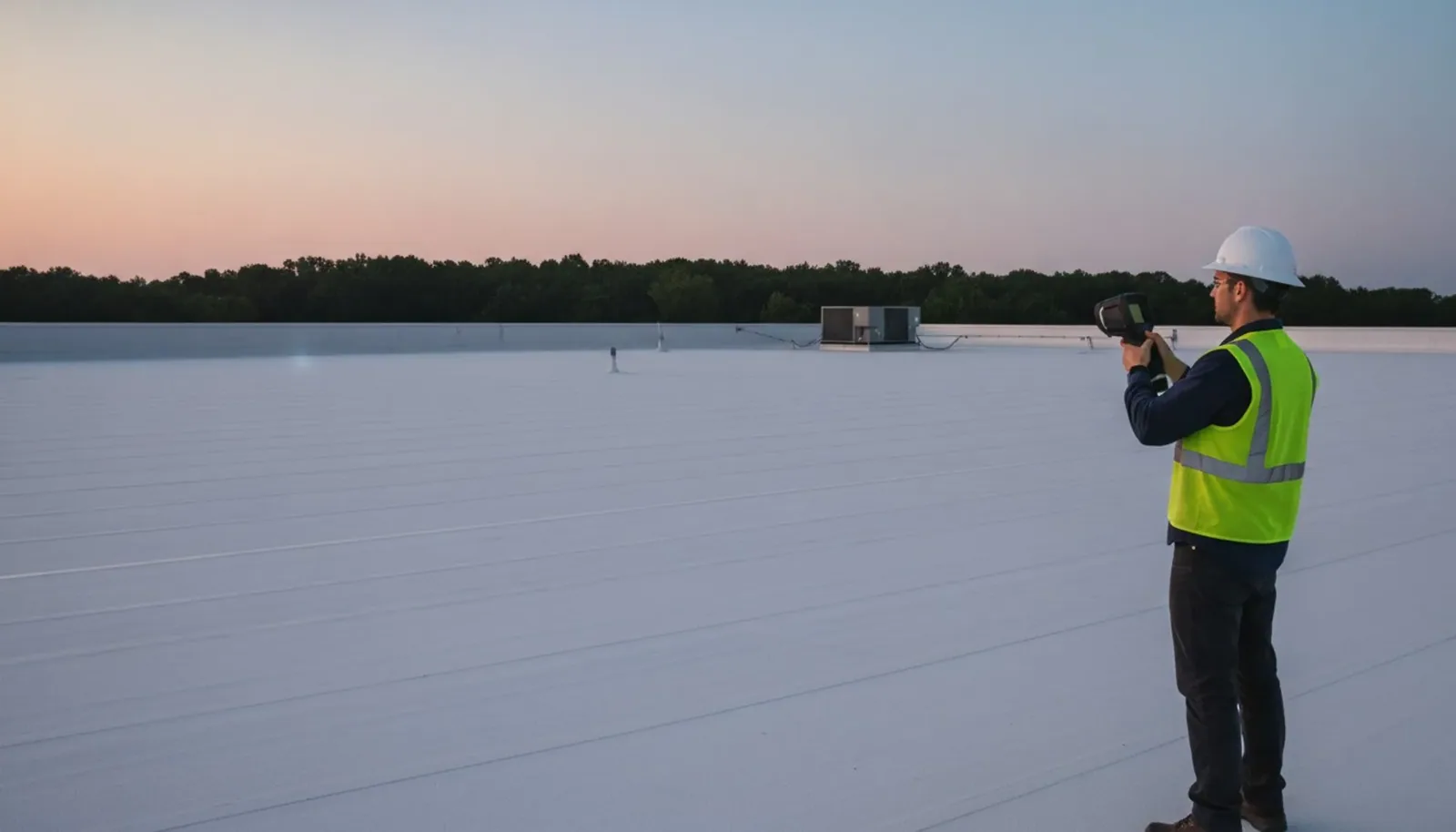
A roof condition report carries that range to a budget meeting, and an infrared moisture survey checks whether the insulation is still dry before anyone commits to restoration.
A reading taken the same week each year makes the trend visible. Surface temperature, chalking and the count of open seams go into one row of the log, so next year's walk compares a measured change and not an impression.
Price Repair, Restoration and Replacement Against Each Other
Heat damage offers owners real choices. Local repairs on a sound roof cost the least. A coating restoration over a clean, dry, sound membrane can add years and improve reflectivity. A cool roof surface can lower rooftop temperatures. A recover or full replacement makes sense when insulation is wet or the membrane is too far gone for a coating to hold. Rain adds up to about 44 inches a year, so a cracked surface will see water. Each option comes with a plain statement of what it extends and what it only holds: a coating extends a sound sheet, a patch holds a weak one, and neither fixes wet insulation.
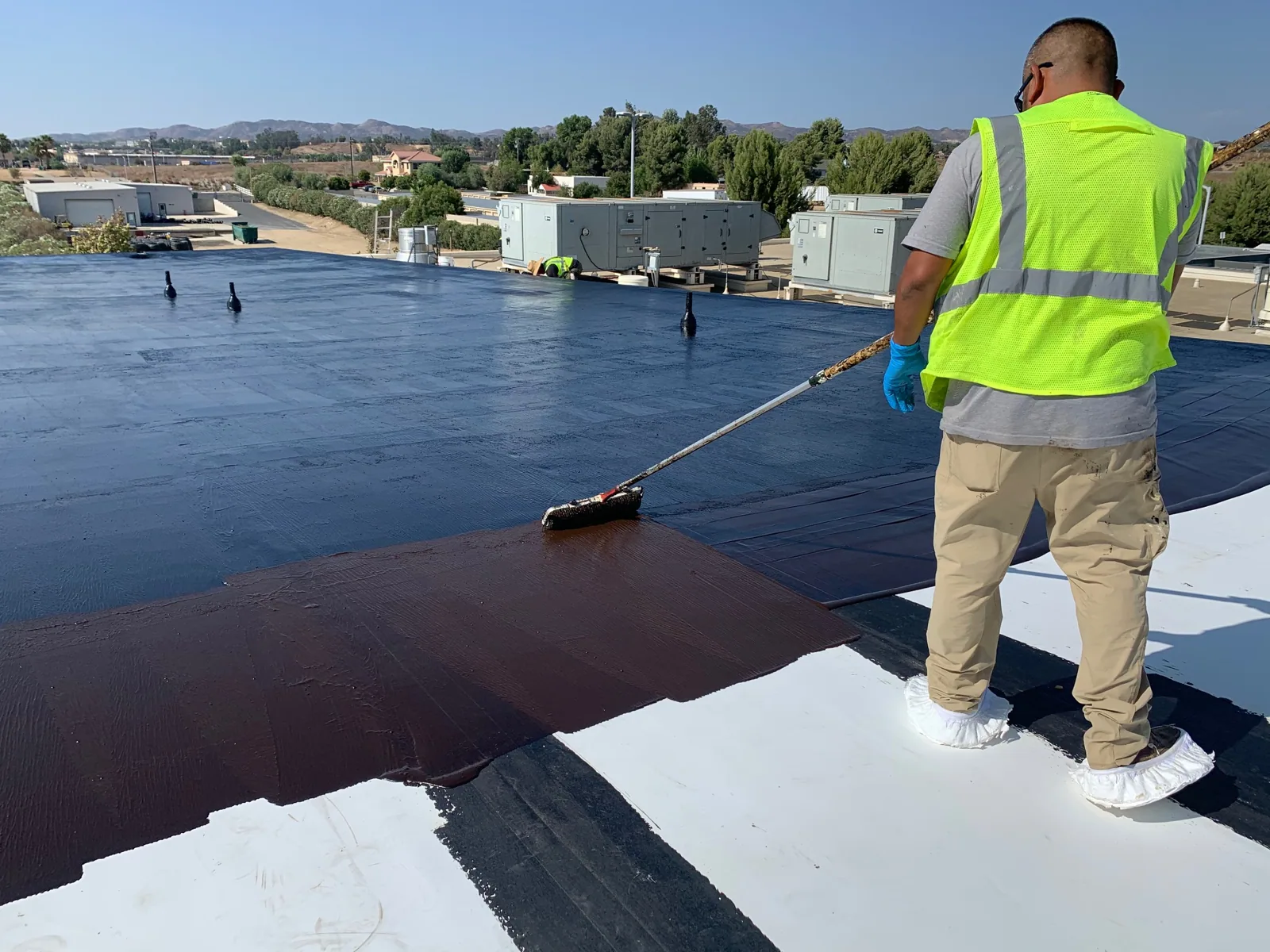
Coatings depend on preparation. The roof is washed, loose material is removed, seams and flashings are repaired, fasteners are checked and primer goes down where the maker requires it. Weather matters, since coatings cure in dry conditions and fair temperatures, and we schedule the work for a stretch of dry days. Owners should ask what the coating warranty covers and what it excludes, and we put both in writing.
We give the figure for each and the cost of waiting. The rule of thumb is to coat a roof while it is sound and replace it when it is not.
Repair the Details First, Then Decide on the Surface
Before any coating or recover, the details have to be right. We cut out and replace failed flashings, renew sealant at terminations, replace split boots and repair open seams, since a coating over a failing detail fails with it. Where a surface is chalking but sound, we clean it and coat. Where cracks have gone through, we repair them or replace the section. Related items such as seam failures and flashing failures often appear on the same walk.
Look at the Buildings That Take the Most Sun
A large, flat industrial roof at Gateway85 or along I-85 gets the whole day's sun with little shade to relieve it. Old mill-era roofs near Loray and in Belmont may have dark surfaces that run hot and aged sealants that have long since hardened. Retail roofs around Eastridge Mall carry rooftop units that add radiant heat to the sheet beside them. Medical and office buildings in Gastonia may have chillers that cycle hot air across the roof. Each gets its own list of what to check. If heat damage leads to a replacement, insulation and energy requirements are confirmed with the building official before the price is set.
Commercial Roofing Questions
How can I tell sun damage from a leak?
Sun damage shows as chalking, cracking and brittle sealant. A leak shows as stains and wet insulation. Often both are present.
Does a white roof last longer in the heat?
A reflective surface runs cooler, which slows aging. It still needs clean seams and sound details to last.
When is a coating the right answer?
When the membrane is sound, the insulation is dry and the surface is clean. Wet insulation takes a coating off the table.
How much life does a heat-aged roof have left?
It depends on seams, details and moisture. We give a range with the reasons and a decision date.
Should I wait for a leak to act?
No. A leak means the insulation is already wet, and wet insulation moves the repair from a coating to a section replacement.
Topic
Heat and UV Roof Damage Repair
Roof Types
Low-slope and metal
Related Roofing Work
Roof Condition Reports
Infrared Roof Moisture Surveys