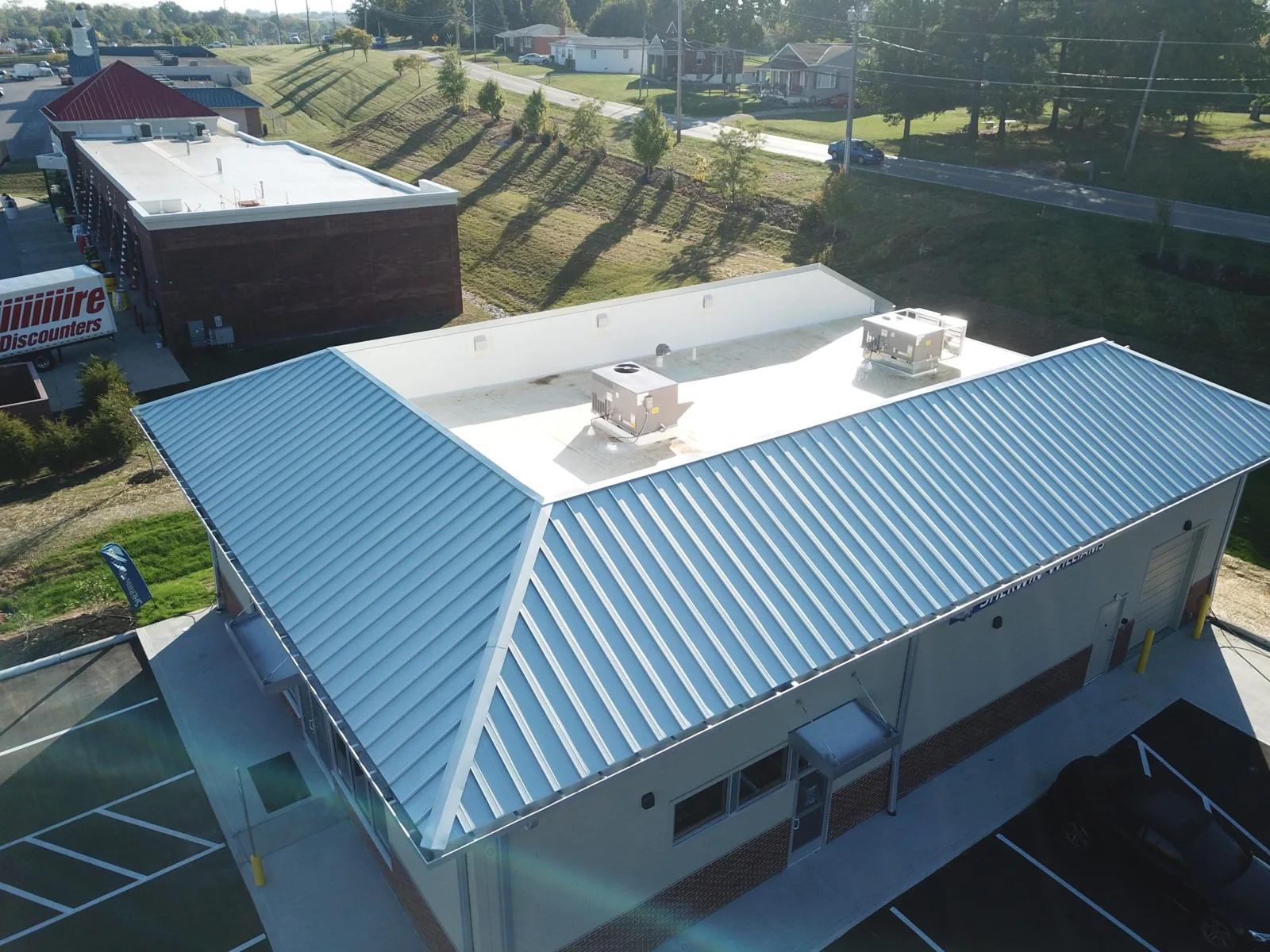
Gym and Fitness Facility Roofing in Gastonia, NC
A drip over a weight floor leaves two possible stories, and an owner needs to know which one is true before paying for a roof repair. One is a leak: water coming through a seam, a curb, or a flashing. The other is condensation: warm, humid air from a hundred people exercising meeting a cold roof deck and forming water on the underside. They look alike on the floor and need different fixes. A roofer who patches a condensation problem has spent money and the drip comes back.
Gyms, recreation centers, and fitness facilities in Gastonia, NC sit under July highs near 91 F, steady rain, and spring wind. We walk the roof, check the interior evidence, and hand back findings an owner or a club operator can use, pricing action today against another year of waiting.
Tell a Leak from Condensation
A leak follows rain. It appears after a storm, lines up with a seam, curb, drain, or wall, and grows over time. Condensation follows weather and use. It appears on cool or humid mornings and busy days, tracks purlins and cold surfaces, and does not need rain. We ask the manager to keep a simple log of drip dates and times. We compare the dates of the drips with the weather record, look at the underside of the roof where we can, and take a moisture reading on the insulation. If the insulation is dry and the drips follow humidity, the answer is ventilation or insulation, not a roof patch.
Getting that right saves the owner from paying for a repair that does nothing. A fitness floor adds its own moisture: sweat, showers, and respiration put water vapor into the air, and the mechanical system has to remove it. If it cannot keep up on a humid July day near 91 F, the extra moisture finds the coldest surface in the building. That surface is sometimes the underside of the deck, and a roof on the receiving end of that vapor ages faster than its neighbors.
Check the Big Rooftop Units
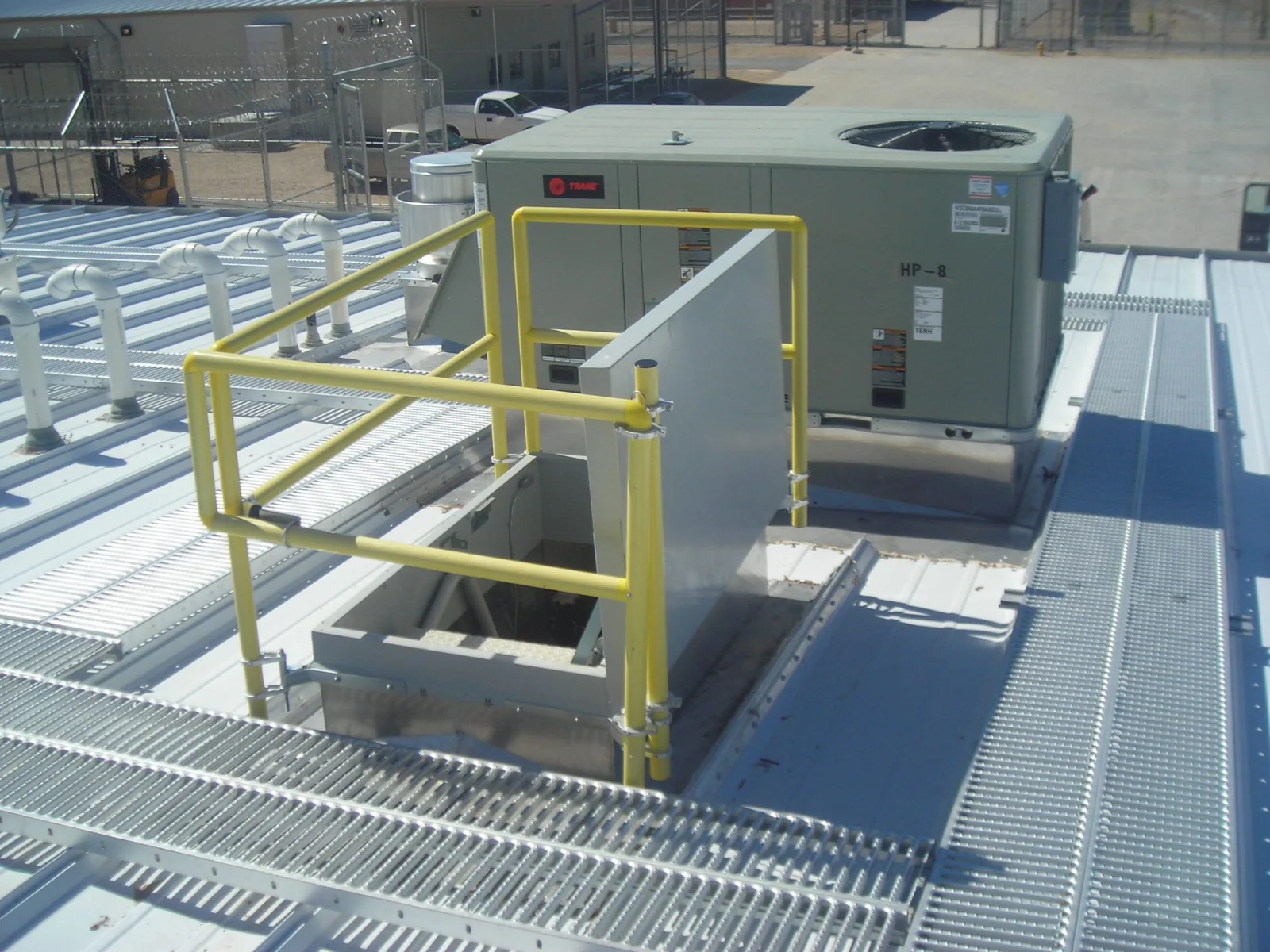
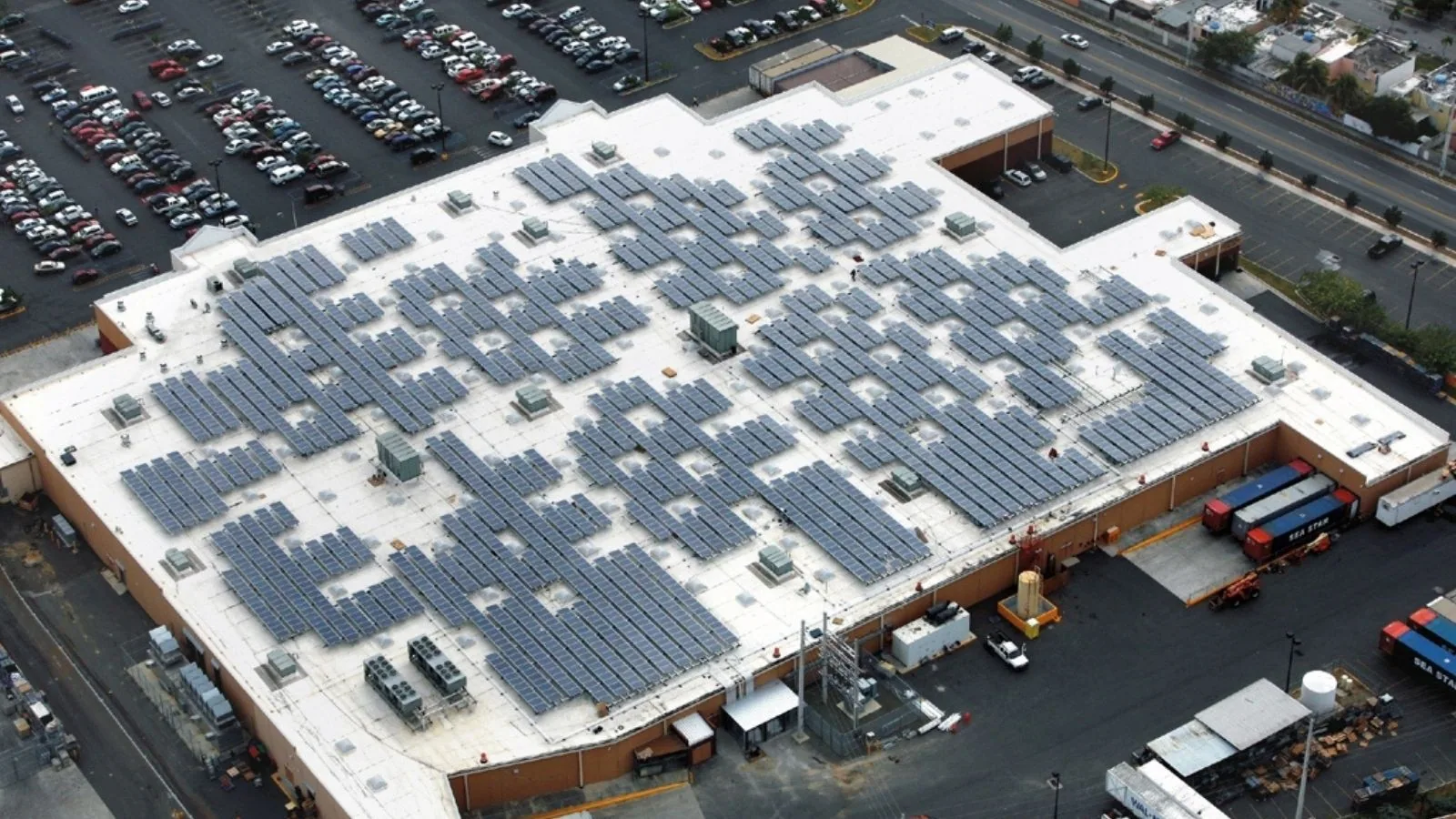
A fitness facility carries heavy air handling to keep a large space comfortable, and the units sit on curbs that move with the heat. Cracked sealant, lifted flashing, and condensate lines that drain onto the membrane are the usual findings. A unit that serves a pool area or locker rooms also discharges moist air, which ages the membrane around its outlet, and exhaust from locker rooms can carry cleaning chemicals that stain or soften some sheets. We count the units, check each curb corner, and trace every condensate line. A curb and equipment support repair is far cheaper than a closed workout floor. When a unit has to be lifted for a curb repair, we coordinate with the facility's mechanical contractor so cooling is off for a short window, ideally on a mild day and in a slow hour. The plan states who disconnects the unit, who resets it, and who checks the temperature on the floor afterward. A big-box store with a similar span faces a similar sequence.
Read the Long, Wide Roof
Gyms and recreation centers often have a wide roof over a high, open space. Heat movement works on long runs of membrane or metal, and the roof has few interior supports. Drains are few, so one clogged strainer can put water on a large area. We walk the roof, clean the drains, measure ponding, and photograph the dirt ring that shows where water sits. Where ponding stays, a taper or an added drain corrects the slope, quoted as a separate item. The repair is easier to schedule when the roof is dry, so we aim for the dry stretches of late summer and early fall, ahead of the leaf drop. A ponding water repair costs less than a membrane aged early. We also check for algae and debris around drains and along parapets, since gym roofs with trees nearby collect leaves that clog outlets. The photograph of a clean drain, taken with a date, is evidence that the maintenance happened, which matters if a warranty or an insurer asks.
Work Around Open Hours and Classes
A fitness facility has a daily rhythm: early morning, lunch, and evening peaks, with quiet hours in between. Roof work should fit the gaps. We stage away from entrances and parking, schedule noisy steps for the quiet hours, and protect the interior over equipment and pool areas. A daily note tells the manager what was opened and closed, and the roof is sealed by evening. The approach follows our occupied building reroofing sequence, with attention to class schedules and childcare areas. Many facilities run 24-hour access or early opening, so we ask when the quietest hours really are and plan around them, not around an assumed schedule. Members and staff are told which days the roof is being worked and where the crew is. Interior protection goes over equipment, and the work zone is fenced so nobody walks under a lift.
Decide Between Repair and Replacement
Dry insulation under a sound membrane points to repair and upkeep. Wet insulation and repeated patches point to replacement. An infrared moisture survey and core cuts answer the question. We confirm with the building department which edition of the state code applies. If the building also needs more insulation or a vapor retarder to control condensation, a replacement is the time to add it, and we price it as a separate line. Roof area, wet insulation, units to disconnect and access equipment each get their own price, so an owner can see what moves the total and choose what to do first. A club that leases its building can use the same figures in a conversation with the landlord.
Watch the Storm Season and the Calendar
Wind that carried the May 2024 EF-1 tornado across the county is why edges, units, and flashing get checked after a storm. Facilities near I-85, in Gastonia, Mount Holly, or Belmont, can request the same walk, and a school gym shares the same long-span questions.
The calendar matters as much as the weather. The manager knows which weeks run quiet, and the roof visit slots into that stretch. A short walk before the wet season catches drains and sealant, and a second walk in early autumn looks at what the summer heat did to the curbs. Both fit into an hour of the manager's time, and both leave a dated photo set that makes the next roof decision easier to defend to an owner or a landlord.
Commercial Roofing Questions
How can I tell whether it is condensation?
Check timing and pattern. Drips on cool, humid days without rain, following cold surfaces, suggest condensation. We confirm with a moisture reading.
Can the gym stay open during roof work?
Usually. We work in sections, protect equipment, and run noisy steps at quiet hours.
Does pool-area humidity affect the roof?
Yes. Moist air can condense in the roof assembly and age materials. We check the assembly and the vapor control, because a pool room asks more of a roof than a gym floor does.
What records does an operator want?
Dated photos, a list of units and curb conditions, and a repair history. If the building has a pool, we add the date of the last moisture reading in the assembly.
How often should drains be cleaned?
Twice a year and after major storms. Units get checked on every visit, with sealant and condensate lines noted in the log.
Topic
Gym and Fitness Facility Roofing
Roof Types
Low-slope and metal

Related Roofing Work
Rooftop Equipment Curbs and Supports
Big-Box Retail Roofing