Fire and Smoke Damage Roof Repair in Gastonia, NC
After a fire, the roof is the part of the building that looks the least damaged and is often the most uncertain. A membrane may be blackened but intact, or it may look fine and sit on a deck that was cooked from below. Water from the fire department has soaked the insulation, smoke has settled in every seam and the interior crew is waiting to start drying. The owner needs three things quickly: the building closed to weather, a straight account of what the roof lost and a scope the carrier can read.
We give those in that order. Close it, assess it, price it.
Close the Building Before Anything Else
A fire opens a roof in ways a storm does not: burned-through sections, melted membrane, failed drains and compromised flashing. The first job is to make the building weather-tight. A crew is available at any hour, holidays included, and checks that the roof is safe to stand on before anyone climbs, with the fire marshal or the engineer's approval where the structure is in question, then tarps open areas, secures loose material and clears drains. Temporary cover is fastened to sound structure, and every step is photographed with a date. We also log every material used for the temporary measures, because the cost of keeping a building dry after a loss is part of the claim and the carrier will ask for it.
Restoration contractors drying the interior need the roof closed first, so we coordinate the schedule with them from the first call.
Access is controlled after a fire. The fire marshal, the insurer's investigator and sometimes the police may need the roof untouched until they have documented the scene, so we ask who has released the building and photograph the roof as we find it before moving anything. A tarp placed over evidence that has not been recorded creates a problem for the claim, and a roofer who waits for the release costs the owner a few hours, not a few days.
Assess the Deck and Insulation, Not Just the Surface
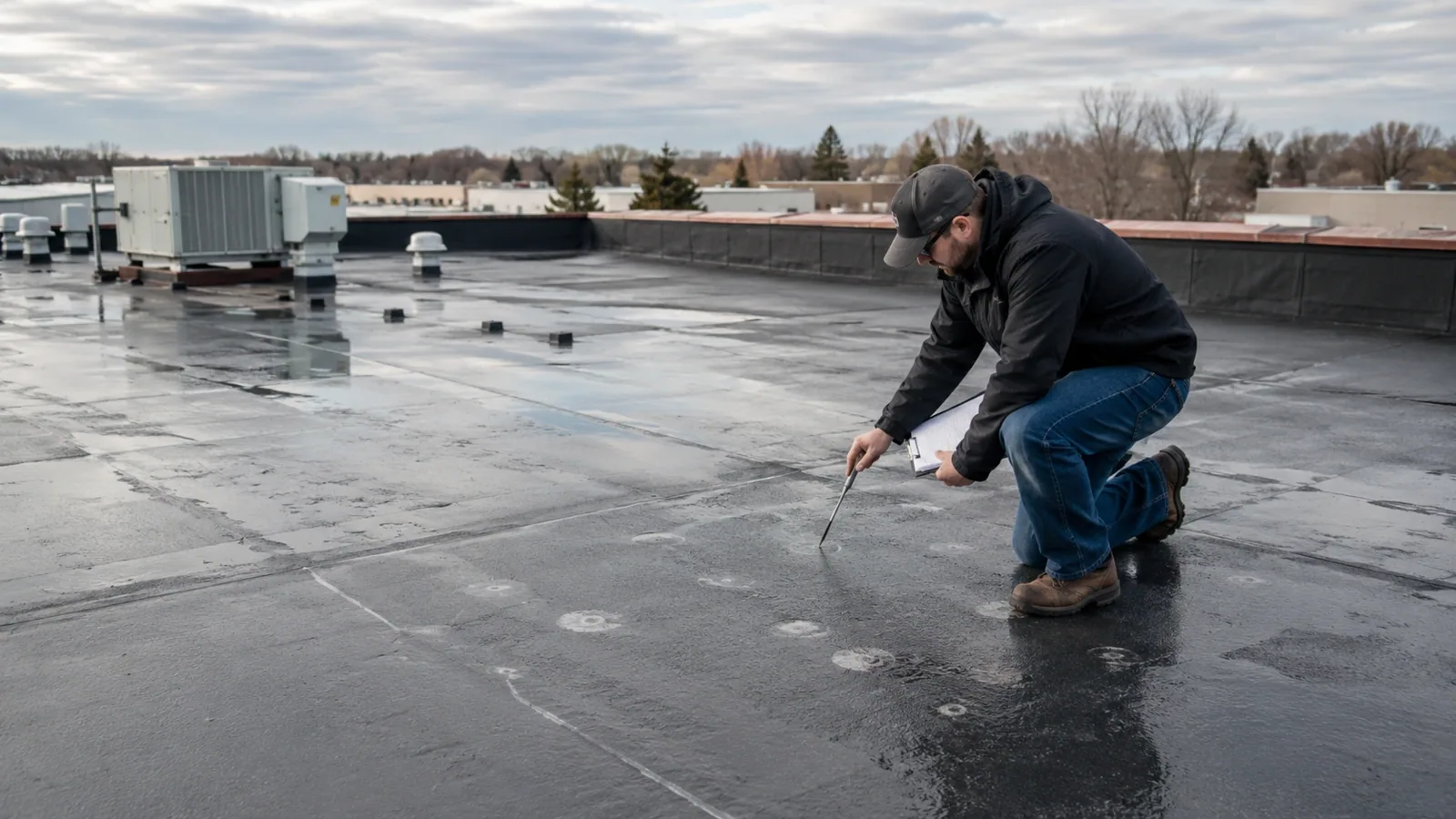
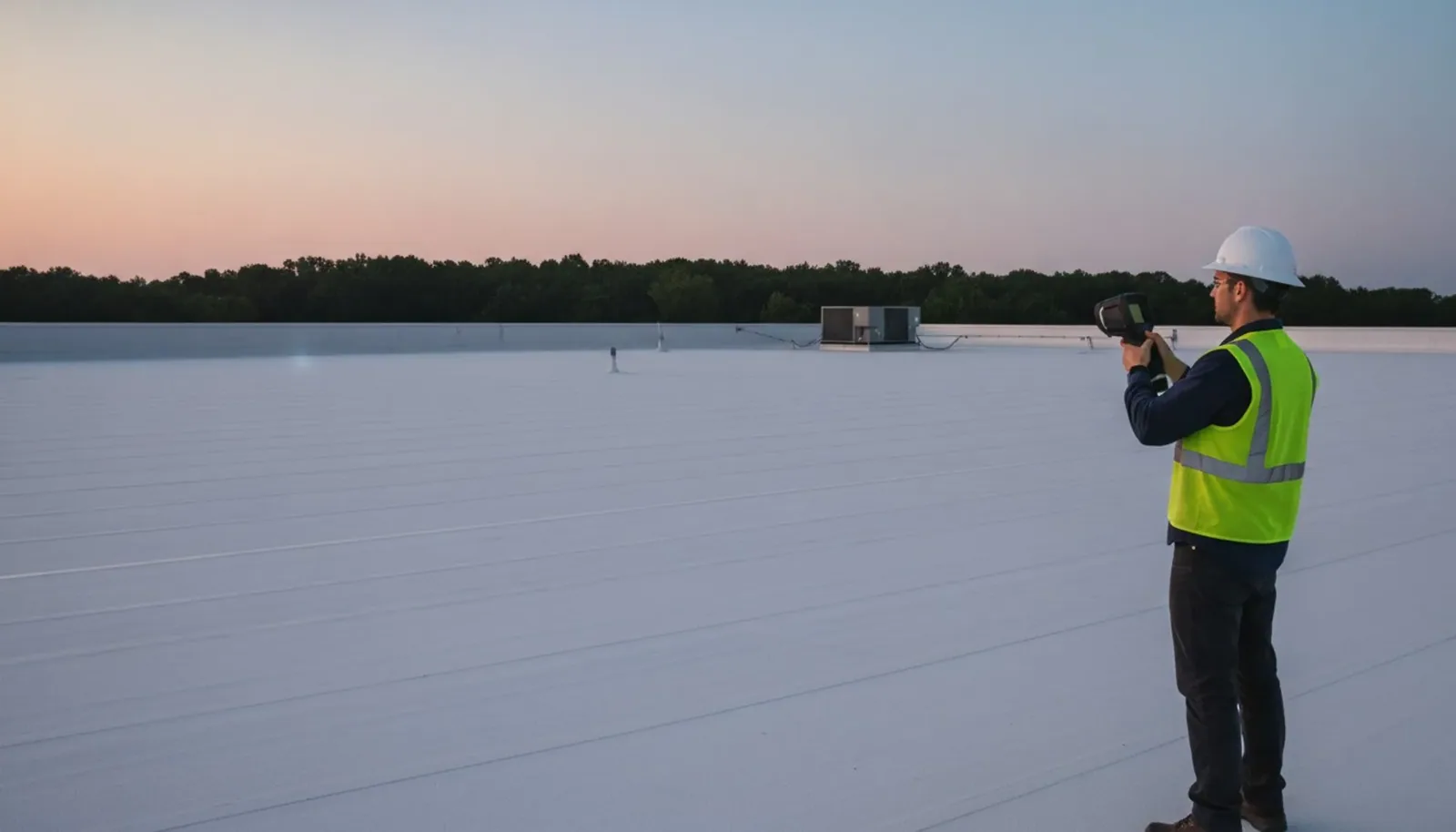
The surface tells less than the layers below. We cut cores through burned and unburned areas to read the membrane, insulation, vapor layer and deck. Charred or softened insulation, warped or rusted steel decking, scorched wood and heat-damaged fasteners are all findings that change the scope. Insulation that was wet by suppression water is removed even where the membrane looks sound, since it holds moisture against the deck and grows mold. An infrared moisture survey outlines wet areas across the roof so removal is limited to what is wet.
Where the deck or framing may have lost strength, we ask for a structural engineer's opinion before crews load the roof with equipment or new material.
Metal decks deserve their own look. Steel that has been heated unevenly can warp, lose its coating or pull away from supports, and a deck that looks flat can be dished enough to pond water. Wood decks and timber framing char below the surface, and a probe will find soft wood where the surface looks solid. Fastener heads, plates and clips near the burn are checked for heat damage, because a fastener that has lost its temper no longer holds a sheet in wind.
Count Smoke, Heat and Chemical Damage
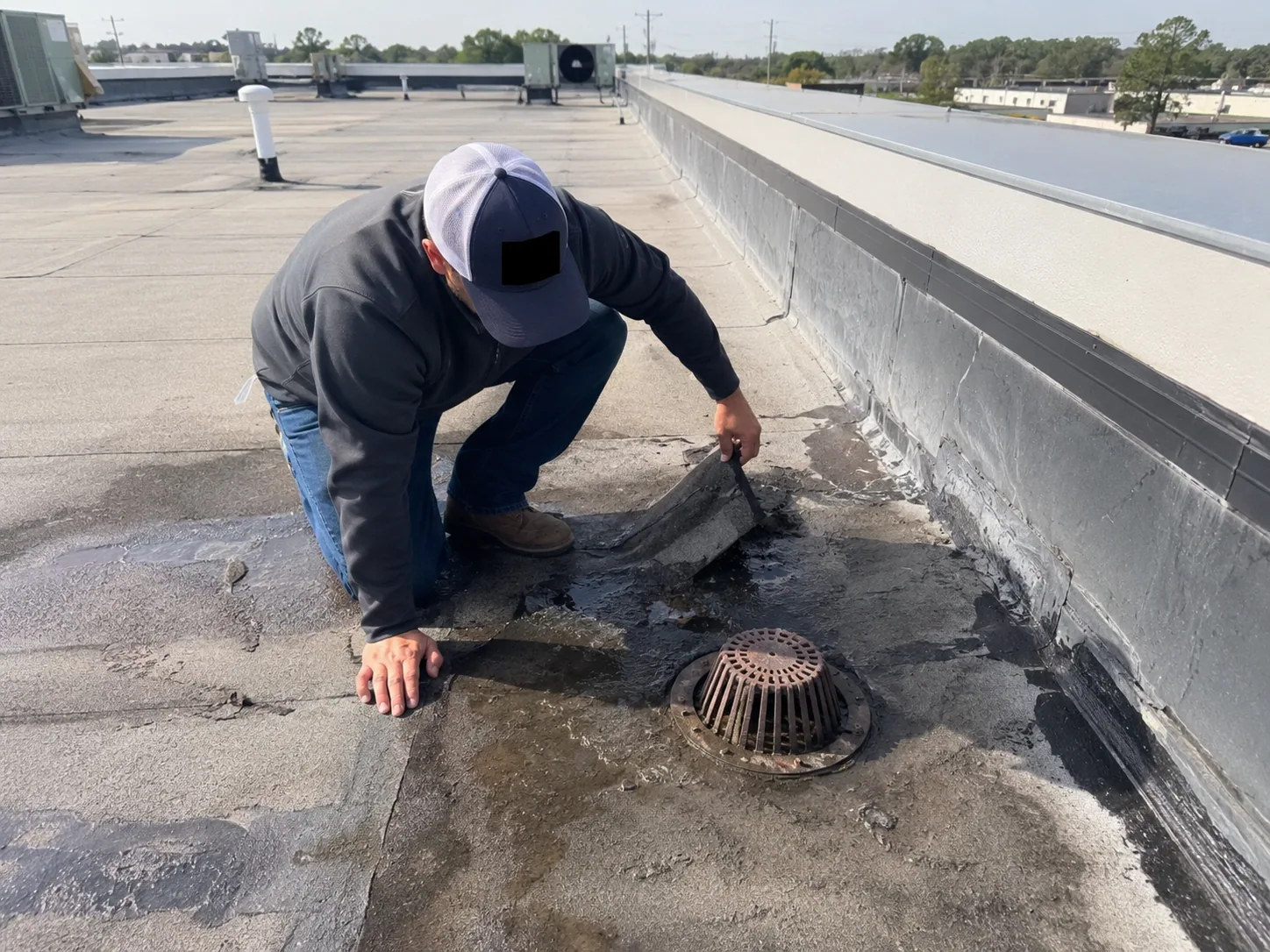
Smoke and heat damage the roof beyond the burn area. Membranes near a fire can shrink, blister or lose plasticizers, seams can open, and sealants can harden. Rooftop equipment and curbs exposed to heat may need replacement. Soot and chemical residue on a membrane can interfere with adhesion, so the surface may need cleaning before any repair. We check drains and scuppers for debris and melted material, since clogged drains after a fire cause a second loss in the next rain.
Rain averages about 44 inches a year in Gastonia, so an open or compromised roof is exposed to the next storm quickly. We schedule the temporary cover accordingly. Equipment on the roof gets its own check: gas lines, electrical conduit and rooftop units near the burn are shut off and reviewed by the owner's technicians before we work near them, and curbs that were exposed to heat are flagged for replacement with their flashings.
Write the Scope the Carrier Can Follow
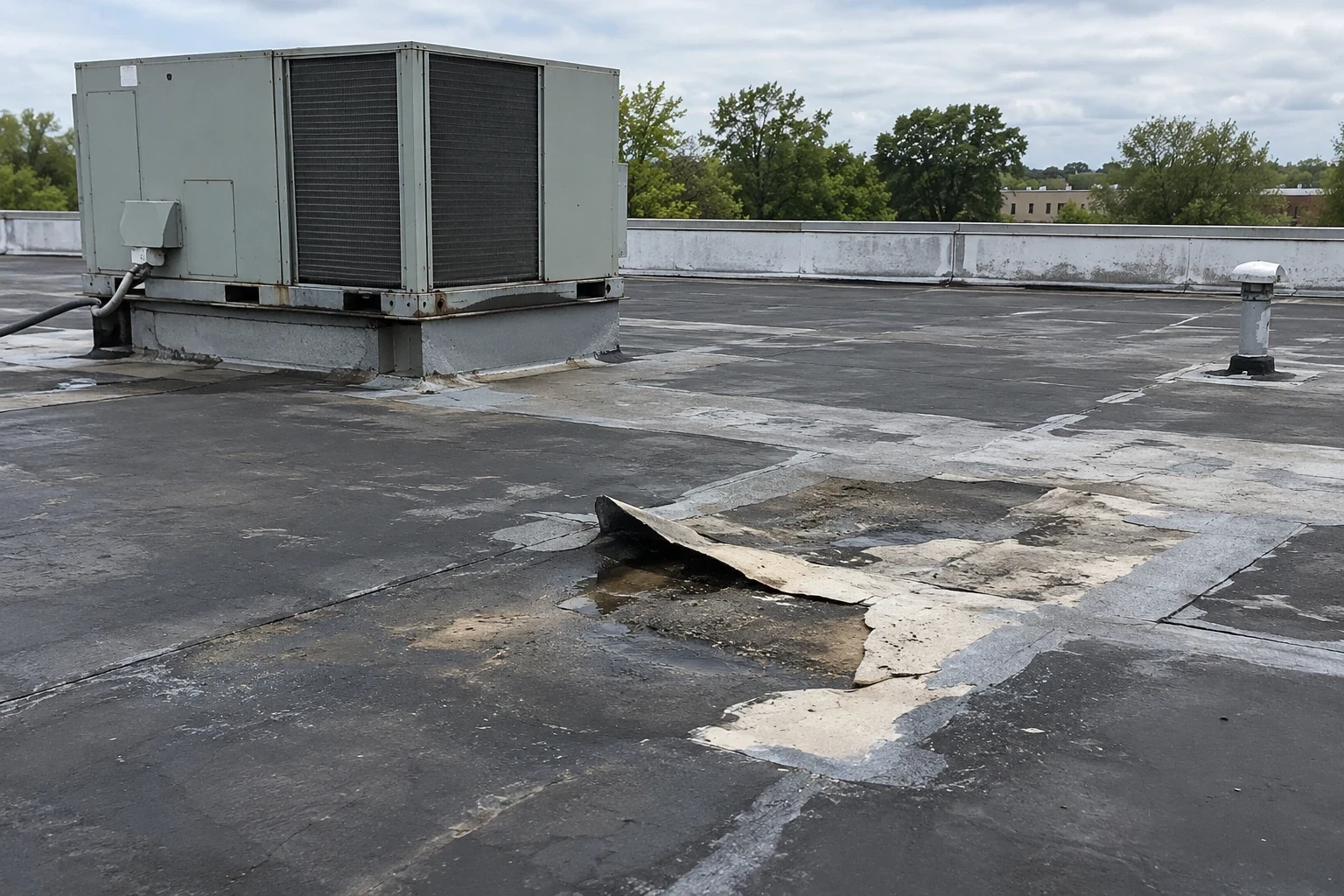
Fire claims involve several parties, and the roof scope has to be readable by all of them. We document the burn area, the heat-affected area and the wet area separately, each with photographs, core results and moisture readings. Repairs are priced in line items that match the claim estimate: removal, deck repair, insulation, membrane, flashing and equipment curbs. Where the approved scope covers only part of the roof, we state in writing what it covers and what it leaves. Our claim documentation keeps measurements and photographs together, and nearby work such as wind damage repair and replacement may be folded into the same visit. If water ponds in a low spot after the debris is cleared, a ponding water repair belongs in the scope while the roof is open, since adding a drain or tapered insulation costs far less during a rebuild than later.
Costs depend on what the cores show. A roof with a localized burn, dry insulation elsewhere and a sound deck is a section replacement and a tie-in. A roof with heat damage across a wide area, wet insulation and a warped deck is a replacement. We state both possibilities in the first report and update the figure as the cores come back, so the owner is not surprised and the carrier sees the reasoning.
Confirm the Code Path Before Rebuilding
Rebuilding after a fire triggers code questions. The 2018 State Building Code still governs while the 2024 edition waits for an effective date, and an owner can ask for the newer one as an alternative method of construction. A substantial repair can bring wind, fire-classification and energy requirements into the scope. Asking the local building official first puts the answer in the price, so the owner does not meet it as a change order.
Plan for the Building Types Around Gastonia
A fire in an old mill-era building near Loray calls for a careful reading of what the framing and masonry can still carry. At a newer industrial building such as those at Gateway85, heat can warp a metal deck over a wide area. Retail strips and medical buildings in Gastonia and Belmont have rooftop units, where an equipment fire can damage the curb, the flashing and the membrane around it. Each type gets its own core plan and its own list of what to check. Nearby cities such as Mount Holly and Cramerton have older industrial and commercial buildings where the same questions apply, and a fire in one calls for the same sequence: cover, cores, scope.
Commercial Roofing Questions
Is the roof safe to walk after a fire?
Not until it has been checked. We confirm with the fire marshal or an engineer where the structure is in question before crews step on it.
Does wet insulation have to come out?
Usually, yes. Insulation soaked by suppression water holds moisture against the deck and can grow mold, even under a sound-looking membrane.
Can the roof be repaired in sections?
Often. The burn area is replaced and the rest is tied in, if the remaining roof is dry and sound.
Who closes the roof for the interior crew?
We do, usually within hours, and the schedule is shared with the restoration contractor from the first call.
Will a fire repair trigger code upgrades?
It can. Which code edition governs is the building official's call, and we price the rebuild after hearing it.
Topic
Fire and Smoke Damage Roof Repair
Roof Types
Low-slope and metal
Related Roofing Work
Infrared Roof Moisture Surveys
Roof Insurance Claim Documentation