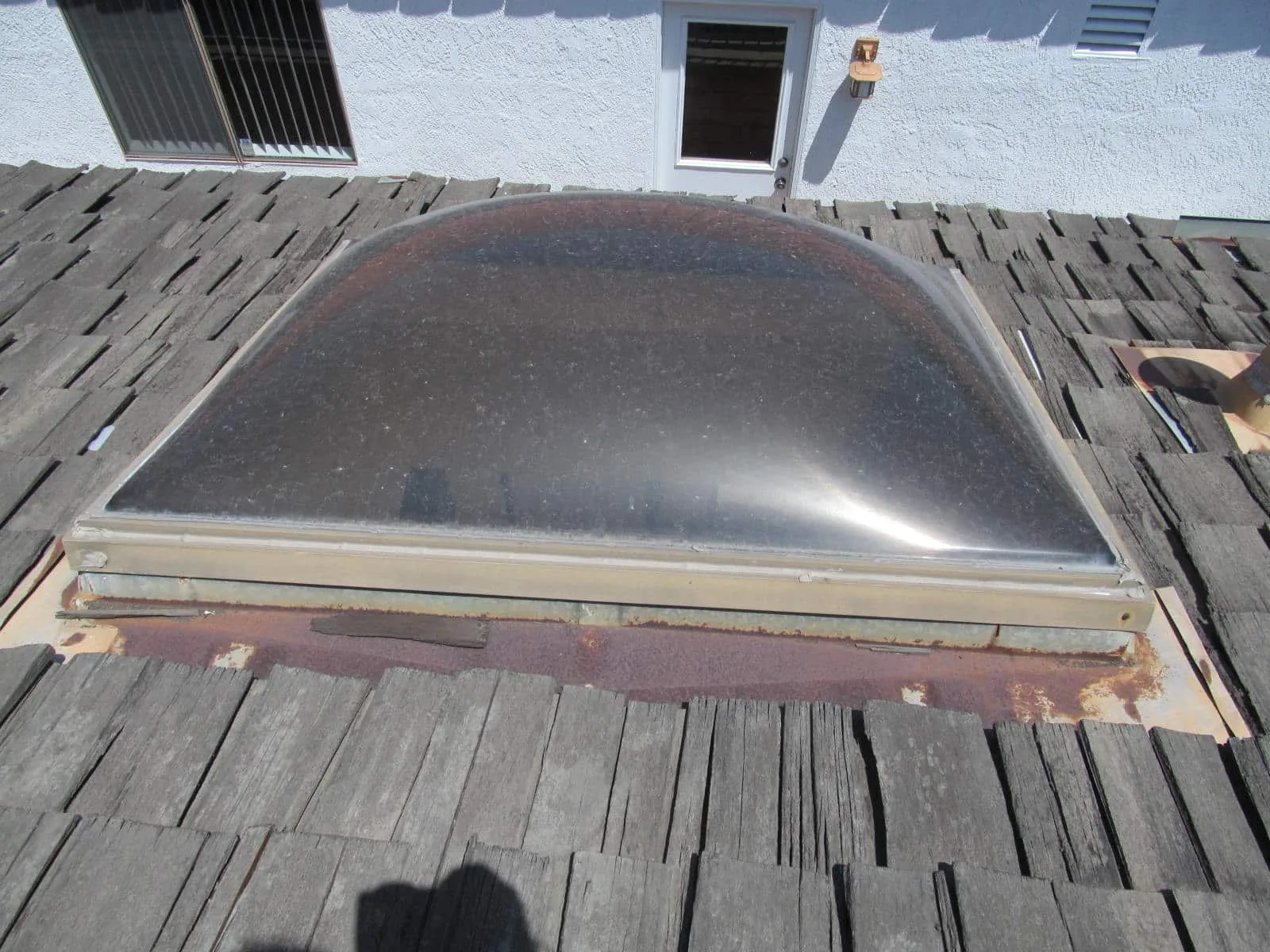
Auto Dealership Roofing in Gastonia, NC
A dealership roof is really three roofs. Over the showroom there is a flat roof with a parapet and a row of rooftop units. Over the service bays there is a longer roof, usually flat or low-slope, with exhaust fans and skylights. Over the entrance and the delivery lane there are canopies with their own drainage. The finding that matters for an owner is usually small, a drip at the showroom's front window line, a stained ceiling in the service writer's office, a canopy gutter that overflows onto a new car.
A dealership on one of Gastonia, NC's main commercial streets, such as Franklin Avenue, Garrison Avenue or New Hope Road, lives under July highs near 91 F and steady rain. Each roof gets a walk and photographs, and the findings come back in a form an owner or a dealer principal can use, priced for fixing now and for waiting.
Treat Each Roof Separately
Showroom, service, and canopy roofs wear differently and cost differently. The showroom roof sits over customers and sales offices, so a stain there is visible and expensive. The service roof carries exhaust and sometimes grease and oil mist. Canopies are small, exposed, and often forgotten. We walk each one, record what is on it, and rank the sections by risk.
The ranking lets an owner fix the showroom roof first, because that is where a leak costs the most in image and sales. Photographs go with the ranking. Dealerships built or expanded in stages often carry a different roof over each addition, and the seam where an old roof meets a new one is a classic leak point. We look at every such joint, record how the two roofs are tied together, and note where the older roof ends. That line on the plan tells the owner where a future repair has to begin and which roof it has to match.
Check Where Glass and Roof Meet
Showrooms have large windows, and where the glass meets the roof edge is a detail that takes movement from both materials. Flashing at the parapet, sealant at the curtain wall, and the roof edge above all take on rain and heat. A hairline gap in sealant lets water run down the inside of a wall and appear at the window sill, far from where it entered. We look at those joints first, because they cause most showroom leaks and cost little to repair when found early.
A flashing failure repair at a showroom wall can be done in a day, and it keeps a ceiling above a new car dry. Rooftop units over a showroom add condensate lines and curb flashing to the list, and the sales floor is the last place an owner wants to see a drip tray. We check each unit's curb for cracked sealant and its condensate line for a proper outlet. A shopping center with similar units is checked the same way, and a unit that was replaced without a roofer is the usual suspect.
Look After the Service Bay Roof
The service roof works hardest. Exhaust fans and make-up air units sit on curbs, and the discharge can carry oil mist and heat. Skylights add leak points as the glazing and the frames age. We check each curb, each fan, and each skylight, and we look at the membrane downwind of exhausts for softening or staining. A skylight or penetration flashing repair is small, and a service bay closed for a leak costs a day of repair orders.
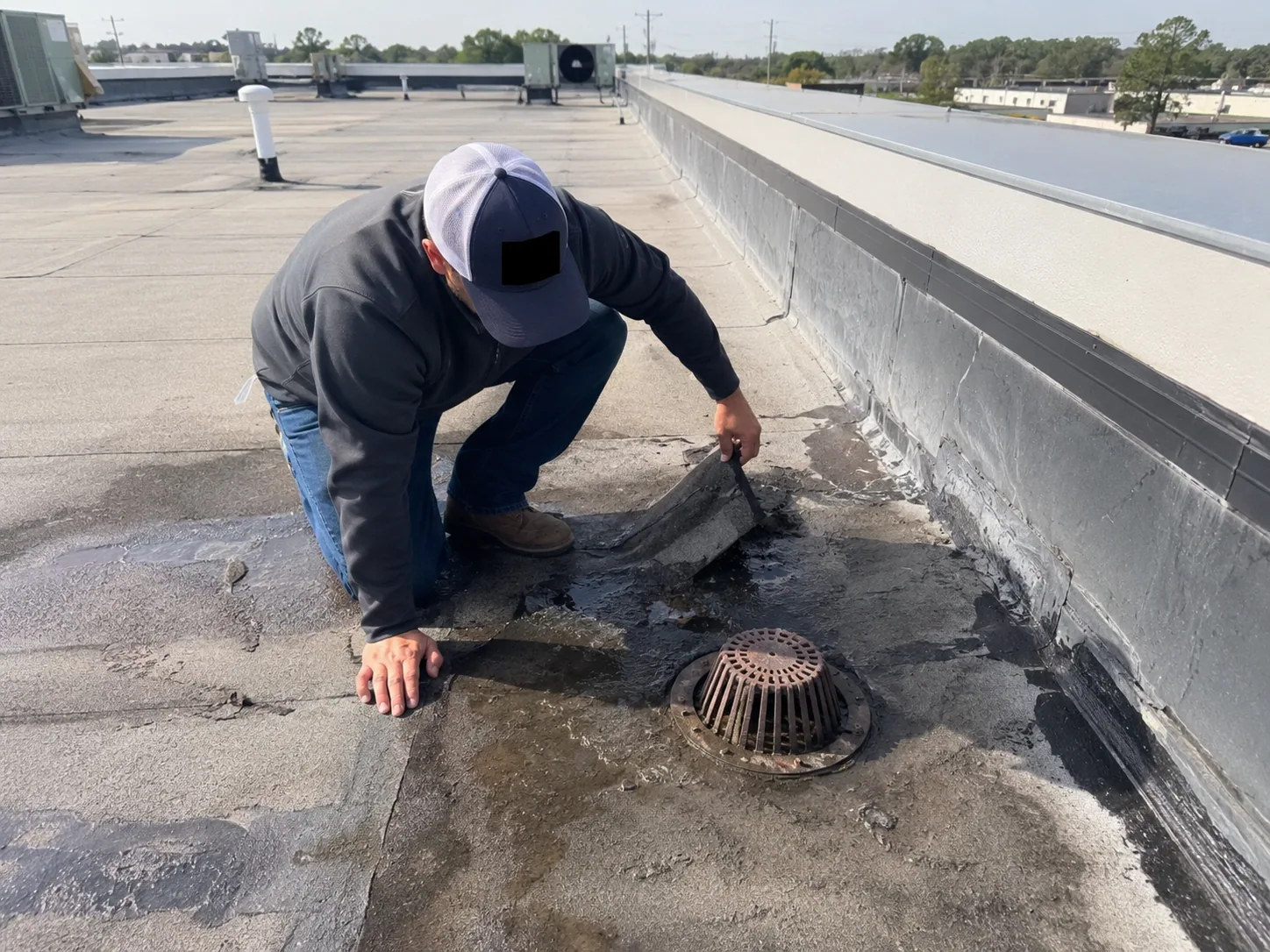
Drains on a long bay roof are cleaned before storm season, because a clogged drain turns an ordinary storm into ponded water. Ponded water near a service door also tracks into the shop, and a wet floor in a service bay is a safety issue as well as a roofing one. We record how long the water stands, photograph the dirt ring, and tell the owner what it would cost to fix the low spot, as its own line, apart from the membrane.
Clear the Canopy Gutters
A canopy over the delivery lane or the entrance has a gutter or a scupper, and it collects leaves, pollen, and trash. A clogged one overflows onto cars and customers. Hail marks on a canopy are also visible from the lot. We clean the outlets, check the fasteners and the edge, and look for dents and cracked finish. A canopy repair is among the cheapest in the report and one of the most visible. We also check the underside of the canopy for stains that show water getting behind the fascia, since a dripping edge over a customer's car door is the kind of finding that gets noticed. Fixing the outlet and the edge flashing together often costs about the same as fixing only one, and it is done in one visit.
Decide Between Repair and Replacement, and Time It to the Calendar
A dealership has busy and slow seasons. Dry insulation under a sound membrane means upkeep is enough. A roof with wet insulation and repeated repairs is a project, and it is better done in a slow month. An infrared moisture survey and core cuts decide. Which edition of the state code governs the permit is confirmed with the building department. We phase the work so the showroom stays open and the service bays keep running. Delivery days for new inventory are marked on the calendar, and the crane or lift is scheduled around the transporter's arrival so the lot is clear. The roof is sealed by evening, and a daily note tells the dealer principal what was opened and closed. The price moves with roof area, wet insulation, units to disconnect, and access to each bay.
Watch Hail and Wind
Storms like the May 2024 EF-1 tornado, which crossed Gaston County, can strip trim and move equipment. After a storm, we walk the roofs and canopies and photograph the edges and equipment. A dealership in Gastonia, near I-85 or in Belmont, can use the record in an insurance claim, and a big-box store nearby faces many of the same checks.
Showroom glass changes the wind picture. A canopy or parapet near the front window line can lift at a corner and drive rain against the glass, so those edges are checked first. The photograph set from a spring walk gives the dealer a clean before picture if a claim ever follows, and it shows the insurer the roof was kept up.
Commercial Roofing Questions
Can the dealership stay open during roof work?
We work in sections, protect the interior, and schedule noisy steps for quiet hours.
What if hail hits the lot?
We walk the roofs and canopies, document dents and damage, and prepare the record for a claim. Hail that is small enough to leave a roof sound can still dent canopy metal and rooftop unit fins, and we count the dents per section so the claim is specific.
How do you protect vehicles during repairs?
We keep lifts and debris away from the lot and ask the dealer to move cars from the work area. A taped-off zone under any lift keeps staff and customers clear, and the crew leader checks it each morning.
Why does the showroom leak at the window line?
Flashing or sealant at the glass and roof edge fails. Water runs inside the wall and shows up far from the entry.
Do service roofs need special materials?
If oil mist or grease reaches the membrane, a resistant sheet may be worth the cost. We check the exhaust first.
Topic
Auto Dealership Roofing
Roof Types
Low-slope and metal
Related Roofing Work
Failed Flashing Repair
Shopping Center and Strip Retail Roofing