
Commercial Roofing in Ranlo, NC
A flat roof over an older commercial building that has changed tenants more than once is a finding to expect in Ranlo, NC, and the first thing to settle is what each tenant left on the roof. Ranlo had 4,511 residents in 2020 and sits just north of Gastonia on 2.06 square miles. The town grew around Rex Spinning in 1915, Ranlo Manufacturing in 1916 and Priscilla Spinning in 1921, and most of those mills have closed.
Ranlo is now largely a commuter community with new industry and neighborhoods arriving. For roofs, that means a blend: older buildings with long histories, and newer commercial and light industrial space that will need its first repairs in the years ahead. Each roof is read from the roof itself, since a town's history says little about what is on top of a building.
Trace What Each Tenant Left Behind
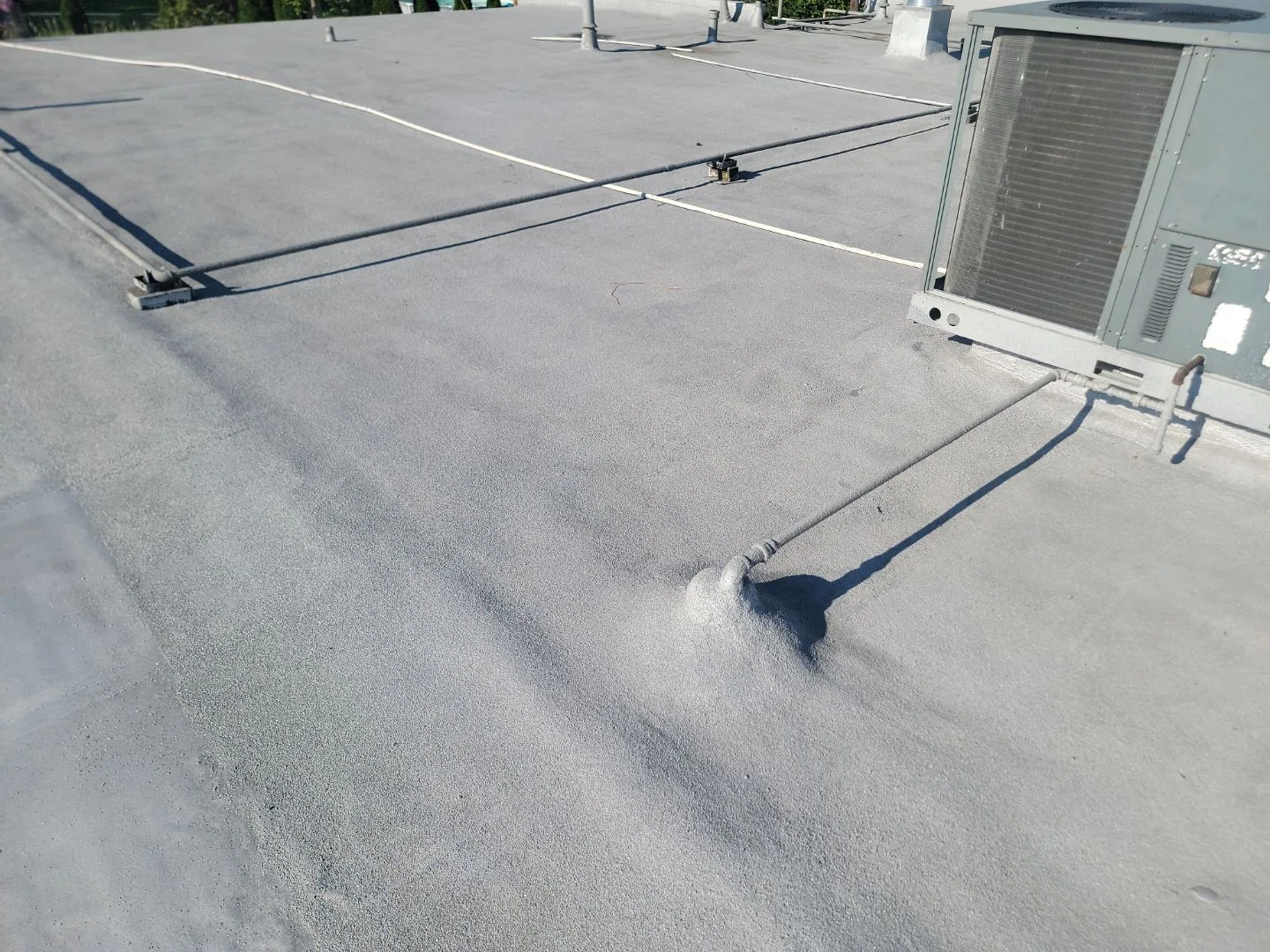
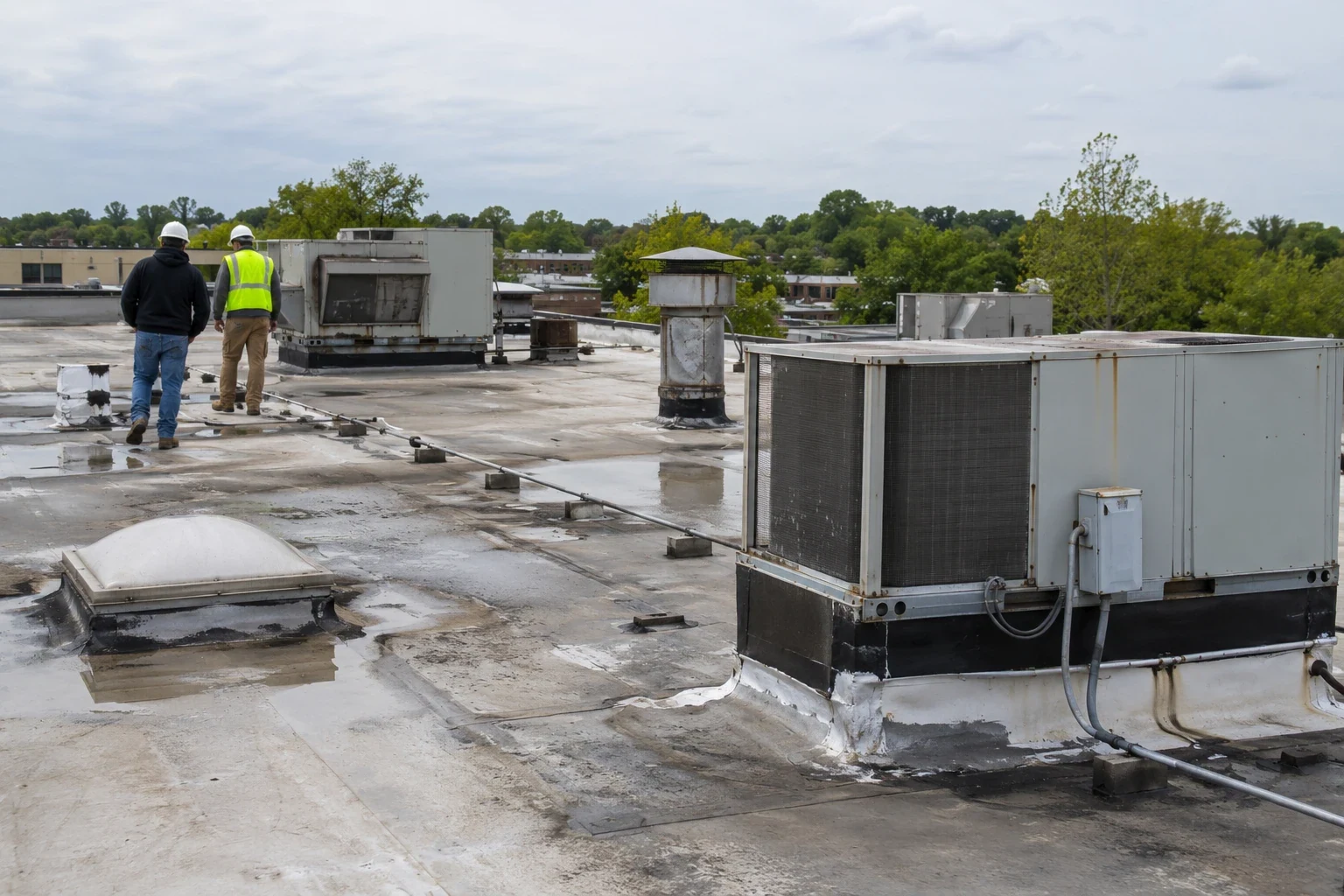
Tenant changes leave marks on a roof: abandoned vents, extra units, cut and capped penetrations, patched curbs and sealant in odd places. On our first walk, we map every penetration and note who likely added it. Each one is checked for flashing, sealant and support.
The goal is a clean record. Unused penetrations are removed or sealed properly, active ones are flashed to the membrane's detail and rooftop equipment gets a walkway and a support check. The result is a roof with fewer ways for water to enter, and a record the next tenant and the next owner can read. If a tenant's contractor caused damage, the photographs show when and where.
Tenant improvements deserve a note. When a tenant adds a kitchen exhaust, a server room cooler or a new rooftop unit, the roof is part of the job. We ask for a heads-up before the crane arrives, check the new curb and flashing afterward and update the file.
Handle Former Mill Sites With Evidence
Where a former mill site remains, its roof gets a core before anything else. Old roofs can be sound under layers of patches or soaked through, and nothing on the surface says which. Cores and a moisture scan answer it. If the insulation and deck are dry, repair or restoration is on the table. If they are wet, replacement is the right path, and the cost drivers are laid out beside the alternative.
When a mill site is being redeveloped, the roof decision belongs in the early plan. A new use can change loads and ventilation, and a roof replaced before a conversion can be damaged by later trades. The schedule shows when the roof is done relative to the rest of the work.
Set Up New Buildings With a Baseline
New industry and neighborhoods bring new commercial roofs. A newer roof still needs a record from day one: the system, the zones, the warranty, the inspection duties and photographs of the finished work. We build that baseline on a first walk, so problems show up as changes from the baseline, not as surprises.
Early roof trouble on new buildings tends to come from a short list: clogged drains from construction debris, punctures from other trades, unsealed penetrations and flashings that were rushed. A walk in the first year catches them while the warranty is fresh and the contractor can be called back. Warranty duties are tracked in the same file, as in any warranty management program.
Plan for Heat, Rain and Wind
Ranlo sits just north of Gastonia, whose record gives July highs near 91 degrees, about 44 inches of annual rain and little snow, so heat and rain are the wear factors: warm seams, ponding after storms and a spring season that tests edges.
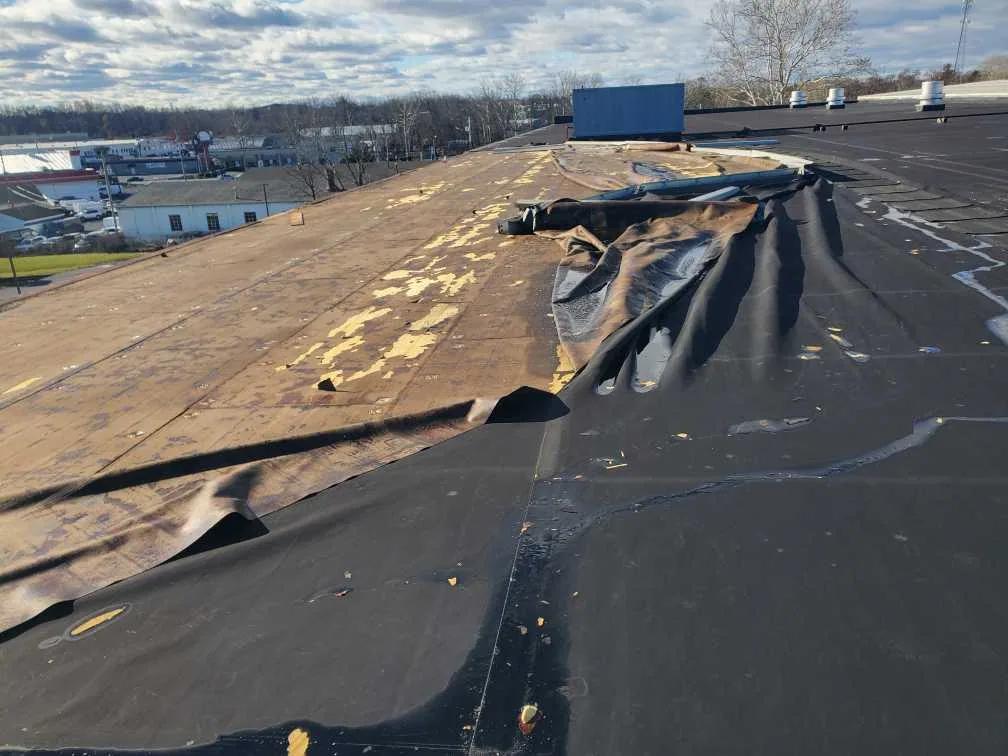
In May 2024 a tornado crossed the county and one East Gastonia warehouse lost part of its roof, and another came through in May 2020. We check edges and equipment ahead of the spring season and walk the roof after a storm, the way a tornado-damaged roof is walked.
Temporary protection is part of every plan. If a crew opens a roof, tarps, sheet membrane and sealant are staged on site before the first cut, and the crew leader decides at midday whether the sky allows the next section to open.
Keep Drains and Edges Working
On the flat roofs of small commercial and light industrial buildings, three things do most of the work: the drains, the edge metal and the flashings. A drain that clogs with leaves, grit or a plastic bag holds water for days. Edge metal that has come loose lets wind under the membrane. A flashing that has pulled from a wall lets water in behind it.
We check all three on every walk. Drains get a hose test and a strainer check. Edges get a pull test. Flashings get a press along their length. The cost of fixing each is small when done early. A visit before the spring storm season and one after it keeps the roof where it should be, and our preventive roof maintenance schedule puts both on the calendar.
Neighborhood commercial buildings near trees also collect debris in gutters, which overflow behind the fascia. Cleaning them is part of the visit, and it protects the wall and the roof edge.
Fit the Work to the Capital Line
A small owner reads a roof estimate against a tight budget, and the findings summary is written for that reader. It sorts items into this quarter, this year and later, with the cost of waiting beside each, so the owner can see which spend protects the building and which can be scheduled.
For owners planning a sale or a refinance, the summary shows buyers and lenders the real state of the roof. For owners planning to hold, it becomes a multi-year maintenance plan. Either way, the decision date and the evidence are on one page, and no pressure comes with it.
Price Repair Against Replacement
The options are repair, coating restoration, recover and replacement. Each has a cost, a downtime and a warranty consequence, and each fits a different roof. We list cost drivers in plain terms and attach the evidence, so the owner or the partner can see why a path was recommended.
A Ranlo job can share a crew with work in Gastonia or Dallas, and the records use the same format.
Closeout is a walk with the owner. Every drain, edge and tie-in is checked, the photo log is handed over and any retest, such as a water test after the next heavy rain, is written down with a date.
Commercial Roofing Questions
What should a new owner ask for from the seller?
The roof plan, warranty papers, repair history and any moisture or inspection reports. We fill the gaps with a walk, a few cores and a moisture scan.
How do I know if a roof is worth saving?
Cores and a moisture scan show whether the insulation and deck are dry. Dry insulation and sound seams mean repair or restoration may work, and the findings summary prices both paths.
Can you remove old rooftop equipment?
We handle the roof side. Disconnects are done by the right trades, and we flash or patch the opening properly so it does not become a leak.
Do you work on small buildings?
Yes. The method does not change with size, and the scope is fitted to the building and budget, often phased across years.
How soon can you walk a roof?
Often within days, with leaks moved up the list and emergency calls taken at any hour.
Topic
Ranlo
Roof Types
Low-slope and metal
Related Roofing Work
Roof Warranty Management
Tornado Damage Roof Repair