Commercial Roofing in Lincolnton, NC
A brick parapet cap that moves when pushed, with a rust-colored stain running down the wall below it, is a finding to expect first in Lincolnton, NC, and it means water is getting behind the roof edge. Lincolnton is the Lincoln County seat on the South Fork Catawba River, home to 11,091 residents in 2020, and North Carolina's first textile mill was built here in 1813. US 321 runs as a four-lane freeway on the east side of the city, and Main Street is NC 27. County offices, storefronts and old mill-era buildings each fail in their own way, and the repair is often as much masonry as roofing.
A Lincolnton job gets what any job gets: photographs, a written list and a price for both the repair and the delay. The summary reaches the owner within days, so the next conversation with a partner, a board or a lender starts from evidence.
Trace the Water Through the Wall
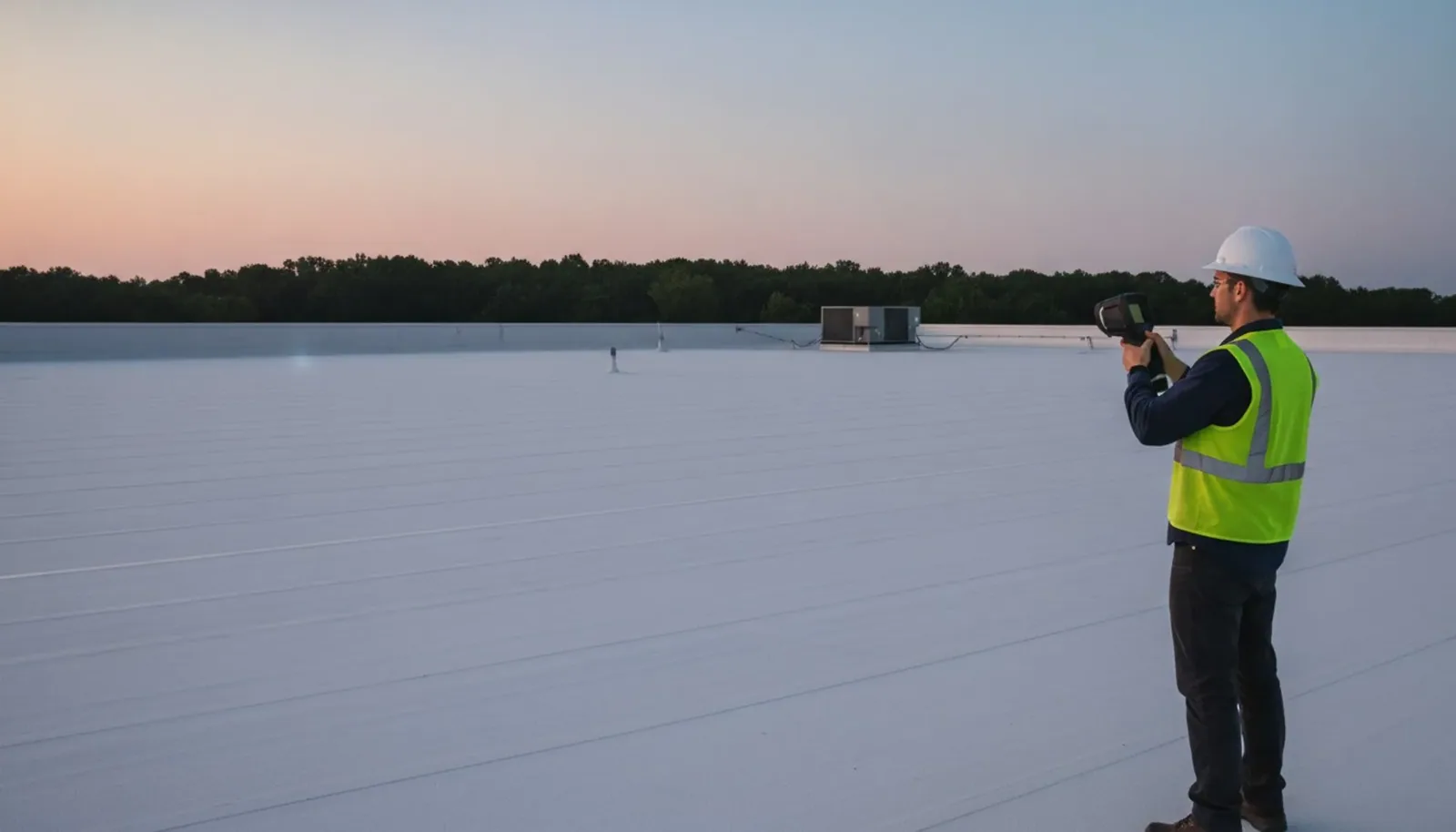
Where a roof meets old masonry, the two behave as one assembly. Coping, open mortar joints, the base flashing and the membrane turned up the wall all share the same water. A stain two bays from the parapet usually started at the wall, so the trace begins there and works inward. We probe the flashing, press the coping and photograph each joint with a tape beside it, then return to the same standing points on the next visit so any movement shows in the pictures.
The order of repair is half the budget. A new membrane laid against a wall that is still taking in water fails behind its own flashing within a season. The mason and the roofer have to agree on who goes first, and the scope of work names that sequence so the owner does not pay twice for the same corner.
Staging is the other cost on a small downtown roof. Lay-down space is tight, a lift may need a lane closed and deliveries compete with customers for curb space. Those costs are worked out before the number is given, because a crane pick that needs street coordination moves the line items.
Core the Old Mill Roof Before Quoting It
Cotton and textiles were long the main industries in Lincolnton, and a building from that era can carry a stack of roofs laid over decades. The surface says very little. A core shows the deck, the insulation and every earlier membrane, and a moisture scan across the roof marks where water has settled. Those two pieces of evidence decide whether a recover is allowed or the old layers have to come off.
Wet insulation is the quiet expense. It loses most of its thermal value, adds weight and hides under a membrane that looks serviceable. The scan produces a map, and the map sets the repair boundary, so the owner pays to replace what is wet and not a foot beyond it. Dry board over a sound deck tells a better story: repair or recover, with years of remaining service life still on the roof.
A mill-era building that was converted or divided carries the split in its roof. The sections have different ages, slopes and materials, and the joints between them are where leaks begin. Each section is marked on the plan and rated separately, so a sound section never hides a failing one.
Write the Scope for a Board, Not a Roofer
A county seat carries public buildings with fixed hours and a budget cycle that ends in a vote. A leak that could have been a repair in October waits for a July appropriation and comes back as a section replacement. The remedy is a written summary before the budget meeting: each roof area, what we found, what it costs now and what it costs after another year, with a decision date at the bottom of the page.
The summary is written for the reader who has five minutes. Photographs lead, the ranked list follows and the detail sits behind them. Noisy work stays out of public hours where the building allows, interiors are protected below the open area and one named contact approves changes if hidden damage turns up. A board can approve a repair from that page without a second meeting.
Parking and foot traffic around a civic or downtown building shape the staging. Deliveries arrive early, barriers go around lifts and the site is swept before opening time.
Price One More Year of Rain
The nearest long weather record, Gastonia's, shows a 90.7 F July high, roughly 44 inches of rain a year and almost no snow. Summer heat softens sealants, and the next hard storm finds every joint that has opened. A parapet joint repointed this spring costs a mason's visit. The same joint left through two summers can cost a stretch of wet insulation, a stained ceiling and a tenant call.
Deferred repair stacks quietly. A joint, a clogged drain and a patch from a previous owner each look small, and added together they are one wet section. One page lists them with a combined price, which shows the capital line the small items add up to and lets the owner choose the decision date.
The spring storm season adds a deadline. Open joints and loose coping are cheap to fix in March and expensive after the first line of storms, so the walk is best booked early in the year, with repairs sequenced ahead of the weather.
Weigh Repair, Recover and Replacement Line by Line
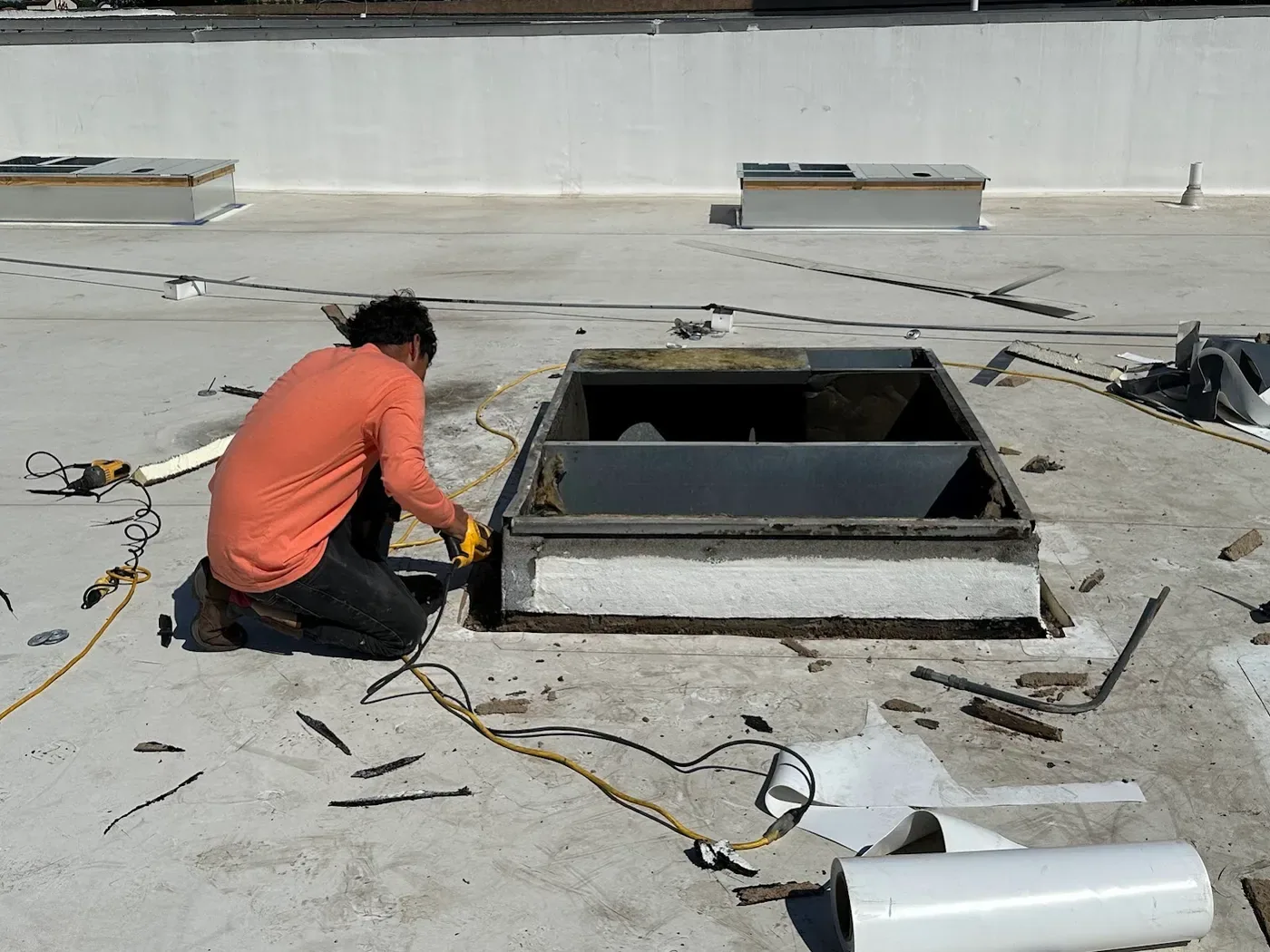
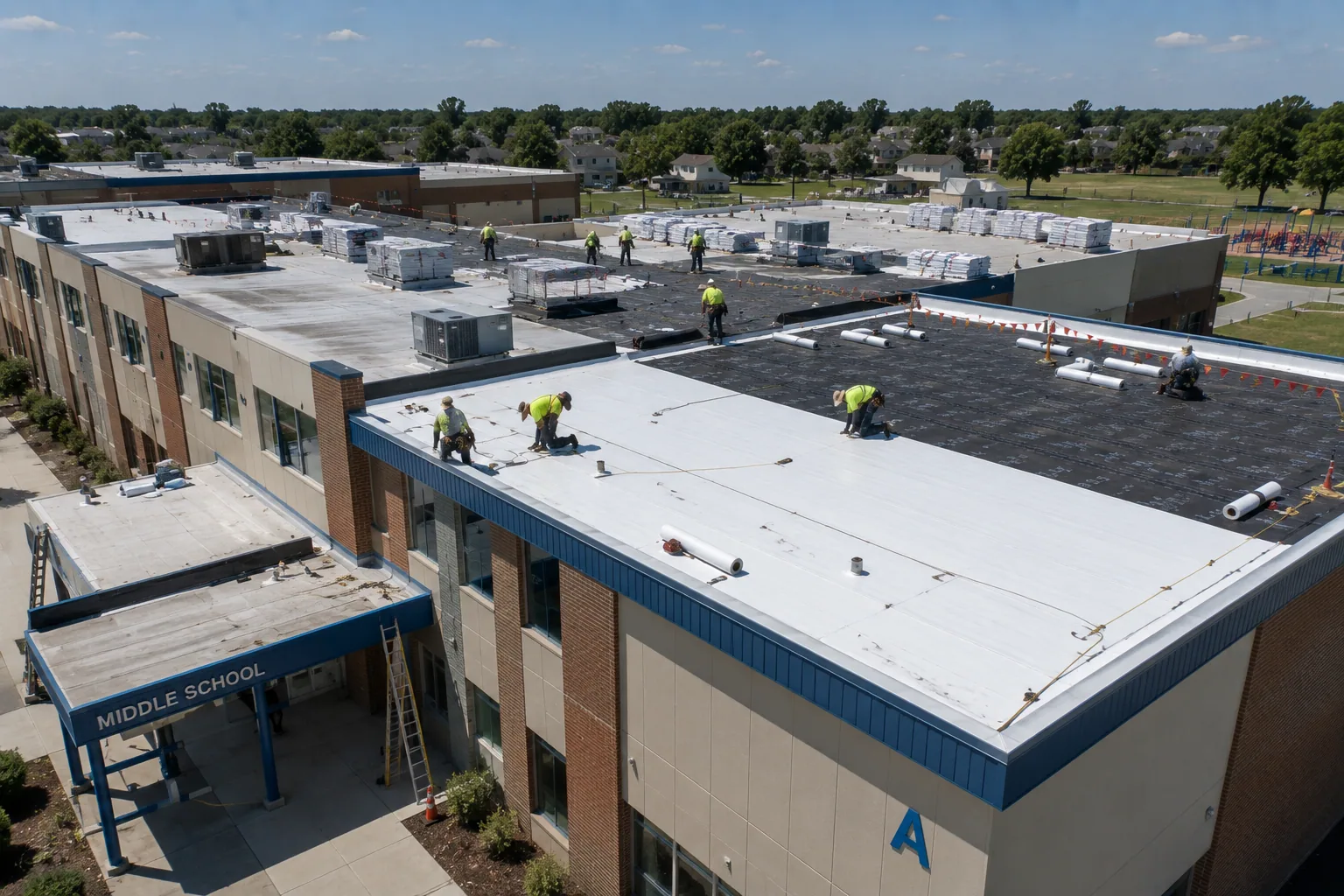
A commercial roof repair fits a local failure on a dry roof. A recover fits a dry, sound roof with a tired surface. Replacement fits a wide wet area or a repair history that has started to cost nearly as much as a new roof. A moisture survey and a few cores show which of the three applies.
Large roofs often split cleanly into stages: the failing section this cycle, the next worst one the cycle after, each with its own price and date. A roof that cannot be funded whole can be funded in parts. Wind adds a seasonal check: Charlotte took 87 mph gusts from Hurricane Hugo in 1989 and Gaston County an EF-1 tornado in May 2024, so edges and coping are photographed every spring.
Check the Code and the Neighbors
Before a replacement is priced, the building office is asked which edition of the state code governs the permit, because insulation and wind provisions can change with it. An owner with a roof in Lincolnton may hold others in Cherryville or High Shoals, and one log format lets a condition report carry the history from one building to the next.
Commercial Roofing Questions
Do you work on older masonry buildings?
Yes. The wall and the roof are checked together, since water often enters at the parapet, and the scope sequences the mason ahead of the roofer.
How do we know what is under the roof surface?
A core shows the layers and a moisture scan marks the wet areas. Both go into the file with photographs and dates.
Can repairs avoid public hours?
Usually. Loud work moves outside public hours where the building allows, and interiors are covered below any open section.
What does the written summary contain?
A photo log, area ratings, priced repairs, a remaining service life range and the repair-or-replace call.
Which code edition applies to a reroof?
The building office names it, and the answer goes into the file with the date.
Topic
Lincolnton
Roof Types
Low-slope and metal
Related Roofing Work
Commercial Roof Repair
Roof Recover and Overlay Systems