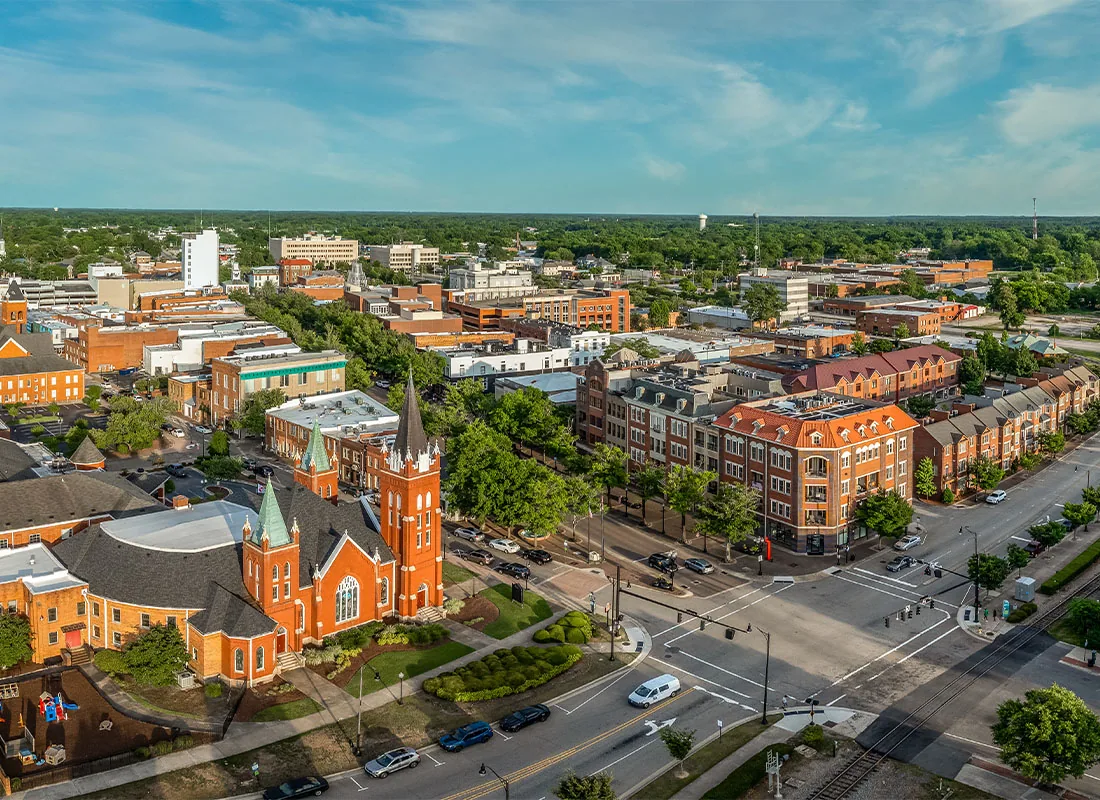
Commercial Roofing in High Shoals, NC
A flat roof over a small commercial building that holds water at one drain for a day after every storm is the first finding we look for in High Shoals, NC. It tells an owner that the next decision is a cheap one now or an expensive one later. High Shoals had 595 residents in 2020 and sits on the South Fork Catawba River. In a small town one roof can carry a large share of an owner's budget, and one wet insulation board matters more than it would in a large portfolio. We walk the roof, photograph what we find and put a price on acting now beside a price on waiting.
The deliverable is short: findings in plain words, a scope and a decision date.
Walk the Roof Before Anyone Quotes It
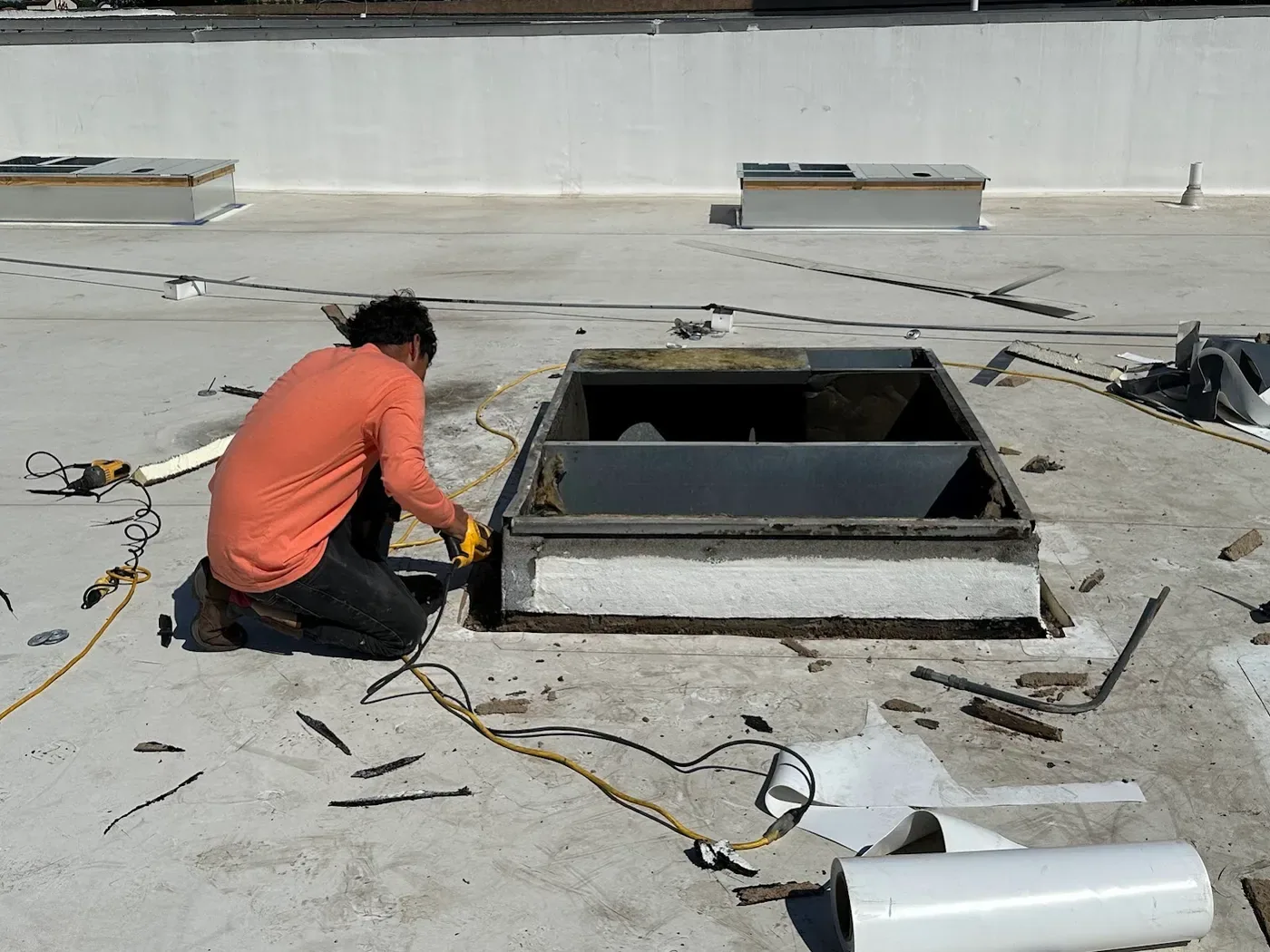
A first walk in a small town has the same checklist as a big one. We start at the drains and scuppers, because water that stands is the quickest path to a wet deck. We probe seams and laps, check every flashing at walls and curbs, look at the edge metal and mark any place where an older patch has been covered by a newer one. Each finding goes into a photo log with a position on a simple roof sketch.
The point of the log is the second visit. An owner who can compare this year's photographs with last year's can see what is moving and what is not. A roof that looks the same twelve months later has bought itself time. A roof that shows three new problems has used it up.
Without the walk, a budget has nothing to stand on.
Access is part of the first walk. We confirm the roof hatch or ladder, who holds the key and whether tenants or customers need notice. For a small building, one ladder and one afternoon are often enough. The written summary follows within days, with photographs, a rating for each roof area and a short list of what to fix first.
Treat Older Buildings as Unknowns Until Tested
High Shoals has a long industrial past. The High Shoals Iron Works, founded around 1795, made cannonballs in the War of 1812 and ran until 1875, and High Shoals Mills, a textile company, owned the community from the 1890s. The town incorporated in 1973. That history is part of the setting; what a given roof is made of today comes from the roof.
If an owner has a building that dates from the textile years, we start with a core of its construction. We take the core, look at the deck and the insulation, and run a moisture scan. Older flat roofs are often layered with past repairs, and the layers decide whether a recover is possible or a tear-off is unavoidable. The core answers the question in one photograph.
A cheap test now beats an expensive surprise at tear-off.
Price the Cost of Waiting Against This Climate
Gastonia, in the same county, averages July afternoons of 90.7 F and about 44 inches of rain a year against barely an inch of snow. Summer heat and heavy rain, not snow, wear roofs in this part of the county, which is why seams, sealants and drains are the first things we check.
Heat hardens sealants and stiffens seams. Rain finds every gap. A small open seam in June can be a wet layer by autumn, and a wet layer cannot be dried in place without a larger repair. The difference between a seam repair and a section replacement is often one season of delay.
Put the repair in this year's line item, or plan the replacement for next year's.
Plan for Spring Storm Season
Gaston County has taken two tornadoes in recent springs, an EF-1 in May 2024 and a weaker one in May 2020, and the 2024 storm lifted part of a warehouse roof in East Gastonia. Both are reasons to check edges before storm season. Lifted edge metal, loose coping and loose equipment covers are the cheapest repairs on a roof when they are found early, and the most expensive when a gust finds them first. We photograph the perimeter in spring and again after any severe storm.
Edge work in a small town goes quickly. A walk along the perimeter with a pull test on coping and drip edge takes under an hour on a small building, and the photographs give the owner a before picture for any later claim. Cheap items get fixed on the spot. Anything larger goes on the list with a price and a date, so the owner can see which fixes protect the building before the first line of storms and which can wait for the budget cycle.
Decide Between Repair and Replacement With Numbers
Repair makes sense when the problem is local and the rest of the roof is dry. Replacement makes sense when moisture has spread, when seams are failing across the field or when the cost of repeated repairs is close to the cost of a new roof. A commercial roof repair that works is a good outcome. A replacement that arrives on a planned date is a better one than a replacement forced by a ceiling collapse.
We write both options with their cost drivers: roof area, access, deck condition, insulation, flashing count and the time of year. The owner sees the repair-or-replace answer plainly, and a partner or a lender can read it without a guide.
Timing matters too. A repair booked in the dry weeks of late spring holds better than one squeezed into a wet week, because adhesives and sealants cure on a dry surface. If the roof is near the end of its life, we say so, and we put the replacement on a calendar the owner can plan around.
Check the Code Before the Scope Is Final
North Carolina has not yet set a date for the 2024 code, so the 2018 edition is the working baseline, and an owner may ask the building office to accept the newer one as an alternative. Which edition governs a roof project is settled with that office before the scope is final.
Insulation level and wind provisions can shift with the edition. A scope that ignores them can be priced low and change later. We write the answer into the file with the date and the name of the person who gave it.
Coordinate With the Towns Around You
An owner with a building in High Shoals can hold others nearby. We use one findings format across all of them, so a roof in Cherryville and a roof in Lincolnton can be compared in one table. The ranking shows which roof gets the next dollar. For storm follow-up, a dated storm damage roof repair file helps with insurance, and a condition report carries the history forward.
Everything else follows from what the roof shows on the first walk.
Commercial Roofing Questions
Do you work on small buildings in small towns?
Yes. A small roof gets the same walk, photo log and written findings as a large one.
How do we tell if an old roof can be saved?
Dry insulation and a sound deck keep repair or recover possible. Cores and a moisture scan confirm both.
What does it cost to wait a year?
A small open seam can become a wet section in one season, so we price both paths and show the gap.
Which building code applies to a reroof?
The 2018 edition is the working baseline, and the building office confirms it for each project.
Can you give a second opinion on another contractor's bid?
Yes. Send the bid. We walk the roof and tell you where the scope matches what we find.
Topic
High Shoals
Roof Types
Low-slope and metal
Related Roofing Work
Commercial Roof Repair

Commercial Roof Replacement