Commercial Roofing in Lake Wylie, SC
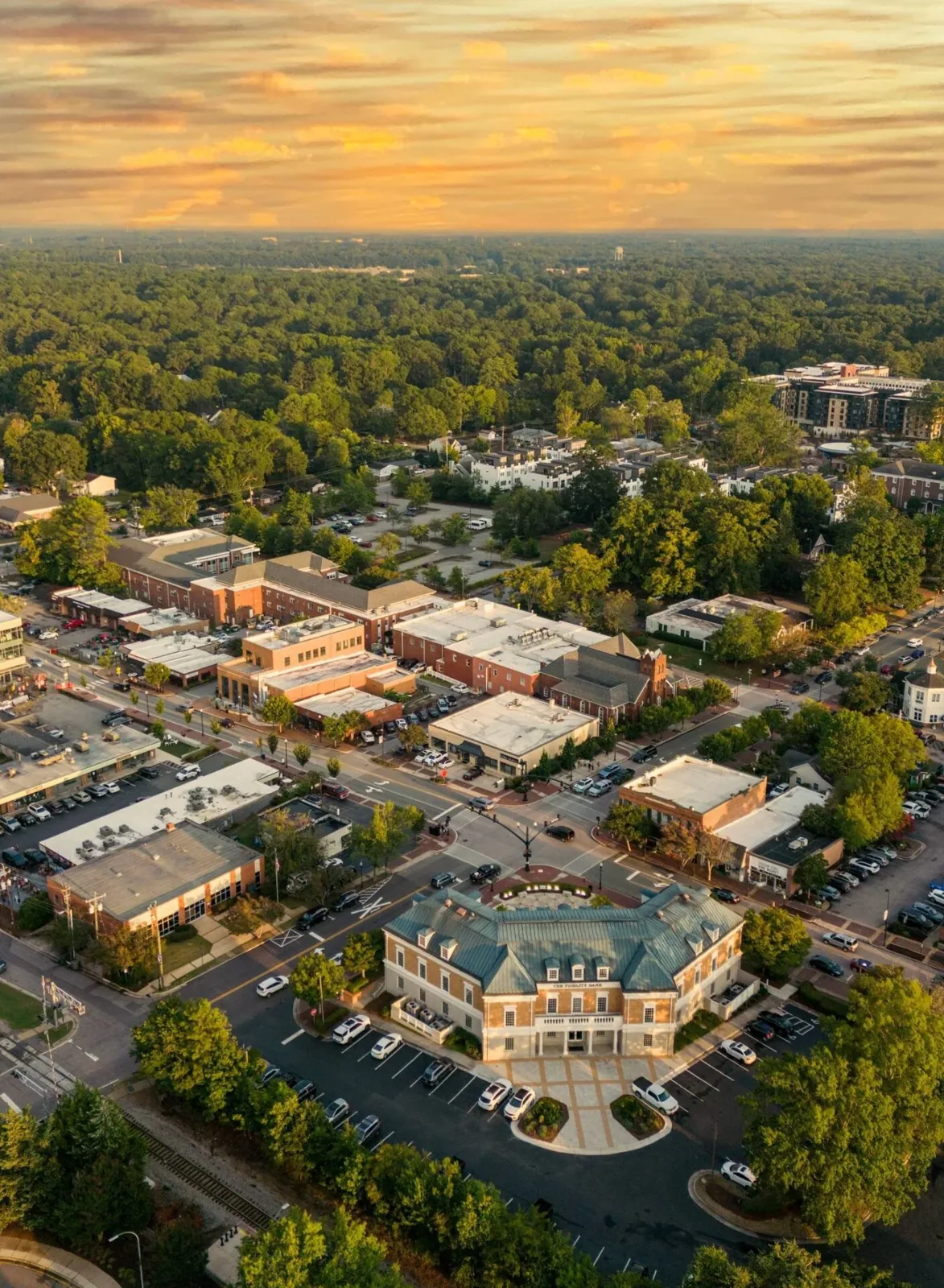
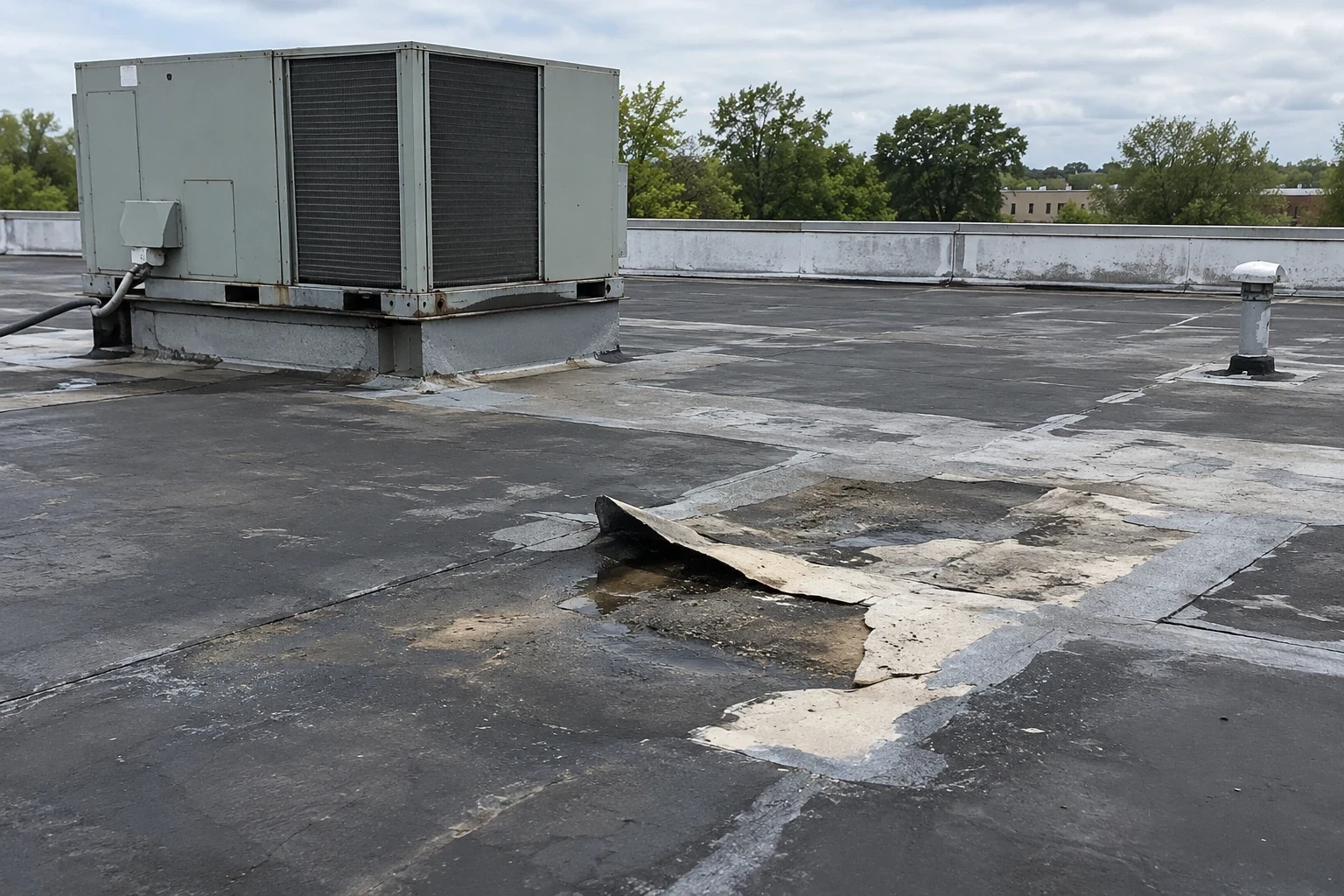
A shallow pond at the base of a rooftop unit is where a walk in Lake Wylie, SC begins, because it points at one of three causes: the curb, the drain or the slope. Lake Wylie is a Charlotte suburb on a peninsula along the Lake Wylie reservoir, reached by the Buster Boyd Bridge, and its population climbed from 8,841 in 2010 to 13,655 in 2020. The climate is humid subtropical, with July averages below 90 F and January highs below 50 F.
Fast growth brings newer commercial construction, and newer roofs fail in their own way: details finished in a hurry, drains set a little high and warranties in force that a careless patch can void. Each walk ends with a photo log, the findings in writing and a price on both repair and delay.
Read the Units, Drains and Warranty Terms
On a newer commercial roof the failures cluster at details. We check every rooftop unit, curb, counterflashing and pipe boot, then the drains, scuppers and the slope between them. A pond that stays a day after rain goes into the photo log with its depth and position, because a pond near a curb points at a different cause than a pond at a drain. The warranty is read in the same visit, since its terms may limit ponding or require approved repair materials.
A defect on a young roof is a different decision from age on an old one. If the problem traces to the installation, the installer or the manufacturer may owe the repair, and the log shows what was found, when, and what the paperwork says. That record carries more weight than a quick patch.
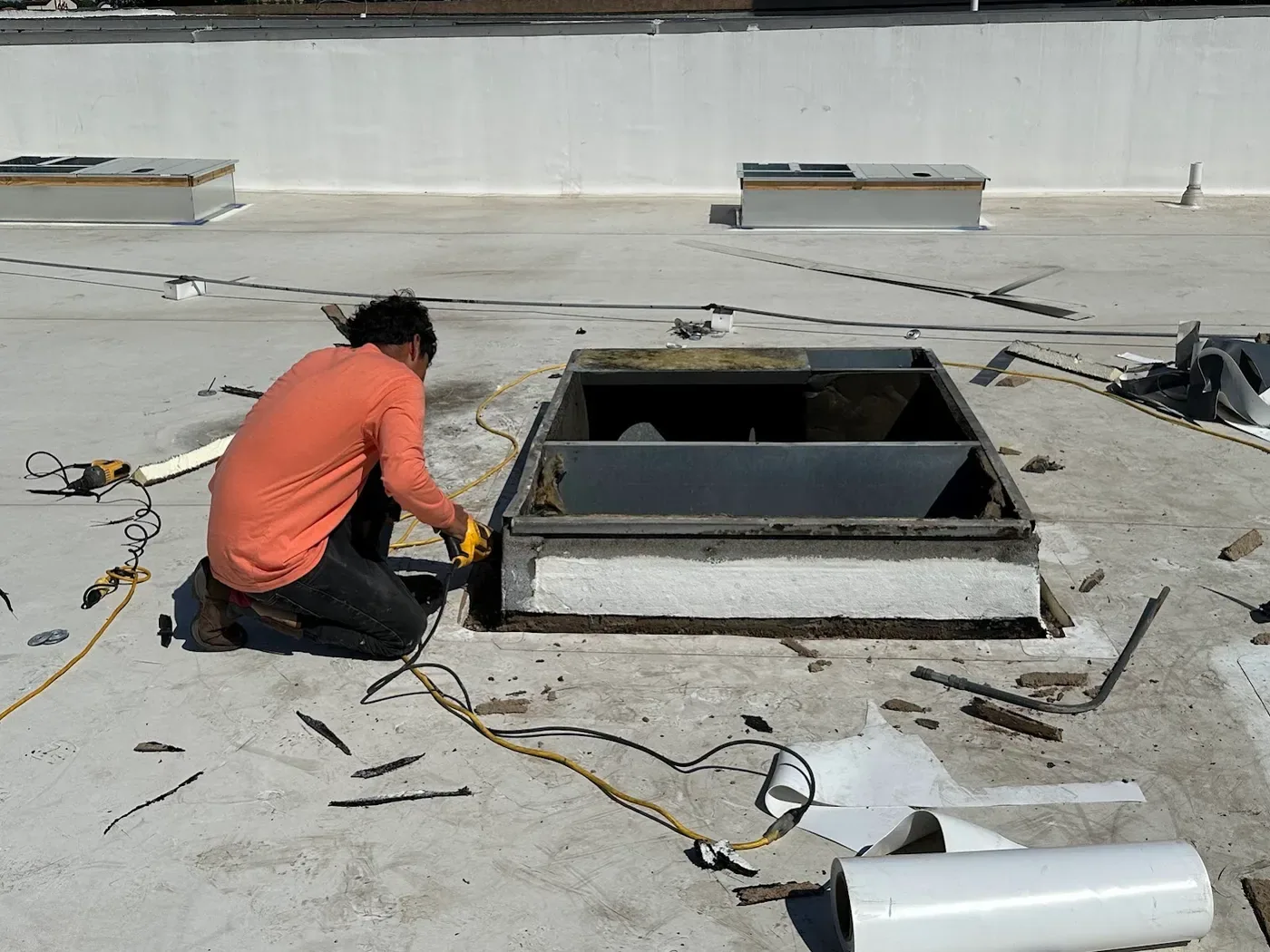
Each unit sits on a curb that was flashed once, often between other trades. We check the corners, the counterflashing and the seal at the base, and we log the curb height. A curb set too low, or a corner folded wrong, shows up as a leak in the first heavy rain.
Walk paths deserve a line of their own on a roof that technicians visit often. Between the hatch and each unit, the membrane takes the boots, the tool bags and the dropped screws. We mark the route, rate the wear and price a walk pad before the sheet is cut through, because a pad costs a fraction of the patch that follows.
Schedule Around the Bridge
Crews, lifts and material deliveries reach the peninsula by way of the Buster Boyd Bridge, so roof work there is a logistics job as much as a roofing job. We book deliveries for off-peak hours, stage material close to the building and keep equipment lists short so nothing waits on a second trip. Lifts go in early in the day, and debris hauling stays off the commute.
When rain is forecast the crew closes what is open and leaves, because a loaded truck on a bridge approach is the wrong place to be caught by weather. Parking and shared drives at small centers are settled with the owner in advance, customer lanes stay open and a named contact approves changes if hidden damage appears. The daily log records what was opened, what was sealed and what the weather did, so the owner has the whole day on one page.
Tenants on a shopping strip see the work from the parking lot, so a short written notice goes out before the first lift arrives. It names the dates, the noisy hours and the foreman's phone number.
Dry Out the Damp Edges
A humid subtropical climate keeps surfaces damp longer after rain, and a roof under tree cover near the water can dry slowly. Algae, moss and leaf litter collect at low edges and around drains, and a clogged outlet holds water against the membrane. We clear drains and gutters twice a year, and the photographs taken before and after show how fast each outlet loads up.
Gastonia, the nearest long record, averages a 90.7 F July high and about 44 inches of rain a year. Heat softens sealants through the summer, and the next heavy storm finds the gap. Resealing one curb corner in spring is an afternoon of work. Leaving it open can mean wet insulation by autumn, and that is the line a lender reads.
Photograph the Edges Before Spring Wind
Edge metal, coping and corner pieces take the load in a wind event, and a loose cap lets rain behind the wall. A tornado with estimated 110 mph winds tracked across Gaston County in May 2024, and the lesson reaches Lake Wylie roofs: every edge run is photographed in spring with positions and dates, and small fixes are made on the spot when the fix takes minutes.
After a severe storm the walk repeats and a dated summary follows. The photographs support insurance claim documentation and record the roof as it stood that day. Covers and louvers lift first in a gust, so latches, hinges and tie-downs get checked and anything loose is photographed.
Weigh Repair, Restoration and Replacement
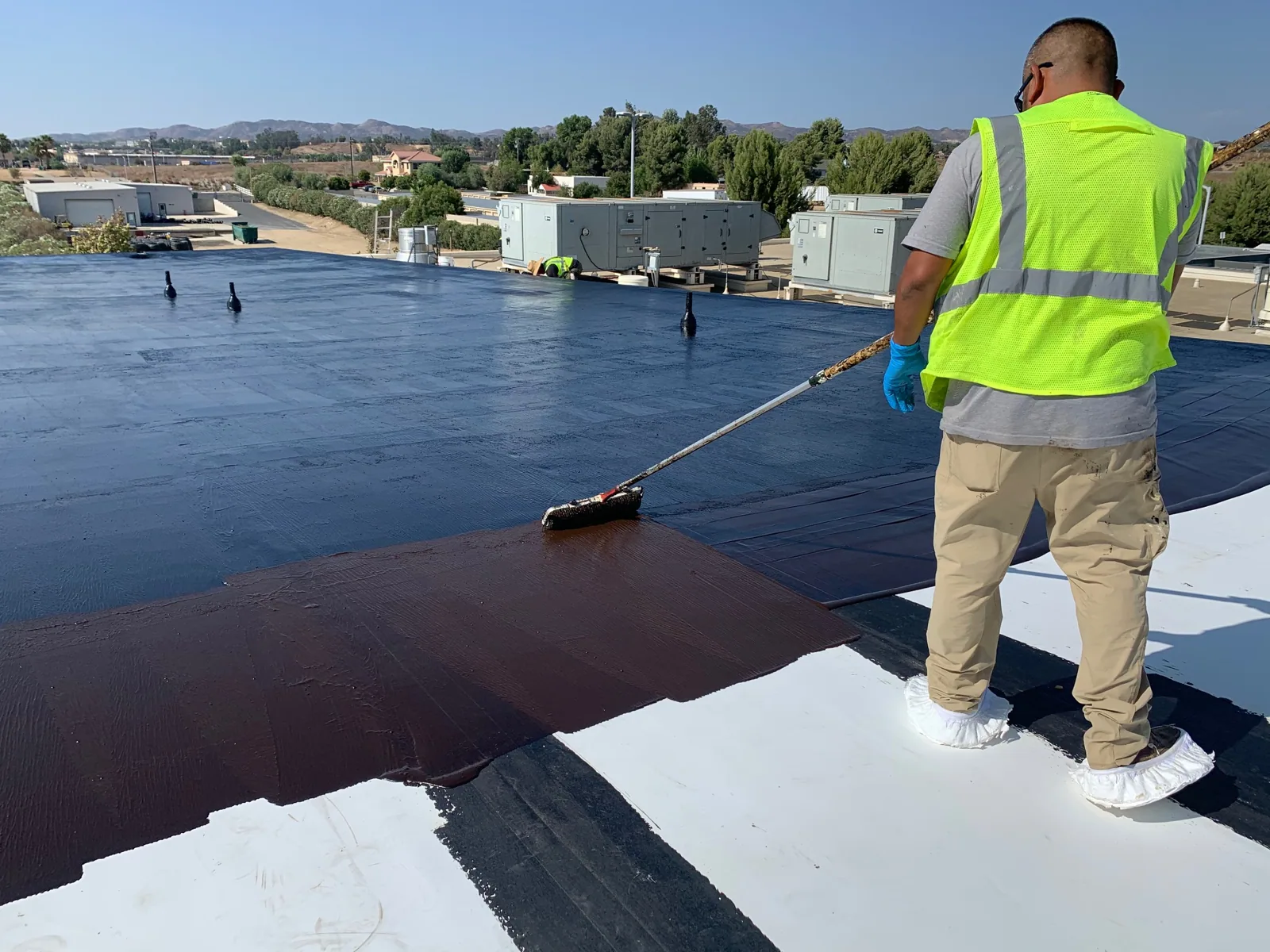
A commercial roof repair suits a local failure on a dry roof. A roof coating restoration can extend a sound membrane that passes adhesion and moisture tests. A replacement belongs on the capital line when the wet area is wide or repairs keep landing in new places. Cores and a scan sort the roof into one case or another, and each option carries its drivers: area, access, insulation, flashing count and the time of year.
A larger roof can be staged over two budget cycles, with the worst section first and each stage priced in the plan. Funding falls into place more easily in stages.
Put the Cost of Waiting in Plain Numbers
Deferred items stack up even on a newer roof. A drain that holds water, a seam with a small open edge and a patch somebody made without recording it each look minor alone. Together they become a line in next year's budget, and a wet spring turns that line into a section replacement. The summary lists the items side by side with one combined price and a decision date, so the owner picks the timing and the weather does not.
Two numbers sit beside every finding: the cost to fix it this quarter and the likely cost if it waits another season. Some items can wait a year without consequence, and the report says so. Others are one storm from a claim, and the report says that too.
Keep the Close-Out File With the Building
Owners with property on the peninsula may hold roofs in Tega Cay and Fort Mill, and across the state line in Pineville. One scale for every building sends the capital line to the roof that needs it first. The close-out file holds the photographs, ratings, work orders, materials and warranty notices, and it travels with the building, so a lender or a buyer can see what the roof has been through.
Commercial Roofing Questions
Do you work on newer commercial roofs?
Yes. The warranty is read first, and repair materials are chosen to keep coverage in place.
What if a defect looks like an installation problem?
The finding is documented with photographs and the warranty terms, so the owner can ask the installer or manufacturer to respond.
How do deliveries reach the peninsula?
Over the Buster Boyd Bridge, booked off-peak and staged close to the building.
What does the written summary include?
A photo log, a roof plan with condition ratings and a price for each fix, followed by the repair-or-replace answer.
Which code edition governs a South Carolina roof?
The one the local building office has adopted. We confirm it before the scope is final.
Topic
Lake Wylie
Roof Types
Low-slope and metal
Related Roofing Work
Roof Insurance Claim Documentation
Commercial Roof Repair