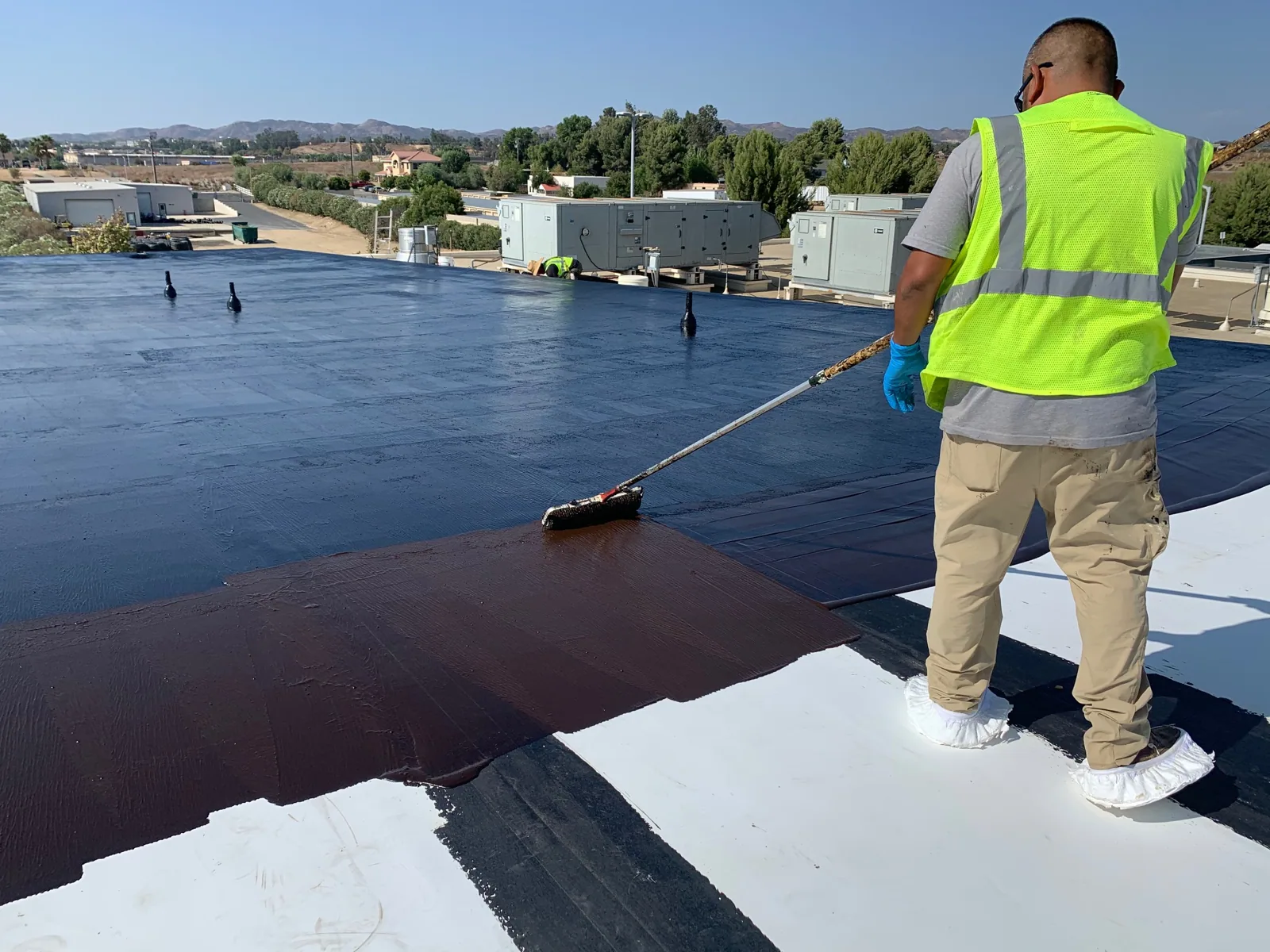
Commercial Roofing in Tega Cay, SC
A drain strainer packed with leaf litter, with a ring of dried debris showing where water stood, is the first finding to look for on a flat commercial roof in Tega Cay, SC. It tells an owner how often the roof has been holding water. Tega Cay is a planned city on a peninsula along Lake Wylie, about 20 miles south of Charlotte, with 13 miles of lake shoreline and a marina with boat launches. It had 12,832 residents in 2020, and the 2025 estimate of 14,457 compares with 7,620 in 2010.
A planned city grows in phases, so roofs of several ages sit close together, and a newer roof under warranty needs a different plan from an older one in its last years. The walk ends in a photo log, a written list of findings and a price on both acting now and waiting.
Walk the Drains, Then the Details
Water leaves a flat roof through a few outlets, so the walk starts there. We lift the strainers, clear the debris, flush the line where possible and watch the flow. Scuppers and overflows come next, then seams and laps, then every curb, boot and wall flashing. The photo log gets each finding with its place on a simple sketch of the roof.
Leaf litter and windblown debris clog drains wherever trees stand near a roof, and a drain problem is a ponding problem. A pond that stays a day or more after rain gets a depth and a photograph. The log shows the pattern from one visit to the next, so the owner can choose between a cleaning schedule and a drainage fix.
Access on a peninsula site belongs in the plan. We confirm the hatch or ladder, who holds the key and where the crew can stage material without blocking customer lanes. Deliveries run at off-peak hours, and one named contact approves changes if hidden damage appears.
Sort Roofs by Age and Warranty Before Quoting
A city that nearly doubled in fifteen years builds in layers. A commercial owner may hold a newer building with a roof still under warranty or an older one outside it, and the first question for each roof is which case applies. A roof under warranty needs repairs that follow the document: approved materials, notice where required and records. An older roof leaves the owner more choices.
We read the warranty, check the age and then price repair, recover and replacement as separate paths with their cost drivers beside each. When the papers are missing, the report names who to ask. A clean file helps at sale, refinance and renewal, and it shortens the next contractor's visit.
Check Edges Near Open Water
A building close to open water can meet wind with little in the way to slow it. Along the Lake Wylie shoreline and the marina area, coping, drip edge, corner pieces and the membrane at terminations take that load first. Lifted edges are cheap to fix and costly to ignore, so each run is photographed in spring with positions and dates.
Regional storms show the range. Regional weather has range: an EF-1 tornado crossed Gaston County in May 2024, and the December 2002 ice storm in Charlotte, 20 miles north, cut power to more than 1.3 million people. Equipment covers are the other wind item, because a cover that blows across a roof tears the membrane where it lands. Latches, hinges and tie-downs are checked, and a latch costs minutes to fix while a torn membrane costs a day.
Weigh the Piedmont Heat and Rain
Gastonia's July high averages 90.7 F with about 44 inches of rain and roughly an inch of snow. Heat and rain, more than snow, wear roofs on this side of the state line. Sealant dries out by July, seams go stiff and one hard storm finds whatever gap is there.
Resealing a flashing in spring is an afternoon of work; leaving it open through a wet summer puts the insulation at risk. Both prices go on paper with a decision date, and the report marks which items can wait a year and which sit one storm from a claim.
A planned community with newer buildings still has a weather exposure. Coating wear, loose sealant at laps and softened flashings show up in the first decade on roofs that were never touched. Two walks a year catch those items while the fix is a short visit and not a section.
Read Shoreline Buildings for Moisture
Service and storage buildings near the water live with damp air, and spray and humidity keep sealants and fasteners working. Rust at fastener heads, softened sealant at laps and algae at low edges are the signs to look for on a building like that, and each gets a photograph and a position. Metal roofs near water are checked for coating wear, loose panels and corroded trim.
A sealant that has softened can be reworked, a panel that has lost its coating can be restored, and a roof that has taken water into the insulation needs more than a patch. A core or a close walk settles which case a building is in, and the repair follows the evidence.
Keep the Close-Out File With the Building
A planned city turns over owners and tenants as it fills in, and the roof file has to travel with the building. At close-out the owner receives the photographs, the ratings, the work orders, the materials list and any warranty notices. A lender or a buyer who reads it can see what the roof has been through, and the next inspector starts from facts instead of a seller's memory.
A pair of preventive maintenance visits each year, timed before storm season and after the summer, keeps the file current. Each visit clears the drains, checks the details and adds dated photographs, which is the cheapest way to keep small items small and to show a manufacturer that the roof was cared for.
The file also records who touched the roof and when. Tenant improvements, antenna mounts and mechanical swaps are the usual sources of new holes, so each entry carries a date, the trade and the flashing detail used. When a leak appears, that history narrows the search before anyone climbs the ladder.
Decide Between Repair and Replacement on Evidence
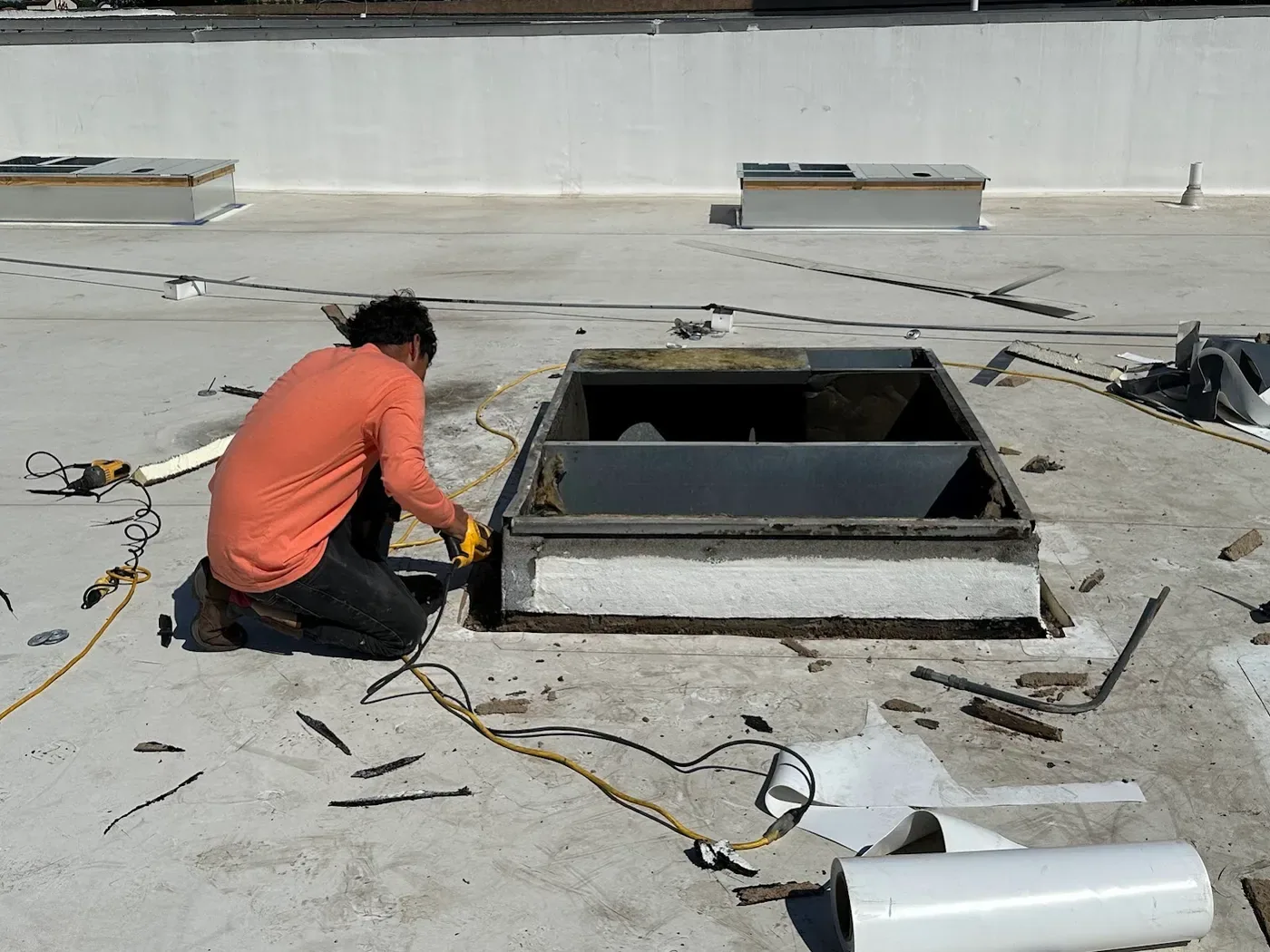
Local trouble on a dry roof calls for a commercial roof repair. A sound membrane that passes adhesion and moisture tests may take a roof coating restoration. A wide wet area, or fixes that keep landing in new places, makes replacement the likelier answer. A scan across the roof marks the wet insulation and cores confirm it, which sets the repair boundary so the owner pays for the wet part only.
The building office names the code edition before the scope is final. Owners on the peninsula may also hold roofs in Lake Wylie or Fort Mill, and a common rating scale points the capital line at the roof that needs it first.
Commercial Roofing Questions
Do you work on small retail and office roofs?
Yes. Every roof gets the same walk, photo log and written findings, whatever its size.
How do we learn whether a roof is still under warranty?
Check the owner's records, then ask the manufacturer or installer. The warranty is read before any repair.
Can tree debris cause roof damage?
It clogs drains and holds water against the membrane. A cleaning schedule is often the cheapest fix.
What is in the written findings summary?
Photographs, area ratings, prices for each repair and the repair-or-replace answer, with a note on what stayed out of reach.
Who names the code edition for a Tega Cay roof?
The local building office. We ask before the scope is final.
Topic
Tega Cay
Roof Types
Low-slope and metal
Related Roofing Work
Preventive Roof Maintenance
Commercial Roof Repair