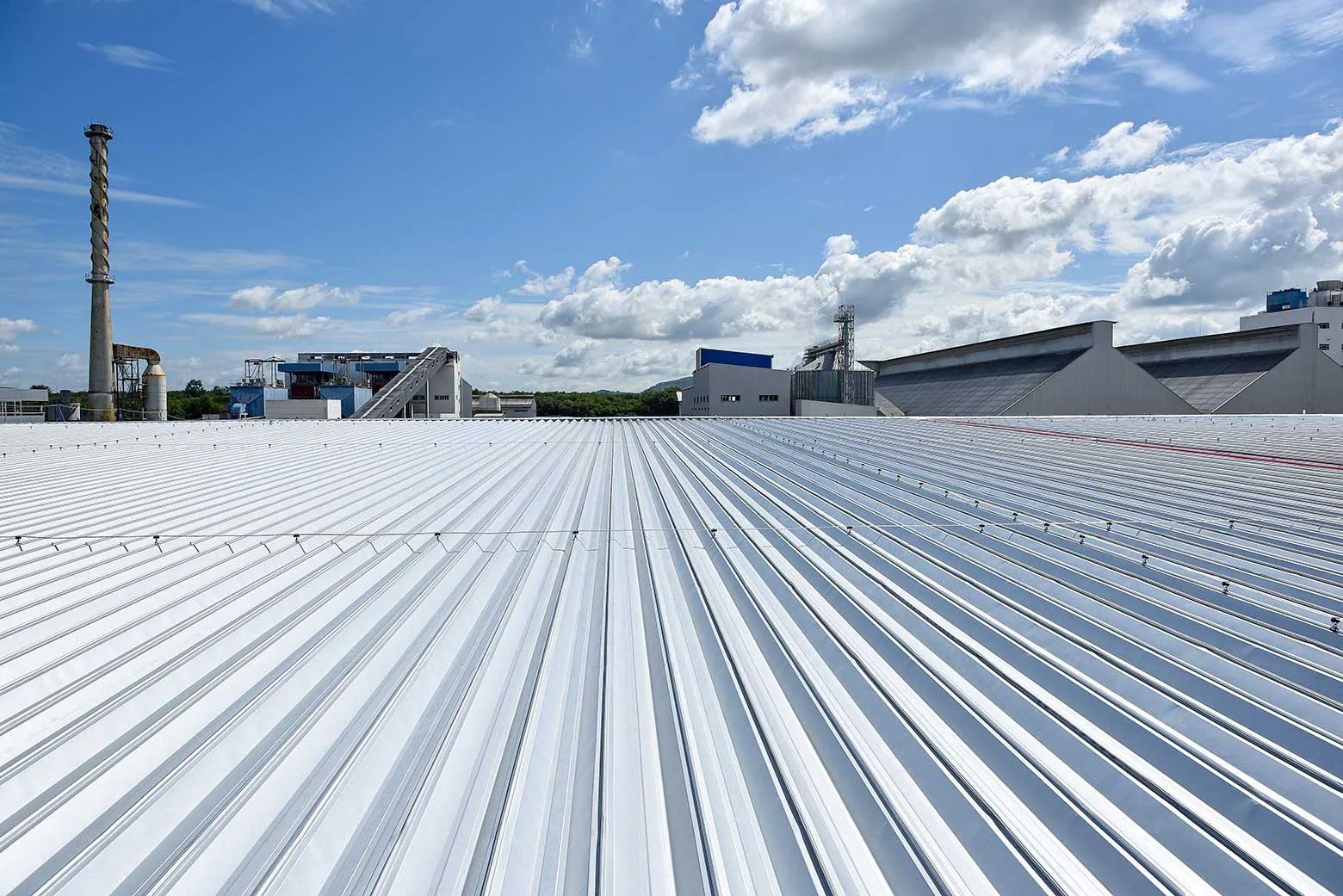
Aircraft Hangar and Aviation Building Roofing in Gastonia, NC
A hangar roof has one job that no other roof has: it can cover aircraft worth more than the building itself, with a clear span and almost nothing between the sky and the floor. The finding a roofer sees is usually small. A line of fasteners backing out along a panel seam, sealant cracked at the head of the big door, a drip near a skylight that lands a few feet from a wing. What it means for the owner is plain: a leak over an aircraft is not a roofing problem, it is an insurance and maintenance problem, and it starts with a roof question.
Aviation buildings near the Gastonia Municipal Airport and across Gaston County carry July heat near 91 F, about 44 inches of rain a year, and spring storms. A May 2020 tornado with estimated 85 mph winds ran about 8.7 miles from Crowders Creek Road across US 321 to near the Gastonia airport. We walk the roof, photograph each finding, and hand back a written summary an owner or an airport tenant can use.
Read the Long Span Carefully
A hangar is a wide, open building. The roof may be a long run of metal panels, a low-slope membrane over deck, or a combination, and it carries little interior support. Heat movement acts on long runs, so expansion shows at laps, trim, and the head of the door. We walk the entire roof, record the system, and mark every fastener row, lap, and trim joint that shows movement.
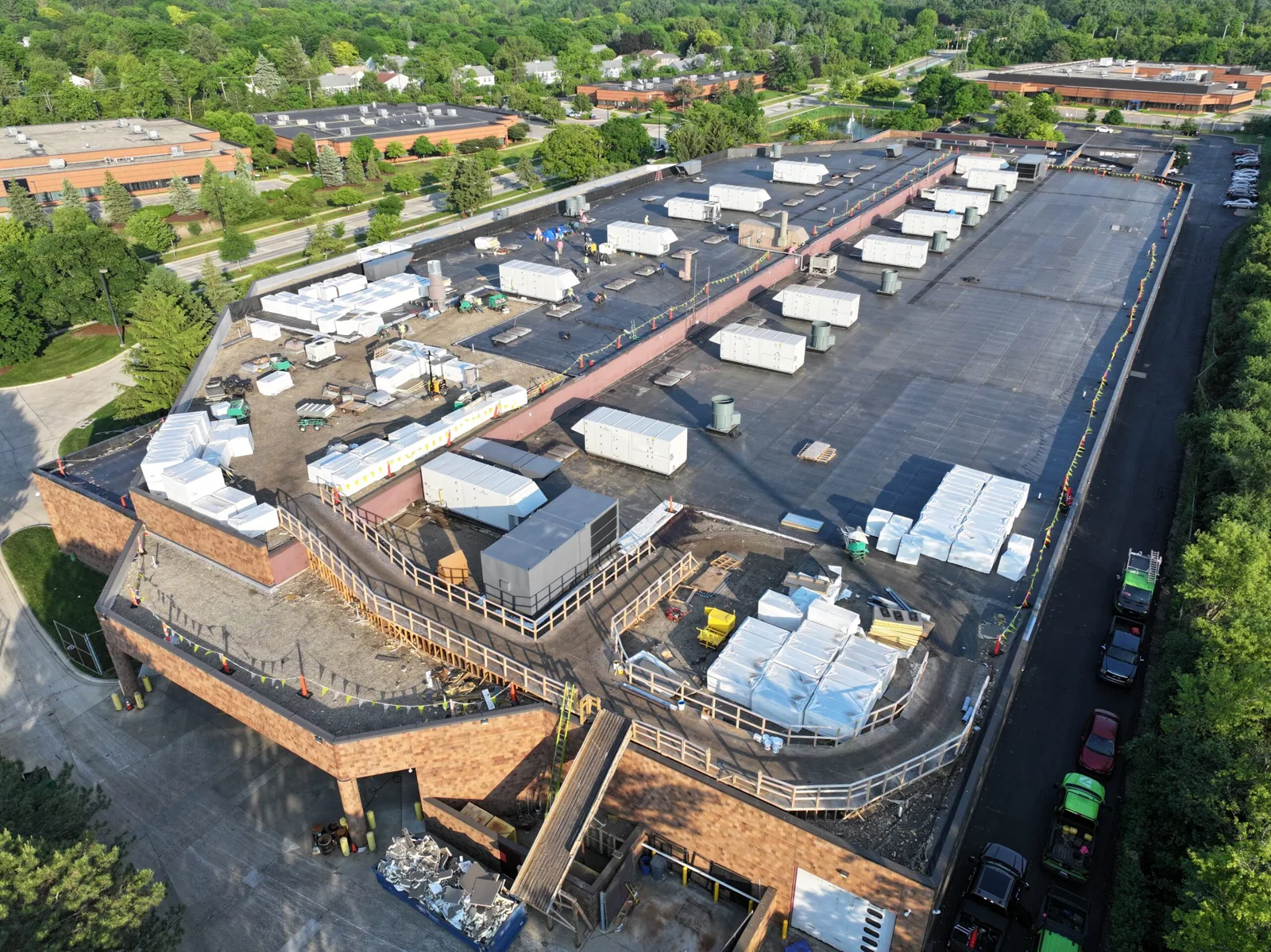
The report names what is on a hangar roof once it has been read. A long span also concentrates water. When it rains, a wide roof sheds a great deal of water to its edges, and the gutters, scuppers, and downspouts at the eaves carry all of it. A clogged downspout at a hangar eave can back water up under the edge trim, so we clear and flush each outlet and look for staining on the wall below. A warehouse roof shares this exposure.
Check the Door Head and the Walls
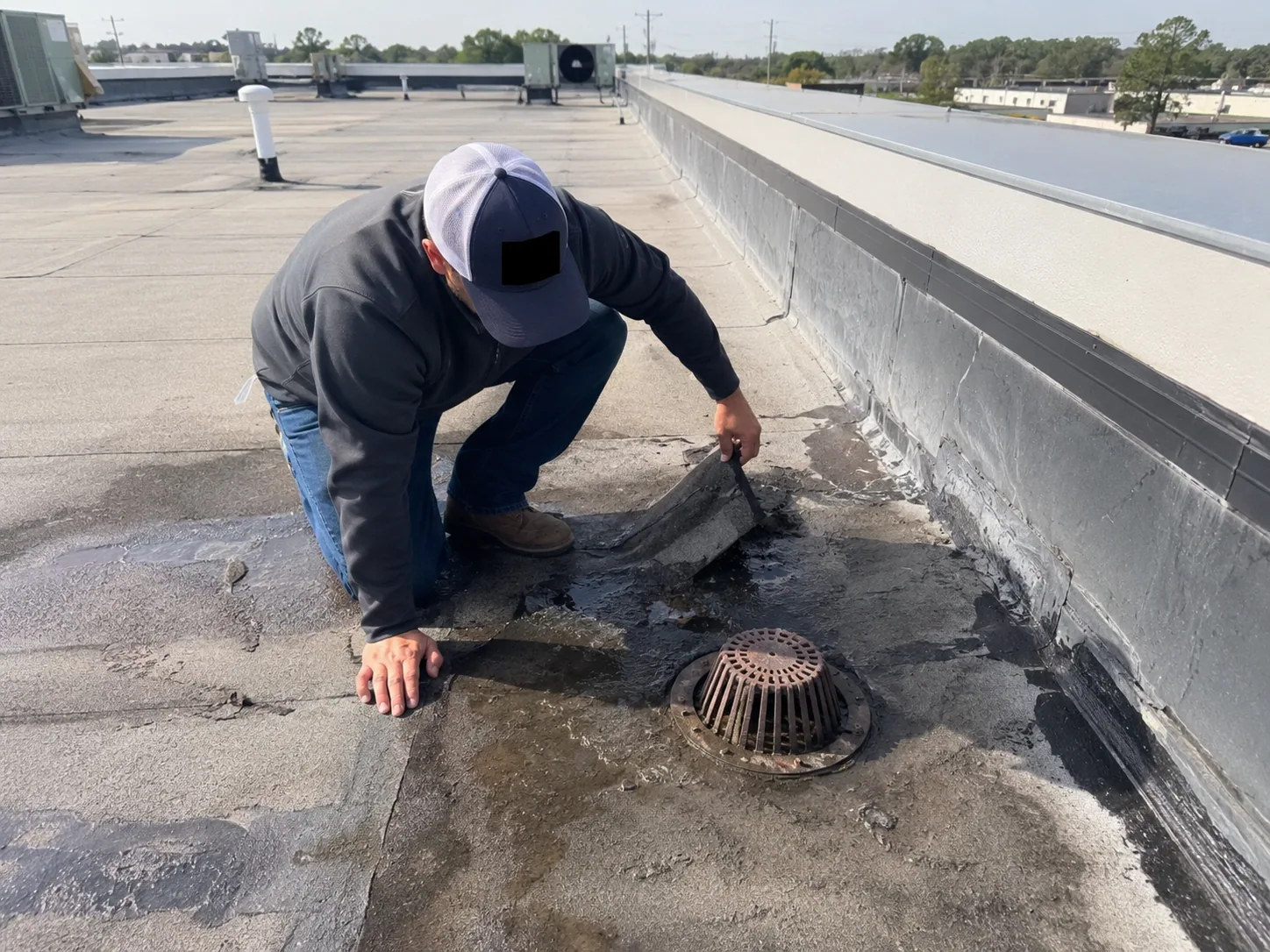
The big door is the weak point of a hangar envelope. Water runs down the face of the wall, meets the door header, and finds any gap in flashing or sealant. We look at the roof-to-wall transition above the door, the flashing at jambs, and the wall panels at the corners. A leak there often shows up as a stain on the door frame or a drip on the floor inside the door line. A flashing failure repair at the header is usually a modest job and protects the interior. Doors that run on tracks also need the roof edge above them to stay straight, since a sagging header can bind the door and open a gap in the weather seal. If the header has moved, we say so in the report and refer it to the building's structural or door contractor, because it is not a roofing repair.
Inspect Fasteners, Laps, and Trim on Metal Roofs
Where the roof is metal, we check screws, washers, laps, and ridge and eave trim. Exposed fasteners back out over time, and washers harden in the sun. Standing seam roofs hide their fasteners but have clips, seams, and penetrations to check. A standing seam roof and an exposed-fastener roof fail in different places, so the walk follows the system. Rust at fastener heads and at cut edges is photographed and located on the plan. Skylights and roof vents on a hangar are checked as well, since each is a hole with flashing around it. A drip from a vent lands on whatever is below, and in a hangar that can be an aircraft. We note every penetration, what it serves, and what sits beneath it, and we recommend the first repairs where the thing below is most valuable.
Plan Around the Airfield
Roof work near an airport raises questions that a roof elsewhere does not. Cranes and lifts have height limits near runways and flight paths, tools and loose debris on a ramp can damage aircraft, and the airport or tenant may require approvals and escort. We ask for the airport's requirements before scheduling any lift. Work hours avoid flight operations where the tenant asks. Ladders, lifts, and material stay clear of taxi routes, and the crew keeps the area free of loose items.
Gastonia Municipal Airport is local, and Charlotte Douglas International Airport lies 20 to 30 minutes away. The same planning habits apply at either. Fire suppression systems, if the hangar has them, run through the roof structure, and we avoid fasteners or cutting near sprinkler lines without the owner's guidance. Hot work, if any, needs a permit and a fire watch. The plan lists these steps and who signs for each, so the crew does not stop at the hangar door with a question nobody can answer.
Decide Between Repair and Replacement
A roof with sound panels and tight laps may need only fasteners, sealant, and trim. A roof with rust through, a failed deck, or wet insulation is closer to replacement. An infrared moisture survey and core cuts decide. The 2018 North Carolina State Building Code remains in effect until the 2024 code has an official effective date, and an owner may request the 2024 code as an alternative, so we confirm which applies. Cost drivers are the roof area, the access height, the number of panels to replace, and the protection needed for aircraft below. A tall building may need a larger lift, and a larger lift needs a firm, clear pad, which on an airport may be limited. We state the access assumption in the scope, so the figure holds when the lift arrives.
Check the Roof After Storms
Long-span buildings catch wind at edges and corners, and the county has a recent example: the May 8, 2024 EF-1 tornado took part of a warehouse roof in East Gastonia. Long-span buildings catch wind at edges and corners. After a storm, we check trim, ridge caps, and fasteners, and we photograph what we find. A dated photo set, taken within days of the event, is what an insurer asks for first, and a hangar owner with that set in hand can start a claim without waiting for a second visit. If damage turns up, temporary protection goes on the same day, and the permanent repair follows once the scope is agreed. Owners in Gastonia, Lowell, and across the county can request the walk, and a military hangar roof adds federal access rules.
Commercial Roofing Questions
How do you protect aircraft during roof work?
We agree with the tenant on covers and aircraft positions, keep debris off the floor, and seal the roof by evening. Where an aircraft cannot be moved, a protective layer goes up above it before the work starts.
Can a hangar stay in use during repairs?
Often. We work in sections and schedule around flight operations the tenant names, and we post a daily note that shows which bay is under the crew that day.
What about crane height near the runway?
Limits apply. We confirm them with the airport before booking a lift.
Why does the door head leak?
Flashing and sealant fail there under heat and rain. We check the header, the jambs, and the wall panels. Staining on the door frame tells us how long the water has been running.
What records help with insurance?
Dated photos of the roof, a repair log, and our findings summary.
Topic
Aircraft Hangar and Aviation Building Roofing
Roof Types
Low-slope and metal
Related Roofing Work
Warehouse Roofing
Failed Flashing Repair