Roofing for Insurance Adjusters and Restoration Work in Gastonia, NC
After a storm, the roof tells two stories at once: what the wind did this week and what the roof already had wrong with it. An adjuster needs to know which is which, and a restoration contractor needs to know which rooms to dry first. In Gastonia, NC the recent record is concrete. The recent record is concrete: the EF-1 tornado of May 8, 2024, estimated at 110 mph, left minor roof damage on several buildings and removed part of a warehouse roof in East Gastonia.
We write the roof's side of that record: dated photographs, a plan, moisture readings and a scope that separates new damage from old wear.
Document the Roof So a Stranger Can Follow It
A claim file needs a record that someone who never stood on the roof can read. For every section we photograph the overall condition, then each finding with a scale and a location mark, and tie the images to a numbered plan. Every photograph is dated. We note lifted edge metal, torn flashing, creased or punctured membrane, dented equipment housings and drains blocked with debris. We also note old wear: shrunken sealant, worn walk paths, algae and earlier patches. A report that separates new damage from age is more useful to an adjuster than one that calls every blemish storm-related.
Where moisture is suspected we take readings and cut a core, and an infrared moisture survey on a dry evening shows how far wet insulation runs. The numbers go on the plan beside the photographs.
Access is part of the record. We note how each section was reached, who was present and what the weather was, and where a section could not be walked safely we say so and use a drone for the survey. An adjuster who wants to meet on the roof gets a plan, a ladder or lift position and a time, and the foreman walks the findings in the order they appear on the sheet, so the visit takes an hour and not a day.
Weather on the day is written down with each visit, since wind direction and recent rain both help an adjuster place the damage.
Read the Pattern, Not Just the Hole
Wind leaves a pattern. Uplift starts at corners and perimeters, so lifted edge metal, torn base flashing and billowed membrane near the edges point to wind. Debris impact leaves punctures and dents with a direction. A smaller tornado in May 2020, estimated at 85 mph, left uprooted trees and minor structural damage on its way toward the Gastonia airport. Damage from winds of different strength looks different, and the pattern across a building shows which one we are reading. A neighboring roof is never assumed damaged or undamaged because of what happened next door. The wind-uplift question gets its own line in the report: how the edge metal is fastened, whether the membrane is adhered or attached, and what the previous owner's repairs did to the original attachment pattern.
Close the Roof Before Anything Else
A roof opened by wind has to be closed before it is evaluated further. A crew can reach the building at any hour, holidays included, and tarps or patches the opening, secures loose metal, clears drains and photographs the condition before and after. Mitigation is documented as carefully as damage, with dates, materials and locations, because the cost of keeping a building dry belongs in the file. The permanent scope follows once the facts are in, and the temporary cover comes off as part of it. If rain is forecast first, the cover is checked and re-secured, and the check is logged. Tarps are fastened to the structure and not to the membrane, since a cover that tears the sheet adds a second loss to the first, and photographs show how each tarp was secured.
Scope the Permanent Repair in the Adjuster's Terms
Repair and replacement are decided by moisture, layers and the extent of damage. Localized damage on a sound roof is a storm damage repair. Damage across much of a section, or wet insulation under it, points to replacement. Where the roof is old and the approved scope covers only part of it, we state in writing what the approved work covers and what it leaves, so the owner can decide on the rest. We price in line items that match the claim estimate, so an adjuster can compare like with like and a supplement has a clear baseline. We also mark in the estimate which items are code-driven, such as insulation or edge details that the permit requires, so a supplement for them is not a surprise.
When hidden damage appears during tear-off, the foreman stops, photographs and measures it and sends the adjuster a note before the work covers it again.
Coordinate With the Interior Crew
On a loss with interior damage, the roofer is one of several trades. The restoration contractor dries and repairs the inside, the roofer closes and repairs the outside, and each needs to know the other's schedule. We share the moisture map, the entry point and the dates of temporary cover, and we make sure interior drying does not start before the roof is closed. On a large loss across many buildings, a triage list ranks them by occupancy and exposure, and the work proceeds in that order. Owners with a deductible or a coverage limit to manage get a plain account of which repairs the claim is likely to address and which fall to maintenance, so the budget conversation starts from facts.
Count Heat, Rain and Delay in the Timeline
July in Gastonia averages about 90.7 F at the high end, with roughly 44 inches of rain over a year. A roof opened by wind that goes unrepaired through a wet week takes on water, and insulation that was dry on day one is wet by day ten. Hurricane Hugo's 87 mph gusts reached Charlotte in 1989 and an ice storm in December 2002 darkened more than a million customers there, so damage in this region is not limited to one season or one type of event. We document the timeline, because the difference between what the storm did and what delay did matters to the file.
Leave the Owner a File That Serves the Next Claim
After the loss, the owner should hold the plan with photographs, the moisture map, the cover record, the scope, the adjuster's estimate, the supplement history and the final punch list. The same pages feed a roof condition report and keep the next claim from starting from zero. Owners of shopping centers in Gastonia and Belmont follow the same steps, as do public agencies and property managers.
Commercial Roofing Questions
How soon after a storm should a roof be documented?
As soon as it is safe to walk. Fresh damage is clearest in the first days, and a dated record ties it to the event.
How do you separate storm damage from age?
By location, direction and pattern. Edge and corner damage and directional impacts point to wind, while shrunken sealant and worn paths point to age.
What if the approved scope covers only part of the roof?
We write down what the approved work covers and what it leaves, and the owner decides how to handle the rest.
Who closes the roof before interior drying starts?
We do, usually within hours. Drying begins once the opening is covered and the entry point is documented.
Do you provide line-item estimates?
Yes. Items match the claim estimate format, so an adjuster can compare scope and a supplement has a clear baseline.
Topic
Insurance Adjusters and Restoration Work
Roof Types
Low-slope and metal
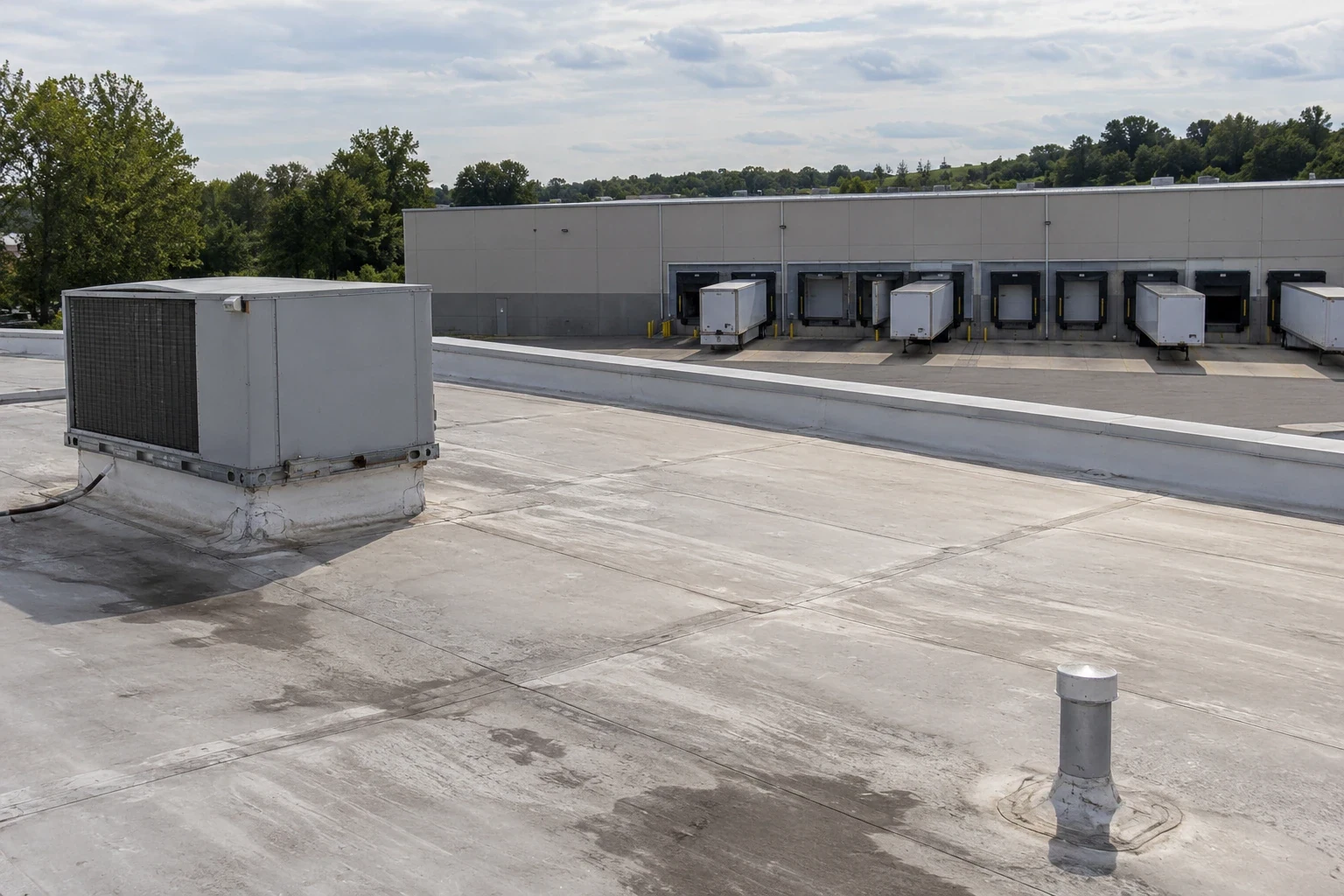
Related Roofing Work
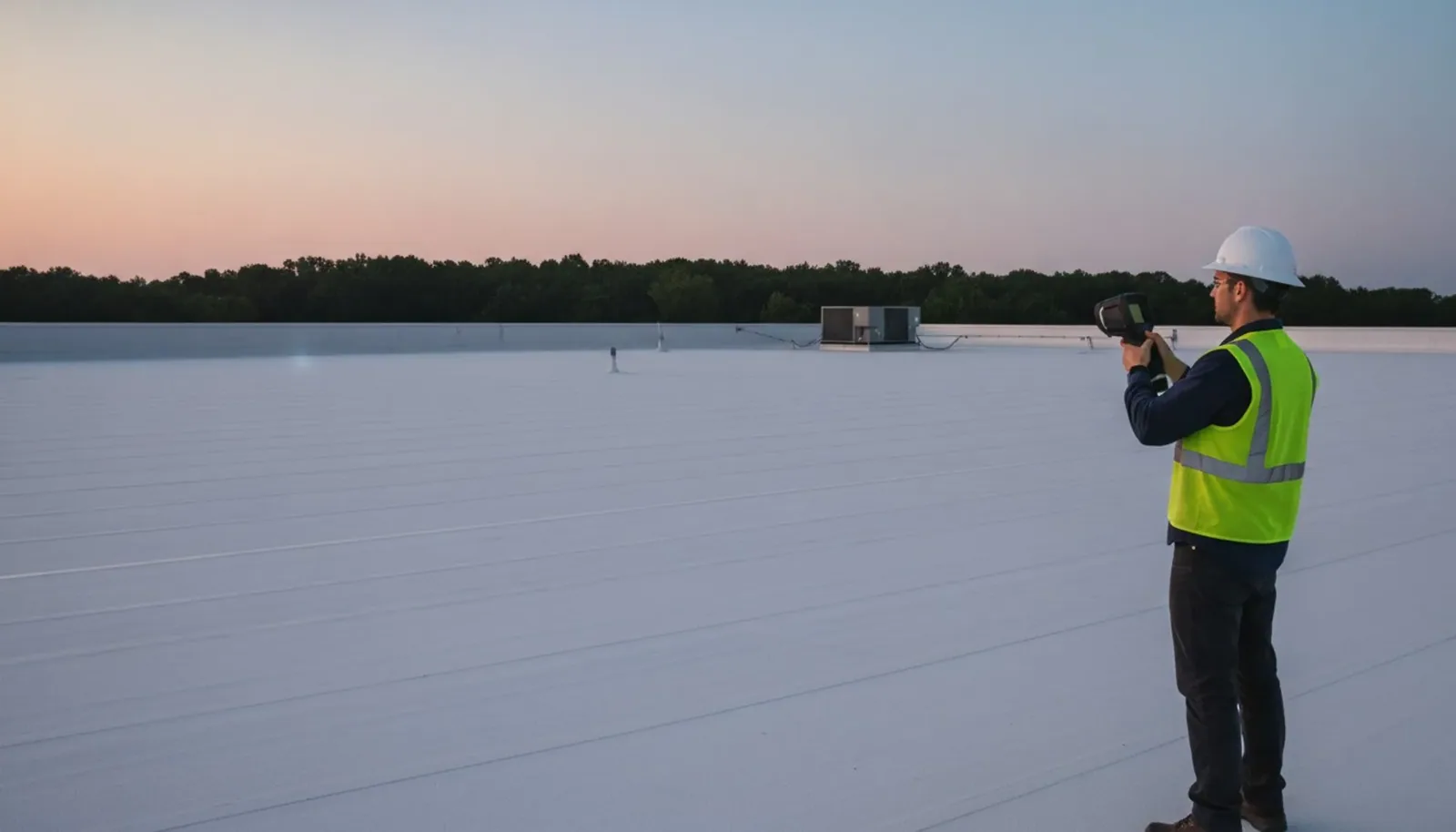
Infrared Roof Moisture Surveys
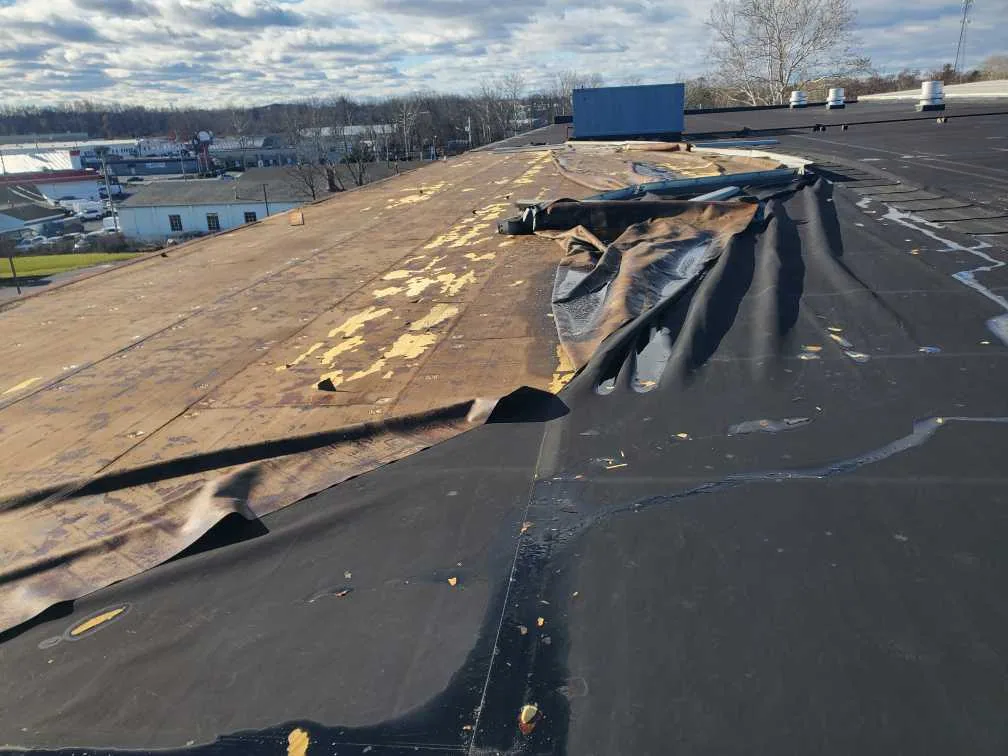
Storm Damage Roof Repair