Commercial Roofing in York, SC
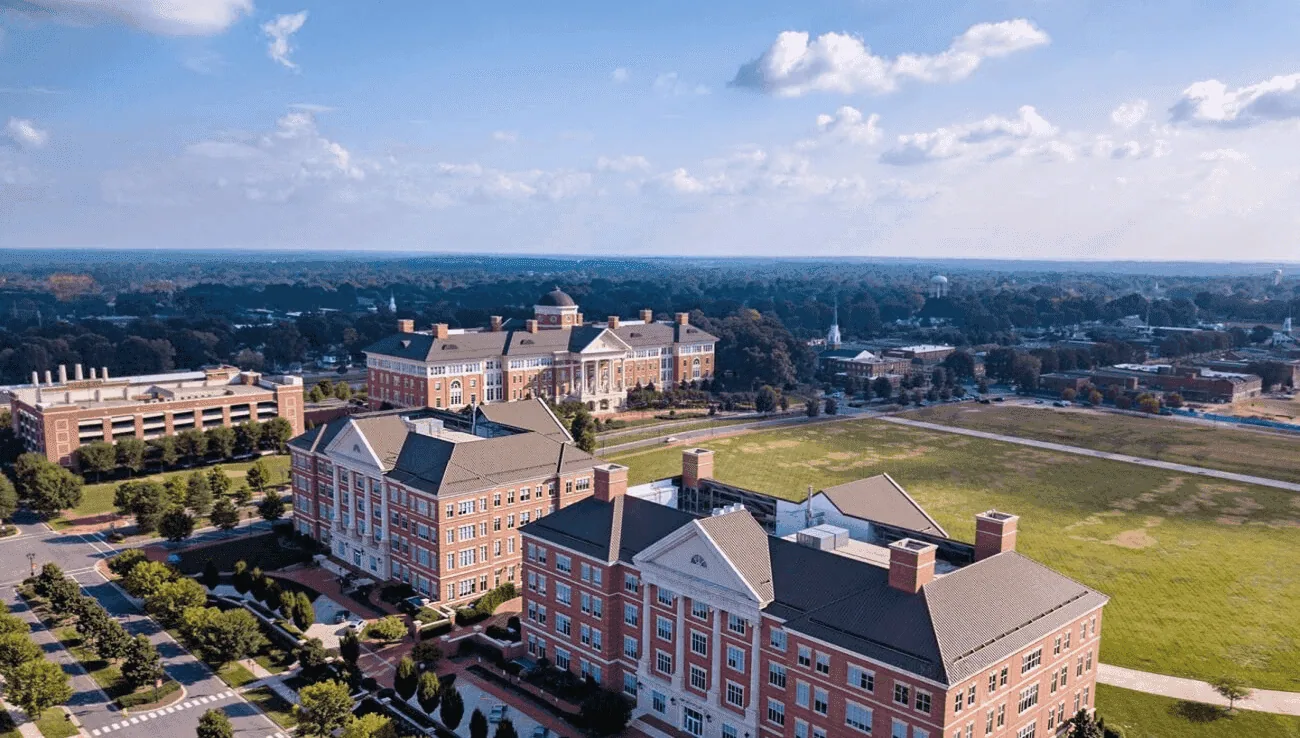
A masonry parapet with open mortar joints and a rust stain below the coping is the finding to expect first on an older commercial building in York, SC. It tells an owner that the wall and the roof have to be repaired in the right order. York is a county seat about 27 miles southwest of Charlotte and 13 miles west of Rock Hill, with 8,503 residents in 2020. Its 340-acre downtown historic district holds more than 180 historic structures, among them the York County Courthouse.
The city's 2025 estimate of 10,620 is a 24.9 percent rise since 2020. Old roofs and new roofs fail differently, and the first visit is a walk with photographs. Findings return in writing, each path priced and a decision date at the bottom. Nothing is quoted before the roof has been walked.
Repair the Masonry Before the Membrane
On an older masonry building the roof edge and the wall behave as one assembly. We check the coping, the mortar joints, the wall flashings and the membrane turned up the wall, then the seams, the drains and the curbs. Water that gets in at a joint runs behind the membrane and appears two bays over, which is why the trace starts at the wall and not at the stain.
Every finding is numbered, photographed and placed on a roof sketch. A joint that has opened gets a tape beside it in the picture, and a cap that has shifted gets a measurement. When the same positions are shot again the following year, the owner can see what moved and what held.
The sequence is worth real money. A new roof laid against a wall that is still wet fails behind its own flashing, so the scope puts masonry repair ahead of the membrane and names the trade responsible for each step.
Roof access in an older building is part of the price. A hatch with no fall protection, a ladder bolted to a party wall or a stair that ends one floor below the roof all change how long the walk takes and how the crew gets material up. We note the access method on the first visit, photograph it and carry it into the scope, so a bid does not assume a lift that the site cannot hold.
Call the Review Office, Then Core the Roof
Exterior work inside a historic district can be subject to review, and the town is asked what applies before design begins. That call costs nothing and avoids a redesign after materials are ordered. Drains, seams, insulation and flashings that cannot be seen from the street can usually go ahead without changing how a building looks.
A building near the courthouse may carry a recent roof, and a new-looking one may hide old layers. A core settles it with one photograph showing the deck, the insulation, the membrane and any roof beneath. A moisture scan marks where water has gone. Those two pieces of evidence tell us whether a recover is possible or the old layers must come off.
Write for a Board and for a Landlord
A county seat has public buildings on fixed hours and budget cycles, while a growing city adds private commercial roofs that move faster. A public owner wants a written scope with photographs and cost drivers that can sit in a board packet. A private owner wants a short priced list and a date. Both come from the same photo log, written for the person who will use it.
Work near a courthouse square means careful staging: early deliveries, barriers around lifts and a clear path for foot traffic. Interior protection goes under every open area. Where a leak reaches records, files or stock, those spaces are covered first, and the opening on the roof is limited to what can be sealed by evening.
Read New Roofs as Warranty Files
With the city growing by about a quarter in five years, newer commercial roofs are going up beside the old ones. A newer roof may sit under a manufacturer warranty, and a repair made with the wrong material can cost coverage. We read the warranty before any work, put its inspection duties on a calendar and log each repair with the product, the date and photographs.
Trouble on new construction comes from a short list. Drains clogged with construction debris, punctures from other trades and penetrations sealed in a rush top it. A walk in the first years finds them while the installer can still be called back. A good file holds the warranty, the installer, the completion date and the inspection reports, which makes the building simpler to sell, refinance or insure.
Price the Next Wet Season
Charlotte, the metro core to the northeast, has recorded 104 F highs, and its December 2002 ice storm left more than 1.3 million people without power. A roof in York works under the same regional swings of heat, rain and the occasional hard freeze. A cap joint repointed in spring costs a mason's visit. The same joint left open through summer storms can wet the insulation beneath it and stain a ceiling by autumn. Both prices go on paper beside a decision date.
Wind belongs in the file as well. Coping and edge metal are photographed every spring and after any severe storm, and Gaston County's EF-1 tornado in May 2024 is the recent reminder. The dated set supports insurance claim documentation if damage follows.
Leave a Record That Outlasts the Project
A building in the courthouse district may be sold, converted or handed to a new tenant long before its roof wears out, and the record has to survive each change. By closeout the owner has the photo log, the cores, the moisture map and a short account of the work. Warranty papers, repair invoices and the dated list of open items sit in the same folder.
That folder is what a lender asks for at refinancing and what an insurer asks for after a storm. It also shortens the next roofer's work, because the previous walk is already on paper.
Compare Repair and Replacement With Numbers
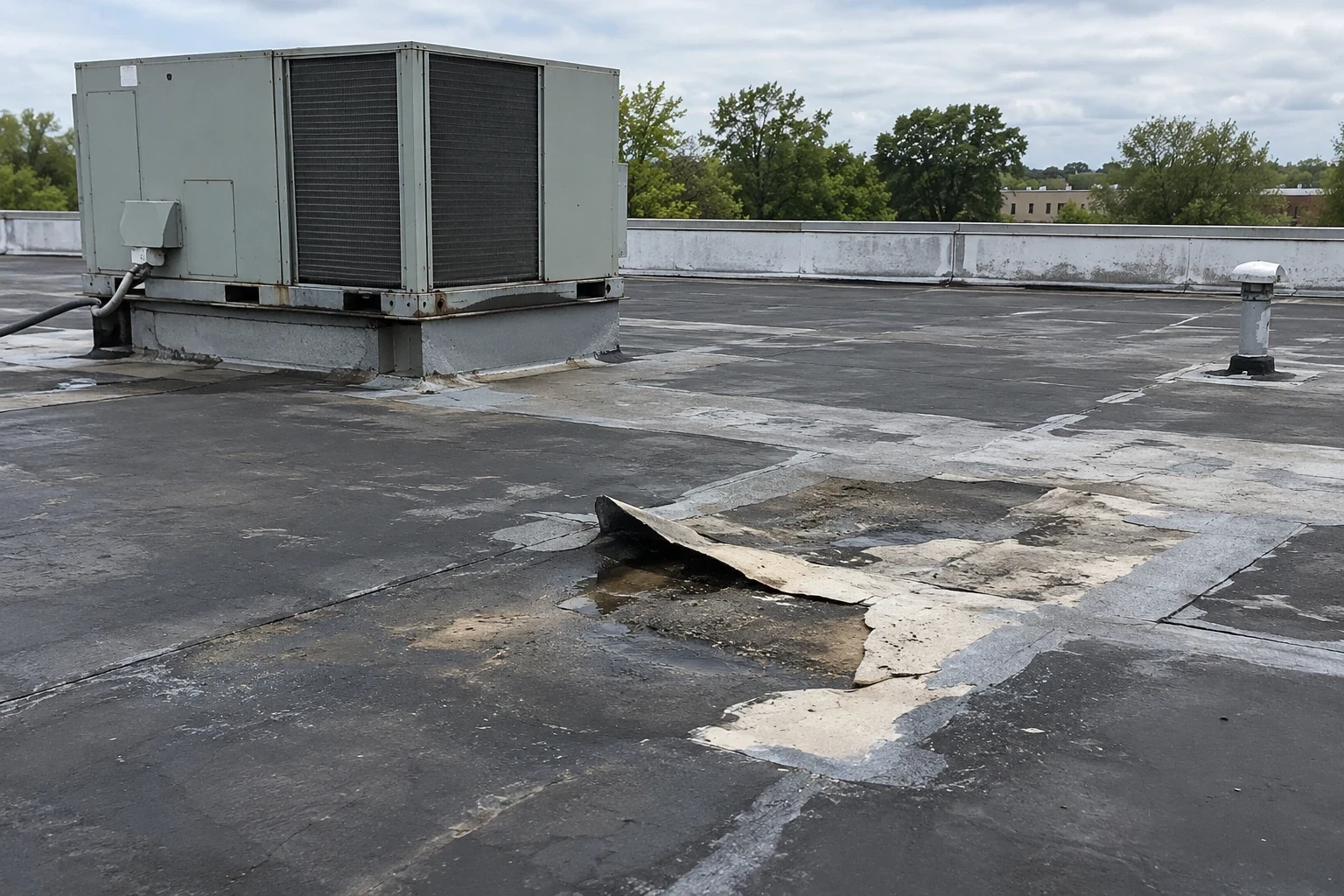
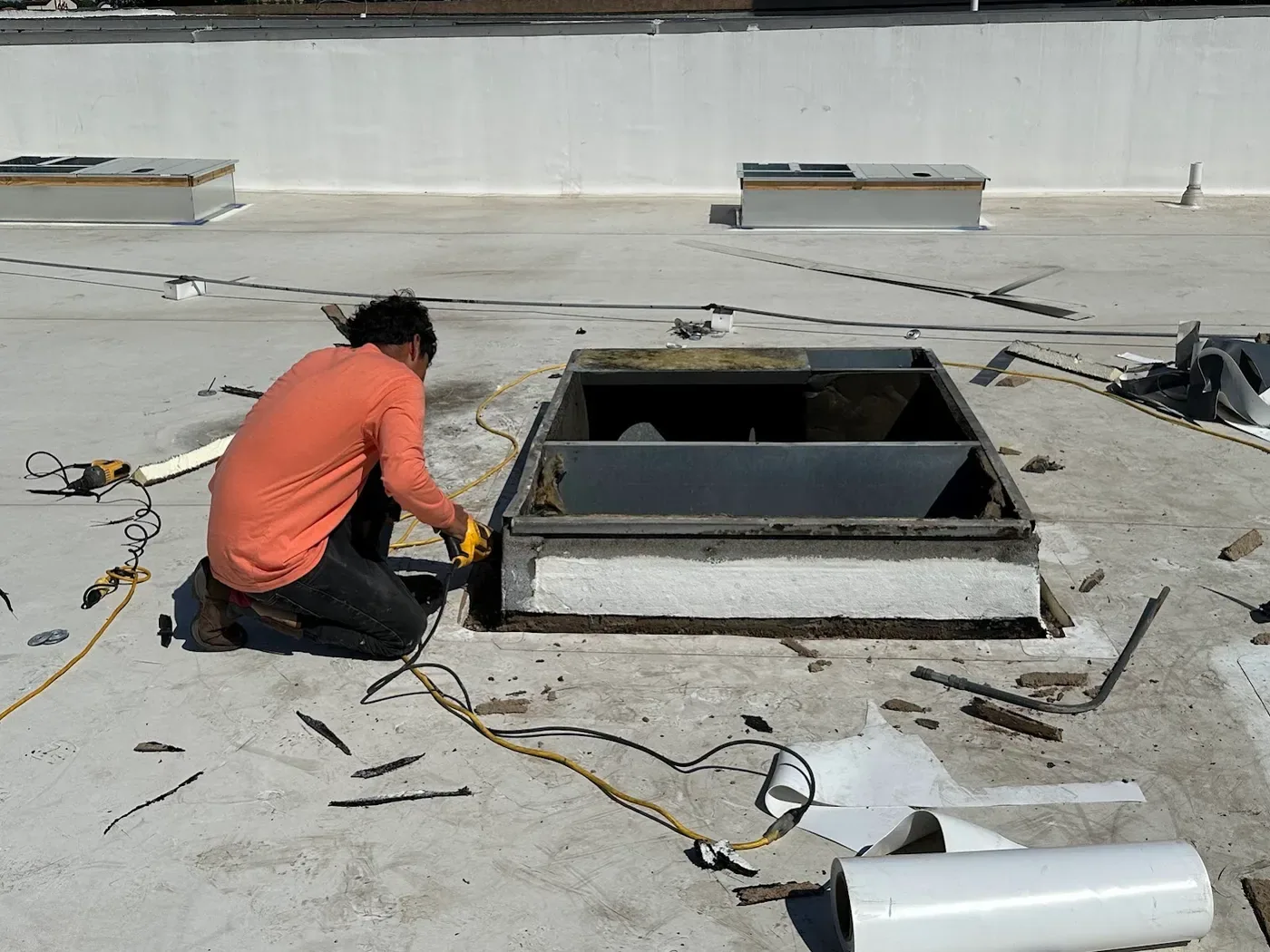
When the damage is local and the insulation is dry, a commercial roof repair is the sound spend. When moisture covers a wide area, or the patch history costs nearly as much as a new roof, replacement belongs on the capital line. Cost drivers sit beside each: roof area, access, deck condition, insulation, flashing count and season. The local building office confirms the code edition before the scope is final.
An owner holding roofs in York, Rock Hill or Clover can track them on a single scale, and each condition report adds to the same history. A large roof can be staged by condition, with the worst section in the first budget cycle.
Commercial Roofing Questions
Do you work on historic buildings?
Yes. The wall and the roof are checked together, and the town is asked about review before design.
How do we find where water enters an old roof?
The wall and cap come first, then seams and drains. A core backs up whatever the scan flags.
Can public buildings be repaired around their hours?
Often. Quiet work runs during open hours and noisy work moves outside them where the building allows.
What goes into the written summary?
Area ratings with photographs, a priced list and the repair-or-replace answer, with unreachable spots listed.
Who sets the code edition for a South Carolina roof?
The local building office. We ask first and file the answer with its date.
Topic
York
Roof Types
Low-slope and metal
Related Roofing Work
Roof Insurance Claim Documentation
Commercial Roof Repair