Commercial Roofing in Stanley, NC
A small commercial roof with one clogged drain and a patch from two owners ago is the kind of building a Stanley, NC owner may hold, and the finding to pin down first is how much of the roof is still dry. Stanley had 3,963 residents in 2020 across 2.71 square miles, in the northern part of Gaston County at about 846 feet elevation. The Stanley ZIP code reaches north into unincorporated land at the southwestern corner of Lake Norman in Lincoln County.
That is a small town with a wider mail area, and the buildings in it are the small commercial, office and light industrial roofs a small town carries. The walk tells the owner what those roofs are made of, how old they are and what condition they are in, and what to do next.
Walk the Whole Roof, Not Just the Leak
A stain is where the water stopped, and the cause is rarely under it. Water enters at a drain, a seam or a flashing, travels along the deck and drops somewhere else. We trace it by starting at the nearest drain and working upslope, probing seams, pressing flashings and checking penetrations on the way.
On a small roof, that walk takes little time and gives a lot. We photograph every item, mark it on a plan and note which items are active leaks, which are deferred repairs and which are only worth watching. The result is a ranked list that fits on two pages and tells the owner exactly where the money should go first. It also gives a lender or partner something to read.
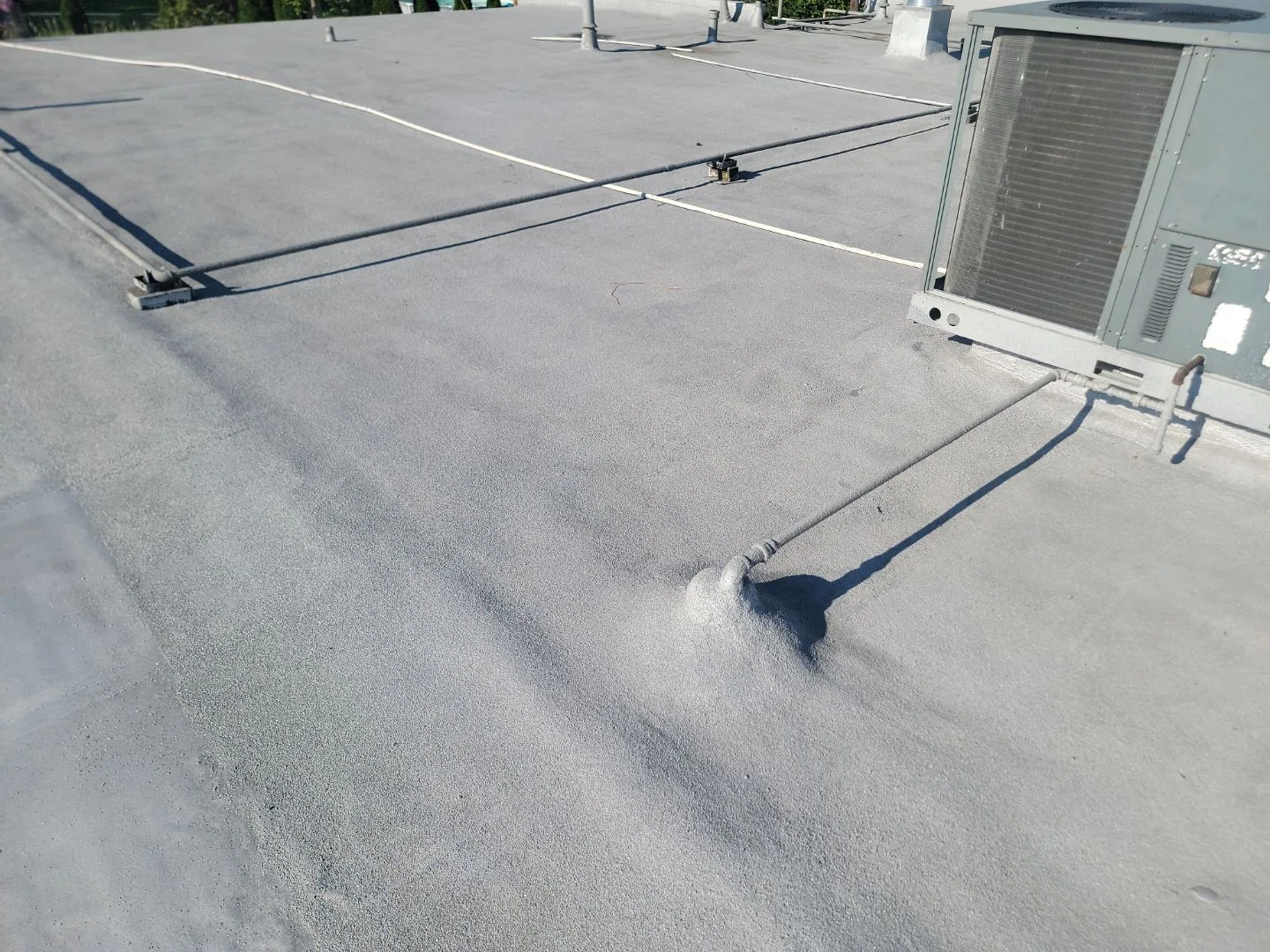
If the roof has equipment, we note each unit and its curb. Stained rings beneath a unit, a loose panel, a missing cap on a vent: each is a small item and a possible entry point. Even a roof with no equipment gets a close look at the skylights, hatches and vents that are easy to forget.
A small roof gives a clear count: how many drains, how many penetrations, how many patches, and which of them are active.
Put a Price on Waiting
Stanley is in the same county as Gastonia, whose long record shows around 44 inches of yearly rain and a July mean high of 90.7 F, so a roof in the area takes heavy rain and long heat. A deferred seam repair costs little in March and a good deal in July, after storms have soaked the insulation.
We write two prices for each item: fix it now, or fix it later at the likely cost. A clogged drain cleared this month costs very little. The same drain left to hold water through spring storm season can become a seam failure, then wet insulation, then a replacement line. The owner decides with both numbers in front of them, and the decision date goes on the page.
The same logic applies to warranties. A small roof may still carry a manufacturer warranty with inspection duties, and a missed duty can cost the owner coverage. We read the paperwork first and log the duties on a calendar so nothing slips.
Choose Between Repair, Coating and Replacement
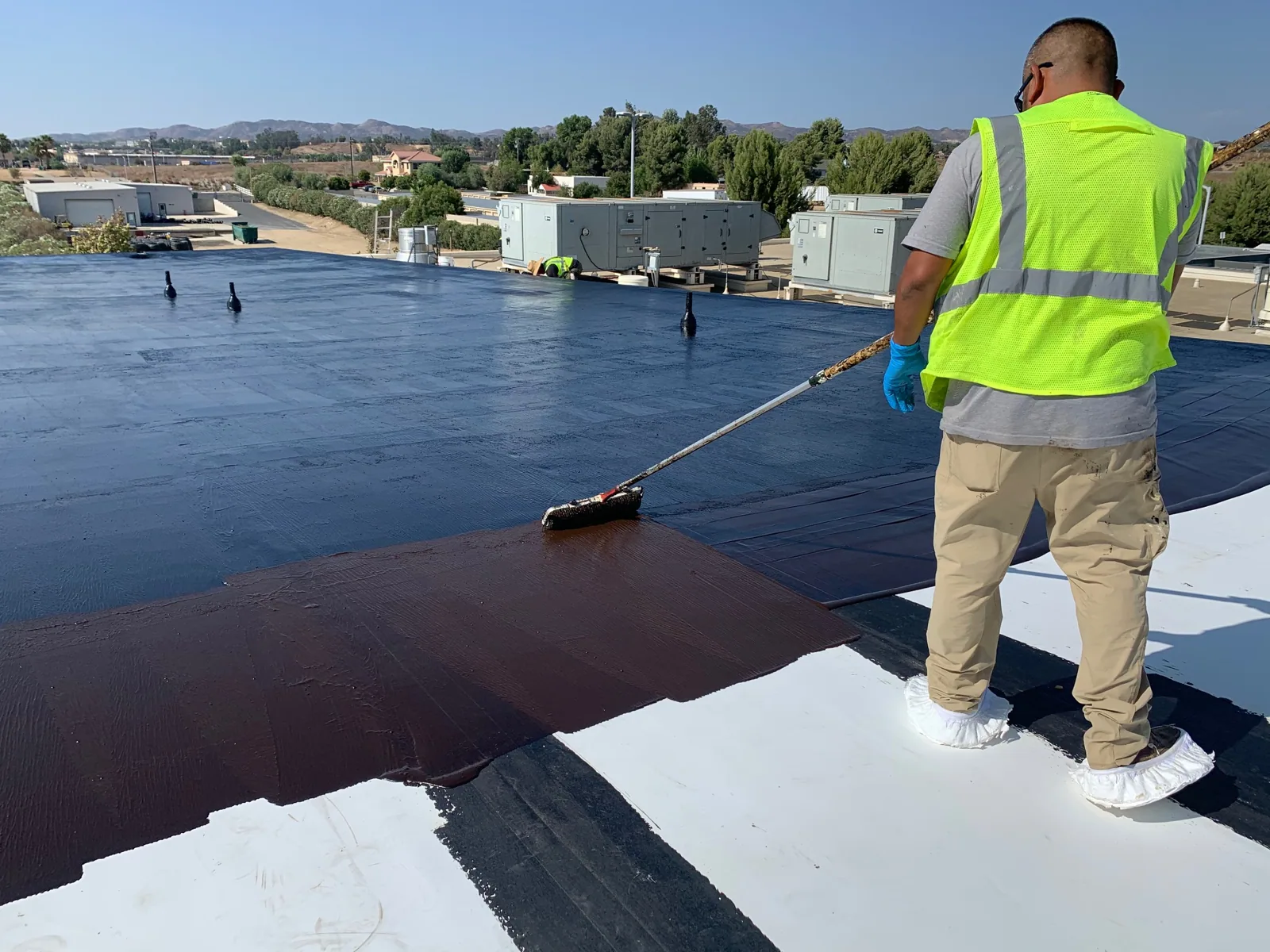
For a small commercial roof, three paths are usual. A repair fixes defects and buys time. A roof coating restoration renews a dry, sound roof and seals seams at lower cost than replacement. Full commercial roof replacement is the call when moisture has reached the insulation or the deck has softened.
A core cut and a moisture scan decide among them, not the age of the roof. Cost drivers are roof area, access, wet insulation, penetrations and the system selected. We list them in plain terms and attach the evidence. If a bid from another contractor is already on the table, we walk the roof, compare the bid with what we find and report where the two match or part ways.
Handle Drains, Gutters and Edges First
On small commercial roofs, the cheapest work often delivers the most. Clearing drains, cleaning gutters, resealing a loose termination and tightening edge metal take little time and prevent the leaks that cost the most. Gutters on buildings near trees fill with leaves and seed pods and overflow behind the fascia, and that water finds the wall.
We run a hose at each outlet to confirm flow, check strainers and leaders, and look at the edge metal from the ground and the roof. Where a roof drains to a scupper, we confirm the opening is the right height and clear. These steps fit into a seasonal visit, and our preventive roof maintenance schedule puts one before spring storm season and one after it.
A written note after each visit tells the owner what was done and what remains, with a photograph for each item.
Check Edges Before the Next Storm Line
A 2024 tornado crossed Gaston County, leaving minor roof damage on several buildings and removing a section of one East Gastonia warehouse roof, and a 2020 storm ran nearly nine miles toward the airport. These events are regional context, and they show why edge metal and rooftop equipment deserve a look every spring.
We pull on coping and drip edge, check fasteners and look at how rooftop units are held. After a storm, a temporary seal comes first, and the steps that follow are those of any wind-damaged roof.
Protect Occupants and Stock During Work
Small buildings are fully in use. A shop, an office or a storage space cannot close for a week because the roof is open. We plan from the owner's schedule: access, parking, noisy hours and what sits under each roof area. Zones over stock or equipment get temporary covers staged in advance.
Each day's opening is sized to what can be sealed by evening. The crew leader checks the weather at midday and decides whether the sky allows the next section to open. If rain is likely, the section stays closed and the crew works on details that can be finished safely. The interior is checked at day's end with the owner or a staff member.
Keep a Record Owners Can Hand Over
At closeout, the owner receives the photo log, the findings list, any core or moisture results and a brief narrative, with warranty papers and repair invoices filed beside them. A small owner who sells, refinances or brings in a partner can hand over the folder, and the buyer or lender sees the roof's real condition. Work in nearby towns like Dallas and Lowell follows the same format, and larger roofs back in Gastonia use it too.
Commercial Roofing Questions
Is the leak always under the stain?
No. Water travels along the deck and drops somewhere else. We trace it from the stain back toward the entry point, starting at the nearest drain and working upslope.
Do I need a full replacement?
Only if the insulation is wet or the deck is soft. Cores and a moisture scan decide, and the findings summary prices repair and replacement side by side.
Can you work around my business hours?
Yes. We agree access, noise hours and staging before the crew arrives, and we keep entrances and parking clear whenever the plan allows.
What does the written summary include?
Photographs, a ranked findings list, cost drivers and the repair-or-replace answer, written so the owner can hand it to a partner or lender.
How soon can you come out?
Often within days, with active leaks first in line and emergency calls taken at any hour, with a temporary seal first.
Topic
Stanley
Roof Types
Low-slope and metal
Related Roofing Work
Roof Coating and Restoration

Commercial Roof Replacement